Returning After a Break: A Visual Guide to Building Healthy Habits That Fit Real Life
Author: Feras Alayed
Published:
Updated:
Category: health
Reading Time: 8 minutes
Returning After a Break: A Visual Guide to Building Healthy Habits That Fit Real Life

A calm, reflective beginning: before any big decision, let yourself breathe and allow time to pass. Many people fall into self-blame after a break from a healthy routine or a habit, turning moments of pause into prolonged sessions of guilt that weigh down the desire to try again. Letting go of guilt is not a luxury; it is a practical act that prepares the mind for something new. Ask yourself constructive questions instead of assigning blame: What did I feel when I stopped? What changed in my day? Where can I start without adding a new burden?
The goal here is to change the question “Why did I stop?” into a practical one: “What small first step can I take today?” The answer does not require complex science or a polished plan, only a simple, modest decision that can be repeated.
A return that fits your day: valuing realism
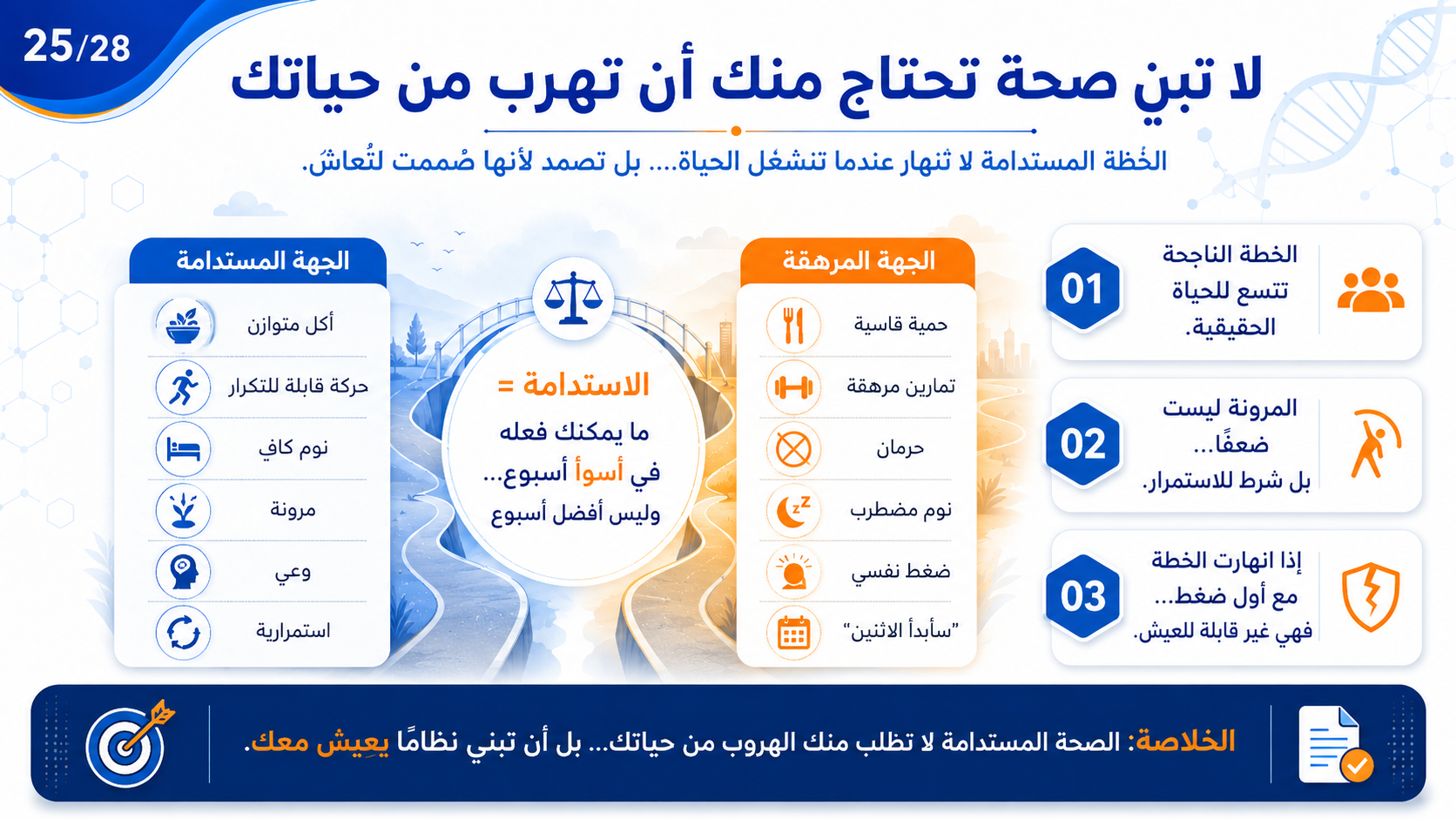
Daily life is full of fluctuations: travel, urgent work, family visits, or weeks with heavy workloads. Building habits that can live with life does not start with perfect plans but with flexible options. Think of “adaptability” as a central value: which habit can you modify to stay with you when things get busy? Which part of your routine won’t be lost if your location or schedule changes?
Make a constant question: does this habit serve me in the context of my life? If the answer is no, it may need adjustment. Sustainable habits don’t require ideal conditions; they stretch to work under pressure and during travel and change. For example, instead of setting a long daily exercise goal, set a short, specific duration you can complete while traveling or after work. That way, the habit stays alive even if its form changes.
The difference between temporary enthusiasm and a system that expands to life
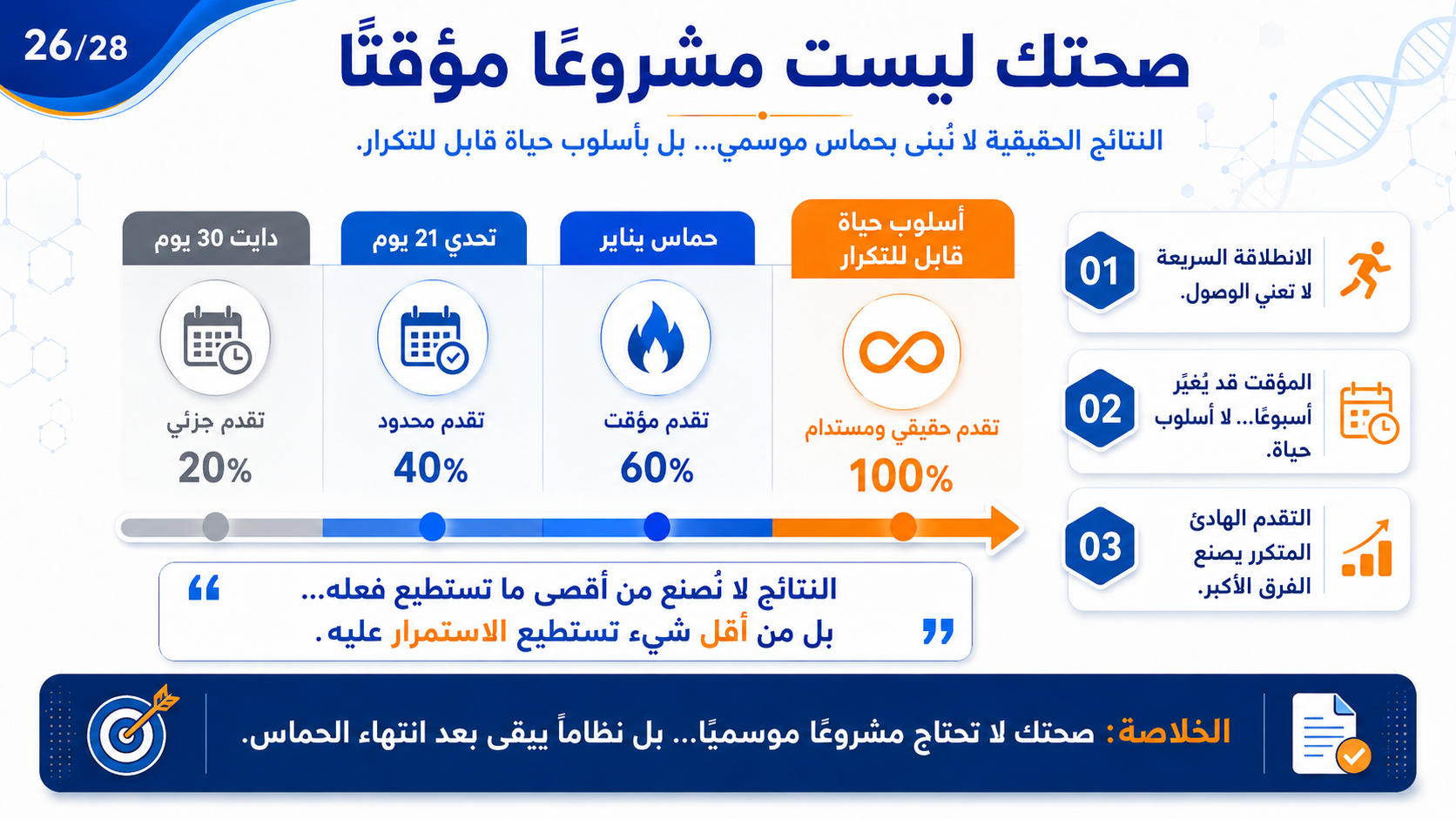
Temporary enthusiasm is strong and inspiring, but often short-lived. People begin with blazing enthusiasm, plan a strict routine, and then that enthusiasm collapses under real-life pressure. A practical system is different: it assumes enthusiasm won’t remain at the same intensity. It therefore builds space for flexibility: alternative effort levels (basic, reasonable, intensive), and substitution options (a short workout instead of a long one, a quick healthy meal instead of a time-consuming recipe).
A system that stretches acknowledges that life is alive and moving. Instead of placing constraints that make you feel like a failure at the first deviation, it provides a framework that brings you back step by step without guilt, turning every attempt into learning rather than judgment.
How do small habits protect you during a tough week?
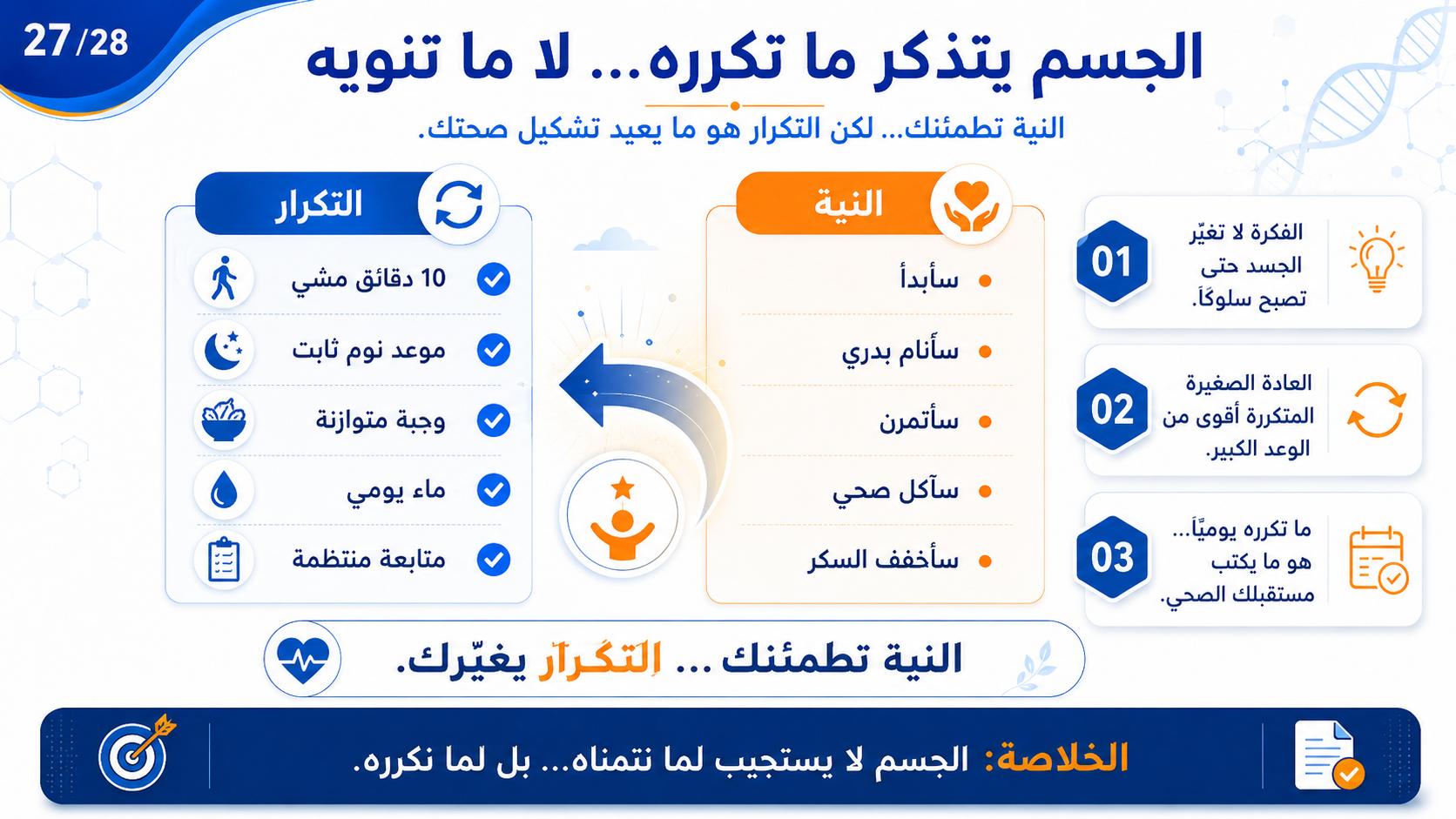
Small habits are your shields on busy days. Don’t underestimate the power of repeating a few minutes daily: five minutes of mindful breathing, ten minutes of walking, three steps to prepare a simple nutritious meal. These practices may not seem important on a perfect day, but they make a significant difference during hard weeks. The focus is not on quantity but on consistency: doing something repeatable.
Choose automatic and easy-to-implement habits: keep a visible water bottle, prepare a simple meal (for example: protein, quick-cooking vegetables, a simple energy source), set aside a short time to move each morning no matter the effort. These elements preserve your sense of connection to health even on busy days.
An important point: give yourself explicit permission to lower expectations when resources (time or energy) shrink. That permission shifts your relationship with the habit from achievement to continuity.

What to do in a week when your routine falls apart?
When a hard week hits, the goal is not to punish yourself or try to recover everything lost at once, but to keep small elements that enable later recovery. Make a short list of “sustainability wins” that can be done even on the toughest days, such as:
- drinking a reasonable amount of water through the day.
- including a protein source in at least one meal.
- five minutes of movement or breathing in the middle of the day.
- reducing digital stimulation an hour before bed.
Sustainability means creating multiple touchpoints with your health intention during the day. These touchpoints don’t need to be large; what matters is that they keep you connected to your overall goal and prevent cumulative decline.
Distinguishing between feeling helpless and a temporary pause
A temporary pause is not failure. Many people confuse a psychological feeling of helplessness with a reality that can be managed with a plan. Remember that a pause can be informative: it gives you data about your energy limits, about your current time demands, and about what adjustments your routine needs to endure. Don’t let a pause be the ladder to your collapse; make it a source of information to craft a stronger plan.
How to build a system that handles travel, work, and pressure
- Design implementation levels: a basic level you keep even while traveling, a medium level you apply on most days, and an ambitious level for calm days. These levels let you continue without frustration.
- Keep portable practices: equipment-free workouts, meals that can be prepared quickly, sleep aids like earplugs or an eye mask for travel.
- Rely on principles instead of recipes: focus on principles (eat protein, move daily, get enough sleep) rather than fixed recipes that fail when circumstances change.
Building habits: short repetition, clear intention
The intention behind a habit gives it meaning. When your goal is clear and compassionate toward your reality, repetition becomes more like a simple practice and less like a chore filling your days. Start by naming a concise intention for each habit: Why do I want to move today? Why choose this meal? Why reduce screens before bed? Intention builds the bridge between what you want and what you do, turning practice into mindful repetition rather than obligation.
Three-step return plan (a concise, practical plan)
Restore compassion: stop blaming yourself now and give yourself three days of simple "observation" without pressure. During these days, record the reality simply: when do you feel energized? when do you get absorbed? what is easiest for you to change?
Choose three core, repeatable habits: pick only three small practices and nothing more (for example: a visible water bottle, 10 minutes of daily movement, 15 minutes of extra sleep with reduced screen time). Make them applicable during travel and work.
Gradual progression and protection: arrange habits by levels: "basic — suitable — developed." Stick to the basic level during busy weeks and give yourself small rewards when you move to higher levels.
This plan does not try to do everything at once. It invites you to return step by step and constructively, with a clear base to protect against decline during pressured weeks.
Encouraging closing note
Returning is a kind process, not a trial. Set your intentions, smile at small progress, and count every moment of repetition as an investment in your resilience. Health that fits real life tolerates imperfection and greets hard days rather than punishing itself.
Start from the return that fits your day
A calm return can begin with the Metabolic Health Hub, then use the Metabolic Health Compass to gather your questions and organize your habits. For simple practical steps, you can use the BMI calculator, the calorie calculator, the water calculator, and the fasting calculator. You will find broader reading in the Research Library and the Feel Great page.
Getting started with Member
If you want to view the official product pathway, use the official Member link. After completing your order, you can send your confirmation via WhatsApp to find the appropriate next step and the available support group. The article is educational and supportive of habits, not a diagnosis or a promise of a specific outcome.
Final note: this text is advisory and educational. It does not provide medical diagnosis or personal treatment. If you have a specific health condition or medical concern, seek advice from a licensed health professional.
Start from the return that fits your day
A calm return can begin with the Metabolic Health Hub, then use the Metabolic Health Compass to gather your questions and organize your habits. For simple practical steps, you can use the BMI calculator, the calorie calculator, the water calculator, and the fasting calculator. You will find broader reading in the Research Library and the Feel Great page.
Getting started with Member
If you want to view the official product pathway, use the official Member link. After completing your order, you can send your confirmation via WhatsApp to find the appropriate next step and the available support group. The article is educational and supportive of habits, not a diagnosis or a promise of a specific outcome.
Related ATHAR paths
To turn the idea into a practical next step, explore the free health calculators and choose the tool that matches what you want to notice in your day.