Sustainable Metabolic Health: A Visual Guide to Understanding Small Habits and Building a Routine That Lives With You
Author: Feras Alayed
Published:
Updated:
Category: health
Reading Time: 10 minutes
 In the image we see a focused scene of a simple daily routine: balanced food, light movement, a glass of water, and time for sleep. The explanation here is not to tell you exactly what you must do but to show how small elements of daily life overlap to create the larger outcome; each small repeated step leaves a cumulative effect over time.
Introduction
Sustainable metabolic health is not a distant goal or a seasonal decision — it is the result of small habits repeated consistently. This may sound obvious, but what truly changes the trajectory is how we structure those habits and keep them through busy, tiring days. This guide speaks to those who want to build a routine that lives with them, step by step, without medical promises or exaggerated claims. We begin with the idea that metabolic health is built from repetition, then move to the daily loop, how to read our body’s signals without diagnosing, how to tell symptom from root cause, why temporary solutions don’t last, five simple repeatable habits to start, and finally how to keep sustainability through difficult weeks.
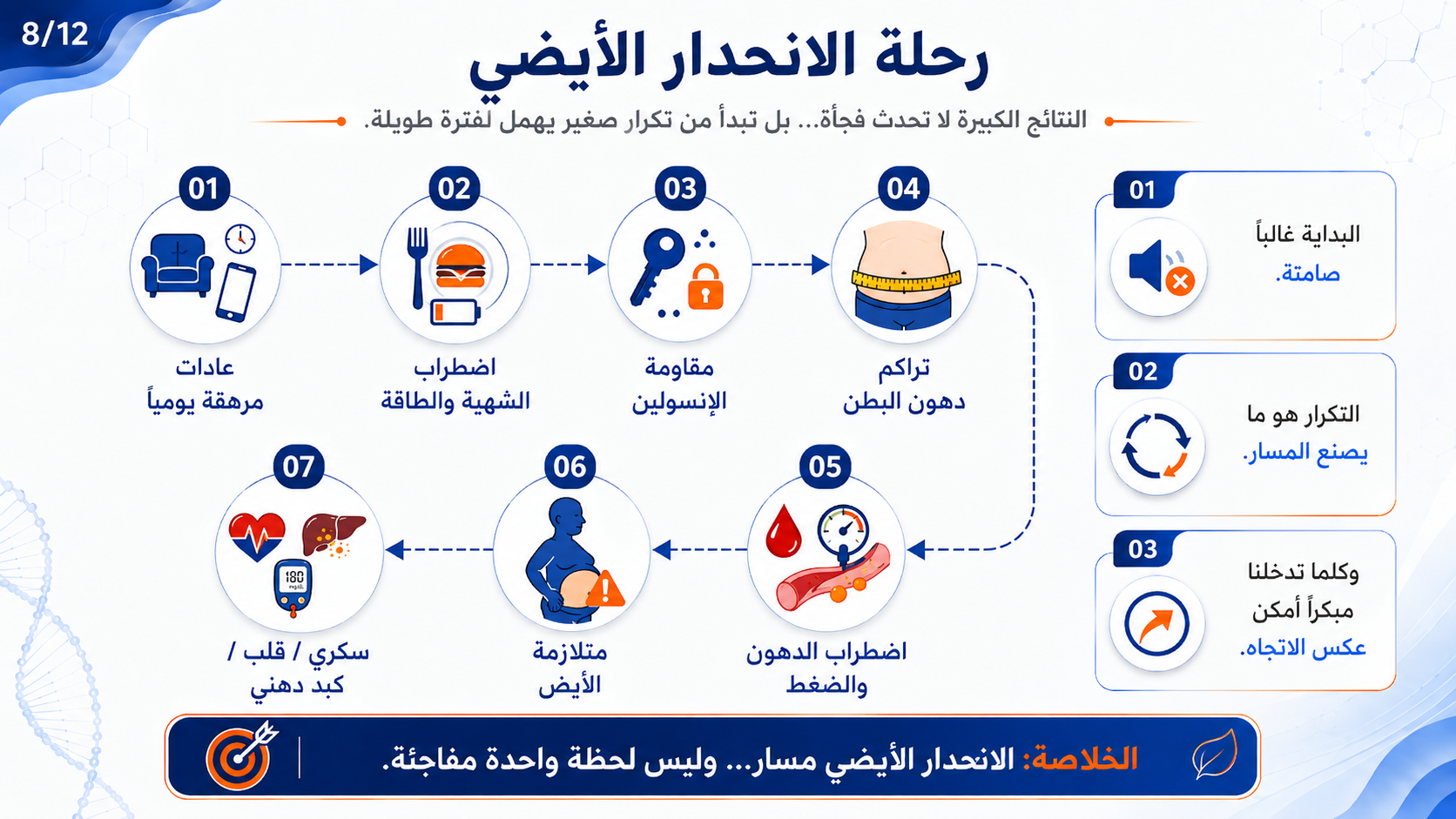
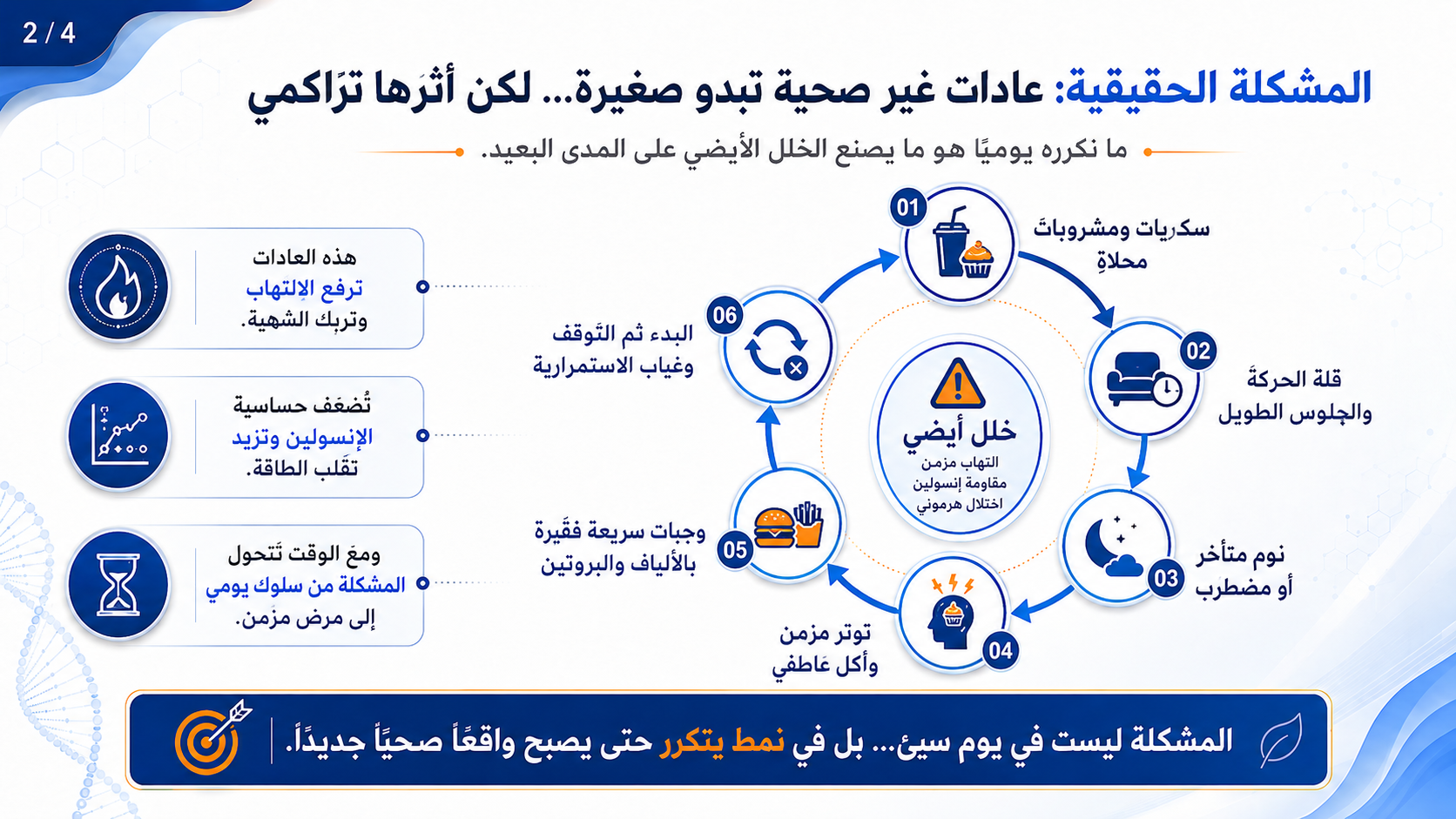 The image illustrates a circle made of consecutive steps: activity, nutrition, sleep, and personal response. The image reminds us that change does not happen in one push; rather by repeatedly adjusting a small loop until it becomes habit.
- Why does metabolic health start with repeated habits?
Repetition makes the difference. Any behavior a person performs repeatedly — even if small — has cumulative potential at the metabolic level. There is no need to complicate things: moving the body daily, eating regular meals, maintaining acceptable sleep, and drinking water mindfully all contribute to an integrated system. This does not mean the effect of each habit will be obvious on the first day; it appears over weeks and months of mindful repetition.
When discussing risk factors for chronic diseases and lifestyle patterns associated with them, there is reliable evidence that lifestyle changes can influence overall health trajectories. For further reading, refer to summaries from global public health organizations about risk factors for noncommunicable diseases. (See: World Health Organization information on noncommunicable diseases and risk factors).
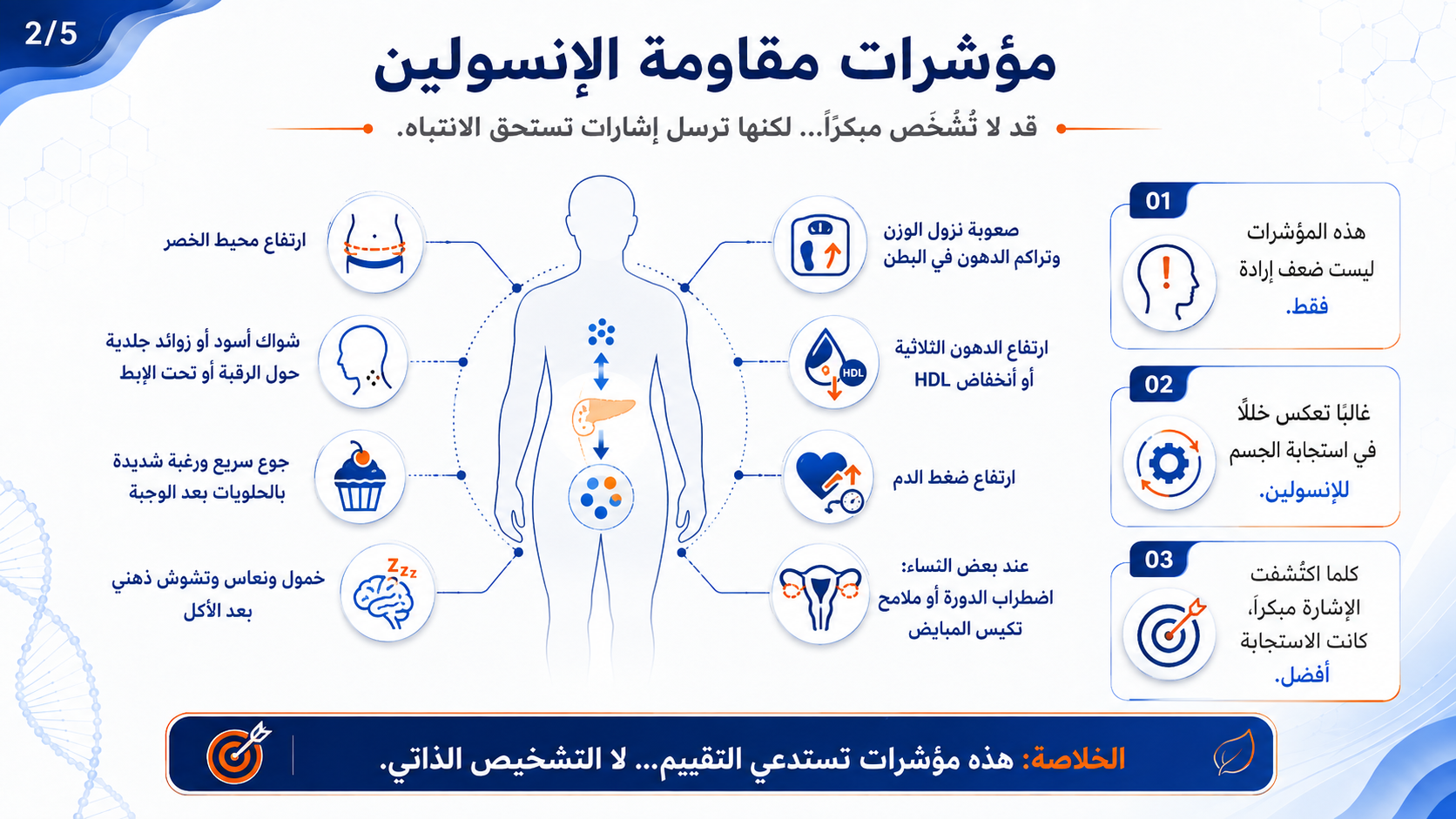
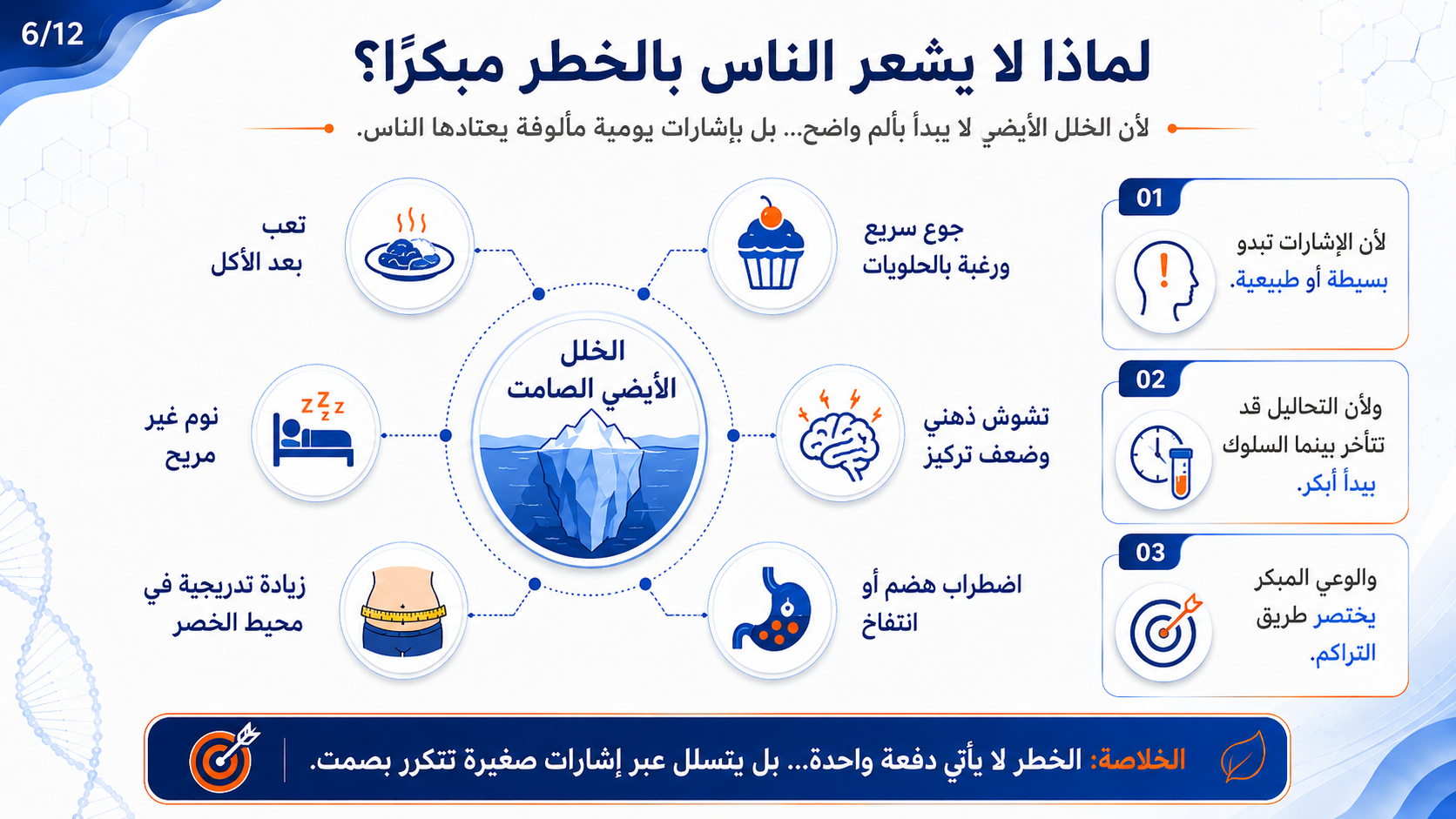
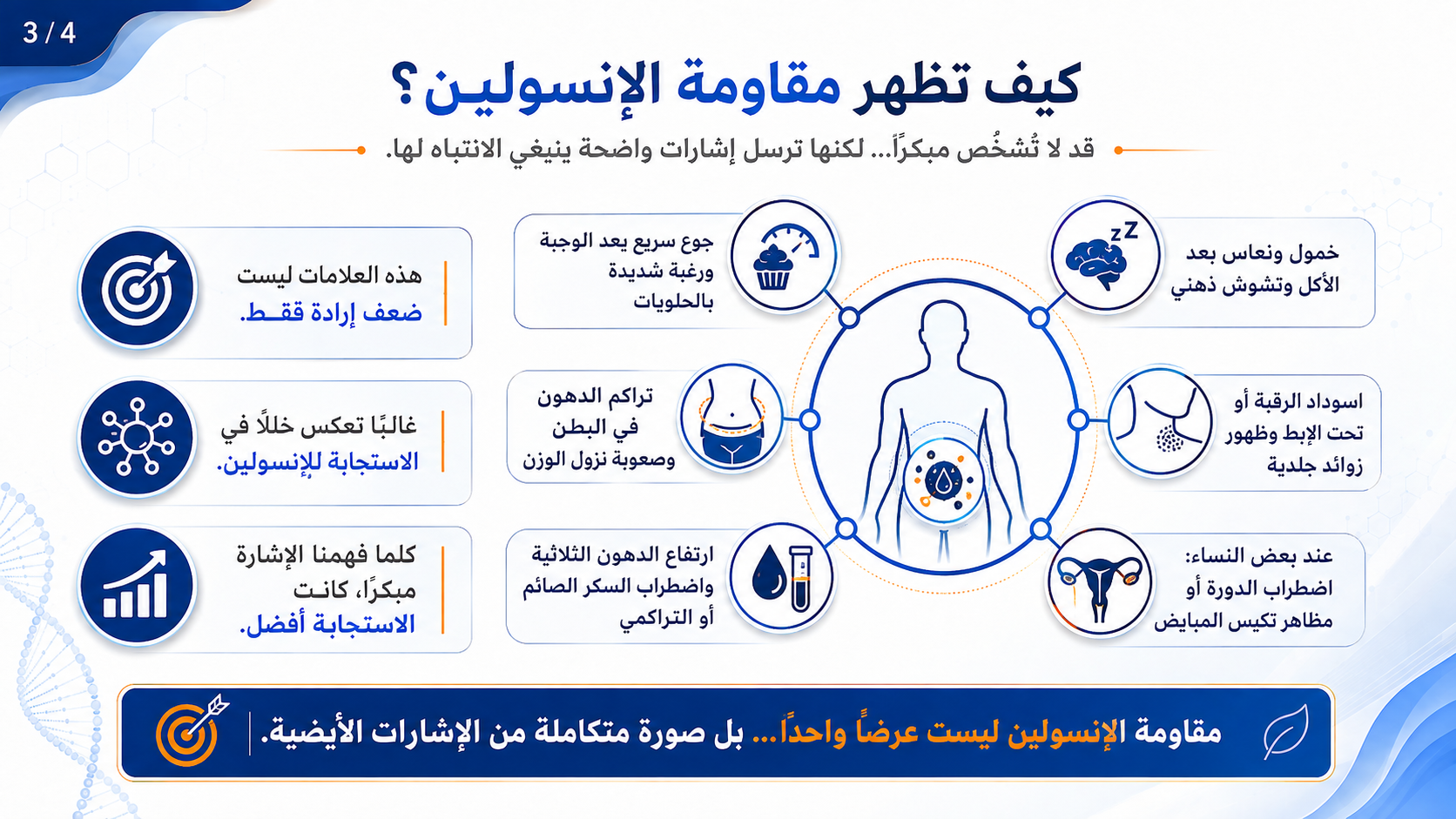 The image displays a simple list of daily signals: emotional hunger, fatigue after a meal, energy fluctuations in the morning. The idea is that these do not describe a disease, but small signals inviting you to pause and observe: what happens daily? When? After which food? After which activity?
- The daily loop: your routine as a manageable vortex
Imagine your day as a loop: waking — breakfast — activity — work — snacks — movement — dinner — getting ready for sleep. Within each stage there are choices that affect the next. A simple example: choosing a morning meal that includes protein and vegetables may give you longer satiety and influence later choices; a choice based on quick sugars may lead to energy swings during the day. The aim here is not to stigmatize or ban a meal, but to increase awareness of how each choice relates to the day’s outcome.
Awareness of this daily loop makes it easier to introduce small repeatable changes. Start by adjusting one point in the loop, then observe its effect for two weeks before adding a new habit.
 A visual scene of core pillars: what a person eats, how much they move, the quality of their sleep, and stress management. The image reminds us that health does not rest on a single element but on a balance among life’s foundations.
- Being aware of signals without diagnosing
Awareness is very important, but awareness is not diagnosis. Noticing a certain feeling — such as post-lunch fatigue or a sudden craving for sugar — calls for questioning and observation more than assuming a particular condition. You can keep simple daily notes: what I ate, when, how my energy was, whether I slept well, what my stress level was. These notes help you detect patterns without leaping to medical conclusions.
It is important to keep boundaries clear: if you notice persistent or concerning symptoms like unexplained weight loss, ongoing pain, or severe fatigue that affects your ability to carry out daily activities, the responsible step is to contact a qualified health professional rather than relying on self-guessing.
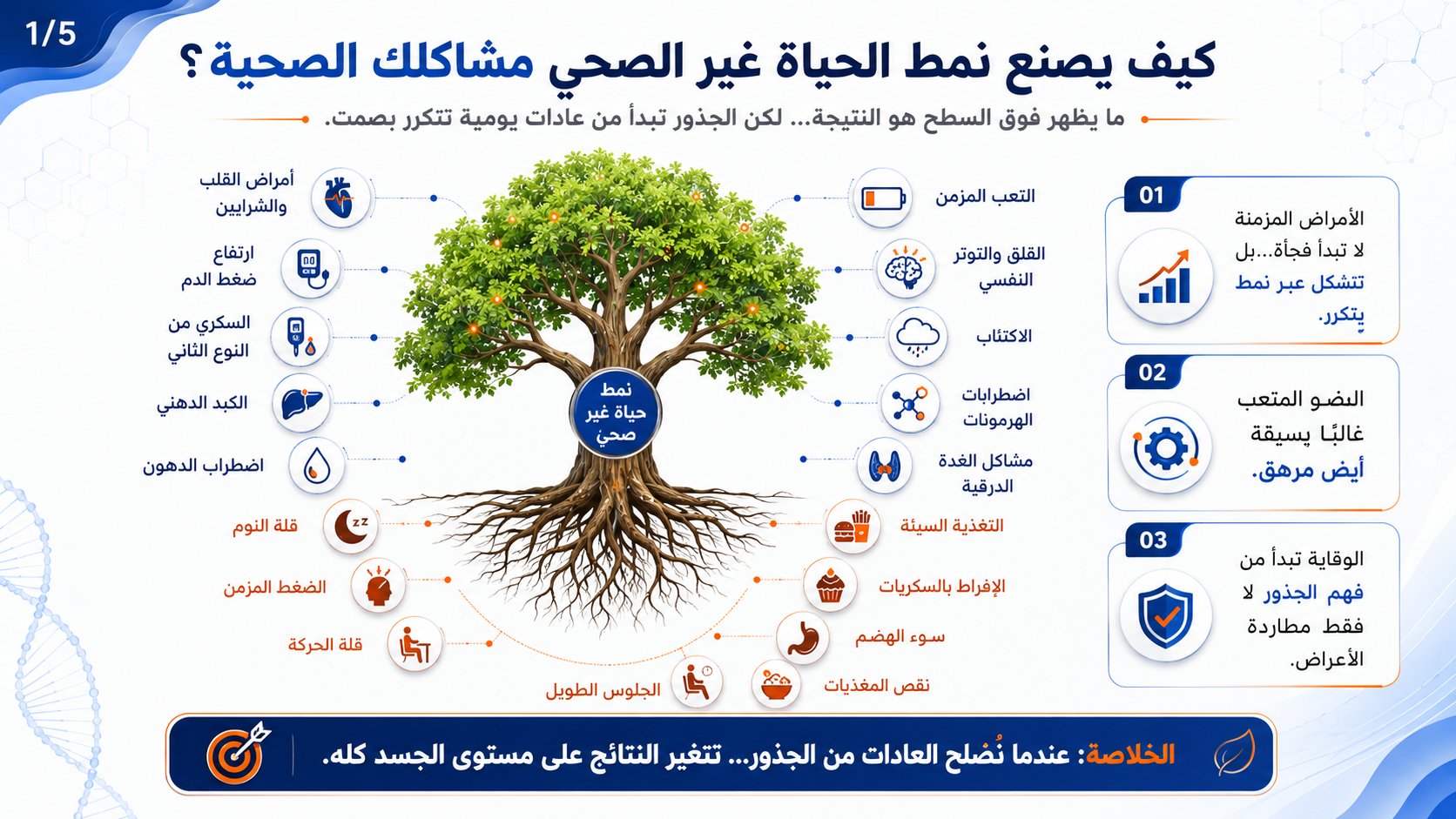 The image shows roots extending under the surface of the soil symbolizing the small habits that nourish health. The explanation clarifies that what you see on the surface (daily energy, mood, body shape) is often the result of stable underlying elements that require maintenance and time.
- The difference between symptoms and roots
Symptoms are what you feel now; roots are the factors that built that feeling over time. Example: repeated tiredness can be a symptom of many causes; its roots may include poor sleep choices, ongoing work stress, unbalanced nutrition, or a combination of these. Focusing on the root means searching for patterns and gradual adjustment instead of trying to temporarily extinguish a symptom.
Addressing roots typically requires patience and measurement. Make it your goal to discover a simple relationship between a daily habit and a tangible effect within two to four weeks. This time frame gives you a reasonable window to judge whether changes are helpful or not.
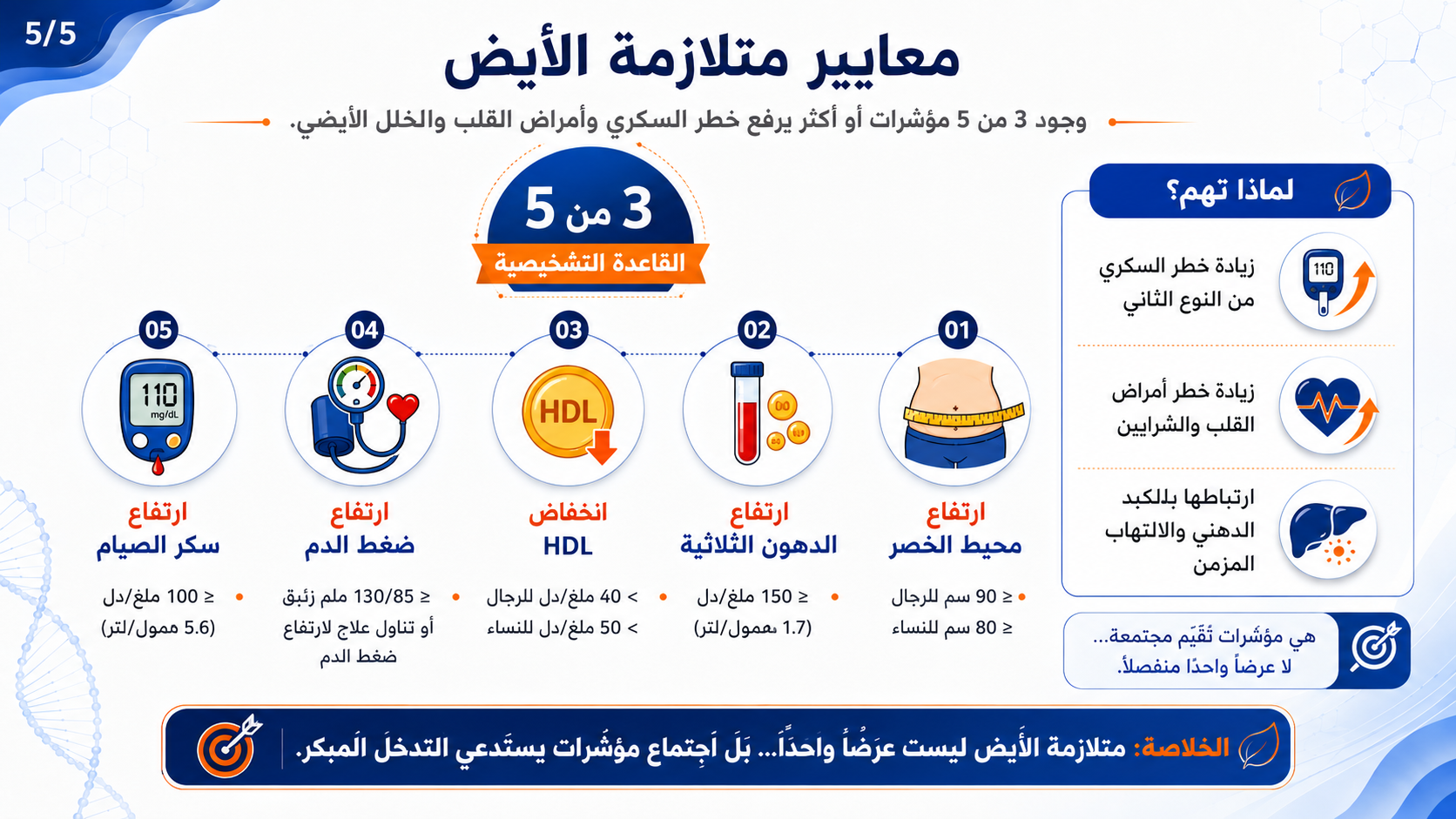
 This image shows measurable elements such as sleep quality, activity level, and fluid intake. The explanation emphasizes that indicators need not be complicated; a simple daily measure provides maps that help you make informed decisions.
- Why temporary solutions don’t last
Quick fixes usually focus on immediate results without changing the behavior that produced the problem in the first place. A very strict diet or a short period of intense training can achieve temporary results but often does not last because the lifestyle has not changed to match your real capacities and daily commitments.
Sustainability begins by choosing what you can repeat twice or three times a week and then gradually increasing it, not by doing a program you cannot maintain on busy workdays, during travel, or under family pressures. So rather than asking yourself to make a complete overnight change, ask yourself to be steadier in two or three doable habits.
 The scene presents an interconnected network of daily-life indicators, from food to sleep to activity. This reminds us that changes are often multi-dimensional and interrelated.
- Five small repeatable habits (a practical path)
This list does not claim to be exhaustive, but it is practical and easy to adopt. Choose one habit to start for two weeks, then add another if you feel comfortable.
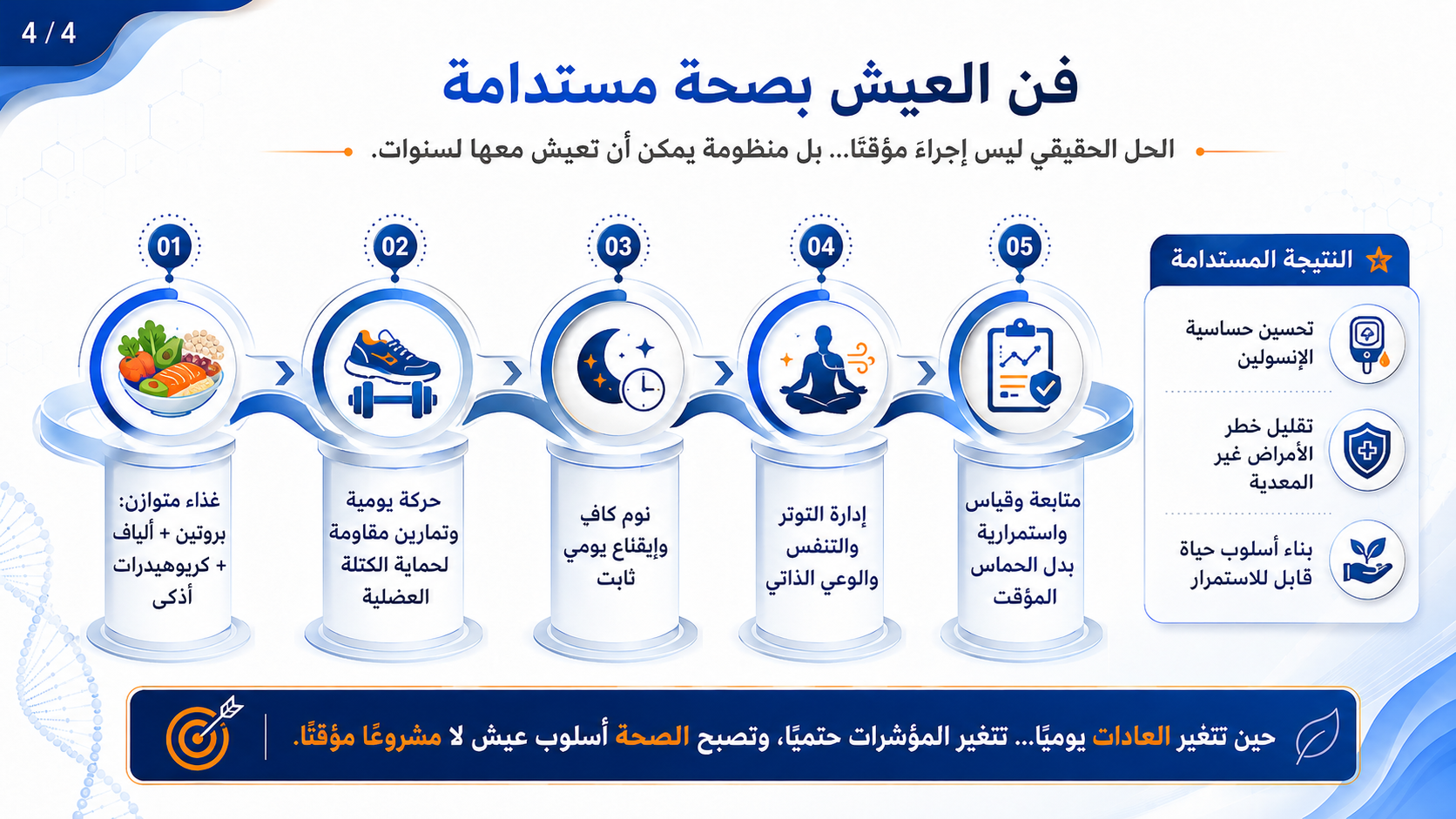
Habit 1: Start your day with a glass of water and a small piece of protein. Practical explanation: drinking water upon waking supports initial hydration, and a small piece of protein helps initial satiety and reduces the rush toward sugars. No need for complex measurements; choose a practical, available option.
Habit 2: Set aside 10–20 minutes for light movement daily. Practical explanation: brisk walking, stretching, or taking stairs can be inserted into short times. The goal is to make movement a pattern not tied only to long sessions but broken into short achievable chunks.
Habit 3: Pay attention to your eating pattern — have a complete meal slowly or take a short pause before a snack. Practical explanation: many food choices come from habit or boredom. Pause for a moment, drink water, and ask yourself whether you are truly hungry or just following a habit.
Habit 4: A simple, consistent bedtime routine as much as possible. Practical explanation: setting a regular sleep and wake time, even on days off, helps balance daily hormonal rhythms. If that is impossible all the time, work on a quiet pre-sleep routine that reduces screens and bright lights.
Habit 5: A short weekly journal for awareness and planning. Practical explanation: at the end of each week, write what you succeeded at and what you would like to improve. The plan does not need to be perfect; it is only a guide.
 The image shows a ladder progressing step by step; the explanation reflects the idea that building a habit is like gradual ascent: a small step today is better than a full pressure that may collapse.
- How to measure progress without obsessing over numbers
Measurement matters but obsessing over numbers can contribute to frustration. Instead of relying solely on a single scale, use qualitative indicators: how do you feel in the morning? Has your focus improved? Do you have enough energy for a simple activity? These are valuable indicators. Also keep a simple habit log: the number of days you executed a habit during a week. The goal is to build continuity, not perfection.
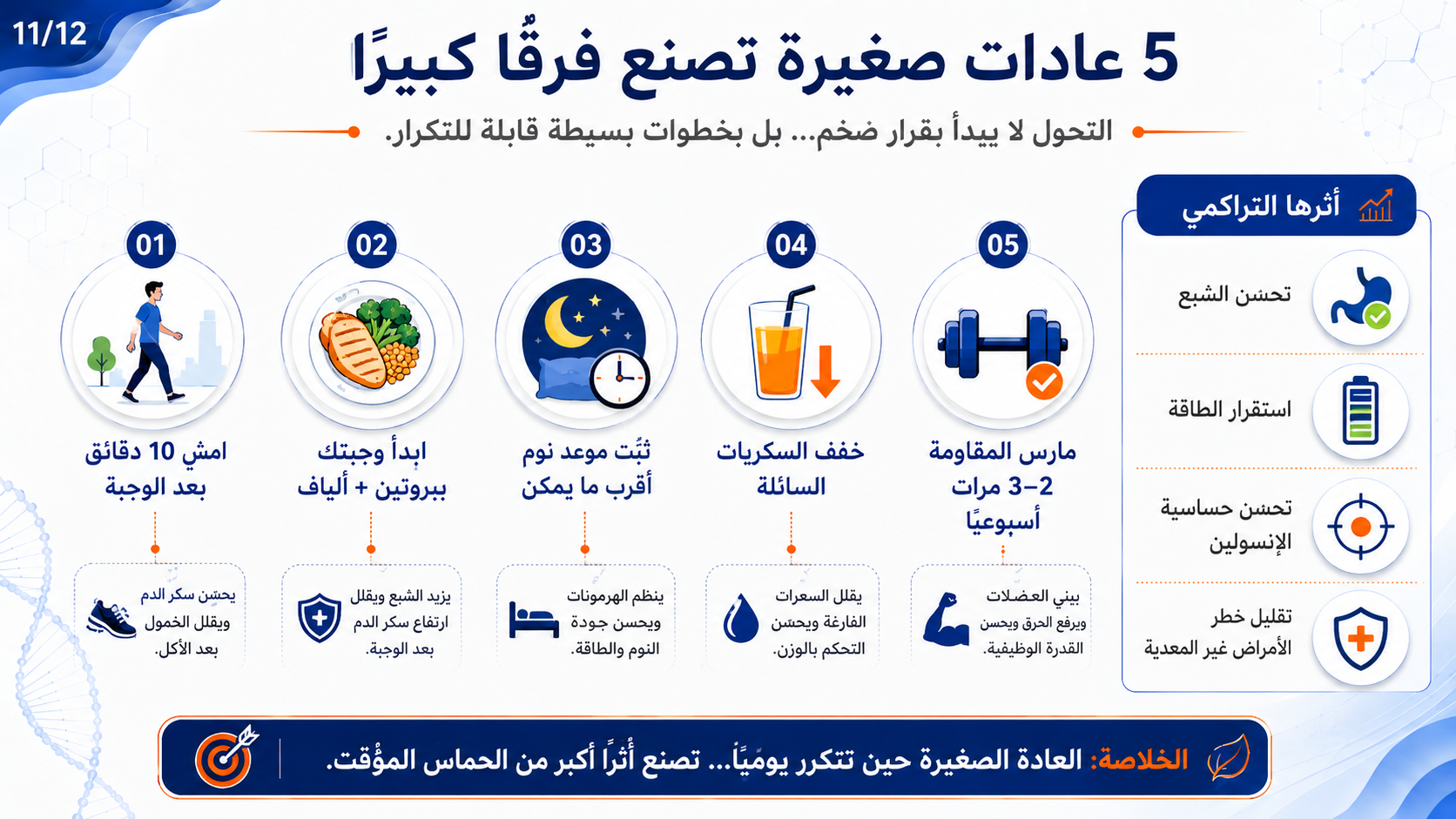 The image shows icons for simple habits: water, movement, sleep, a balanced meal, and a notebook. The explanation emphasizes that small icons can turn into a daily routine when repeated.
- Sustainability during difficult weeks
Everyone faces difficult weeks: work pressure, travel, or a family event. These tests reveal the system’s ability to persist. Some principles for sustainability in these periods:
- Adopt the 80/20 rule: try to maintain 80% of core habits, and don’t exhaust yourself trying for 100%.
- Simplify habits: during stressful weeks shorten exercise time or replace it with a short effective activity. Keep the water habit and basic sleep routine as much as possible.
- Social support: tell one person about your intention to continue a habit; a simple share increases the chance of continuation.
Self-kindness is important: a slip for a day or a week does not erase what you have built over weeks, and there are always scenarios to return.
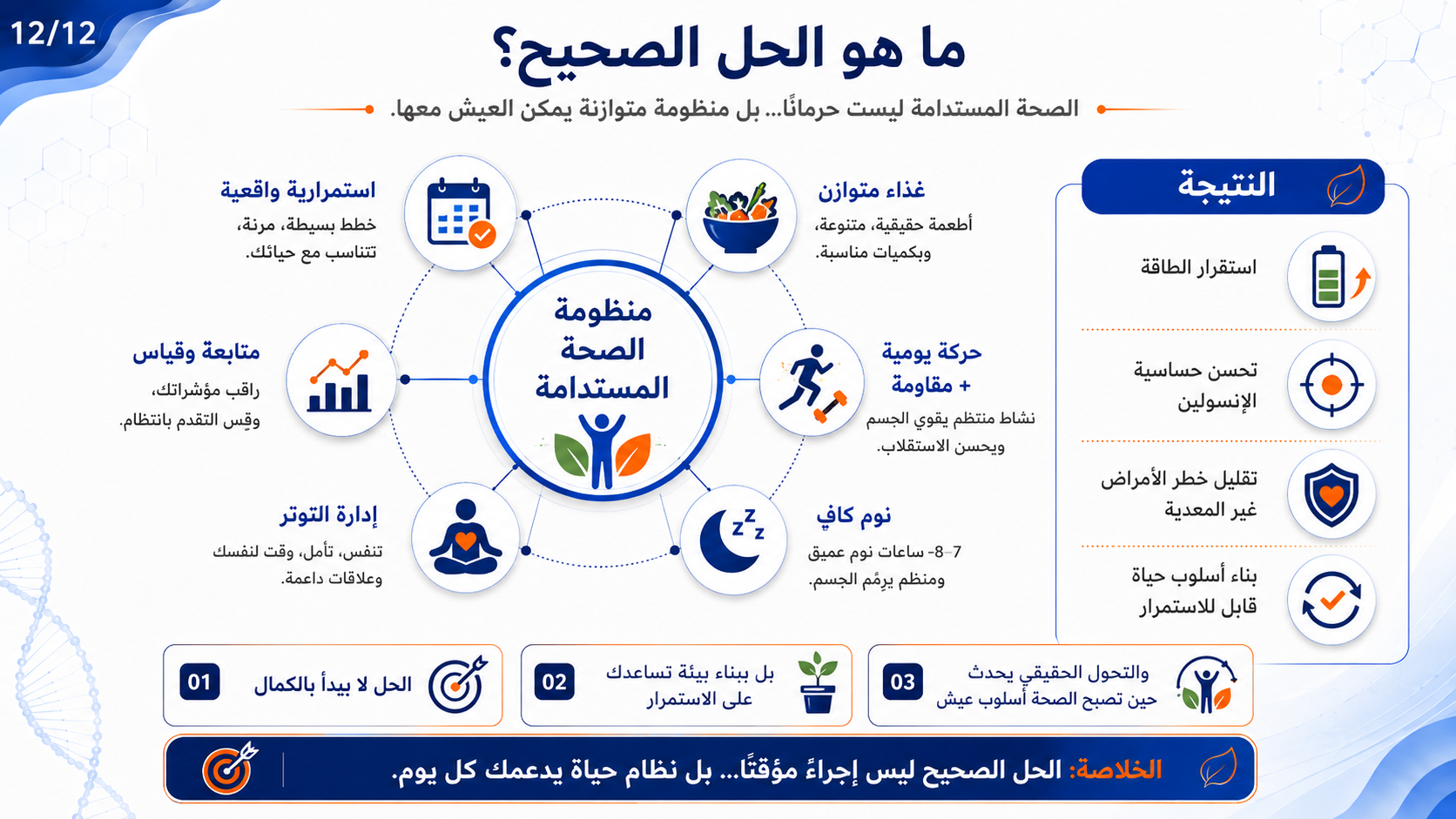 The image shows a support network: family, friends, and helpful technologies. The explanation clarifies that sustainability is easier with a supportive structure—human or technical.
- The “Feel Great” pathway — a route to learn about the system and products (practical information)
This section provides a clear pathway to learn about the system and official products without attributing any therapeutic benefit or specific result to them. If you wish to move from reading to trying the official products, there is one recommended informational pathway:
Start from the step that suits you
If you would like to turn this guide into a simple repeatable plan, start from the Metabolic Health Hub, then use the Metabolic Health Compass as an educational tool to organize your questions and habits. You can also move to the BMI calculator, calorie calculator, water calculator, and fasting calculator to better understand your daily routine. For broader reading, review the research library and the Feel Great page.
Getting started with Member
If you want to start through the official product pathway, choose the official Member link. After completing the order, you can send your confirmation via WhatsApp so we can introduce you to the next suitable step and the available support group. This article is educational and supportive for building habits, and it is not a medical diagnosis or a promise of a specific result.
Important note: any decision to use products or programs should be made with your informed consent and clear understanding of the product, and this text does not constitute medical advice or a recommendation of a specific outcome.
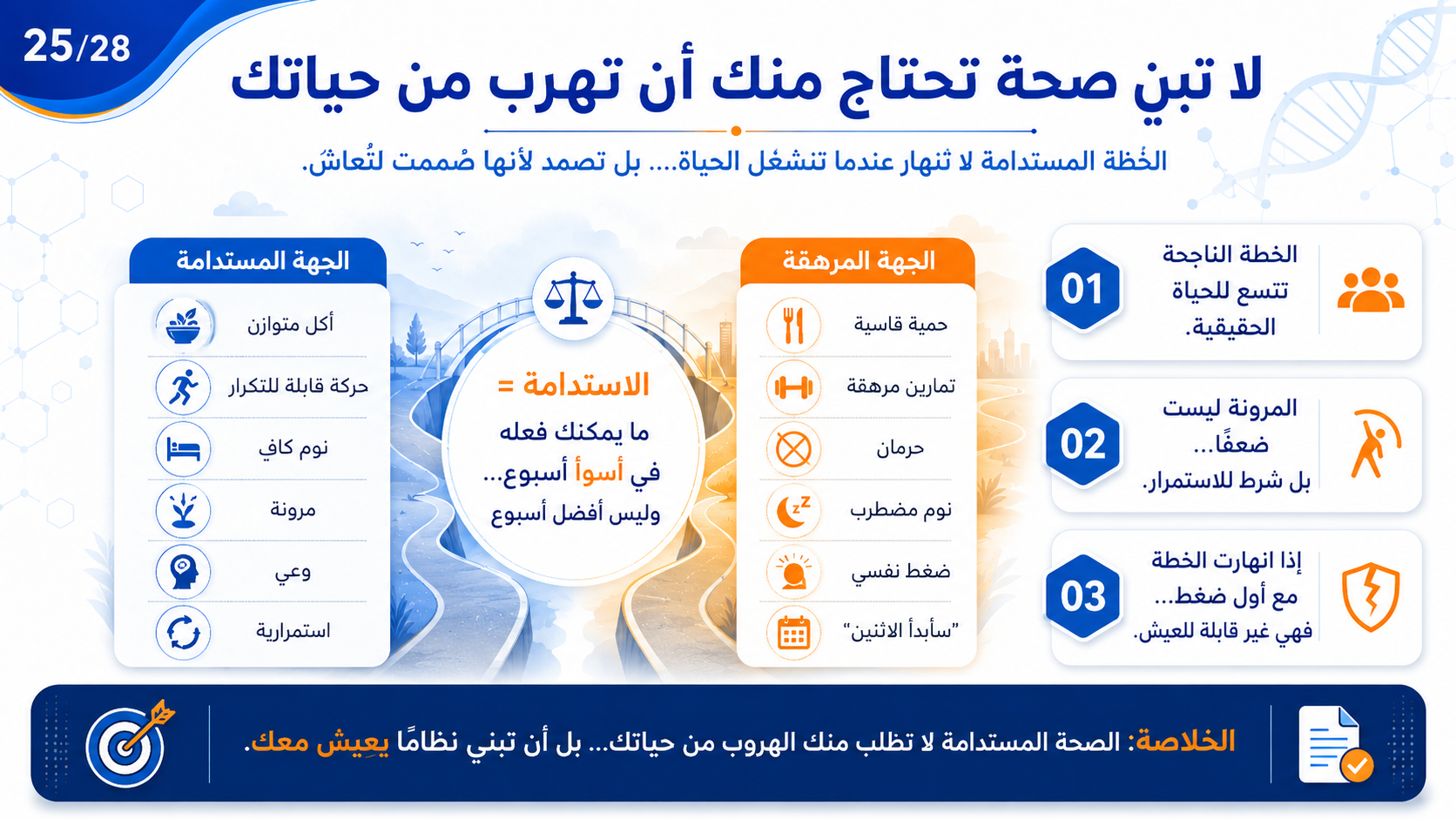 The image brings us closer to the idea of integrated health that fits real daily life—work, family, travel. The explanation emphasizes that realistic solutions are built to fit ordinary days, not only ideal ones.
- Final practical and encouraging tips
- Start small and accept that beginnings are often awkward.
- Prioritize simple rules over striving for perfection.
- Celebrate continuity: two days, a week, then two weeks of small consistent effort.
- Ask for support when needed and share your progress with someone you trust.
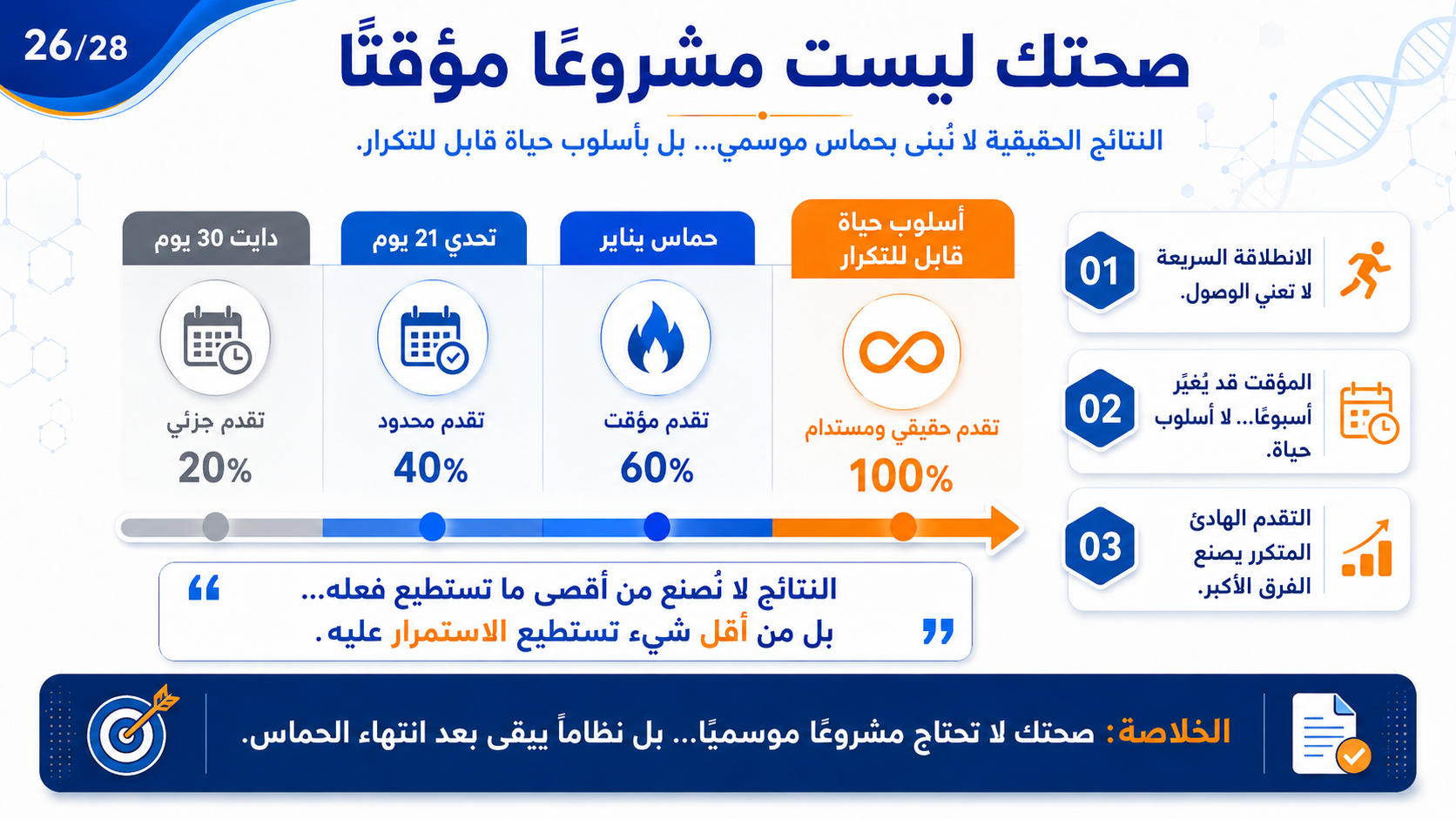
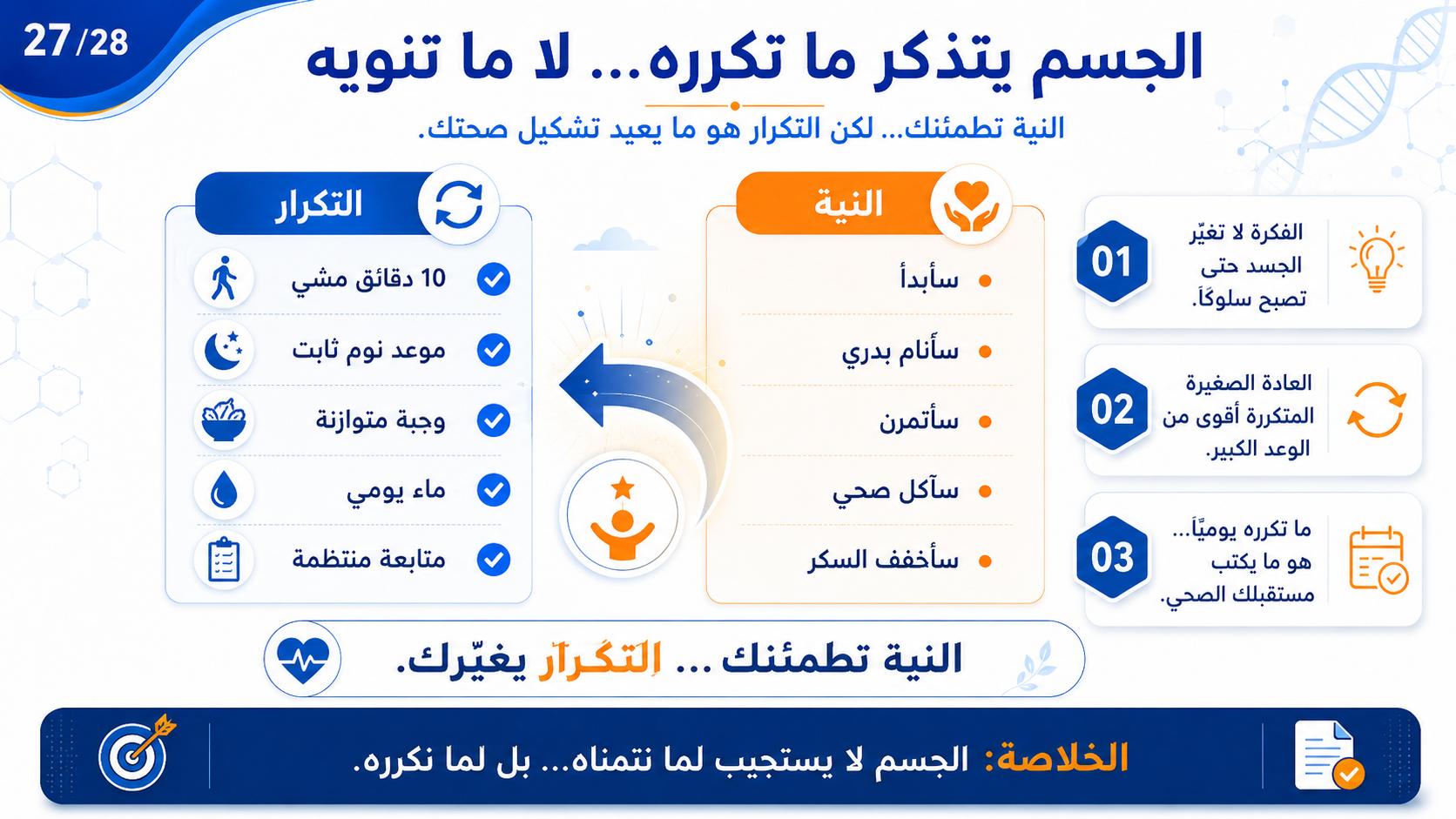 The image visually suggests that mindful repetition of small habits is the essence of sustainability: a simple repetition reflects strength in the long term.
Conclusion
Sustainable metabolic health is not a task for today or this week only; it is an investment in your body’s ability to accompany you through life. It starts from one repeatable habit and grows by accumulation. There is no need for quick promises or temporary solutions; work patiently with a simple plan, and seek appropriate support when needed. For general information about risk factors for chronic diseases and lifestyle, see World Health Organization resources on noncommunicable diseases and risk factors.
References and useful links
- World Health Organization information: noncommunicable diseases and risk factors. [World Health Organization — Noncommunicable Diseases].(https://www.who.int/news-room/fact-sheets/detail/noncommunicable-diseases)
- Data and methodologies on risk factors from the World Health Organization. [World Health Organization — Risk Factors].(https://www.who.int/data/gho/data/themes/topics/topic-details/GHO/ncd-risk-factors)
Final notice: this article is for education and support and is not a diagnosis or treatment. If you have medical questions specific to your situation, consult a qualified healthcare provider.
Visual appendix: a reminder of the steps that live with you


Start from the step that suits you
If you would like to turn this guide into a simple repeatable plan, start from the Metabolic Health Hub, then use the Metabolic Health Compass as an educational tool to organize your questions and habits. You can also move to the BMI calculator, calorie calculator, water calculator, and fasting calculator to better understand your daily routine. For broader reading, review the research library and the Feel Great page.
Getting started with Member
If you want to start through the official product pathway, choose the official Member link. After completing the order, you can send your confirmation via WhatsApp so we can introduce you to the next suitable step and the available support group. This article is educational and supportive for building habits, and it is not a medical diagnosis or a promise of a specific result.
Related ATHAR paths
To turn the idea into a practical next step, explore the free health calculators and choose the tool that matches what you want to notice in your day.