Understanding Bone Density Scan Terminology for Seniors: DEXA Guide
Author: Feras Alayed
Published:
Updated:
Category: healthy-aging
Reading Time: 18 minutes
Key Takeaways
- Understanding bone density scan terminology for seniors helps reduce anxiety and builds a foundation for productive doctor visits.
- The T-Score compares your bone density to a healthy young adult, while the Z-Score compares it to peers of your own age.
- A DEXA scan is a quick, painless, and low-radiation procedure considered the gold standard for assessing bone health.
- A negative number on your report is an observational metric, not a definitive prediction of future fractures.
- Always discuss your DEXA report with a licensed healthcare professional, as the report alone is not a diagnosis or a treatment plan.
TL;DR
This comprehensive guide simplifies the complex terminology found in a bone density (DEXA) scan report. By breaking down concepts like T-Scores, Z-Scores, and the FRAX tool, we aim to empower seniors to read their results with confidence. Remember, this educational resource is designed to help you organize your questions and observations before consulting with a licensed medical professional, who is the ultimate authority on your health.
Introduction: Your Journey to Understanding Bone Health
The story often begins with a routine check-up. As part of a proactive approach to aging, your doctor recommends a test to check the status of your bones. A few days later, you receive a report filled with numbers, unfamiliar acronyms, and charts displaying green, yellow, and red zones. For many seniors, this moment can be fraught with anxiety. What do these negative numbers mean? Are my bones fragile? How am I supposed to interpret this complex medical data? Feeling overwhelmed by medical terminology is a completely normal experience, especially when it concerns our mobility and long-term independence. The real challenge isn't the scan itself, but the knowledge gap between technical clinical terms and the practical understanding needed to make informed lifestyle choices.
This is where the importance of this guide becomes clear. Our goal is to bridge that gap by demystifying and understanding bone density scan terminology for seniors. When you grasp the basics of a DEXA report, you transition from a passive recipient of medical data to an active participant in your health journey. The report transforms from a source of worry into a navigational tool that helps you ask the right questions and understand your doctor's recommendations regarding nutrition, physical activity, and overall wellness. It is crucial to state upfront that this article is strictly educational. No guide can replace the comprehensive clinical evaluation provided by a licensed physician. Our aim is to equip you with the knowledge to make your medical consultations more clear and productive, supporting a holistic approach to healthy aging.
What is a Bone Density Scan (DEXA)?
A DEXA scan, which stands for Dual-Energy X-ray Absorptiometry, is the most common and accurate imaging technique used to evaluate bone health. In simple terms, a DEXA scan is a specialized type of X-ray that measures the amount of minerals (such as calcium) present in specific areas of your bones. The scan typically focuses on the lower spine and the hip (femoral neck). These specific areas are chosen because they are highly susceptible to changes as we age and are critical for maintaining mobility and structural support.
How does this technology work? The machine passes two invisible, very low-dose X-ray beams through the body. One beam is absorbed by soft tissue (like muscle and fat), while the other is absorbed by the bone. By calculating the difference between the two beams, the computer can determine the bone mineral density with high precision. It is worth noting that the amount of radiation used in a DEXA scan is extremely low—roughly equivalent to the natural background radiation you experience in your daily environment over a few days, making it a very safe procedure for seniors.
The experience of getting the scan is straightforward, comfortable, and requires minimal preparation. You simply lie on a padded table while the scanner arm passes slowly over your body. It is completely painless, requires no injections or contrast dyes, and the entire procedure usually takes between 10 to 20 minutes. Understanding the nature of this test can alleviate much of the apprehension associated with it. It is not a test that diagnoses pain; rather, it is a precise measurement tool that helps doctors see what cannot be seen with the naked eye or standard X-rays, providing a proactive window into skeletal health.
Why Understanding Bone Density Scan Terminology for Seniors Matters
As the body ages, it goes through natural physiological changes, including a shift in the bone remodeling process. In our youth, the body builds new bone faster than it breaks down old bone. However, as we enter our senior years, this process gradually reverses. This is where the bone density scan serves as a vital monitoring tool. Understanding bone density scan terminology for seniors is not just an academic exercise; it is a fundamental step toward health empowerment. When you understand what the numbers mean, you can connect them to your daily lifestyle choices, such as nutrition and movement, which play a role in supporting your overall well-being.
First and foremost, understanding provides prompts for observing stress-related patterns. Many older adults feel a sense of dread when they see negative numbers on their reports. Knowing that these numbers are statistical comparisons rather than definitive judgments helps mitigate anxiety. Secondly, comprehension enhances the quality of communication with your healthcare provider. When you sit down with your doctor and already know the difference between a T-Score and a Z-Score, you don't spend the consultation time trying to grasp the basics. Instead, you can move directly to discussing practical steps, available options, and how to integrate recommendations into your daily routine. This level of dialogue builds trust and ensures you receive care tailored to your specific needs.
Furthermore, reading a DEXA report with awareness helps you appreciate the importance of a holistic approach to health. Bones do not exist in isolation. Bone health is intricately linked to muscle health, balance, and proper nutrition. By understanding the report, you might realize the need to explore related topics, such as understanding muscle maintenance basics and sarcopenia terminology, since strong muscles support and protect bones. Knowledge is the most powerful tool you have to guide your aging process toward greater health and independence.
Breaking Down DEXA Report Basics: T-Score and Z-Score
When you look at your bone density scan report, the two most important numbers you will look for are the T-Score and the Z-Score. These numbers form the core of the report, and understanding them unlocks much of the complex medical data. Let's break down each of these terms in a clear, educational manner.
What is a T-Score?
The T-Score is the most critical and widely used metric in DEXA reports for seniors. Simply put, a T-Score is a number that shows how much your current bone density differs from the bone density of a healthy young adult (usually in their 30s) of the same sex. Why compare to a 30-year-old? Because that is typically the age when human bones reach their peak mass and strength. This difference is measured in units called Standard Deviations. A score of zero means your bone density is exactly equal to that of the reference young adult. Positive numbers indicate higher density, while negative numbers indicate lower density.
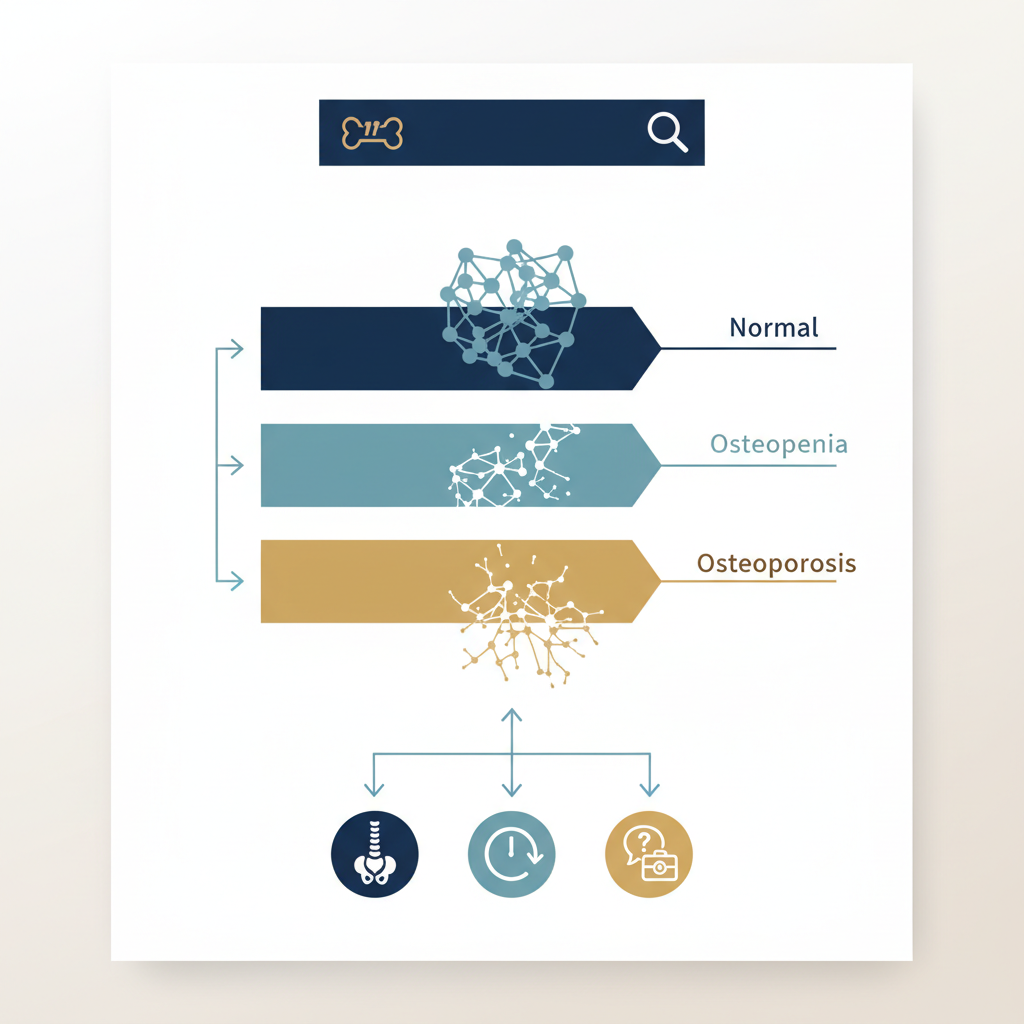
The World Health Organization (WHO) uses a specific classification system based on the T-Score to help interpret the results:
- Normal: If your T-Score is -1.0 or above (e.g., -0.5, 0, or +1). This indicates that your bone density is considered within the expected normal range.
- Osteopenia (Low Bone Mass): If your T-Score is between -1.1 and -2.4. This means your bone density is lower than normal, but not low enough to be classified as osteoporosis. It is an observational marker that suggests a need to pay attention to lifestyle and nutrition.
- Osteoporosis: If your T-Score is -2.5 or lower (e.g., -2.8 or -3.0). This indicates a significant decrease in bone density, which may require a deeper discussion with your doctor about support options and monitoring.
What is a Z-Score?
While the T-Score compares your bones to someone at their peak youth, the Z-Score compares your bone density to people of your own age group, sex, and sometimes ethnic background. This number answers the question: How do my bones look compared to my peers? If your Z-Score is close to zero, it means your bone density is typical for someone your age.
Generally, the Z-Score is not used to diagnose osteoporosis in seniors; rather, it is an additional tool for the physician. If a Z-Score is unusually low (typically below -2.0), it might indicate to the doctor that factors other than normal aging are affecting bone health, such as long-term use of certain medications or specific health conditions. This might prompt further medical evaluation. Understanding the distinction between these two scores gives you a clearer picture of what your doctor is focusing on during the review.
Common Bone Density Scan Terminology Explained
Beyond the T-Score and Z-Score, a DEXA report contains several other terms and acronyms that might seem complex at first glance. To simplify things, we have prepared this educational glossary explaining the key terms you might encounter. Remember, understanding bone density scan terminology for seniors helps organize your thoughts before consulting your doctor.
- BMD (Bone Mineral Density): This is the actual physical measurement taken by the machine, usually expressed in grams per square centimeter (g/cm²). It represents the amount of minerals in a specific area of bone. Doctors use this raw number to calculate the T-Score and Z-Score.
- BMC (Bone Mineral Content): This refers to the total amount of minerals in the scanned bone, measured in grams. It differs from density in that it does not account for the area of the bone.
- FRAX Score (Fracture Risk Assessment Tool): This is a calculation tool developed by the University of Sheffield, often integrated into modern DEXA reports. It uses your personal data (age, weight, height, family history, smoking status, etc.) along with your T-Score to estimate the probability of a major fracture over the next 10 years. This helps doctors make comprehensive decisions that don't rely solely on bone density.
- Lumbar Spine: Refers to the lower back. The scan usually measures vertebrae L1 through L4. This area is important because changes in bone density often appear here early on.
- Femoral Neck: The upper part of the thigh bone that connects to the pelvis. Measuring this area is crucial as it is a common and significant point for monitoring bone health in seniors.
- Total Hip: A measurement that includes the femoral neck and surrounding areas to provide a comprehensive assessment of hip joint strength.
- TBS (Trabecular Bone Score): An advanced software tool that can be added to a DEXA machine. While BMD measures the amount of mineral, TBS evaluates the microarchitecture (quality) of the bone. Bone is not just a solid block; it resembles a sponge inside. TBS helps assess the strength of this spongy structure.
By familiarizing yourself with these terms, you can read the report not as a puzzle, but as a map detailing different aspects of your physical health, making it easier to explore related topics like healthy aging and longevity and how to support your body holistically.
Common Mistakes in Reading Bone Density Reports
When trying to understand bone density scan terminology for seniors, it is easy to fall into informational traps or misinterpretations. These mistakes can lead to unnecessary anxiety or an inaccurate understanding of one's health status. In this section, we clarify some common concepts that need verification and provide the correct educational context.
| Common Information (Misconception) | Needs Verification (Correct Educational Context) |
|---|---|
| A negative score means a bone will inevitably break soon. | A negative score (like a low T-Score) is a statistical metric comparing density to a 30-year-old. It does not predict the future but indicates the level of attention needed for lifestyle and medical monitoring. |
| If the scan is normal, there is no need to care for bone health. | Bone health requires ongoing maintenance. A normal scan is a great starting point, but maintaining proper nutrition and physical activity remains essential for supporting healthy aging. |
| A DEXA scan determines the cause of low bone density. | The scan only measures density; it does not diagnose the underlying cause. Identifying reasons requires a comprehensive medical evaluation, including health history and blood tests by a licensed doctor. |
| The scan should be repeated every few months to monitor progress. | Bone density changes very slowly. Doctors typically recommend re-testing every one to two years, or based on clinical assessment, because shorter intervals may not show measurable changes. |
| Osteopenia is a disease that always leads to Osteoporosis. | Osteopenia is a descriptive term for low bone mass, not a disease itself. It serves as a prompt to discuss preventive lifestyle strategies with your doctor; it does not guarantee progression to osteoporosis. |
How to Organize Your Notes and Prepare for the Doctor
Now that you have a better grasp of understanding bone density scan terminology for seniors, the next practical step is preparing for your doctor's appointment. Going into the clinic with organized thoughts and clear notes can significantly improve the quality of your consultation. Here is a structured approach to help you prepare:
- Create a Health Folder: Keep a dedicated physical or digital folder for your DEXA reports. If you have had previous scans, bring them along. Doctors look for trends over time, and comparing a new scan to an old one provides valuable context.
- List Your Medications and Supplements: Write down every medication, vitamin, and supplement you are currently taking, including the dosages. Certain medications can affect bone health, and your doctor needs a complete picture to make accurate assessments.
- Document Your Lifestyle Factors: Be prepared to discuss your daily habits. Note down your typical diet, focusing on your intake of calcium and protein. You can read more about this in our guide on nutrition and healthy aging: protein intake for aging adults. Also, note your physical activity level and any recent falls or balance issues.
- Highlight Areas of Confusion: If there is a specific term or number on the report that you don't understand, highlight it. Don't hesitate to ask for clarification; your doctor is there to help you understand your health.
By taking these steps, you shift the dynamic of the appointment. You are no longer just receiving information; you are actively collaborating with your healthcare provider to build a strategy that suits your life.
Important Questions to Ask Your Healthcare Provider
To make the most of your consultation, it is helpful to have a list of specific questions ready. These questions are designed to move the conversation from merely reading numbers to actionable, personalized advice. Consider asking your licensed medical professional the following:
- Can you explain what my specific T-Score and Z-Score mean in the context of my overall health?
- Based on my FRAX score, what is my estimated risk, and how should we address it?
- Are there any medications I am currently taking that might be affecting my bone density?
- Should we run any additional blood tests (like Vitamin D or calcium levels) to get a clearer picture?
- What specific types of physical activities or exercises are safe and recommended for my current bone status?
- How does my current nutritional intake align with my bone health needs? (You might reference resources like healthy aging: nutrition guide for seniors during this discussion).
- When should I schedule my next DEXA scan to monitor any changes?
Asking these questions ensures that you leave the clinic with a clear understanding of your current status and a structured plan for the future, rather than just a piece of paper with numbers.
The Role of Lifestyle in Supporting Bone Health and Healthy Aging
While understanding the terminology is crucial, the ultimate goal is to use this knowledge to support your well-being. Bone health is a dynamic process influenced heavily by daily habits. While a DEXA report provides a snapshot, your lifestyle choices provide the ongoing support your skeleton needs. It is important to remember that lifestyle changes are part of a broader supportive approach and should be discussed with your doctor.
Nutrition plays a foundational role. Adequate intake of essential nutrients provides the building blocks for bone maintenance. This includes not only well-known minerals like calcium and vitamins like Vitamin D but also adequate protein, which makes up a significant portion of bone structure. For a deeper dive into how specific dietary choices support aging, you might explore topics like foods high in spermidine: a functional nutrition guide to autophagy and longevity, which discusses cellular health in a broader context.
Physical activity is equally important. Weight-bearing exercises and resistance training signal the body to maintain bone strength. Activities like walking, light weightlifting, or even gardening can be beneficial. However, the type and intensity of exercise should always be tailored to your individual capabilities and cleared by your healthcare provider, especially if your DEXA report indicates lower bone density. Additionally, maintaining overall physical health, including cognitive function, contributes to a safer lifestyle with a lower risk of falls. You can learn more about this holistic connection in our article on healthy aging: how to prevent cognitive decline as you age.
Ultimately, a DEXA scan is a tool for awareness. By combining the insights from your report with a proactive lifestyle and regular medical guidance, you can navigate the aging process with greater confidence and vitality.
Frequently Asked Questions
What is the difference between a DEXA scan and a regular X-ray?
A regular X-ray is typically used to diagnose broken bones or other acute issues, but it is not sensitive enough to detect subtle changes in bone density. A DEXA scan uses two distinct, low-dose X-ray beams specifically calibrated to measure bone mineral density with high precision.
Do I need to prepare for a bone density scan?
Preparation is minimal. You can eat and drink normally on the day of the test. However, you should avoid taking calcium supplements for 24 hours before the scan, and wear comfortable clothing without metal zippers or buttons.
Is the radiation from a DEXA scan dangerous for seniors?
No, the radiation exposure from a DEXA scan is extremely low. It is significantly less than a standard chest X-ray and is comparable to the natural background radiation you are exposed to over a few days.
Can a DEXA scan diagnose arthritis?
No, a DEXA scan is specifically designed to measure bone density. While the technician might notice signs of arthritis on the scan, it is not the appropriate tool for diagnosing or evaluating arthritis.
Why did my doctor order a DEXA scan if I feel fine?
Bone loss is often a 'silent' process, meaning it occurs without symptoms or pain until a fracture happens. Doctors order DEXA scans as a proactive screening tool to assess bone health before any issues arise.
What does it mean if my T-Score is different in my hip compared to my spine?
It is very common to have different scores in different parts of the body. Bone density can vary based on how you use your body, genetics, and other factors. Your doctor will look at the lowest score to guide their recommendations.
Can lifestyle changes improve my T-Score?
Lifestyle changes, such as improved nutrition and weight-bearing exercise, are essential for supporting bone health and slowing down bone loss. However, significant improvements in the T-Score itself may require medical intervention, which should be discussed with your doctor.
How often should a senior get a bone density scan?
The frequency depends on your initial results and overall health profile. Generally, doctors recommend a follow-up scan every 1 to 2 years to monitor changes, but your physician will determine the best schedule for you.
Conclusion and Next Steps
Understanding bone density scan terminology for seniors is a powerful step toward taking charge of your health as you age. By demystifying terms like T-Score, Z-Score, and the FRAX tool, you transform a potentially intimidating medical report into a valuable tool for proactive health management. Remember that the numbers on your report are observational data points designed to guide a conversation with your healthcare provider, not definitive conclusions about your future mobility.
Your next step is to organize your notes, gather your questions, and schedule a consultation with your licensed medical professional. Use this knowledge to engage in a meaningful dialogue about your nutrition, physical activity, and overall wellness strategy. For more insights on how nutrition supports your skeletal structure, we encourage you to read our guide on bone density nutrition for seniors: healthy aging guide.
Medical Disclaimer: The information provided in this article is for educational and informational purposes only and does not constitute medical advice, diagnosis, or treatment. Always seek the advice of your physician or other qualified health provider with any questions you may have regarding a medical condition or the interpretation of your DEXA scan results.

Ready to choose a clearer health starting point?
Start with a short educational assessment to explore tools and resources that may fit your goal. It is not a medical diagnosis.
Continue learning at Healthy Aging & Longevity.