Understanding Cholesterol Test Terms: Your Practical Guide to Decoding Lab Results
Author: Feras Alayed
Published:
Updated:
Category: heart-health
Reading Time: 6 minutes
- Understanding cholesterol test terms is the first step toward taking control of your heart health.
- Cholesterol is not just one number, but a balance of different types of lipids.
- Linking test results to food labels helps in making better shopping decisions.
- Preparing for your medical appointment ensures you get the most out of your consultation.
The Morning Email: Facing the Mysterious Numbers
Imagine you woke up today and opened your email to find a message from the lab titled "Blood Test Results." You open the attachment, and instead of clear words, you find a list of acronyms: LDL, HDL, VLDL, and Triglycerides. For many, this paper feels like it's written in a foreign language, sparking anxiety rather than providing clarity. Understanding cholesterol test terms is not just a cognitive luxury; it is an empowerment tool that allows you to actively participate in your health journey.
When you look at "Total Cholesterol," you are looking at the overall sum of all cholesterol components in your blood. But this number alone doesn't tell the whole story. Much like a household budget, it’s not enough to know the total amount; you need to know where the money is going and where it’s coming from. This is where the specific details we will cover in the following sections come in.
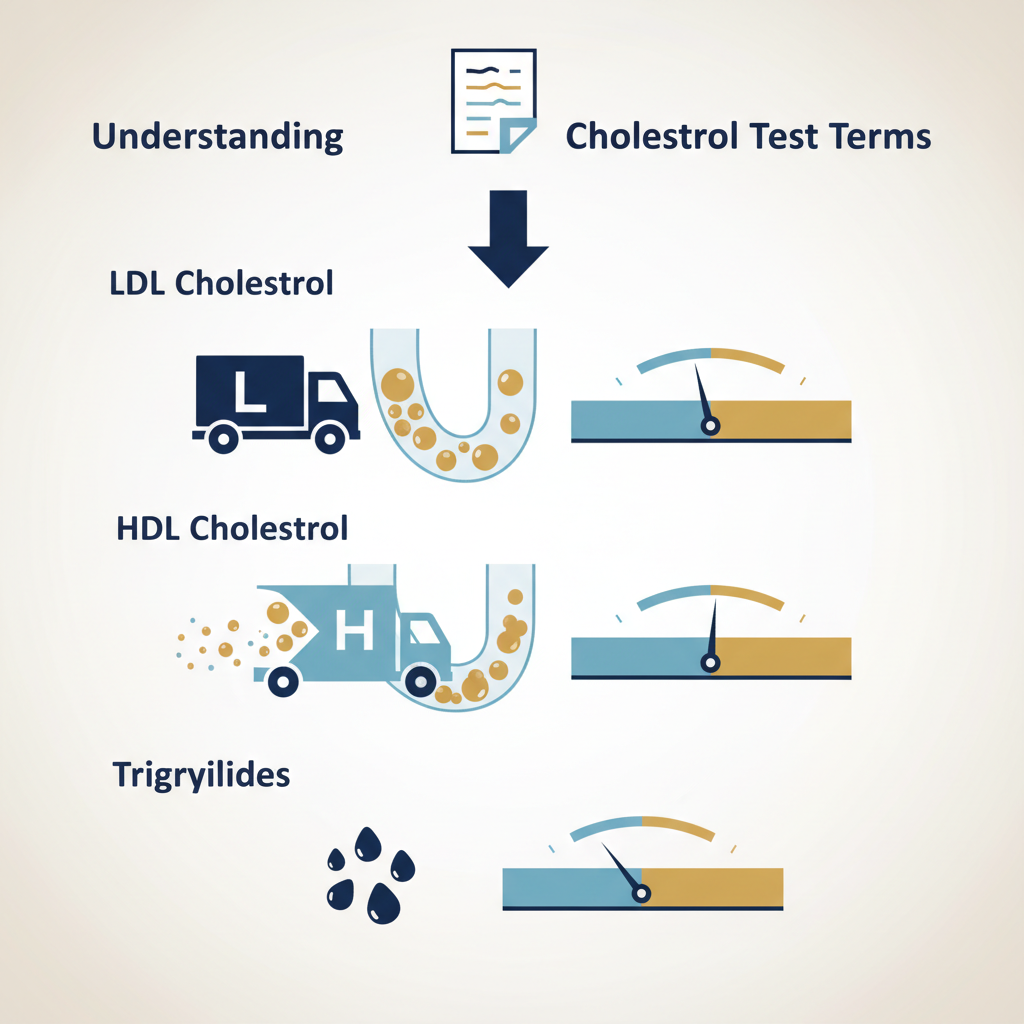
The Logic of LDL and HDL: Delivery Trucks and Cleanup Crews
Let’s move to the next scene in your day: you are sitting down for breakfast and trying to understand the difference between "good" and "bad" cholesterol. To simplify it, think of your body as a massive city with a road network (blood vessels).
LDL: The Delivery Trucks That Might Overload
LDL (Low-Density Lipoprotein) is often known as "bad" cholesterol. Its primary job is to transport cholesterol from the liver to the body's cells that need it to build membranes and produce hormones. The problem starts when there are too many of these "trucks." Instead of reaching their destination, they begin to dump their cargo on the artery walls, which can lead to narrowing over time. Understanding this term helps you realize why doctors focus on keeping this number within certain limits.
HDL: The Skilled Cleanup Crew
On the other side, we find HDL (High-Density Lipoprotein), the "hero" of this story. Its job is like a cleanup crew roaming the city streets, picking up excess cholesterol from the blood and returning it to the liver to be disposed of or recycled. The more of these crews you have (i.e., the higher the HDL number), the better your body can protect its blood vessels. This balance is the core of Heart Health Education that we strive to promote.
Triglycerides: The Excess Energy Stores
As you prepare for work, you might wonder about another term that always appears alongside cholesterol: Triglycerides. These are not cholesterol in the literal sense, but the most common type of fat in the body. When you eat, your body converts any calories it doesn't need right away into triglycerides and stores them in fat cells.
If your results indicate an elevation in this type, it might be time to look at your daily habits. You can check out Triglycerides Lowering Natural Strategies: A Practical, Evidence‑Based Guide for ideas on how to support your levels naturally through simple lifestyle changes, such as reducing added sugars and increasing physical activity.
At the Grocery Store: How to Translate Numbers to Purchases
Now, you are at the supermarket after a long workday. How does understanding cholesterol test terms help you here? When you pick up a bottle of oil or a box of cereal, you will find the Nutrition Facts label. The knowledge you gained from the lab report now becomes your compass.
If your LDL level is high, you will look for products with lower saturated and trans fats. If you want to support HDL, you might lean toward foods rich in unsaturated fats like olive oil and nuts. To do this effectively, it is essential to master the skill of label reading, which we cover in detail in our article on Reading Nutrition Labels for Heart Health: A Comprehensive Guide to Smart Food Choices. Linking the number in your report to the number on the food package is the most powerful preventive act you can do daily.
Quick Review Table for Cholesterol Terms
| Term | Function in the Body | Impact on Heart |
|---|---|---|
| Total Cholesterol | Overall sum of fats in the blood | General indicator needing detail |
| LDL | Transports cholesterol to cells | Excess can lead to artery deposits |
| HDL | Returns excess cholesterol to liver | Acts as a protective factor for vessels |
| Triglycerides | Stores excess energy | High levels often linked to lifestyle/sugar |
At the Doctor’s Office: Turning Terms into Smart Questions
Your appointment with the doctor to discuss the results arrives. Instead of just sitting and listening, you can now lead the conversation. Understanding cholesterol test terms gives you the confidence to ask questions that go beyond "Am I okay?".
You can ask: "Based on my current LDL level, what dietary changes are most impactful?" or "How does my HDL to Total Cholesterol ratio affect my heart risk assessment?". To ensure you don't forget any important details, we have prepared Your Comprehensive Heart Health Appointment Question List and Result Guide. Using this list transforms the visit from a routine procedure into a strategic action plan for your health.
Long-term Tracking: Building a Heart Health Record
Heart health is not a single snapshot in time; it is a long-term movie. Understanding the terms allows you to compare this year's results with last year's. Did your triglyceride levels improve after you committed to walking? Did your HDL stay stable despite work stress?
Remember that numbers alone do not define your health identity, but they provide traffic signals that help you adjust your course. Continuing to learn and applying this knowledge in daily life situations—from choosing lunch to how you spend your free time—is what makes the real difference in the long run.

Explore health education
Review the educational guides and practical tools related to this topic.
Explore the education hub