Understanding Hormone Health Terminology: A Comprehensive Guide to Your Endocrine System
Author: Feras Alayed
Published:
Updated:
Category: hormonal-health
Reading Time: 7 minutes
- Hormones act as chemical messengers regulating vital body functions.
- Distinguishing between stimulating hormones and actual hormones is key for lab literacy.
- Hormonal health literacy empowers you to ask the right questions during medical visits.
Basics of Endocrine Language: What Are Hormones?
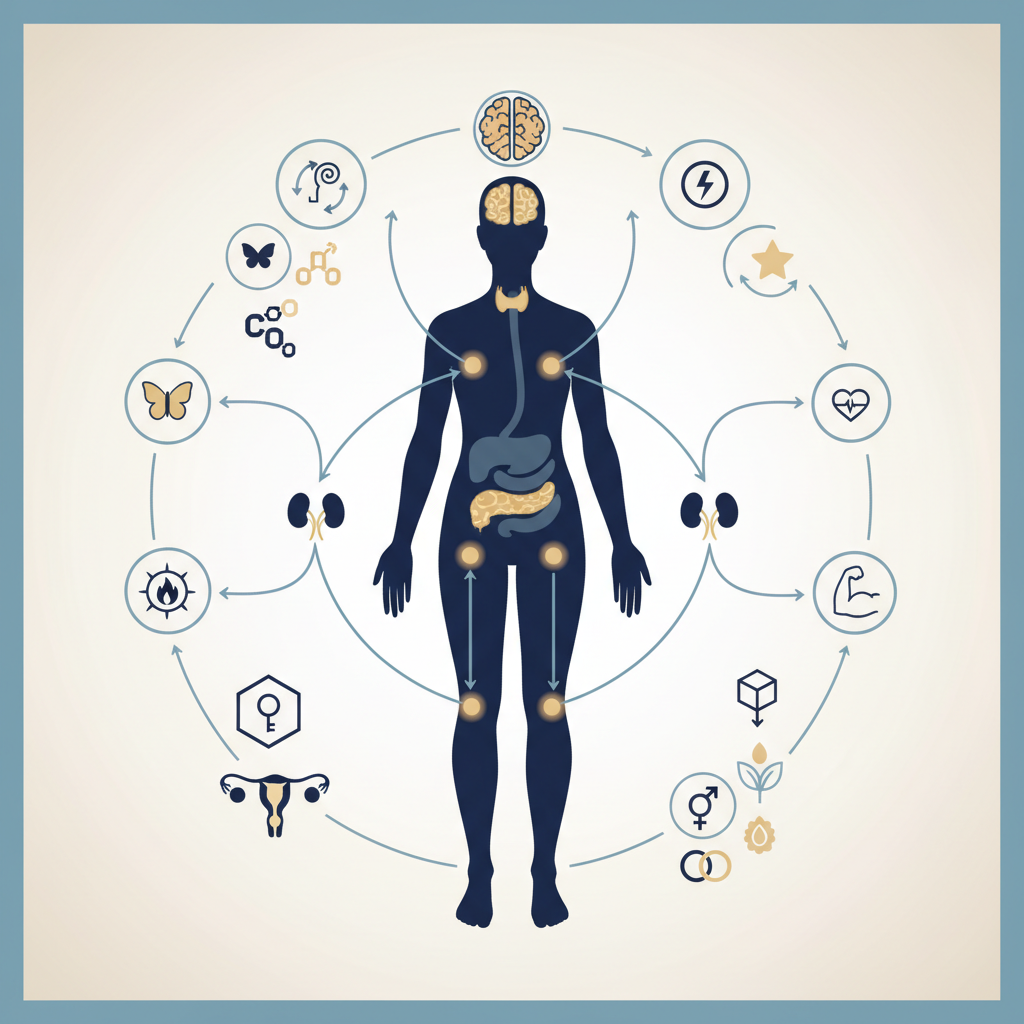
When we discuss hormone health terminology, we start with the fundamental unit: the hormone itself. Hormones are powerful chemical messengers produced by the endocrine system that travel through the bloodstream to tell tissues and organs what to do. Think of hormones as keys and cell receptors as locks; a hormone can only perform its function if it finds the right lock. The endocrine system consists of major glands like the pituitary (often called the master gland because it controls others), the thyroid, the adrenals, and the pancreas. Understanding this network requires knowing terms like 'Gland' (the organ secreting the substance) and 'Receptor' (the protein on a cell that receives the hormonal signal). In daily life, we often use the word 'hormonal' loosely to describe moods, but medically, they are responsible for everything from growth and metabolism to sleep cycles and stress responses. Having health information literacy regarding these terms makes you better equipped to understand changes in your body over time, whether they are age-related or require professional consultation.
Thyroid and Metabolic Terminology
The thyroid gland is the body's engine, and understanding its related terminology is vital. The most common term is TSH, or Thyroid Stimulating Hormone. It is crucial to realize that TSH is not produced by the thyroid itself, but by the pituitary gland to stimulate the thyroid to work. High TSH levels often mean the body is asking the thyroid to work harder (hypothyroidism), and vice versa. Other terms include T4 (thyroxine), the inactive hormone, and T3 (triiodothyronine), the active hormone that cells actually use. When preparing for your next visit, reviewing 50 Essential Questions for a Thyroid Health Appointment: Empowering Your Health Journey can help you apply these terms practically and ask precise questions about Free T3 and Free T4 levels. You should also understand 'Thyroid Antibodies,' which indicate autoimmune activity that might affect gland function. In many cultures, thyroid awareness is growing, but confusion between 'hypo' and 'hyper' remains common, so mastering these terms helps in identifying the correct path for healthcare.
Stress and Energy Hormones: Cortisol and Adrenaline
In our fast-paced world, 'cortisol' has become part of daily conversation, but what does it mean exactly in the context of hormone health terminology? Cortisol is a steroid hormone produced by the adrenal glands, known as the 'fight or flight' hormone. Its primary role is helping the body respond to stress, regulating blood pressure, and metabolizing proteins and carbohydrates. The term 'Cortisol Diurnal Rhythm' refers to how hormone levels fluctuate over 24 hours, peaking in the morning to help us wake up and dropping at night to allow sleep. There is also 'Adrenaline' (epinephrine), which provides an immediate energy boost in emergencies. Another important term here is the 'HPA axis' (Hypothalamic-Pituitary-Adrenal axis), the complex communication system between the brain and the adrenal glands. Understanding these terms helps us realize that stress is not just a psychological feeling but a series of biochemical reactions affecting every cell in the body.
Reproductive Hormone Glossary: Beyond the Basics
Reproductive hormones aren't just about fertility; they impact bone health, heart health, and brain function. Estrogen and progesterone are the primary hormones in women, while testosterone is primary in men, though both sexes have all three in varying amounts. The term 'Estrogen Dominance' is sometimes used to describe an imbalance between estrogen and progesterone, but it should be used with clinical caution. Other hormones like LH (Luteinizing Hormone) and FSH (Follicle-Stimulating Hormone) play pivotal roles in regulating menstrual cycles and sperm production. In the realm of health information literacy, one must distinguish between 'Bioidentical Hormones' and 'Synthetic Hormones.' Learning these terms breaks down barriers of embarrassment and facilitates accurate medical consultations regarding topics like PCOS, menopause, or testosterone deficiency.
Understanding Lab Results and Units
One of the most frustrating aspects of hormone health terminology is reading lab reports. The 'Reference Range' refers to the set of values considered 'normal' for the majority of the population, but what is 'normal' may not be 'optimal' for you as an individual. Hormones are measured in tiny units like nanograms per deciliter (ng/dL) or milli-international units per liter (mIU/L). It is important to understand the difference between 'Total' and 'Free' hormones. Total hormone includes those bound to carrier proteins (like SHBG), while Free hormone is the active portion available for cells to use. When reviewing your results, you might encounter terms like 'Sensitivity' and 'Specificity' of the test, which describe how accurately the test detects an imbalance. Awareness of these details makes you an active partner with your doctor in interpreting results rather than just a recipient of information.
Feedback Loops and Homeostasis
The body operates on a system similar to a thermostat, called 'Negative Feedback.' When levels of a certain hormone rise in the blood, the brain signals the responsible gland to stop production. 'Homeostasis' is the state the body strives for where all systems are in harmony. There is also 'Positive Feedback,' which is less common and occurs in specific instances like childbirth. Understanding these mechanisms explains why taking external hormones (like steroids or certain medications) can cause natural glands to stop working, known as 'Suppression.' This part of hormone health terminology is essential for understanding how medication and lifestyle affect the body's internal balance over the long term.
Common Concepts Needing Verification
- Myth: 'Adrenal Fatigue' is a recognized medical diagnosis. Fact: The accurate medical term is 'Adrenal Insufficiency' or 'HPA axis dysfunction'; adrenal fatigue is a popular but non-clinical term.
- Myth: Hormones only affect mood. Fact: Hormones regulate everything from bone density to blood sugar levels and blood pressure.
- Myth: 'Normal' lab results always mean everything is fine. Fact: Results can be within range but not reflect the individual's optimal health state.
Common Mistakes (5+)
- Confusing TSH with actual thyroid hormones (T3/T4).
- Assuming testosterone is only a male hormone and estrogen only female.
- Ignoring the importance of testing time (some hormones must be tested in the morning).
- Believing 'natural' supplements do not affect hormonal balance.
- Comparing lab results between individuals without considering age, sex, and health conditions.
Questions to Discuss with a Licensed Professional
- What is the difference between the lab's reference range and the optimal range for my condition?
- Do the medications I am currently taking affect the accuracy of hormone tests?
- Why did you order a Free hormone test instead of a Total hormone test?
- How does my lifestyle (sleep, nutrition) affect these lab results?

Explore health education
Review the educational guides and practical tools related to this topic.
Explore the education hub