Understanding Inflammatory Markers: A Comprehensive Guide to Your Body's Warning Signals
فهم مؤشرات الالتهاب: دليل شامل لفك رموز إشارات جسمك التحذيرية
Author: Feras Alayed - Therapeutic & Behavioral Nutrition Specialist
Published:
Category: chronic-inflammation
Reading Time: 8 minutes
- Inflammatory markers are proteins or biological signs that rise when the body responds to a threat.
- CRP and ESR tests are the most common, but they don't pinpoint the exact location of inflammation.
- Silent chronic inflammation can be detected via the high-sensitivity hs-CRP test.
- Lifestyle factors, including sleep and stress, directly impact these readings.
What are Inflammatory Markers? Definitions and Basics
Inflammatory markers are biological substances, often proteins, released by the body into the bloodstream in response to specific stimuli such as infection, injury, or oxidative stress. In the context of Inflammation Education, we consider these markers as an 'early warning system'. When the body faces a threat, the liver and immune system secrete these substances to coordinate defense and repair. The scientific term for this process falls under inflammation terminology, describing how the body communicates internally.
It is crucial to understand that the presence of these markers is not inherently bad; inflammation is a necessary survival mechanism. The problem lies in the persistence of these markers at high levels over long periods, indicating a state of chronic inflammation. In many cultures, we often associate pain with inflammation, but science tells us that much inflammation is 'silent' and does not cause immediate pain, which is where laboratory tests become essential. You can refer to the Inflammation Education Pillar for a deeper understanding of these vital processes.
Common Blood Tests for Inflammation: CRP, ESR, and Beyond
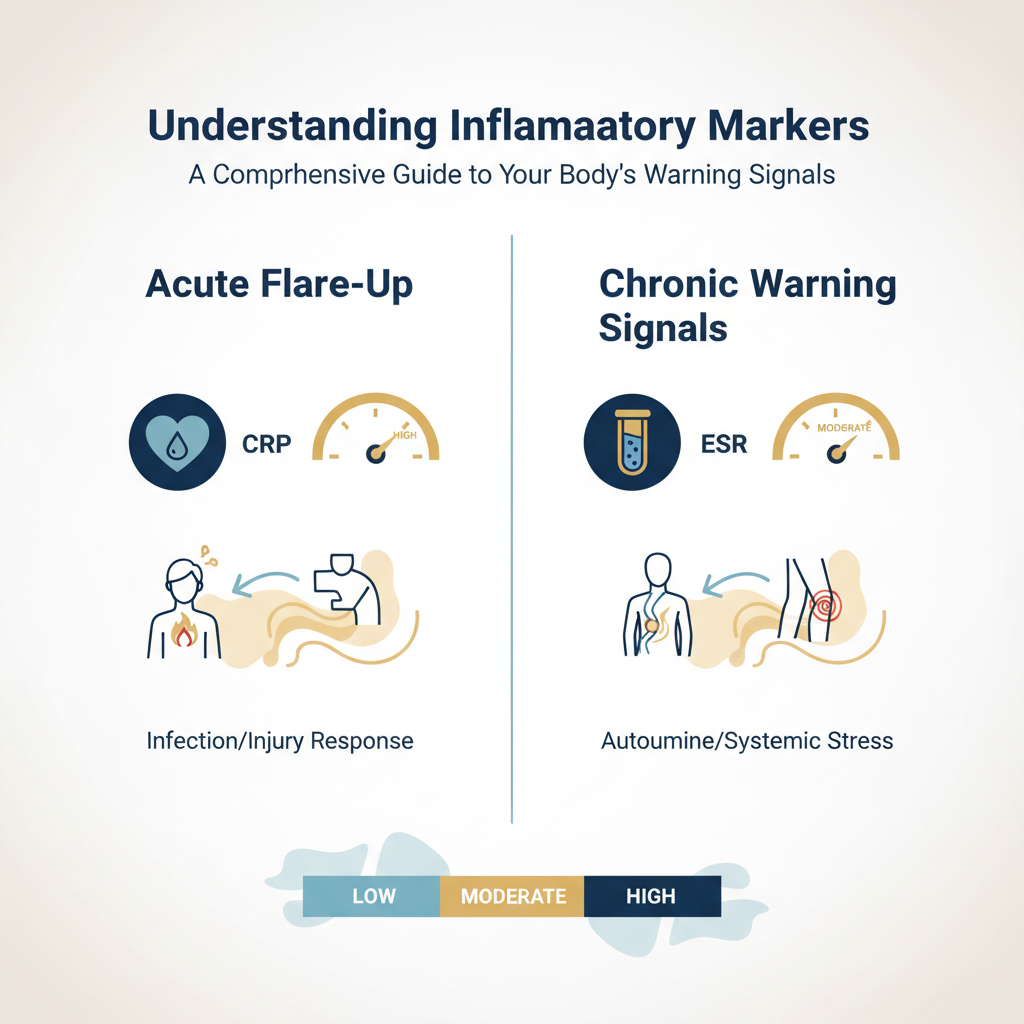
When a doctor orders an 'inflammation test,' they are usually referring to two main tests. The first is C-Reactive Protein (CRP). CRP is a protein produced by the liver that rises very quickly during acute inflammation. There is an advanced version called hs-CRP (high-sensitivity), which is a powerful tool for detecting very low levels of inflammation that may increase the risk of heart disease. If you find your levels are elevated, there are effective ways to lower high hs-CRP levels naturally involving diet and physical activity adjustments.
The second test is the Erythrocyte Sedimentation Rate (ESR). This test measures how quickly red blood cells sink in a test tube. In the presence of inflammation, cells clump together and become heavier, causing them to settle faster. Additionally, inflammatory marker terms might include other tests like Ferritin (an iron storage protein that also acts as an inflammatory marker) and Fibrinogen. Understanding these terms helps when reading inflammation research related to your health, as each marker provides a different piece of the overall puzzle.
Acute vs. Chronic Markers: Why Timing Matters
Acute inflammation is a rapid, short-term reaction, such as what happens when you have the flu or a cut on your finger. In this case, markers like CRP jump to very high levels and then return to normal once healing occurs. Chronic inflammation, however, is a 'slow fire' that lasts for months or years. Here, markers may not be glaringly high, but they remain consistently above the ideal range. This type of inflammation is a major driver of many modern health issues.
There is a close connection between inflammation and autoimmune diseases, where the body fails to turn off the inflammatory response and begins attacking its own tissues. In these cases, inflammatory markers become a tool for monitoring disease activity and the body's response to treatment. Distinguishing between a transient spike and a sustained elevation is the key to correct diagnosis, which is why doctors often prefer to retest after a period to see the general trend rather than a single isolated reading.
Lifestyle Impact on Inflammatory Markers
Our daily lifestyle directly affects these markers. A diet high in refined sugars and hydrogenated oils is a potent trigger for raising CRP. Conversely, studies have shown that fasting, such as during Ramadan, may contribute to lowering certain inflammatory markers in healthy individuals by giving the digestive and immune systems a rest period. Stress associated with life and work pressures raises cortisol levels, which in turn affects the balance of inflammatory markers.
Sleep also plays a pivotal role. Chronic late nights and disruption of the circadian rhythm lead to elevated levels of pro-inflammatory cytokines. If you are looking to improve your readings, focusing on 'natural anti-inflammatories' like turmeric, extra virgin olive oil, and garlic can have a tangible positive effect. Remember that these markers are a mirror of your daily choices, not just static numbers in a lab report.
Interpreting Results: What the Numbers Mean in Your Report
When you receive your lab report, you will find a 'reference range.' It is important to know that 'normal' does not always mean 'optimal.' For example, in an hs-CRP test, a lab might consider any number below 3 mg/L as normal, but from a preventive medicine perspective, a number below 1 mg/L is preferred to minimize cardiovascular risk. This distinction is a core part of Inflammation Education. Numbers must always be linked to clinical symptoms and a person's health history.
If your results are slightly elevated, there is no need to panic. The cause could be as simple as strenuous exercise the day before the test or poor sleep the previous night. However, persistent elevation requires deeper investigation. Using a clinician question list will help you understand whether these numbers require medical intervention or just lifestyle changes. The readings are a compass guiding you toward areas in your body that need attention.
The Connection to Chronic Disease: When Do Markers Become Dangerous?
Consistently elevated levels of inflammatory markers are linked to a wide range of chronic diseases, including type 2 diabetes, obesity, and heart disease. Inflammation causes a state of 'insulin resistance,' making blood sugar control harder. Furthermore, chronic inflammation in the arterial walls is what leads to plaque buildup and atherosclerosis. In recent years, research has also linked inflammation to brain health, suggesting that chronic elevation may contribute to cognitive decline.
Understanding the inflammation and autoimmune disease connection illustrates how markers like ESR can predict flares in conditions like rheumatoid arthritis or lupus. Monitoring these signs allows doctors to adjust medications before joint or organ damage worsens. It is a proactive battle; the more we succeed in keeping these markers within optimal ranges, the better our chances of preventing age-related diseases, a concept sometimes called 'Inflammaging.'
Common Mistakes in Understanding Inflammatory Markers
Many people make mistakes when dealing with inflammation tests, most notably: 1) Taking the test while having a cold or flu, which gives false-positive high results for chronic status. 2) Relying on a single test to make major health decisions; markers are volatile and require monitoring the trend over time. 3) Ignoring slight elevations that fall within the lab's 'normal range' but indicate low-grade inflammation. 4) Believing that lowering the marker with medication alone is the solution, without addressing the root cause like diet or stress. 5) Failing to inform the doctor about supplements you are taking, as some can affect lab results. To avoid these errors, it is helpful to follow effective ways to lower hs-CRP levels based on sound scientific principles and sustainable changes.
Questions You Can Discuss with a Licensed Professional
At your next doctor's visit, don't just settle for hearing 'your results are fine.' Use this clinician question list to deepen the dialogue: What is my exact hs-CRP number, not just the range? Is my ESR consistent with my age and gender? Is there a need to retest in a month to confirm the trend? How do my current medications affect these markers? Do you recommend additional tests like Ferritin or Homocysteine for a clearer picture? These questions transform you from a passive recipient of information into an active participant in managing your health. Remember that understanding inflammatory marker terms gives you the power to make informed decisions based on your body's biological data.
Common Myths Needing Scrutiny
- Myth: Elevated CRP always means a bacterial infection. Fact: It can rise due to extreme stress, obesity, or even very intense exercise.
- Myth: If my inflammatory markers are normal, I am perfectly healthy. Fact: Some localized inflammations may not

Explore health education
Review the educational guides and practical tools related to this topic.
Explore the education hub- مؤشرات الالتهاب هي بروتينات أو علامات بيولوجية ترتفع عندما يستجيب الجسم لتهديد ما.
- اختبار CRP و ESR هما الأكثر شيوعاً، لكنهما لا يحددان مكان الالتهاب بدقة.
- الالتهاب المزمن الصامت يمكن اكتشافه عبر اختبار hs-CRP عالي الحساسية.
- نمط الحياة، بما في ذلك النوم والتوتر، يؤثر بشكل مباشر على هذه القراءات.
مؤشرات الالتهاب هي أدوات تشخيصية تساعد الأطباء على تقييم مستوى النشاط المناعي في جسمك. بينما تشير المستويات العالية إلى وجود استجابة التهابية، فإنها تتطلب سياقاً طبياً كاملاً لتحديد السبب. فهم هذه المؤشرات هو الخطوة الأولى نحو إدارة الصحة الوقائية والتعامل مع الالتهابات المزمنة قبل تفاقمها.ما هي مؤشرات الالتهاب؟ تعريفات وأساسيات
مؤشرات الالتهاب هي مواد بيولوجية، غالباً ما تكون بروتينات، يطلقها الجسم في مجرى الدم استجابةً لمحفزات معينة مثل العدوى، الإصابة، أو الإجهاد التأكسدي. في سياق Inflammation Education أو تعليم الالتهابات، نعتبر هذه المؤشرات بمثابة 'نظام إنذار مبكر'. عندما يتعرض الجسم لتهديد، يقوم الكبد والجهاز المناعي بإفراز هذه المواد لتنسيق عملية الدفاع والإصلاح. المصطلح العلمي لهذه العملية يندرج تحت inflammation terminology التي تصف كيف يتواصل الجسم داخلياً.
من المهم أن تفهم أن وجود هذه المؤشرات ليس سيئاً في حد ذاته؛ فالالتهاب هو آلية بقاء ضرورية. المشكلة تكمن في استمرار ارتفاع هذه العلامات لفترات طويلة، مما يشير إلى حالة من الالتهاب المزمن. في ثقافتنا العربية، غالباً ما نربط الألم بالالتهاب، لكن العلم يخبرنا أن الكثير من الالتهابات تكون 'صامتة' ولا تسبب ألماً مباشراً، وهنا تبرز أهمية الفحوصات المخبرية. يمكنك الاطلاع على دليل تعليم الالتهابات الشامل لفهم أعمق لهذه العمليات الحيوية.
اختبارات الدم الشائعة للالتهاب: CRP و ESR وما وراءهما
عندما يطلب منك الطبيب إجراء 'فحص التهاب'، فإنه عادة ما يشير إلى اختبارين رئيسيين. الأول هو بروتين سي التفاعلي (CRP). الـ CRP هو بروتين ينتجه الكبد ويرتفع بسرعة كبيرة عند حدوث التهاب حاد. هناك نوع متطور يسمى hs-CRP (عالي الحساسية)، وهو أداة قوية للكشف عن المستويات المنخفضة جداً من الالتهاب التي قد تزيد من مخاطر أمراض القلب. إذا وجدت أن مستوياتك مرتفعة، فهناك طرق فعالة لخفض مستويات hs-CRP بشكل طبيعي تشمل تعديلات في الغذاء والنشاط البدني.
الاختبار الثاني هو سرعة ترسب الدم (ESR). هذا الاختبار يقيس مدى سرعة سقوط كريات الدم الحمراء في أنبوب الاختبار. في حالة وجود التهاب، تلتصق الكريات ببعضها البعض وتصبح أثقل، مما يجعلها تترسب بشكل أسرع. بالإضافة إلى ذلك، قد تشمل inflammatory marker terms فحوصات أخرى مثل الفيريتين (مخزون الحديد الذي يعمل أيضاً كمؤشر التهاب) والفايبرينوجين. فهم هذه المصطلحات يساعدك عند reading inflammation research أو قراءة الأبحاث المتعلقة بصحتك، حيث أن كل مؤشر يعطي قطعة مختلفة من الصورة الكاملة.
الفرق بين المؤشرات الحادة والمزمنة: لماذا التوقيت يهم؟
الالتهاب الحاد هو رد فعل سريع وقصير الأمد، مثل ما يحدث عند إصابتك بإنفلونزا أو جرح في إصبعك. في هذه الحالة، تقفز مؤشرات مثل CRP إلى مستويات عالية جداً ثم تعود للطبيعي بمجرد الشفاء. أما الالتهاب المزمن، فهو 'حريق هادئ' يستمر لأشهر أو سنوات. هنا، قد لا تكون المؤشرات مرتفعة بشكل صارخ، لكنها تظل فوق المعدل المثالي باستمرار. هذا النوع من الالتهاب هو المحرك الرئيسي للعديد من المشاكل الصحية المعاصرة.
هناك علاقة وثيقة بين الالتهاب والأمراض المناعية، حيث يفشل الجسم في إيقاف الاستجابة الالتهابية ويبدأ في مهاجمة أنسجته الخاصة. في هذه الحالات، تصبح مؤشرات الالتهاب أداة لمراقبة نشاط المرض واستجابة الجسم للعلاج. التمييز بين الارتفاع العابر والارتفاع المستمر هو مفتاح التشخيص الصحيح، ولهذا يفضل الأطباء دائماً إعادة الفحص بعد فترة للتأكد من الاتجاه العام للمؤشرات وليس مجرد قراءة واحدة معزولة.
تأثير نمط الحياة على مؤشرات الالتهاب في البيئة العربية
نمط حياتنا اليومي في العالم العربي يؤثر بشكل مباشر على هذه المؤشرات. النظام الغذائي الغني بالسكريات المكررة والزيوت المهدرجة، والتي قد تكون شائعة في بعض الأطباق الحديثة، يعتبر محفزاً قوياً لرفع الـ CRP. من ناحية أخرى، أظهرت الدراسات أن الصيام، مثل صيام رمضان، قد يساهم في خفض بعض مؤشرات الالتهاب لدى الأفراد الأصحاء من خلال إعطاء الجهاز الهضمي والمناعي فترة راحة. التوتر المرتبط بضغوط الحياة والعمل يرفع مستويات الكورتيزول، والذي بدوره يؤثر على توازن المؤشرات الالتهابية.
النوم أيضاً يلعب دوراً محورياً. السهر الطويل واضطراب الساعة البيولوجية يؤديان إلى ارتفاع مستويات السيتوكينات المؤبهة للالتهاب. إذا كنت تسعى لتحسين قراءاتك، فإن التركيز على 'مضادات الالتهاب الطبيعية' الموجودة في مطبخنا العربي مثل الكركم، زيت الزيتون البكر، والثوم، يمكن أن يكون له أثر إيجابي ملموس. تذكر أن هذه المؤشرات هي مرآة لخياراتك اليومية، وليست مجرد أرقام جامدة في تقرير المختبر.
تفسير النتائج: ماذا تعني الأرقام في تقريرك؟
عندما تستلم تقرير المختبر، ستجد 'نطاقاً مرجعياً'. من المهم معرفة أن 'الطبيعي' لا يعني دائماً 'المثالي'. على سبيل المثال، في اختبار hs-CRP، قد يعتبر المختبر أن أي رقم أقل من 3 ملغ/لتر هو طبيعي، ولكن من منظور الطب الوقائي، يفضل أن يكون الرقم أقل من 1 ملغ/لتر لتقليل مخاطر القلب والأوعية الدموية. هذا التمييز هو جزء أساسي من Inflammation Education. يجب دائماً ربط الأرقام بالأعراض السريرية والتاريخ الصحي للشخص.
إذا كانت نتائجك مرتفعة قليلاً، فلا داعي للذعر. قد يكون السبب بسيطاً مثل ممارسة تمارين رياضية شاقة قبل الفحص بيوم، أو قلة النوم في الليلة السابقة. ومع ذلك، الارتفاع المستمر يتطلب بحثاً أعمق. استخدام clinician question list أو قائمة أسئلة للمختص سيساعدك على فهم ما إذا كانت هذه الأرقام تتطلب تدخلاً علاجياً أو مجرد تغييرات في نمط الحياة. القراءات هي بوصلة توجهك نحو المناطق التي تحتاج اهتماماً في جسمك.
الارتباط بالأمراض المزمنة: متى تصبح المؤشرات خطيرة؟
المستويات المرتفعة باستمرار من مؤشرات الالتهاب ترتبط بمجموعة واسعة من الأمراض المزمنة، بما في ذلك السكري من النوع الثاني، السمنة، وأمراض القلب. الالتهاب يسبب حالة من 'مقاومة الأنسولين'، مما يجعل التحكم في سكر الدم أصعب. كما أن الالتهاب المزمن في جدران الشرايين هو ما يؤدي إلى تراكم اللويحات وتصلب الشرايين. في السنوات الأخيرة، ربطت الأبحاث أيضاً بين الالتهاب وصحة الدماغ، مشيرة إلى أن الارتفاع المزمن قد يسهم في التدهور المعرفي.
فهم العلاقة بين الالتهاب والأمراض المناعية يوضح كيف يمكن لمؤشرات مثل ESR أن تتنبأ بنوبات النشاط في أمراض مثل الروماتويد أو الذئبة. مراقبة هذه العلامات تسمح للأطباء بتعديل الأدوية قبل أن يتفاقم الضرر في المفاصل أو الأعضاء. إنها معركة استباقية؛ فكلما نجحنا في إبقاء هذه المؤشرات ضمن النطاقات المثالية، زادت فرصنا في الوقاية من الأمراض المرتبطة بالتقدم في السن، وهو ما يسمى أحياناً 'Inflammaging'.
أخطاء شائعة في فهم مؤشرات الالتهاب
يقع الكثيرون في أخطاء عند التعامل مع فحوصات الالتهاب، ومن أبرزها: 1) إجراء الفحص أثناء الإصابة بنزلة برد أو إنفلونزا، مما يعطي نتائج مرتفعة كاذبة لا تعكس الحالة المزمنة. 2) الاعتماد على فحص واحد فقط لاتخاذ قرارات صحية كبرى؛ فالمؤشرات متقلبة وتتطلب مراقبة الاتجاه (Trend) عبر الزمن. 3) تجاهل الارتفاعات الطفيفة التي تقع ضمن 'النطاق الطبيعي' للمختبر ولكنها تشير إلى التهاب منخفض الدرجة. 4) الاعتقاد بأن خفض المؤشر بالأدوية فقط هو الحل، دون معالجة السبب الجذري مثل النظام الغذائي أو التوتر. 5) عدم إبلاغ الطبيب عن المكملات الغذائية التي تتناولها، حيث أن بعضها قد يؤثر على نتائج التحليل. لتجنب هذه الأخطاء، من المفيد اتباع طرق فعالة لخفض مستويات hs-CRP التي تعتمد على أسس علمية رصينة وتغييرات مستدامة.
أسئلة يمكنك مناقشتها مع مختص مرخص
عند زيارتك القادمة للطبيب، لا تكتفِ بسماع كلمة 'نتائجك جيدة'. استخدم هذه القائمة (clinician question list) لتعميق الحوار: ما هو الرقم الدقيق لـ hs-CRP الخاص بي وليس فقط النطاق؟ هل سرعة الترسيب (ESR) متوافقة مع عمري وجنسي؟ هل هناك حاجة لإعادة الفحص بعد شهر للتأكد من الاتجاه؟ كيف تؤثر أدويتي الحالية على هذه المؤشرات؟ هل تنصح بفحوصات إضافية مثل الفيريتين أو الهوموسيستين للحصول على صورة أوضح؟ هذه الأسئلة تحولك من متلقٍ سلبي للمعلومات إلى مشارك نشط في إدارة صحتك. تذكر أن فهم inflammatory marker terms يمنحك القوة لاتخاذ قرارات واعية مبنية على البيانات البيولوجية الخاصة بجسمك.
مفاهيم شائعة تحتاج تدقيقاً
- خرافة: الـ CRP المرتفع يعني دائماً وجود عدوى بكتيرية. الحقيقة: يمكن أن يرتفع بسبب التوتر الشديد، السمنة، أو حتى ممارسة رياضة عنيفة جداً.
- خرافة: إذا كانت مؤشرات الالتهاب طبيعية، فأنا سليم تماماً. الحقيقة: بعض الالتهابات الموضعية قد لا تظهر في فحوصات الدم العامة.
- خرافة: لا يمكن خفض مؤشرات الالتهاب إلا بالأدوية. الحقيقة: تغيير نمط الحياة هو الأداة الأكثر استدامة لخفض الالتهاب المزمن.
الأسئلة الشائعة
- هل يجب أن أكون صائماً قبل فحص CRP؟ ليس ضرورياً لـ CRP العادي، لكن يفضل الصيام إذا كان الفحص جزءاً من لوحة دهون شاملة.
- كم مرة يجب أن أفحص مؤشرات الالتهاب؟ يعتمد ذلك على حالتك الصحية، ولكن مرة سنوياً للأصحاء كجزء من الفحص الدوري تعتبر جيدة.
- هل التوتر يرفع سرعة الترسيب (ESR)؟ التوتر المزمن يمكن أن يرفع مؤشرات الالتهاب بشكل غير مباشر عبر تأثيره على الجهاز المناعي.
- ما الفرق بين CRP و hs-CRP؟ الـ hs-CRP يقيس مستويات أقل بكثير من البروتين، مما يساعد في تقييم مخاطر القلب.
- هل ممارسة الرياضة تؤثر على النتيجة؟ نعم، التمارين الشاقة جداً قبل الفحص بـ 24 ساعة قد ترفع الـ CRP مؤقتاً.
- هل السمنة ترفع مؤشرات الالتهاب؟ نعم، الخلايا الدهنية تفرز سيتوكينات التهابية ترفع مستويات CRP في الدم.
- هل يمكن للغذاء أن يخفض ESR؟ الغذاء الغني بمضادات الأكسدة يساعد في تقليل الالتهاب العام، مما قد ينعكس إيجاباً على ESR بمرور الوقت.
- ماذا أفعل إذا كانت نتائجي مرتفعة باستمرار؟ يجب استشارة طبيب للبحث عن بؤر التهاب خفية أو أمراض مناعية كامنة.
إخلاء مسؤولية طبية: المعلومات الواردة في هذه المقالة هي لأغراض تعليمية فقط ولا تهدف إلى تشخيص أو علاج أي حالة طبية. يجب عليك دائماً استشارة طبيب مرخص أو مقدم رعاية صحية مؤهل قبل إجراء أي تغييرات في نظامك الغذائي أو البدء في أي علاج جديد أو تفسير نتائج الفحوصات المخبرية الخاصة بك.