Anxiety Nutrition Canada: How Diet May Help Calm Anxiety (2026 Guide)
Author: Feras Alayed
Published:
Updated:
Category: canadian-health
Reading Time: 11 minutes
Key Takeaways
- Anxiety affects many Canadians; nutrition is a modifiable factor that may help reduce symptom severity when used with therapy and medical care.
- Stable blood glucose (fasting ~4.0–5.6 mmol/L), regular protein, soluble fibre and healthy fats can reduce physiological anxiety triggers.
- Omega‑3s, vitamin D, B‑vitamins, magnesium and targeted probiotics have emerging evidence for anxiety symptom support.
- Canada‑specific factors (long winters, provincial healthcare differences, regional food access) should shape nutrition plans.
- Feel Great (Balance soluble fibre, Unimate yerba mate, 4‑4‑12 fasting) may be used as a lifestyle support alongside evidence‑based treatments.
TL;DR
Anxiety nutrition Canada: Dietary patterns that stabilise blood sugar, reduce inflammation and support the gut may help lower anxiety symptoms. Use whole foods, vitamin D in winter, omega‑3s and consistent meal timing alongside mental health care and provincial resources. (Sources: Health Canada, Statistics Canada, CIHI, Diabetes Canada, CMHA)
🇨🇦 Thousands of Canadians are using Feel Great to support their metabolic health naturally. Learn more & order here →
Anxiety in Canada: How Nutrition Can Help
Introduction — a Canadian snapshot
Anxiety affects a substantial portion of the Canadian population. Statistics Canada surveys during and after the COVID‑19 pandemic reported sharp increases in anxiety and depressive symptoms; in some analyses about one in four adults reported moderate to severe anxiety or depressive symptoms (Statistics Canada). The Canadian Mental Health Association (CMHA) highlights anxiety disorders among the most common mental health conditions in Canada, with young adults and women disproportionately affected (CMHA). With mental health services variably available across provinces, practical, evidence‑based lifestyle strategies — including nutrition — are important complements to clinical care (Health Canada; CIHI).
How nutrition intersects with anxiety (basic mechanisms)
Nutrition influences anxiety through several interlinked biological pathways:
- Blood sugar regulation: Rapid post‑meal glucose swings or hypoglycaemia can trigger autonomic symptoms (palpitations, tremor, sweating) that mimic or worsen anxiety. Diabetes Canada recommends population glucose targets (fasting around 4.0–5.6 mmol/L for people without diabetes) which are useful reference points when considering metabolic contributors to anxiety.
- Neurotransmitter synthesis: Amino acids from dietary protein (e.g., tryptophan, tyrosine) and B‑vitamins are required for building serotonin, GABA and catecholamines involved in mood and anxiety regulation.
- Inflammation and oxidative stress: Diets high in ultra‑processed foods and low in antioxidants have been associated with poorer mental health outcomes in observational studies (CMAJ; CIHI).
- Gut‑brain communications: The microbiome can affect mood via immune, endocrine and neural signalling; prebiotic and probiotic interventions are a growing research area.
Canada‑specific context
Several Canadian realities should shape nutrition advice:
- Prevalence and population impact: Statistics Canada and CIHI analyses show increases in reported anxiety symptoms since 2020, with certain groups at higher risk (younger adults, women, those with financial stress).
- Access to care: Mental health and nutrition services vary by province. Many Canadians access care through family doctors, walk‑in clinics, provincial telehealth, or community mental health teams (Health Canada). Wait times and availability differ in Ontario, Quebec, BC, Alberta and the territories.
- Seasonality and vitamin D: Long winters and limited sunlight in many Canadian regions increase the risk of low vitamin D, which has been linked to mood changes in observational studies (Public Health Agency of Canada; Health Canada).
- Comorbidity: Anxiety frequently coexists with cardiometabolic conditions (diabetes, heart disease). Integrating metabolic care (Diabetes Canada; Heart & Stroke) with mental health strategies is critical.
What the evidence says — ranked overview
Below we summarise dietary strategies ordered by the strength of current evidence (systematic reviews/meta‑analyses > RCTs > cohort studies).
Dietary patterns: Mediterranean and whole‑food approaches (Strong evidence)
Systematic reviews suggest that Mediterranean‑like dietary patterns—high in vegetables, fruits, whole grains, legumes, fish, nuts and olive oil—are associated with reduced anxiety and depression symptoms in population studies and clinical trials in some settings. Canada's Food Guide aligns with this plant‑forward, whole‑food approach and is a practical foundation for Canadians across provinces.
Blood sugar stability and meal composition (Moderate evidence)
Maintaining steady blood glucose using protein, soluble fibre (e.g., oats, legumes, psyllium) and healthy fats reduces glycaemic variability that can trigger anxiety‑like symptoms. Diabetes Canada glycaemic targets (fasting ~4.0–5.6 mmol/L) are useful clinical markers for many people; for those with diabetes, individualized targets apply.
Omega‑3 fatty acids (Moderate evidence)
Several meta‑analyses of RCTs indicate small to moderate reductions in anxiety symptoms with omega‑3 supplementation (higher EPA formulations often studied). Dietary sources (salmon, mackerel) are excellent in Canada’s coastal regions, and supplements are available nationwide. Choose Health Canada‑regulated products and discuss with your clinician if you take blood thinners.
Vitamin D (Low–Moderate evidence)
Observational links between low vitamin D and anxiety exist; supplementation trials are mixed but suggest benefit for those with deficiency. In Canada, testing 25‑OH vitamin D through your family doctor is common, especially in winter months. Public Health Agency of Canada provides guidance on supplementation ranges.
B‑vitamins, magnesium (Low–Moderate evidence)
B‑vitamin complexes and magnesium play roles in neurotransmitter synthesis and nervous system function. Some RCTs show modest benefit for anxiety symptoms with targeted supplementation when deficiencies are present.
Probiotics and prebiotics (Emerging evidence)
Trials of specific probiotic strains (so‑called psychobiotics) have shown modest anxiety reductions in some populations. Evidence is promising but variable; more large RCTs are ongoing, including Canadian research groups.
Practical Canadian meal plan and tips
Below are practical, culturally adaptable suggestions that reflect Canada’s food availability, seasonal changes and clinical guidance.
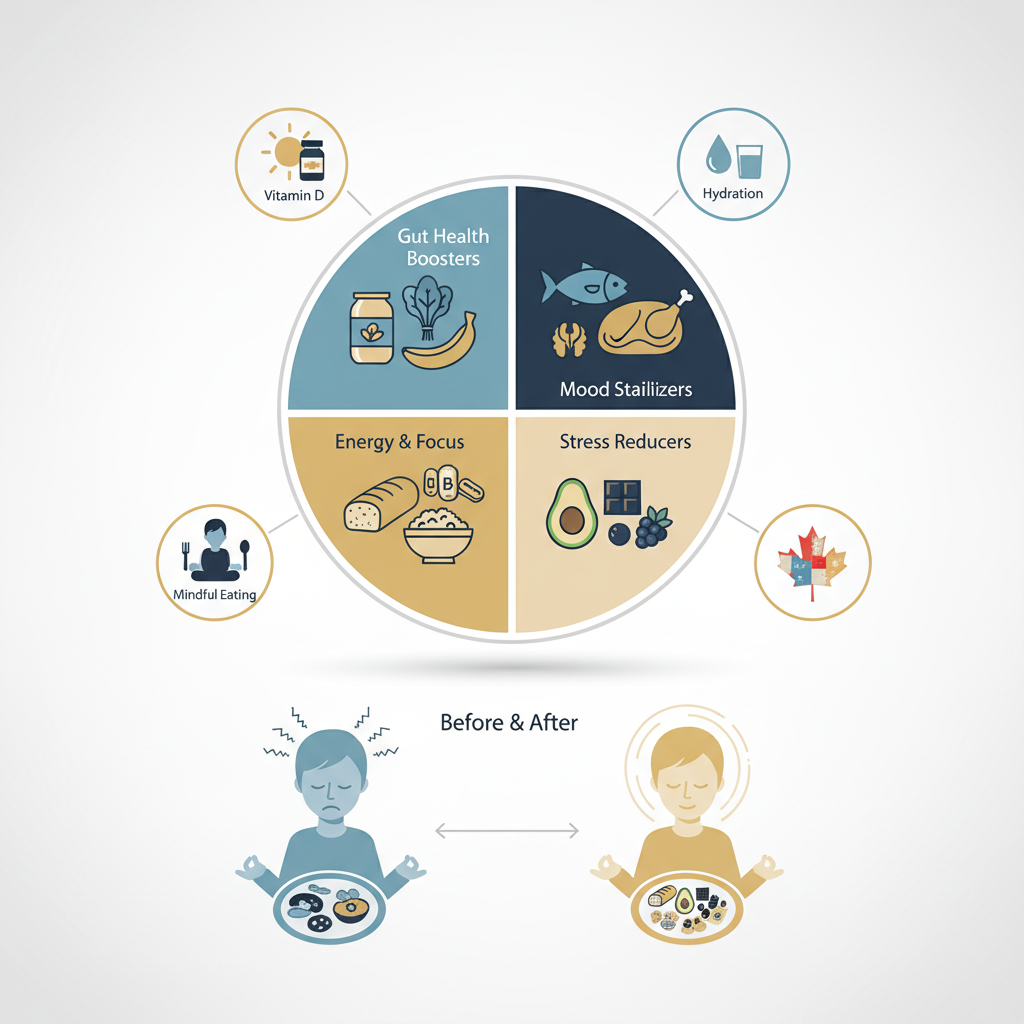
- Breakfast: Steel‑cut oats with chia, ground flaxseed, berries, Greek yoghurt (or fortified plant alternative) and chopped walnuts — protein, soluble fibre and omega‑3 ALA.
- Lunch: Mixed salad with canned Atlantic or Pacific salmon, lentils, mixed greens and olive oil dressing — omega‑3s and plant protein.
- Snack: Hummus with carrot sticks or an apple and a handful of almonds — stabilises blood sugar and provides magnesium.
- Dinner: Baked trout or tofu, quinoa or barley, roasted seasonal vegetables and a side of fermented food (yoghurt or kefir) where appropriate for probiotics.
- Hydration & stimulants: Keep caffeine to individual tolerance; avoid late‑day caffeine and excessive alcohol (Heart & Stroke guidance).
- Supplements: Consider vitamin D in winter, omega‑3s if fish intake is low, and a B‑complex or magnesium after checking with your provider.
How Feel Great Helps (integrating nutrition and metabolic health)
Feel Great offers lifestyle tools that may complement nutritional strategies for anxiety when used with standard care. Important features:
- Balance: a soluble fibre matrix aimed at moderating post‑meal glucose responses. By flattening glucose peaks, Balance may reduce physiological triggers of anxiety such as palpitations and shakiness.
- Unimate: a yerba mate extract rich in chlorogenic acids, offering natural stimulant effects and potential improvements in mental clarity. Individual responses to stimulants vary — monitor caffeine sensitivity.
- 4‑4‑12 intermittent fasting protocol: structured meal timing that may help stabilise appetite and metabolic signals. Time‑restricted eating should be personalised and discussed with a healthcare provider, especially for people with diabetes or disordered eating histories.
- Evidence: The Feel Great programme references 50+ clinical studies listed in professional resources (PDR). While Feel Great is not a medication, its components may be used as part of a comprehensive lifestyle plan to support metabolic health and by extension, mental well‑being.
Always disclose supplements and structured fasting to your family doctor or mental health provider to ensure safety with medications and comorbid conditions.
People Also Ask
- Can changing my diet reduce my anxiety? — Nutrition may help reduce triggers and symptom intensity for some people, particularly via blood sugar stability, anti‑inflammatory foods and key nutrients.
- Which foods make anxiety worse? — Highly processed foods, high sugar items, excessive caffeine and alcohol may worsen anxiety in susceptible individuals.
- Should I test my vitamin D levels in Canada? — Consider testing if you have low sun exposure, live in northern latitudes, have darker skin, or are symptomatic; discuss with your family doctor.
- Do probiotics help anxiety? — Some probiotic strains have shown modest benefits; evidence is evolving. Choose products with clinical strain data and Health Canada compliance.
- How do I find a dietitian in my province? — Start with your family physician for referrals. Provincial health authority directories, private telehealth dietitians and extended health benefits are common routes.
FAQ
- Can food alone 'cure' anxiety? No. Food can be an important adjunct but not a cure. Evidence‑based psychotherapy and medication when indicated remain central.
- Are there risks to supplements? Yes. Supplements can interact with prescriptions and have side effects. Use Health Canada‑regulated products and consult your prescriber or pharmacist.
- What blood sugar numbers are relevant? For people without diabetes, fasting glucose around 4.0–5.6 mmol/L is typical; individual targets differ for diabetes—refer to Diabetes Canada guidance.
- Does mental health care coverage vary by province? Yes. Provincial health systems differ in coverage for psychologists/dietitians and wait times. Check provincial health websites for local resources (Ontario, BC, Alberta, Quebec).
- Where can I get urgent mental health help in Canada? For crisis situations call 911 or your provincial crisis line. Non‑urgent care: family doctor, community mental health teams, telehealth and walk‑in clinics.
References & Scientific Sources
(Selected Canadian and international sources; prioritised recent systematic reviews, meta‑analyses and RCTs)

- Health Canada — Mental Health & Substance Use. https://www.canada.ca/en/health-canada.html
- Statistics Canada — Mental health during the COVID‑19 pandemic: https://www150.statcan.gc.ca
- Canadian Institute for Health Information (CIHI) — Mental Health and Addictions: https://www.cihi.ca
- Canadian Mental Health Association — Anxiety information. https://cmha.ca
- Diabetes Canada — Clinical Practice Guidelines, glycaemic targets: https://www.diabetes.ca
- Heart & Stroke Foundation of Canada — Alcohol and caffeine guidance: https://www.heartandstroke.ca
- Public Health Agency of Canada — Vitamin D and seasonal considerations: https://www.canada.ca/en/public-health.html
- Jacka FN, et al. "Diet and mental health" systematic reviews and meta‑analyses (various 2021–2024). PubMed: https://pubmed.ncbi.nlm.nih.gov
- Meta‑analysis: Omega‑3 fatty acids and anxiety symptoms (2022). PubMed: https://pubmed.ncbi.nlm.nih.gov
- Probiotic and psychobiotic meta‑analyses (2021–2024). PubMed: https://pubmed.ncbi.nlm.nih.gov
- Vitamin D supplementation and mood/anxiety meta‑analysis (2021). PubMed: https://pubmed.ncbi.nlm.nih.gov
- Harvard Health — Nutrition and mental health. https://www.health.harvard.edu
- Mayo Clinic — Anxiety overview. https://www.mayoclinic.org
- CMAJ — Canadian reviews on nutrition and mental health. https://www.cmaj.ca
Medical Disclaimer
This article is educational and not a substitute for medical advice. For severe anxiety, suicidal thoughts or a medical emergency contact 911 or your provincial crisis service immediately. Discuss supplements, major diet changes and scheduled fasting with your family doctor, pharmacist or a registered dietitian, especially if you have diabetes, heart disease or take prescription medications. Provincial resources and coverage differ (Ontario, BC, Alberta, Quebec). Feel Great products are lifestyle supports and not medications.
Related ATHAR paths
🇨🇦 Ready to Start Your Health Transformation?
Join thousands of Canadians who have improved their metabolic health with the Feel Great system. Backed by 50+ clinical studies and listed in the Physicians' Desk Reference (PDR).
✅ Ships to all provinces: BC, Alberta, Saskatchewan, Manitoba, Ontario, Quebec, New Brunswick, Nova Scotia, PEI, Newfoundland & Labrador | 90-Day Money-Back Guarantee