Balanced Plate for Hormonal Shifts: Women Health After 40 Guide
Author: Feras Alayed
Published:
Updated:
Category: womens-health
Reading Time: 13 minutes
Key Takeaways
- Nutritional needs shift after 40 due to natural hormonal transitions, requiring adjustments in how meals are structured.
- Protein and fiber are the foundation of a balanced plate, supporting satiety and stable energy levels.
- Healthy fats are essential for hormone support, while complex carbohydrates provide sustainable energy.
- Understanding these changes is a core part of women's health education and does not replace professional medical advice.
TL;DR
As women enter their forties, the body undergoes natural hormonal changes that affect energy, sleep, and how the body responds to food. This guide provides a practical, step-by-step approach to building balanced meals that support this phase. Focusing on health education and correcting common myths, it helps you make better daily choices to support your overall well-being without restrictive dieting.
Introduction: Understanding Changes After 40
Have you noticed that the dietary habits that worked for you in your twenties and thirties no longer yield the same results? Perhaps you experience mid-day energy slumps, find it harder to maintain focus, or notice changes in your sleep quality. These experiences are incredibly common and often frustrating, but they are not your fault. It is simply your body's new language communicating natural transitions.
When we talk about women health after 40 education, the focus is on understanding these shifts rather than fighting them. Crash diets or constant restriction are often hard to sustain and can increase physical and mental stress. Instead, the goal is to provide structural support through smart daily choices. This article offers a practical framework as part of a broader lifestyle approach. It is not a diagnosis or a cure, but a guide to help you make clearer nutritional decisions.
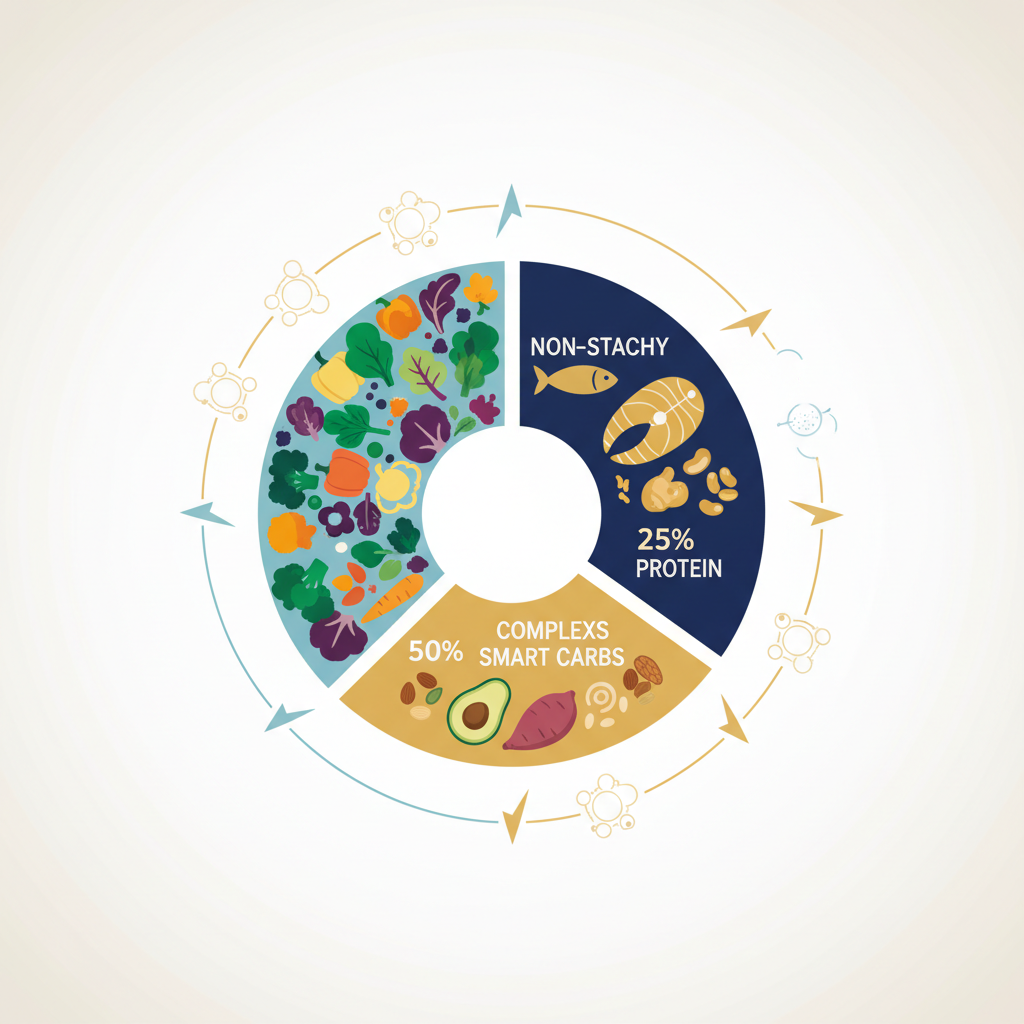
What is a Balanced Plate for Hormonal Shifts?
A balanced plate for hormonal transitions is a flexible meal-planning framework focused on providing the body with macronutrients (protein, fats, carbohydrates) and fiber in proportions that support blood sugar stability, promote satiety, and provide the building blocks for efficient hormone function. The limit of this framework is that it does not treat hormonal diseases, but it creates a supportive internal environment that makes managing daily symptoms easier.
For a deeper understanding of how this phase affects the body, you can read our guide on navigating perimenopause symptoms, which explains the natural changes occurring during this time.
Why This Education Matters Now
During this stage of life, the production of hormones like estrogen and progesterone begins to fluctuate. This fluctuation is not just a reproductive event; it impacts how your body utilizes energy. Positive health education gives you the tools to handle this change. Building a balanced plate helps to:
- Organize your daily routine: It reduces the confusion of 'what should I eat today?' and makes choices clearer.
- Support energy stability: By minimizing sharp blood sugar spikes and crashes that lead to sudden fatigue.
- Encourage consistency: A flexible approach is much easier to sustain than strict rules.
This understanding intersects significantly with metabolic health after menopause, where stabilizing energy levels becomes a daily priority.
Practical Guide: 4 Steps to Build Your Plate
Here are the practical steps to assemble a meal that supports your current needs. Remember, these are general guidelines that can be adjusted based on your personal preferences and your doctor's advice.
Step 1: Start with Protein (The Foundation)
Protein is essential for maintaining muscle mass, which tends to decline with age, and it highly promotes a feeling of fullness. Dedicate roughly one-quarter of your plate to a high-quality protein source.
- Practical Options: Eggs, chicken, fish, lentils, chickpeas, or tofu.
- Application Tip: Try to include a protein source in every meal, even breakfast, to support energy stability throughout the morning.
Step 2: Fill Half the Plate with Fiber and Greens
Fiber is your gut's best friend, playing a vital role in eliminating excess hormones and supporting digestion. Vegetables provide essential vitamins and minerals without adding a heavy load on your blood sugar.
- Practical Options: Dark leafy greens (spinach, arugula), broccoli, cauliflower, zucchini, and bell peppers.
- Application Tip: Eating a variety of colors ensures a diverse intake of antioxidants.
Step 3: Add Healthy Fats (Hormone Building Blocks)
Fats are not the enemy. In fact, hormones are synthesized from cholesterol and fats. Adding a moderate amount of healthy fats helps with vitamin absorption and supports brain health.
- Practical Options: Extra virgin olive oil, avocados, nuts (walnuts, almonds), and seeds (chia seeds, flaxseeds).
- Application Tip: A tablespoon of olive oil or a quarter of an avocado is an excellent portion for a meal.
Step 4: Choose Smart Carbohydrates
Carbohydrates provide energy, but the type matters. Complex carbohydrates break down slowly, preventing rapid spikes and drops in energy levels. To understand this better, read about how insulin affects other hormones.
- Practical Options: Quinoa, sweet potatoes, whole oats, and brown rice.
- Application Tip: Let complex carbohydrates occupy the final quarter of your plate.
Daily Scenarios: Applying it in a Busy Life
Theoretical knowledge is good, but application is what counts. Here are hypothetical examples of how to apply this framework:
- The Busy Morning Scenario: You have no time to cook. Instead of grabbing a quick pastry (refined carbs), prepare a bowl of Greek yogurt (protein) with chia seeds (fiber and healthy fats) and a handful of berries (smart carbs and antioxidants).
- The Work Lunch Scenario: At the cafeteria, opt for a large green salad (fiber), add grilled chicken pieces (protein), drizzle with olive oil (healthy fats), and include a small scoop of quinoa or chickpeas (complex carbs).
- The Late Dinner Scenario: If you prefer a lighter meal, try a slice of salmon (protein and healthy fats) with roasted asparagus (fiber). You might find that pairing these meals with specific eating windows is helpful; you can explore our intermittent fasting beginner's guide as an additional organizational tool.
Myth vs. Fact: Common Misconceptions
| Common Information | What Needs Verification (The Practical Truth) |
|---|---|
| You must cut carbs completely after 40 to avoid weight gain. | Myth. The body needs complex carbs for energy and thyroid support. The secret lies in quality and portion, not elimination. |
| Fats cause weight gain and should be avoided. | Myth. Healthy fats are necessary for hormone production and satiety. |
| Protein needs increase as we age. | Fact. Protein helps preserve muscle mass, which in turn supports metabolic rate. |
| Stress has nothing to do with what we eat. | Myth. Stress impacts our food choices and how the body stores energy. Read more about the impact of stress hormones. |
Common Information Mistakes & Corrections
In your search for women's health information, you might encounter misleading advice. Here is how to evaluate it:
- The Mistake: Relying on supplements as a replacement for real food. The Correction: Supplements are meant to supplement the diet, not replace it. A balanced plate is always the foundation.
- The Mistake: Following harsh detox diets to 'cleanse' hormones. The Correction: The liver and kidneys perform natural detoxification. Supporting these organs is done through adequate hydration, fiber, and protein, not starvation juices.
- The Mistake: Ignoring hunger and fullness cues. The Correction: Learn to listen to your body. Mindful eating helps regulate portions naturally without the need for obsessive calorie counting.
Preparing for a Productive Doctor's Visit
Educational articles, including this one within our women's health hub, do not replace medical care. To get the most out of your next visit to a doctor or dietitian, organize your observations:
- Track your energy levels: When do you feel energetic and when do you feel fatigued during the day?
- Monitor your sleep quality: Do you have trouble falling asleep or waking up frequently?
- Note digestion changes: Do you feel bloated after eating specific foods?
- Suggested questions for your doctor: 'Based on my blood work, are there specific vitamin deficiencies I should focus on through my diet?', 'Do my symptoms require medical intervention, or can they be managed with lifestyle adjustments?'
Frequently Asked Questions
Should I take hormone supplements after 40?
This is strictly a medical decision based on your symptoms and personal health history. It must be discussed with a licensed medical professional who can evaluate your individual case and run necessary tests.
Can a balanced plate stop hot flashes?
No specific food cures or completely stops hot flashes. However, maintaining stable blood sugar through balanced meals and reducing triggers like excessive caffeine and spicy foods may help reduce their severity or frequency for some women.
What are the best sources of fiber that don't cause bloating?
If you are not used to a high-fiber diet, increase your intake gradually and drink plenty of water. Gentle sources include cooked zucchini, cooked carrots, soaked chia seeds, and oats. Avoid a sudden overload of raw legumes or cabbage.
Do I need to drastically reduce my calories after 40?
Focusing on food quality (nutrient density) is more important than just cutting calories. Severe restriction can lead to muscle loss and slow down metabolism. A balanced plate promotes natural satiety.
How do I handle intense sugar cravings?
Intense cravings are often a sign of an imbalance in your previous meal (lack of protein or fiber) or a result of stress and poor sleep. Ensure your meals are satiating and contain adequate healthy fats and protein.
Your Next Step
Building a balanced plate is not a strict rule that must be applied perfectly every single day; rather, it is a skill you learn gradually to support your body through these natural transitions. Start by adjusting just one meal a day and observe how your body and energy levels respond.
Start your internal health assessment today to identify which habits need a simple adjustment to support your goals.

Ready to choose a clearer health starting point?
Start with a short educational assessment to explore tools and resources that may fit your goal. It is not a medical diagnosis.
Continue learning at Women's Health.