The Complete Intermittent Fasting Guide for Beginners: Everything You Need to Know in 2026
Author: Feras Alayed
Published:
Updated:
Category: intermittent-fasting
Reading Time: 8 minutes
The Complete Intermittent Fasting Guide for Beginners: Everything You Need to Know in 2026
You want a sustainable way to lose fat, steady your energy, and regain control of your hunger—without obsessively counting calories all day. Yet with so many “fasting” methods online, it’s hard to know where to start, what’s safe, and what actually works.
This beginner’s guide explains intermittent fasting (IF) in plain English. You’ll learn how it works in your body, which schedule to try first, what to eat, what to avoid, how to train, and how to troubleshoot common roadblocks. We also break down myths with the latest evidence and point you to trusted sources so you can make informed decisions.
Intermittent fasting isn’t a magic trick. It’s a simple structure that helps you eat in a way that improves insulin sensitivity, supports fat-burning, and can be easier to sustain than constant calorie counting.[1][11]
If you’re managing insulin resistance, cravings, or stubborn weight, consider this your roadmap—backed by research and written for real life. For deeper dives on related topics, see our guides on the best program for insulin resistance, why you’re always hungry, and daily sugar cravings.
What Is Intermittent Fasting?
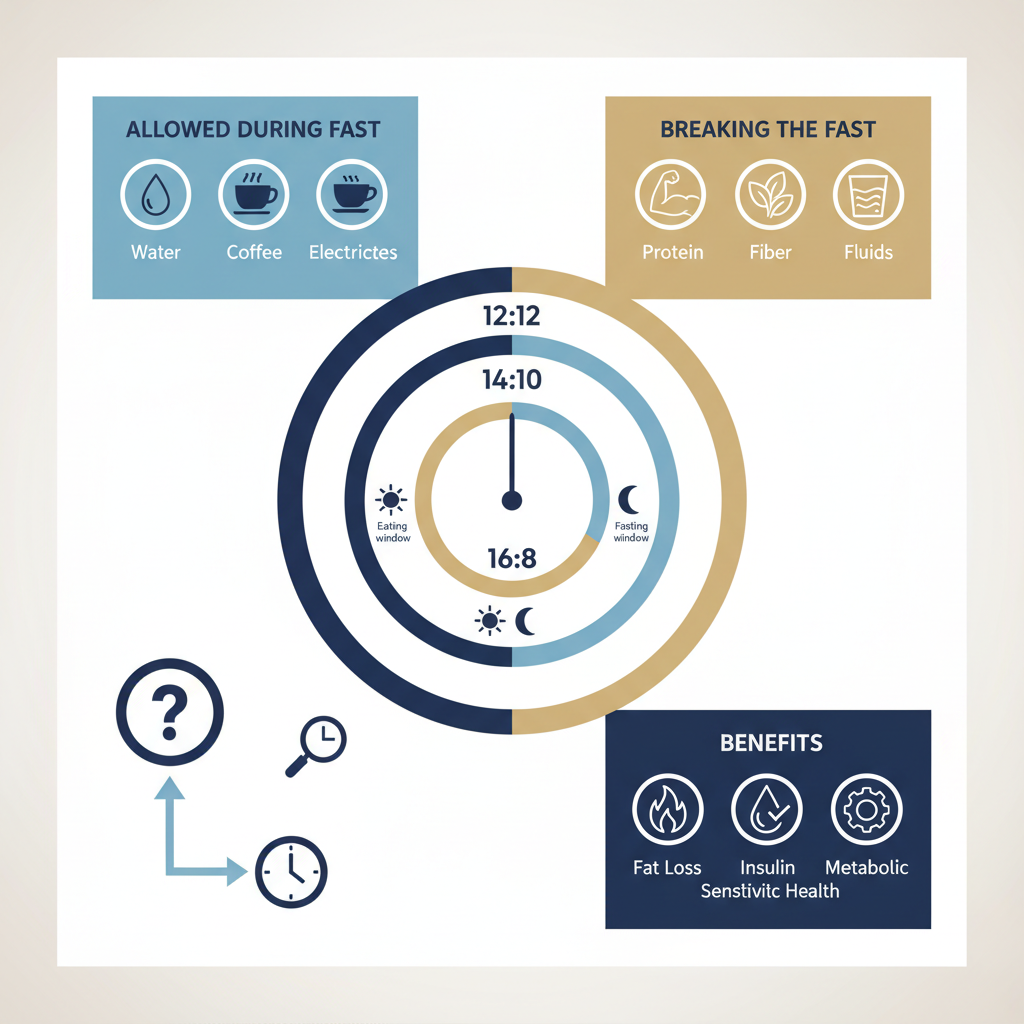
Intermittent fasting is the practice of cycling between periods of eating and not eating. It doesn’t tell you exactly what to eat; it sets when you eat. Common approaches include a daily eating window (time-restricted eating, like 12/12 or 16/8) or periodic fasting days (such as the 5:2 plan).
How Intermittent Fasting Works in Your Body
After meals, your insulin rises to help shuttle glucose into cells. Between meals—especially if you leave enough time—insulin falls. Lower insulin signals your body to tap stored glycogen and, later, body fat for energy. This metabolic flexibility is key to fat loss and steady energy.[1][11]
- Glycogen to fat shift: Once liver glycogen begins to deplete, the body increases lipolysis (fat breakdown) and fat oxidation. This can take 8–12 hours depending on prior meals and activity.[1]
- Insulin sensitivity: Compressing eating windows may improve insulin sensitivity and blood sugar control, particularly with earlier-in-the-day meals aligned to circadian rhythms.[2][10][11]
- Cellular housekeeping: Longer fasting periods can increase autophagy signaling (cellular cleanup) in animal and preliminary human data, though human outcomes are still being studied.[1][11]
Fact: In controlled studies, intermittent fasting is at least as effective as continuous calorie restriction for weight loss and can preserve metabolic rate when protein and resistance training are adequate.[4][5]
Is Intermittent Fasting Right for You?
Most healthy adults can try gentle time-restricted eating (like 12/12 or 14/10). However, some people should not fast or should only do so under medical supervision:
- Pregnant or breastfeeding women
- People under 18 or with a history of eating disorders
- Individuals who are underweight, frail, or recovering from surgery or illness
- People with diabetes on insulin or sulfonylureas, or on medications that must be taken with food—speak with your clinician first[7][8][9]
Popular Intermittent Fasting Methods Compared
| Method | Fasting:Eating | Best For | Pros | Watch Outs |
|---|---|---|---|---|
| 12/12 (Beginner) | 12 hrs fast : 12 hrs eat | New to IF, improving sleep rhythm | Gentle, circadian-friendly, widely sustainable | Modest fat loss unless food quality improves |
| 14/10 | 14 hrs fast : 10 hrs eat | Gradual metabolic reset | Often reduces snacking, easy social fit | Plan protein to avoid under-eating |
| 16/8 | 16 hrs fast : 8 hrs eat | Fat loss, insulin resistance support | Strong evidence base, simple rules[3][11] | Initial hunger, coffee reliance, late-night snacking risk |
| Early TRE | e.g., 8 a.m.–4 p.m. eating | Prediabetes, metabolic health | Improves insulin sensitivity, BP, oxidative stress markers[2] | Hard socially; dinner becomes early |
| 5:2 | 5 days normal, 2 low-cal (500–600 kcal) | People preferring weekly structure | Flexible, evidence for weight loss[4][5] | “Low-cal” days can feel tough without planning |
| 24-hr (Eat-Stop-Eat) | 1–2 non-consecutive 24-hr fasts | Plateaus, experienced fasters | Efficient weekly calorie reduction | Greater hunger, requires electrolytes and supervision if on meds |
For most beginners, a daily window (12/12 → 14/10 → 16/8) is the simplest, most sustainable path. If your goal is insulin sensitivity, consider earlier eating windows when possible.[2][10] Explore more basics on our intermittent fasting topic hub.
A Two-Week Beginner Plan (With Real-Life Examples)
Week 1: Gentle On-Ramp (12/12 to 14/10)
- Pick a consistent dinner cutoff, e.g., finish by 7 p.m.
- Eat a protein-rich breakfast 12 hours later (7 a.m.). Aim for 25–35 g protein.
- Choose whole-food meals with fiber and healthy fats to stabilize appetite.
- Hydrate: 2–3 liters of water/day, add electrolytes if needed.
- After 3–4 days, push breakfast 30–60 minutes later if you feel good.
Sample day (14/10):
- 7:30 a.m. Hydration + black coffee or unsweetened tea
- 9:00 a.m. First meal: Greek yogurt, berries, chia; or eggs, avocado, spinach
- 1:00 p.m. Lunch: Salmon bowl with quinoa, olive oil, mixed greens
- 5:30 p.m. Dinner: Grilled chicken, roasted vegetables, olive oil, small baked potato
- 6:30–7:00 p.m. Kitchen closed
Week 2: Slide Toward 16/8 (If It Feels Good)
If your energy is stable and sleep is solid, shift your first meal later by another 30–60 minutes. Many beginners land at 10 a.m.–6 p.m. or 11 a.m.–7 p.m. for an 8-hour eating window.
Training days: If you lift in the morning, consider a small protein intake post-workout and then resume the fasting window once you’re consistent, or schedule workouts inside your eating window. Adequate protein (0.7–1.0 g per pound of goal body weight per day) supports muscle maintenance while losing fat.[3][11]
Fact: Meal quality still matters. Whole foods with protein, fiber, and healthy fats improve satiety and metabolic health. Ultra-processed foods can derail fasting by provoking overeating and cravings.[6][7][8]
What to Eat During the Eating Window
- Protein: Eggs, fish, poultry, Greek yogurt, tofu, legumes. Target 25–35 g per meal.
- Fiber-rich plants: Non-starchy vegetables, beans, lentils, berries.
- Healthy fats: Olive oil, avocado, nuts, seeds—help satiety and glycemic control.
- Smart carbs: Whole grains (quinoa, brown rice, oats), starchy veg (potato, squash) scaled to activity.
- Fluids: Water, mineral water, unsweetened tea/coffee. Consider 1–2 g sodium/day if lightheaded (from broth or electrolytes), particularly during longer fasts or hot climates.
New to metabolic health? See our resources on insulin resistance and sustainable health for context on cravings and blood sugar stability.
What Breaks a Fast?
- Typically allowed: Water, black coffee, plain tea, electrolytes without sugar (trace calories are usually okay for most goals).
- Likely to break a fast metabolically: Sugar, milk/cream, juice, alcohol, protein or amino acids.
- Gray zone: Non-nutritive sweeteners; some people experience appetite spikes—test your response.
Common Mistakes (And How to Fix Them)
1) Undereating Protein
Cutting the eating window without planning protein can cause fatigue, muscle loss, and rebound hunger. Build your plate around protein first.
2) Late-Night Windows
Eating late impairs glucose control and may blunt fasting benefits. Where possible, move your window earlier.[2][10]
3) All-or-Nothing Thinking
A perfect plan you can’t follow is worse than a good plan you can. Social dinner? Slide the window, enjoy mindfully, resume the next day. Consistency beats rigidity.
4) Ignoring Sleep and Stress
Short sleep raises hunger hormones and cravings. Protect 7–9 hours of sleep and add brief stress-management rituals.
5) Dehydration and Electrolyte Gaps
Headaches, dizziness, and cravings often reflect hydration or sodium shortfalls. Sip water throughout the morning and add electrolytes if needed.
Fact: Ghrelin (the “hunger hormone”) pulses in waves. Many people notice hunger peaks pass within 10–20 minutes with hydration or a brisk walk.[7][8][11]
Exercise, Sleep, and Hormones: Making IF Work With Your Life
Training on IF
- Resistance training: Aim for 2–4 sessions/week. If training fasted, prioritize a protein-rich meal within your window to support recovery.[3]
- Endurance: Low-to-moderate cardio can pair well with fasts. For high-intensity work, many perform better closer to meals.
- Electrolytes: During morning fasted workouts, consider electrolytes without sugar to reduce dizziness or fatigue.
Sleep and Circadian Rhythm
Earlier eating windows may align better with natural insulin rhythms, improving blood sugar and blood pressure markers.[2][10] Avoid large meals within 2–3 hours of bedtime to protect sleep quality.
Earlier time-restricted eating improved insulin sensitivity, blood pressure, and oxidative stress markers in men with prediabetes—even without weight loss.[2]
Women and IF
Most healthy women do well with gentle time-restricted eating. If you notice cycle irregularities, low energy, or sleep disruptions, shorten the fasting window (e.g., 12/12 to 14/10) and emphasize nutrient density. During high-training phases or luteal phase (pre-period), some prefer slightly earlier meals and extra protein and carbs to support recovery. Anyone with a history of disordered eating should avoid fasting and seek clinician guidance.
Real-World Troubleshooting
“I’m starving at 10 a.m.”
- Check dinner composition: add 20–30 g protein and fiber-rich veg.
- Hydrate early; add electrolytes.
- Walk for 5–10 minutes; wait 15 minutes before deciding.
- If persistent, use 14/10 instead of 16/8 for two weeks.
“I binge when my window opens.”
- Pre-plan your first meal; include 30 g protein and fiber.
- Start with a piece of fruit or salad before the main course to slow eating pace.
- Avoid opening your window with ultra-processed snacks.
“My energy dips in the afternoon.”
- Eat enough at lunch: protein + slow carbs + healthy fat.
- Shift caffeine earlier; avoid late-afternoon stimulants.
- Ensure 7–9 hours sleep; add a brief walk after lunch.
If you’re struggling with cravings or post-meal crashes, explore our resources on sugar cravings and managing insulin resistance naturally.
Scientific Evidence at a Glance
Weight, Metabolic Health, and Timing
- NEJM Review (2019): Summarized human and animal studies showing IF can improve insulin sensitivity, blood pressure, resting heart rate, and markers of inflammation; it may promote fat loss and metabolic flexibility.[1]
- Early Time-Restricted Feeding (2018): In men with prediabetes, eating within 6 hours earlier in the day improved insulin sensitivity, blood pressure, and oxidative stress—without weight loss changes.[2]
- Body Composition (2015): Intermittent fasting can reduce fat mass while preserving fat-free mass when paired with adequate protein and resistance training.[3]
- Intermittent vs Continuous Restriction (2013): Intermittent energy restriction produced weight loss comparable to continuous restriction, with potential insulin sensitivity benefits in some groups.[4]
- Time-Restricted Eating (2019): A 10-hour eating window over 12 weeks led to weight loss and reduced blood pressure in adults with metabolic syndrome features.[10]
Importantly, success hinges on fundamentals: food quality, sufficient protein, movement, sleep, and consistency. IF is a tool—effective when used well, unhelpful when used to justify poor diet quality.[7][8][11]
FAQs: Intermittent Fasting for Beginners
1) How long does it take to see results?
Many notice steadier energy and less grazing within 1–2 weeks. Measurable fat loss typically appears by 3–6 weeks when food quality and protein are adequate. Markers like fasting glucose or blood pressure may improve within weeks, especially with earlier windows.[2][10]
2) Does coffee break a fast?
Black coffee or plain tea is generally compatible with fasting for most goals. Adding sugar, milk, cream, or protein will likely break a fast. If sweeteners trigger cravings, consider avoiding them during the fast.
3) Can I build muscle on intermittent fasting?
Yes, with enough total daily protein (about 0.7–1.0 g per pound of goal body weight), progressive resistance training, and adequate calories during the eating window. Many lifters schedule training inside the window and split protein across 2–3 meals.[3][11]

4) Is intermittent fasting safe for women?
Many women do well with 12/12 to 16/8. If you experience cycle changes, low energy, or sleep issues, shorten the fasting window and ensure you’re eating enough. Avoid IF if pregnant, breastfeeding, underweight, or with a history of disordered eating; consult a clinician if unsure.[7][8][9]
5) Will intermittent fasting slow my metabolism?
Not when done properly. Studies show similar weight loss to continuous restriction without unique metabolic harm. Maintaining protein intake, strength training, and sleep helps preserve resting metabolic rate.[3][4][5]
6) Who should not try intermittent fasting?
People who are pregnant or breastfeeding, under 18, underweight, with eating disorders, or taking medications that require food (or that can cause hypoglycemia, like insulin or sulfonylureas) should avoid or only fast under medical supervision.[7][8][9]
7) What should I eat to break my fast?
Start with protein, fiber, and healthy fats: for example, eggs with vegetables and avocado; Greek yogurt with berries and chia; or a chicken-and-quinoa bowl with olive oil. Avoid opening with ultra-processed snacks that spike hunger.
8) Is 16/8 better than 14/10?
“Better” depends on what you can sustain. 16/8 may offer stronger appetite control and metabolic benefits for some, but 14/10 is often easier and still effective—especially when combined with high-quality meals and activity.[3][11]
Putting It All Together: A Beginner’s Checklist
- Pick an on-ramp: 12/12 for 3–7 days, then 14/10; consider 16/8 if you feel good.
- Align earlier when practical; finish dinner 2–3 hours before bed.[2][10]
- Center meals on protein + fiber + healthy fats; limit ultra-processed foods.
- Strength train 2–4x/week; walk daily; hydrate and add electrolytes as needed.
- Sleep 7–9 hours; manage stress; be flexible with social life.
- Track how you feel: energy, sleep, cravings, performance—not just the scale.
For personalized context—especially if you’re dealing with insulin resistance, prediabetes, or fatty liver—review our guides on insulin resistance, diabetes, and fatty liver.
Call to Action: Learn, Test, and Personalize
Intermittent fasting is a framework, not a finish line. Start gently, observe how your body responds, and adjust. If you want structured guidance that connects fasting with protein targets, food quality, movement, sleep, and behavioral habits, explore our educational resources and take the next step.
- Start with our quick self-check to map your goals and readiness: Take the free assessment.
- See how fasting fits within our sustainable approach in the Feel Great program and related curriculum: Learn more.
When used thoughtfully, IF can be a powerful, sustainable part of a healthier lifestyle—one that helps you feel great, not just lose weight.
References
- Mattson MP, Longo VD, Harvie M. Effects of intermittent fasting on health, aging, and disease. New England Journal of Medicine. 2019;381(26):2541-2551. PubMed PMID: 31881139.[1]
- Sutton EF, et al. Early time-restricted feeding improves insulin sensitivity, blood pressure, and oxidative stress even without weight loss in men with prediabetes. Cell Metabolism. 2018;27(6):1212–1221.e3. PubMed PMID: 29754952.[2]
- Tinsley GM, La Bounty PM. Effects of intermittent fasting on body composition and clinical health markers in humans. Journal of the International Society of Sports Nutrition. 2015;12:47. PubMed PMID: 26384657.[3]
- Harvie MN, et al. The effects of intermittent or continuous energy restriction on weight loss and metabolic disease risk markers: a randomized trial in young overweight women. British Journal of Nutrition. 2013;110(8):1534–1547. PubMed PMID: 23444495.[4]
- Varady KA. Intermittent versus daily calorie restriction: which diet regimen is more effective for weight loss? Obesity Reviews. 2011;12(7):e593–e601. PubMed PMID: 21210942.[5]
- World Health Organization. Obesity and overweight: Key facts. Updated 2024. https://www.who.int/news-room/fact-sheets/detail/obesity-and-overweight.[6]
- Harvard Health Publishing. Intermittent fasting: The science of going without. Updated 2024. https://www.health.harvard.edu/blog/intermittent-fasting-surprising-update-2018062914156.[7]
- Mayo Clinic Staff. Intermittent fasting: What are the benefits? Updated 2024. https://www.mayoclinic.org/healthy-lifestyle/nutrition-and-healthy-eating/expert-answers/intermittent-fasting/faq-20441303.[8]
- National Institute on Aging (NIH). Calorie Restriction and Fasting Diets: What Do We Know? Updated 2022. https://www.nia.nih.gov/health/calorie-restriction-and-fasting-diets-what-do-we-know.[9]
- Wilkinson MJ, et al. Ten-hour time-restricted eating reduces weight, blood pressure, and atherogenic lipids in patients with metabolic syndrome. Cell Metabolism. 2019;30(1):92–104.e5. PubMed PMID: 31488366.[10]
- Patterson RE, Sears DD. Metabolic effects of intermittent fasting. Annual Review of Nutrition. 2017;37:371–393. PubMed PMID: 28661504.[11]