Balancing the Grind: Building a Sustainable Workday Wellbeing Routine in the UK
Author: Feras Alayed
Published:
Updated:
Category: sustainable-health
Reading Time: 7 minutes
For many professionals across the United Kingdom, the workday often feels like a marathon run at a sprinter's pace. Between the morning commute—whether it’s a dash to the London Underground or a drive through Manchester traffic—and the back-to-back digital meetings, health often takes a backseat. You might start the week with the best intentions, only to find your energy flagging by Wednesday afternoon, reaching for a sugary snack to bridge the gap until dinner.
The desire is simple: to feel consistent, focused, and capable throughout the day without feeling like your health routine is a second job. Yet, sustaining these habits is notoriously difficult. Traditional advice often feels disconnected from the reality of a 40-hour work week. This guide explores how to build a resilient workday wellbeing routine in the UK by examining common misconceptions and providing a structured framework for long-term consistency.
The Challenge of Consistency in a British Work Culture
In the UK, work culture often prioritizes output over physiological needs. We see this in the 'al desko' lunch habit and the reliance on caffeine to mask fatigue. When we try to implement health changes, we often aim for perfection—strict diets or grueling gym sessions—which are the first things to go when a deadline looms. The key to a sustainable workday wellbeing routine in the UK isn't about doing more; it's about organizing what you already do more effectively.
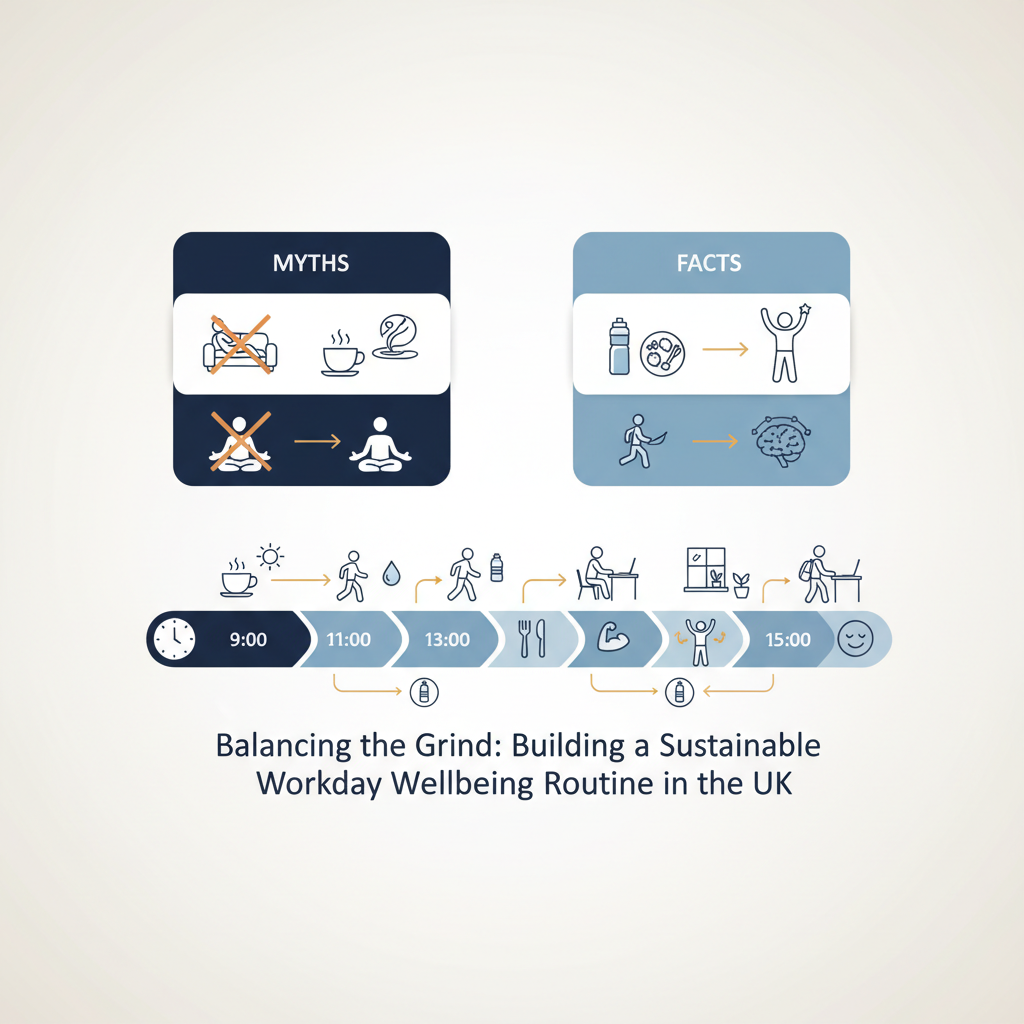
Myth vs. Fact: Redefining the UK Workday Routine
To build a better routine, we must first clear away the clutter of common health myths that often lead to burnout or frustration.
Myth 1: You Must Eat a Large Breakfast to 'Jumpstart' Your Metabolism
The Fact: The idea that breakfast is the most important meal of the day is not a one-size-fits-all rule. For many, a large, carbohydrate-heavy breakfast can lead to a rapid rise and subsequent fall in blood glucose levels. In the UK, medical professionals often measure blood sugar in millimoles per litre (mmol/L). A sharp spike early in the morning can lead to that familiar 11:00 AM energy crash.
Many people find that delaying their first meal or opting for a high-fibre, protein-rich start helps maintain more stable energy levels. This is where structured approaches, such as intermittent fasting or the use of specific fibre supports, can help simplify the morning routine. By focusing on satiety rather than just 'fueling up,' you may find your focus remains sharper during those critical morning meetings.
Myth 2: 'Wellbeing' Requires an Hour at the Gym Every Day
The Fact: While regular exercise is vital, the NHS suggests that even 150 minutes of moderate activity per week, broken into smaller chunks, offers significant benefits. For the busy UK professional, 'movement snacks'—five to ten minutes of walking or stretching every hour—can be more effective for metabolic health than a sedentary day followed by an intense evening workout.
Incorporating movement into your commute, such as getting off the bus one stop early or taking the stairs at the office, contributes to your Non-Exercise Activity Thermogenesis (NEAT). This consistent movement helps manage blood glucose levels (aiming for the healthy range as defined by NICE guidelines) and reduces the physical strain of prolonged sitting.
Myth 3: You Need Unbreakable Willpower to Stay Healthy
Building Your Routine: A Structured Approach
Creating a workday wellbeing routine in the UK requires a balance of nutrition, movement, and mental recovery. Here is how to structure your day for better consistency.
1. The Morning Transition
Instead of reaching for a high-sugar cereal or a sweetened latte, consider how your first choices impact your blood sugar. If you are following a lifestyle approach that includes time-restricted eating, the morning is a time for hydration and perhaps a tool to support focus without breaking your fast. This helps keep your mmol/L levels stable, avoiding the early-morning roller coaster.
2. Navigating the 'Mid-Day Slump'
The 2:00 PM slump is often a physiological response to a heavy, processed lunch. The British Heart Foundation and Diabetes UK both emphasize the importance of fibre and lean proteins in maintaining steady energy. A simple way to support this is by ensuring a high-fibre intake before your main meals. This doesn't just help with digestion; it supports a slower release of energy, keeping you productive until the end of the shift.
3. The Evening Wind-Down
In the UK, the 'always-on' digital culture can bleed into evening hours. A consistent routine must include a hard stop. Use the evening to prepare for the next day—lay out your clothes, prep a fibre-rich meal, and disconnect from screens at least an hour before bed. Quality sleep is the foundation upon which all other health habits are built.
Practical Element: The UK Workday Wellbeing Audit
Use this checklist to evaluate your current routine and identify areas for small, sustainable changes:
- Hydration: Are you drinking at least 6-8 glasses of water, as recommended by the NHS?
- Movement: Do you stand or walk for at least 5 minutes for every hour spent sitting?
- Nutrition Timing: Are your meals spaced to allow for digestive rest, or are you constantly grazing?
- Fibre Intake: Does each meal contain a significant source of fibre (vegetables, legumes, or a structured supplement)?
- Blood Sugar Awareness: Do you experience 'crashes' after meals? (If so, consider consulting a GP to discuss your mmol/L levels).
- Mental Boundaries: Do you have a clear start and end time for your professional responsibilities?
When to Seek Professional Guidance
While lifestyle adjustments and structured supports like the structured reflection approach can enhance your daily experience, they are not substitutes for medical advice. If you are experiencing chronic fatigue, persistent thirst, or unexplained weight changes, it is important to consult a healthcare professional. Organizations like the NHS and NICE provide comprehensive guidelines on metabolic health, and your GP can perform necessary tests to ensure your blood sugar (mmol/L) and cardiovascular markers are within healthy ranges.
For those looking to understand more about how information and health literacy impact their choices, exploring resources on cognitive health information can be a valuable step in becoming a more informed advocate for your own wellbeing.

Conclusion: Consistency Over Perfection
A successful workday wellbeing routine in the UK is not one that requires you to change your entire life overnight. It is one that fits into the gaps of your existing schedule, providing structure where there is currently chaos. By debunking myths about 'perfect' health and focusing on evidence-based habits—like managing blood sugar spikes and prioritizing movement—you can build a routine that lasts.
Ready to see how your current habits align with your goals?
Start Your Health Assessment
Take the first step toward a more structured routine by evaluating your current lifestyle needs.
ابدأ تقييمك الصحيFrequently Asked Questions
What is the scope of this guide?
This guide is educational and helps readers organize questions and observations for further learning.
How should I use the information?
Use it to review terminology, note personal questions, and identify sources that require verification.
When should I seek professional guidance?
Discuss personal symptoms, medicines, diagnoses, or treatment decisions with a licensed professional.
Further Education
- Explore the metabolic health education hub
- Learn how to read research summaries
- Use the educational health assessment
Explore health education with care
Use ATHAR’s educational guides and practical tools to choose your next learning step.