Heart Health Netherlands Hartstichting 2026: Prevention Guide for 2026
Author: Feras Alayed
Published:
Updated:
Category: dutch-health
Reading Time: 10 minutes
Key Takeaways
- Cardiovascular disease remains a major health burden in the Netherlands — about 1 in 4 deaths are heart- or vascular-related (Hartstichting, RIVM).
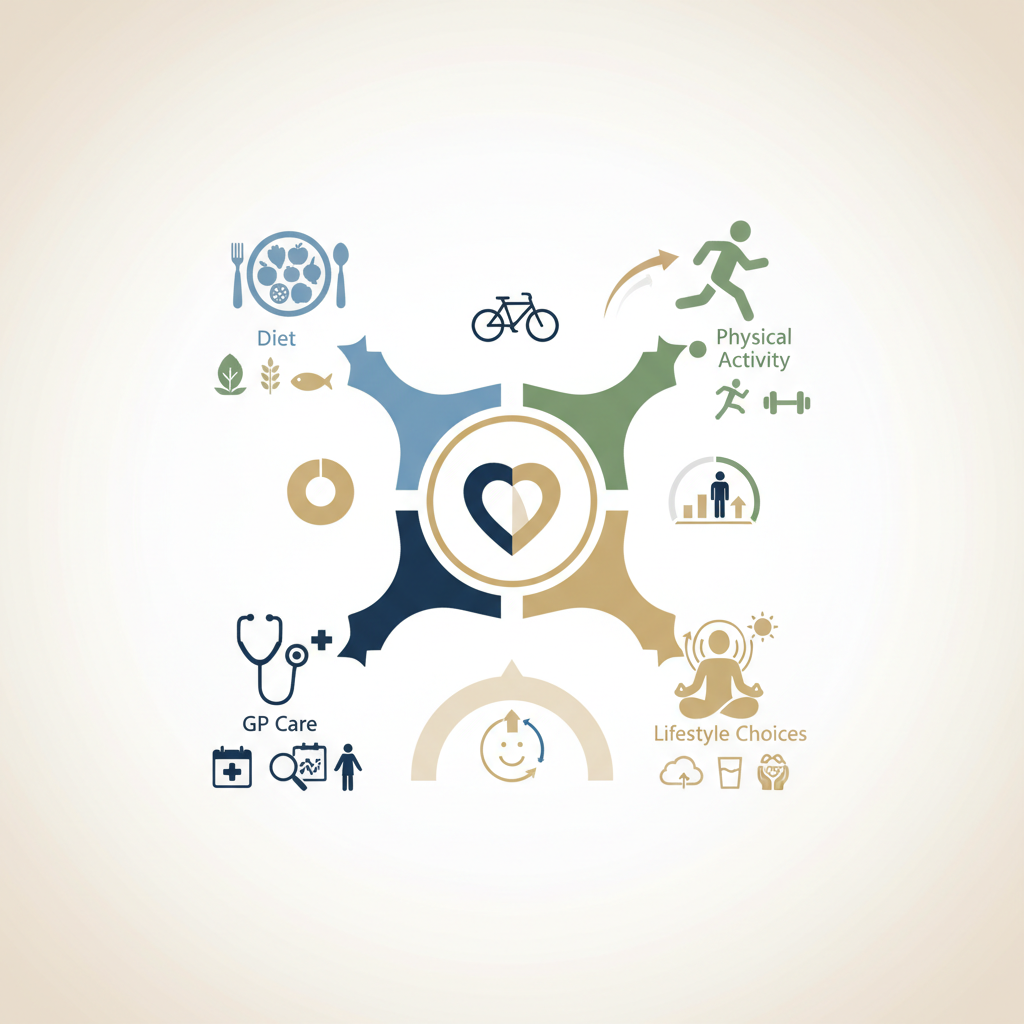
- Prevention focuses on blood pressure, smoking cessation, healthy diet (Schijf van Vijf), physical activity (cycling culture) and managing metabolic risks like elevated glucose (mmol/L).
- GPs (huisarts) and care pathways covered by zorgverzekering are central: screening, lifestyle counselling and medication when needed.
- Practical steps — more cycling, Mediterranean-style foods within the Schijf van Vijf, lower salt, and weight management — may help lower cardiovascular risk.
- The Feel Great lifestyle system (Balance, Unimate, 4-4-12) is presented as a supportive, non-medical tool that may help with metabolic health and post-meal glucose response.
TL;DR
Hartstichting’s 2026 prevention priorities emphasise blood pressure control, smoking reduction, better diet per the Schijf van Vijf and an active life (think: cycling). Work with your huisarts and zorgverzekering-covered prevention services. Lifestyle supports such as the Feel Great system may help manage metabolic drivers of heart disease but are not a replacement for medical care.
🇳🇱 Want to take action now? Try Feel Great → | Chat with a coach →
Introduction — a shocking Netherlands statistic
Cardiovascular disease is still one of the Netherlands’ top health challenges. According to the Dutch Heart Foundation (Hartstichting) and RIVM, roughly one in four deaths in the Netherlands is caused by heart or vascular disease — a reminder that prevention remains vital as we enter 2026. This guide translates Hartstichting’s prevention priorities into practical steps for people living in the Netherlands, using local systems (huisarts, zorgverzekering), local food culture (Schijf van Vijf), and the country’s strong cycling tradition.
Main changes and priorities in Hartstichting Prevention 2026
1. Focus areas
- Early detection and management of high blood pressure (hypertension).
- Smoking cessation and reducing exposures (including second-hand smoke).
- Reducing unhealthy dietary patterns (excess salt, saturated fat, and ultra-processed foods) while promoting Schijf van Vijf choices.
- Addressing metabolic risk: overweight, insulin resistance and elevated fasting glucose (use mmol/L when discussing blood sugar).
- Promoting everyday activity — leveraging cycling culture and active transport.
2. Why these priorities?
International and Dutch evidence shows that modifiable risk factors (blood pressure, smoking, diet, physical inactivity, overweight, diabetes) explain a large share of cardiovascular events. Hartstichting’s 2026 plan aligns with RIVM health monitoring and Amsterdam UMC/Erasmus MC research that emphasize population-wide prevention plus targeted interventions for high-risk groups.
Practical prevention steps for people in the Netherlands
Check and act via your huisarts and zorgverzekering
Your huisarts is the entry point for cardiovascular prevention. Most basic screenings (blood pressure checks, cholesterol testing, fasting glucose — reported in mmol/L, e.g., fasting plasma glucose ≥7.0 mmol/L is used in diagnostic processes) are available via the huisarts; many prevention and lifestyle counselling services are reimbursed or subsidised through your zorgverzekering. If you’re unsure, ask your huisarts about the periodic CV risk check (cardiovasculair risicoprofiel).
Eat according to the Schijf van Vijf — practical swaps
Voedingscentrum’s Schijf van Vijf remains the Netherlands’ simple, evidence-based model for a heart-health-promoting diet. Focus on:
- Vegetables, fruit, whole grains and legumes — prioritise fibre-rich choices.
- Vegetable oils and soft margarines instead of butter and hard margarine.
- Fish twice a week (incl. oily fish) or plant-based omega-3 sources.
- Limit salt — use herbs and spices; ready-made foods often contain high salt.
- Choose minimally processed foods over ultra-processed options.
Move more — use the cycling advantage
The Netherlands' cycling culture is an asset. Regular moderate-to-vigorous physical activity reduces cardiovascular risk. Aim for at least 150–300 minutes/week of moderate activity or 75–150 minutes/week of vigorous activity (per international guidelines). Practical tips:
- Cycle for errands and commuting when possible — it counts as daily moderate activity.
- Break up long sitting periods with short walking or standing breaks — helpful even for people with full-time desk jobs.
- Use community offerings through local sports clubs or preventive programmes available via your gemeente.
Manage metabolic risk — blood pressure, lipids and glucose (mmol/L)
Control of blood pressure and lipids is central. Common blood glucose thresholds used in NL/WHO frameworks (for clinician context) include fasting plasma glucose ≥7.0 mmol/L for diabetes diagnosis. Many people have prediabetes or insulin resistance without symptoms; lifestyle changes focused on weight reduction, increased activity, and dietary fiber may help lower post-meal glucose excursions.
Evidence-based actions that may help reduce cardiovascular risk
| Action | What it may do | Evidence (selected) |
|---|---|---|
| Lowering blood pressure | May reduce stroke and heart attack risk | Multiple RCTs and meta-analyses (JAMA/NEJM/Lancet reviews) |
| Smoking cessation | May sharply reduce cardiovascular events over time | Systematic reviews & Dutch cessation campaigns (Hartstichting) |
| Dietary pattern: Schijf van Vijf / Mediterranean-style | May lower cholesterol, inflammation, and improve weight | Meta-analyses (BMJ, Lancet); WUR nutrition research |
| Physical activity / cycling | May reduce overall CV risk and improve metabolic health | Large cohort studies and systematic reviews |
| Increased dietary fibre | May help manage post-meal glucose and cholesterol | Systematic reviews; Wageningen University research |
How the Dutch system helps: huisarts and zorgverzekering
Prevention in the Netherlands is delivered through a primary care–centred system. Your huisarts coordinates initial CV risk assessments and ongoing care. Many zorgverzekeringen reimburse preventive consultations, lifestyle coaching and smoking cessation aids — check your policy's basic package (basisverzekering) and any additional modules (aanvullende verzekering). For organized screening programmes and municipality initiatives, RIVM health monitors track population trends and local preventive efforts.
Special considerations for people with diabetes or prediabetes (mmol/L values)
High blood glucose is a known cardiovascular risk enhancer. Key mmol/L landmarks used in clinical practice:
- Normal fasting plasma glucose: generally below 6.1 mmol/L (depending on lab and guideline).
- Impaired fasting glucose (prediabetes): laboratory ranges differ; clinicians often use 6.1–6.9 mmol/L as a threshold for further evaluation.
- Diabetes diagnostic fasting plasma glucose: ≥7.0 mmol/L (confirmatory testing often required).
Work with your huisarts for proper testing, and discuss lifestyle steps plus any pharmacological treatment as advised by your clinician. Lifestyle steps that may help include increased physical activity (cycling), weight loss and fibre-rich diets compliant with the Schijf van Vijf.
Comparison: Lifestyle strategies that the Netherlands emphasizes (table)
| Strategy | Netherlands focus | How to apply |
|---|---|---|
| Active transport | High (cycling) | Cycle for commuting/errands; use secure parking, lights, and rain gear |
| Dietary pattern | Schijf van Vijf | Veggies, whole grains, fish, limit processed foods & salt |
| Primary care screening | GP-led | Annual checks for BP, cholesterol, glucose via huisarts |
| Community prevention | Municipality programmes | Local exercise groups, smoking cessation courses |
How Feel Great Helps (connection to insulin resistance → metabolic health)
Feel Great is offered as a lifestyle support system rather than a medication. It combines a targeted soluble-fibre matrix (Balance), a mate extract (Unimate) and an intermittent fasting protocol (4-4-12) alongside general lifestyle guidance. Key aspects:
- Balance: a soluble-fibre matrix designed to slow carbohydrate absorption and help manage post-meal glucose response — this may help flatten postprandial glucose peaks.
- Unimate: a yerba mate extract containing chlorogenic acids and other compounds that may help with energy and mental clarity during lifestyle changes.
- 4-4-12 intermittent fasting protocol: a structured pattern that may align with lifestyle goals for weight management and metabolic health.
There are over 50 clinical studies listed in the PDR related to the ingredients and concepts used in Feel Great. These components are proposed as non-medical supports that may help with insulin resistance and metabolic pathways linked to cardiovascular risk. They are not a substitute for GP care, prescription medicines, or clinically indicated interventions. Always discuss any new supplement or fasting strategy with your huisarts, especially if you use medication or have diabetes (risk of hypoglycaemia) or other chronic conditions.
People Also Ask
- How does Hartstichting 2026 recommend reducing heart disease risk? — Focus on blood pressure control, smoking cessation, Schijf van Vijf diet changes, activity and addressing metabolic risks.
- Will cycling help my heart health? — Regular cycling contributes to recommended weekly activity and is associated with lower cardiovascular risk in population studies.
- What fasting glucose values (mmol/L) should I worry about? — Fasting plasma glucose ≥7.0 mmol/L is commonly used in diagnostic pathways; discuss results with your huisarts.
- Does my zorgverzekering pay for prevention programmes? — Many basic and aanvullende policies cover preventive consultations and smoking cessation; check your insurer.
- Can supplements replace lifestyle changes? — Supplements like those in Feel Great may help as adjuncts, but they are not replacements for diet, activity and medical care.
FAQ
- How often should I see my huisarts for heart risk checks?
If you are over 40 or have risk factors (smoking, high BP, diabetes, family history), ask your huisarts about an annual check. Those with established disease need more frequent reviews. - Are cholesterol tests covered by zorgverzekering?
Yes — basic coverage typically includes essential blood tests when ordered by your huisarts. - What are realistic weight-loss goals for heart health?
A 5–10% weight loss often yields meaningful improvements in blood pressure, glucose and lipids. Tailor goals with your huisarts or a dietitian. - Is the Schijf van Vijf suitable for people with heart disease?
Yes — it is designed for healthy eating across the population and fits heart-healthy principles: high fibre, vegetables, healthy fats, and lean proteins. - What should I tell my huisarts before trying the 4-4-12 fasting protocol?
Discuss current medications (especially for diabetes or blood pressure), past medical history, and any pregnancy or eating disorder history. Your huisarts may recommend monitoring or modifications.
References & Scientific Sources
Selected Dutch sources (mandatory):

- RIVM – National Institute for Public Health: https://www.rivm.nl
- Hartstichting (Dutch Heart Foundation) — prevention priorities 2026: https://www.hartstichting.nl
- Voedingscentrum — Schijf van Vijf and heart-healthy diet guidance: https://www.voedingscentrum.nl
- Wageningen University & Research — nutrition & public health research: https://www.wur.nl
- Erasmus MC / Amsterdam UMC — cardiovascular research and population studies: https://www.erasmusmc.nl and https://www.amsterdamumc.nl
- Dutch Diabetes Fund (Diabetes Fonds) — diabetes prevention resources: https://www.diabetesfonds.nl
Selected international scientific reviews and studies (recent, 2021–2026 focus):
- Physical activity and cardiovascular disease: large systematic reviews and meta-analyses (Lancet reviews, 2022–2024). Example: The Lancet series on physical activity and public health: https://www.thelancet.com
- Mediterranean-style dietary patterns and cardiovascular outcomes — recent meta-analyses (BMJ/Lancet): https://www.bmj.com; https://www.thelancet.com
- Salt reduction and blood pressure: Cochrane systematic reviews (2021–2023): https://www.cochranelibrary.com
- Blood pressure control and cardiovascular outcomes — pooled RCT analyses (NEJM/JAMA reviews): https://www.nejm.org; https://jamanetwork.com
- Dietary fibre, postprandial glucose and cardiometabolic risk — systematic reviews and Wageningen research summaries: https://pubmed.ncbi.nlm.nih.gov
For quick access, consult the Dutch pages above (RIVM, Hartstichting, Voedingscentrum) and international databases (PubMed, Cochrane, NEJM, Lancet) for the most recent systematic reviews and RCTs.
Medical Disclaimer
This article is for information purposes only and does not replace personalised medical advice. Always consult your huisarts or relevant healthcare professional before starting any new diet, supplement or fasting protocol — especially if you have existing cardiovascular disease, diabetes, take prescription medicines, are pregnant or are breastfeeding. The Feel Great system described is a lifestyle support and is not a medication or therapy; individual results vary.
Related ATHAR paths
🇳🇱 Ready to Start Your Health Transformation?
Join thousands across Netherlands who have improved their metabolic health with the Feel Great system. Backed by 50+ clinical studies and listed in the Physicians' Desk Reference (PDR).
✅ Free Delivery in Netherlands | 90-Day Money-Back Guarantee