Iron Deficiency Canada Women: A Hidden Epidemic & Practical Guide
Author: Feras Alayed
Published:
Updated:
Category: canadian-health
Reading Time: 8 minutes
Key Takeaways
- Iron deficiency (with or without anemia) affects a substantial number of Canadian women — nationally representative CHMS data found iron deficiency in ~16% of premenopausal women. ([jn.nutrition.org](https://jn.nutrition.org/article/S0022-3166%2822%2913117-2/fulltext?utm_source=openai))
- Symptoms are often non-specific (fatigue, brain fog, restless legs), which contributes to under-diagnosis and delayed care. ([canada.ca](https://www.canada.ca/en/health-canada/services/nutrients/iron.html?utm_source=openai))
- Major risk groups in Canada include menstruating women, pregnant people, certain ethnic groups, and people on restrictive diets (vegetarian/vegan). ([jn.nutrition.org](https://jn.nutrition.org/article/S0022-3166%2822%2913117-2/fulltext?utm_source=openai))
- Appropriate screening requires ferritin, hemoglobin and inflammation markers; iron deficiency can also distort A1C results used in diabetes screening. ([jn.nutrition.org](https://jn.nutrition.org/article/S0022-3166%2822%2913117-2/fulltext?utm_source=openai))
- Dietary strategies aligned with Canada’s Food Guide, targeted supplements, and structured lifestyle supports such as the Feel Great system may help improve iron status when used with clinical oversight. Check Health Canada NPNs and provincial coverage for access. ([gov.nl.ca](https://www.gov.nl.ca/healthyeating/affordable/welcome-to-affordable/canadas-food-guide/?utm_source=openai))
TL;DR
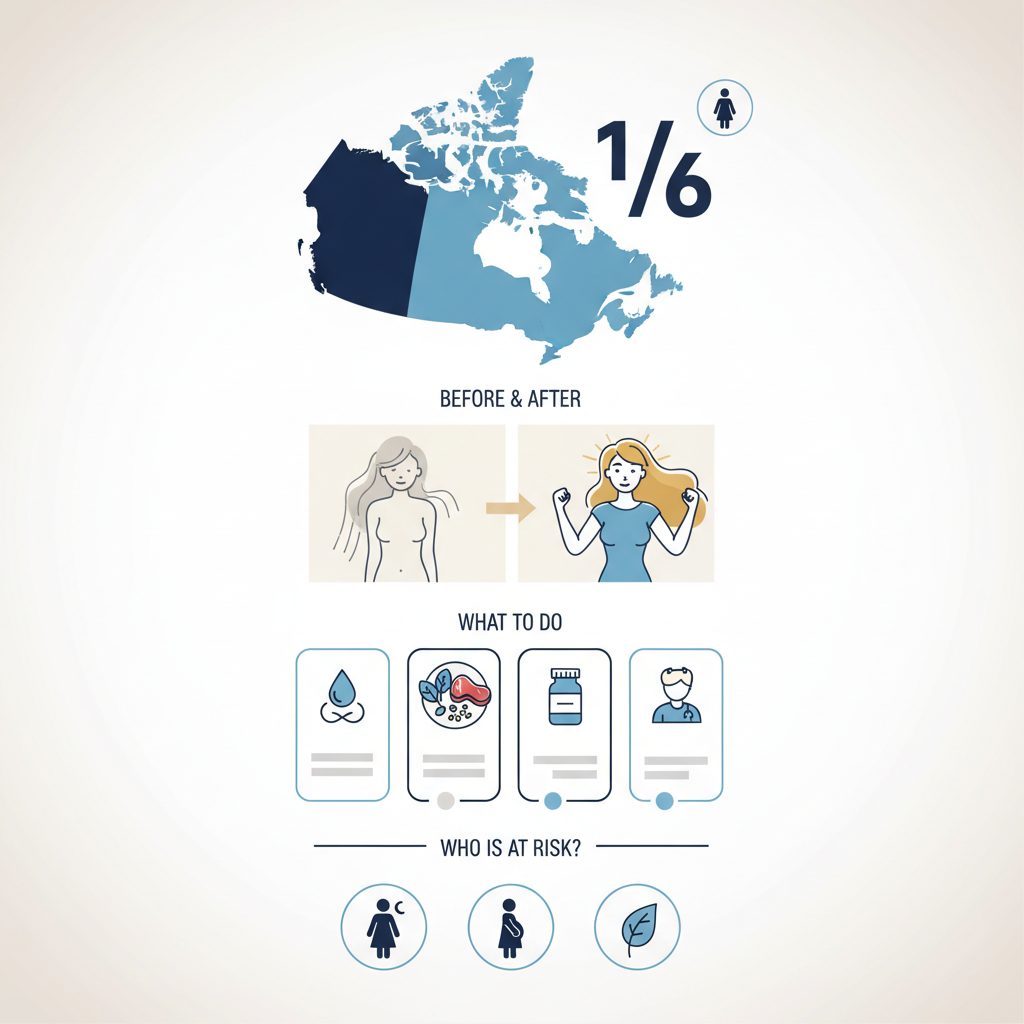
Iron deficiency is a measurable, under-recognized health issue among Canadian women — roughly 1 in 6 premenopausal women had depleted iron stores in national data. Early testing (ferritin + Hb + CRP), diet aligned with Canada’s Food Guide, appropriate supplementation, and follow-up can restore stores and improve symptoms. See practical steps and Canada-specific resources below. ([jn.nutrition.org](https://jn.nutrition.org/article/S0022-3166%2822%2913117-2/fulltext?utm_source=openai))
🇨🇦 Thousands of Canadians are using Feel Great to support their metabolic health naturally. Learn more & order here →
Iron Deficiency in Canadian Women: A Hidden Epidemic
Introduction — a Canadian wake-up call
Startling but evidence-based: analyses of the Canadian Health Measures Survey (CHMS) found that 16.0% of premenopausal women had iron deficiency (serum ferritin <15 µg/L), compared with 4.0% of postmenopausal women. That result — from a national, biomarker-based study — shows iron deficiency is far from rare among Canadian women. ([jn.nutrition.org](https://jn.nutrition.org/article/S0022-3166%2822%2913117-2/fulltext?utm_source=openai))
Why iron matters
Iron is central to oxygen transport (hemoglobin), cellular energy and neurocognitive function. Low iron ranges from subtle symptoms (tiredness, poor concentration, restless legs syndrome) to frank iron-deficiency anemia with low hemoglobin. Health Canada provides clear public guidance on dietary iron and signs to watch for. ([canada.ca](https://www.canada.ca/en/health-canada/services/nutrients/iron.html?utm_source=openai))
How common is it in Canada?
Multiple analyses of CHMS and national surveillance indicate population-level iron deficiency estimates vary by definition, but remain clinically meaningful: uncorrected estimates cited 7% population ID and ~6% anemia overall; targeted analyses among women show the higher 16% premenopausal prevalence figure reported in The Journal of Nutrition (CHMS pooled cycles 2009–2017). These data show iron deficiency is a public-health issue for reproductive-aged women in Canada. ([jn.nutrition.org](https://jn.nutrition.org/article/S0022-3166%2823%2935480-4/fulltext?utm_source=openai))
Who is at highest risk?
- Women with heavy or prolonged menstrual bleeding (the leading driver in reproductive-aged women). ([mayoclinic.org](https://www.mayoclinic.org/diseases-conditions/iron-deficiency-anemia/symptoms-causes/syc-20355034?p=1&utm_source=openai))
- Pregnant people — pregnancy increases iron requirements and is a time for proactive monitoring. ([canada.ca](https://www.canada.ca/en/health-canada/services/nutrients/iron.html?utm_source=openai))
- Vegetarian/vegan eaters unless diets are planned with iron-rich and iron-enhancing foods. ([gov.nl.ca](https://www.gov.nl.ca/healthyeating/affordable/welcome-to-affordable/canadas-food-guide/?utm_source=openai))
- People with gastrointestinal disease, prior bariatric surgery, or chronic GI blood loss. ([nhlbi.nih.gov](https://www.nhlbi.nih.gov/health/anemia?utm_source=openai))
- Socioeconomic and ethnic disparities: CHMS analyses highlight associations with age, ethnicity, diet and income. ([jn.nutrition.org](https://jn.nutrition.org/article/S0022-3166%2822%2913117-2/fulltext?utm_source=openai))
Why iron deficiency is often missed
Symptoms are non-specific and may be attributed to stress, mood disorders, or simply “busy life.” Lab interpretation adds complexity: ferritin is a storage marker but it’s also an acute-phase reactant, so inflammation can mask low iron unless CRP/inflammation markers are considered. Population studies have shown prevalence estimates shift depending on which definition or correction method is used. ([jn.nutrition.org](https://jn.nutrition.org/article/S0022-3166%2822%2913117-2/fulltext?utm_source=openai))
Key tests and lab thresholds
Primary tests: hemoglobin (Hb), serum ferritin (SF), and inflammatory marker (CRP/hs-CRP) when indicated. A commonly used cutoff for iron deficiency is ferritin <15 µg/L; clinicians may use higher cutoffs or additional indices (transferrin saturation, soluble transferrin receptor) in complex cases. Repeat testing is essential to document recovery after intervention. ([jn.nutrition.org](https://jn.nutrition.org/article/S0022-3166%2822%2913117-2/fulltext?utm_source=openai))
Important cross-talk with diabetes testing
Iron deficiency can alter glycated hemoglobin (A1C) readings, potentially leading to misleading results when screening or monitoring diabetes. Diabetes Canada recommends awareness of conditions that distort A1C and suggests using fasting plasma glucose (FPG) or repeating A1C once iron status is corrected if discrepancy is suspected. Diagnostic thresholds to remember (Diabetes Canada): FPG ≥7.0 mmol/L or A1C ≥6.5% indicate diabetes. ([guidelines.diabetes.ca](https://guidelines.diabetes.ca/screening?utm_source=openai))
Root causes to evaluate
- Menstrual blood loss — quantify patterns and consider gynaecologic referral if heavy. ([mayoclinic.org](https://www.mayoclinic.org/diseases-conditions/iron-deficiency-anemia/symptoms-causes/syc-20355034?p=1&utm_source=openai))
- Pregnancy-related increased needs — antenatal follow-up is critical. ([canada.ca](https://www.canada.ca/en/health-canada/services/nutrients/iron.html?utm_source=openai))
- Occult gastrointestinal bleeding — older adults or those with GI symptoms may need endoscopic evaluation. ([phac-aspc.gc.ca](https://www.phac-aspc.gc.ca/publicat/ncccs-cndcc/pdf/ccstechrep_e.pdf?utm_source=openai))
- Dietary insufficiency or malabsorption conditions. ([gov.nl.ca](https://www.gov.nl.ca/healthyeating/affordable/welcome-to-affordable/canadas-food-guide/?utm_source=openai))
What works — evidence-informed approaches
Systematic reviews and RCTs show that targeted dietary interventions and appropriate supplementation restore iron stores and hemoglobin in many women, but the optimal regimen can differ by cause and tolerance. Recent reviews emphasize individualized approaches and monitoring for response. ([pubmed.ncbi.nlm.nih.gov](https://pubmed.ncbi.nlm.nih.gov/35807904/?utm_source=openai))
Dietary guidance (Canada-specific)
Plan meals using Canada’s Food Guide: include heme-iron sources (lean red meat, fish, shellfish) when acceptable; pair plant-based iron sources with vitamin C-rich foods to boost absorption; avoid tea/coffee at mealtimes when trying to increase iron uptake. Public resources from Health Canada outline practical food-based strategies. ([gov.nl.ca](https://www.gov.nl.ca/healthyeating/affordable/welcome-to-affordable/canadas-food-guide/?utm_source=openai))
Supplements and monitoring
Oral iron (various forms: sulfate, fumarate, gluconate) is the standard first-line repletion for many cases. The regimen and dose should be chosen with clinical oversight to balance efficacy and gastrointestinal tolerability; check baseline ferritin and repeat after 6–8 weeks of therapy to document response. If oral therapy fails or is not tolerated, clinicians may consider IV iron under specialist care. Verify any over-the-counter product’s Natural Product Number (NPN) and consult provincial coverage options or private plans. ([mayoclinic.org](https://www.mayoclinic.org/diseases-conditions/iron-deficiency-anemia/diagnosis-treatment/drc-20355040?utm_source=openai))
How Feel Great may fit into a supportive plan
The Feel Great system is a lifestyle support framework that includes:
- Balance — a soluble-fibre matrix that may help stabilise post-meal glucose and appetite, which can assist adherence to iron-enhancing meal patterns. (May help; not a drug).
- Unimate — yerba mate extract containing chlorogenic acids that may improve perceived energy and cognitive clarity while repleting iron stores. (May support daily energy; not a replacement for medical treatment).
- The 4-4-12 intermittent feeding protocol — a structured eating pattern to support consistent nutrient intake and metabolic health.
Use these tools as part of a clinician-reviewed plan; they are not substitutes for diagnostic testing or prescription therapies. Always check product NPNs and verify interactions with other medications. ([canada.ca](https://www.canada.ca/content/dam/hc-sc/migration/hc-sc/fn-an/alt_formats/hpfb-dgpsa/pdf/pubs/iron-fer-eng.pdf?utm_source=openai))
Provincial considerations and access in Canada
Access to testing, specialist referral and coverage for supplements can vary between provinces (Ontario, BC, Alberta, Quebec). Many Canadians can access blood tests through provincial laboratory services ordered by a family physician; walk-in clinics and telehealth services can help start assessments quickly. Some provinces have targeted prenatal programs that cover iron testing or supplements for pregnant people — check local public health resources. ([cihi.ca](https://www.cihi.ca/sites/default/files/document/cihi-annual-report-2024-2025-en.pdf?utm_source=openai))
When to seek urgent care
Seek immediate medical attention for severe dizziness, chest pain, shortness of breath, or heavy bleeding. Also pursue further investigation if iron levels do not rise after several months of compliant therapy — this may indicate ongoing blood loss or malabsorption requiring specialist work-up. ([mayoclinic.org](https://www.mayoclinic.org/diseases-conditions/iron-deficiency-anemia/symptoms-causes/syc-20355034?p=1&utm_source=openai))
People Also Ask
- Does low ferritin always mean anemia? — No; ferritin reflects iron stores and can be low even when hemoglobin is still within the normal range. ([jn.nutrition.org](https://jn.nutrition.org/article/S0022-3166%2822%2913117-2/fulltext?utm_source=openai))
- Can I improve iron without supplements? — Many people can improve stores with dietary changes and monitoring, but supplements are frequently needed for repletion. ([gov.nl.ca](https://www.gov.nl.ca/healthyeating/affordable/welcome-to-affordable/canadas-food-guide/?utm_source=openai))
- Are there risks to taking iron? — Excess iron can be harmful, so therapy should be tailored and monitored. ([nutritionsource.hsph.harvard.edu](https://nutritionsource.hsph.harvard.edu/iron/?utm_source=openai))
- How long until I feel better? — Some symptom improvement may appear in weeks, but full repletion can require months of therapy and follow-up labs. ([canada.ca](https://www.canada.ca/en/health-canada/services/nutrients/iron.html?utm_source=openai))
- Does iron affect diabetes tests? — Yes — iron deficiency can bias A1C; use alternative testing strategies when relevant. ([guidelines.diabetes.ca](https://guidelines.diabetes.ca/screening?utm_source=openai))
FAQ
- Q: What ferritin level defines deficiency?
A: Many labs and the WHO use SF <15 µg/L; clinicians sometimes use higher cutoffs depending on context and inflammation markers. ([jn.nutrition.org](https://jn.nutrition.org/article/S0022-3166%2822%2913117-2/fulltext?utm_source=openai)) - Q: Should all pregnant women take iron supplements?
A: Pregnant patients are monitored and may be recommended supplements based on hemoglobin/ferritin; follow provincial prenatal care guidance. ([canada.ca](https://www.canada.ca/en/health-canada/services/nutrients/iron.html?utm_source=openai)) - Q: Can I check iron at a walk-in clinic in Canada?
A: Yes — family doctors and many walk-in clinics can order blood tests; provincial labs process them. Coverage depends on provincial health plans. ([cihi.ca](https://www.cihi.ca/sites/default/files/document/cihi-annual-report-2024-2025-en.pdf?utm_source=openai)) - Q: Are plant-based diets OK for iron?
A: Yes when well-planned: include iron-fortified foods and pair them with vitamin C-rich items; consider supplements if stores are low. ([gov.nl.ca](https://www.gov.nl.ca/healthyeating/affordable/welcome-to-affordable/canadas-food-guide/?utm_source=openai)) - Q: How to verify a supplement’s Health Canada approval?
A: Look for a Natural Product Number (NPN) on the label and verify via Health Canada's NHP database. ([canada.ca](https://www.canada.ca/content/dam/hc-sc/migration/hc-sc/fn-an/alt_formats/hpfb-dgpsa/pdf/pubs/iron-fer-eng.pdf?utm_source=openai))
References & Scientific Sources
- Health Canada — Iron (nutrient page and public materials). ([canada.ca](https://www.canada.ca/en/health-canada/services/nutrients/iron.html?utm_source=openai))
- Chang VC, et al. "Iron Status and Associated Factors among Canadian Women: Results from the Canadian Health Measures Survey," The Journal of Nutrition, 2023. ([jn.nutrition.org](https://jn.nutrition.org/article/S0022-3166%2822%2913117-2/fulltext?utm_source=openai))
- Population Iron Status in Canada: Results from the Canadian Health Measures Survey 2012–2019, The Journal of Nutrition. ([jn.nutrition.org](https://jn.nutrition.org/article/S0022-3166%2823%2935480-4/fulltext?utm_source=openai))
- Statistics Canada — Iron sufficiency of Canadians (CHMS analysis). ([www150.statcan.gc.ca](https://www150.statcan.gc.ca/n1/pub/82-003-x/2012004/article/11742-eng.htm?utm_source=openai))
- Diabetes Canada Clinical Practice Guidelines — A1C & screening notes. ([guidelines.diabetes.ca](https://guidelines.diabetes.ca/screening?utm_source=openai))
- Heart & Stroke Foundation — women’s heart & brain health context in Canada. ([heartandstroke.ca](https://www.heartandstroke.ca/what-we-do/media-centre/news-releases/system-failure-womens-heart-and-brain-health-are-at-risk?utm_source=openai))
- Systematic reviews and reviews of iron interventions in women (PubMed). ([pubmed.ncbi.nlm.nih.gov](https://pubmed.ncbi.nlm.nih.gov/35807904/?utm_source=openai))
- Mayo Clinic — Iron-deficiency anemia: clinical overview. ([mayoclinic.org](https://www.mayoclinic.org/diseases-conditions/iron-deficiency-anemia/symptoms-causes/syc-20355034?p=1&utm_source=openai))
Medical Disclaimer
This article is educational and not a substitute for medical advice. Consult your family physician, obstetrician, or local provincial healthcare services for personal diagnosis and treatment. If you have severe symptoms, call emergency services.
Related ATHAR paths
🇨🇦 Ready to Start Your Health Transformation?
Join thousands of Canadians who have improved their metabolic health with the Feel Great system. Backed by 50+ clinical studies and listed in the Physicians' Desk Reference (PDR).
✅ Ships to all provinces: BC, Alberta, Saskatchewan, Manitoba, Ontario, Quebec, New Brunswick, Nova Scotia, PEI, Newfoundland & Labrador | 90-Day Money-Back Guarantee