Mastering Your Meal Timing Routine in Spain: Navigating Late Dinners and Social Habits
Author: Feras Alayed
Published:
Category: behavioral-nutrition
Reading Time: 7 minutes
The Spanish Paradox: When Culture Meets Consistency
For many international residents and expats in Spain, the first cultural shock isn't the language—it’s the clock. You sit down for dinner at 7:00 PM, only to find the restaurant doors locked or the staff just beginning their shift. In Spain, the rhythm of life is pushed forward. Lunch is the main event at 2:30 PM, and dinner often doesn't grace the table until 9:30 PM or later. This creates a significant challenge for those trying to maintain a consistent meal timing routine in Spain while pursuing health and wellness goals.
The problem isn't just the late hour; it's the friction between traditional health advice—which often suggests 'closing the kitchen' by 7:00 PM—and the social reality of Spanish life. When your social circle, work schedule, and local environment all revolve around late-night engagement, trying to force a standard early-eating schedule can lead to isolation or burnout. The desired outcome is a lifestyle where you can enjoy the vibrant Spanish culture without feeling like you are compromising your metabolic health or energy levels.
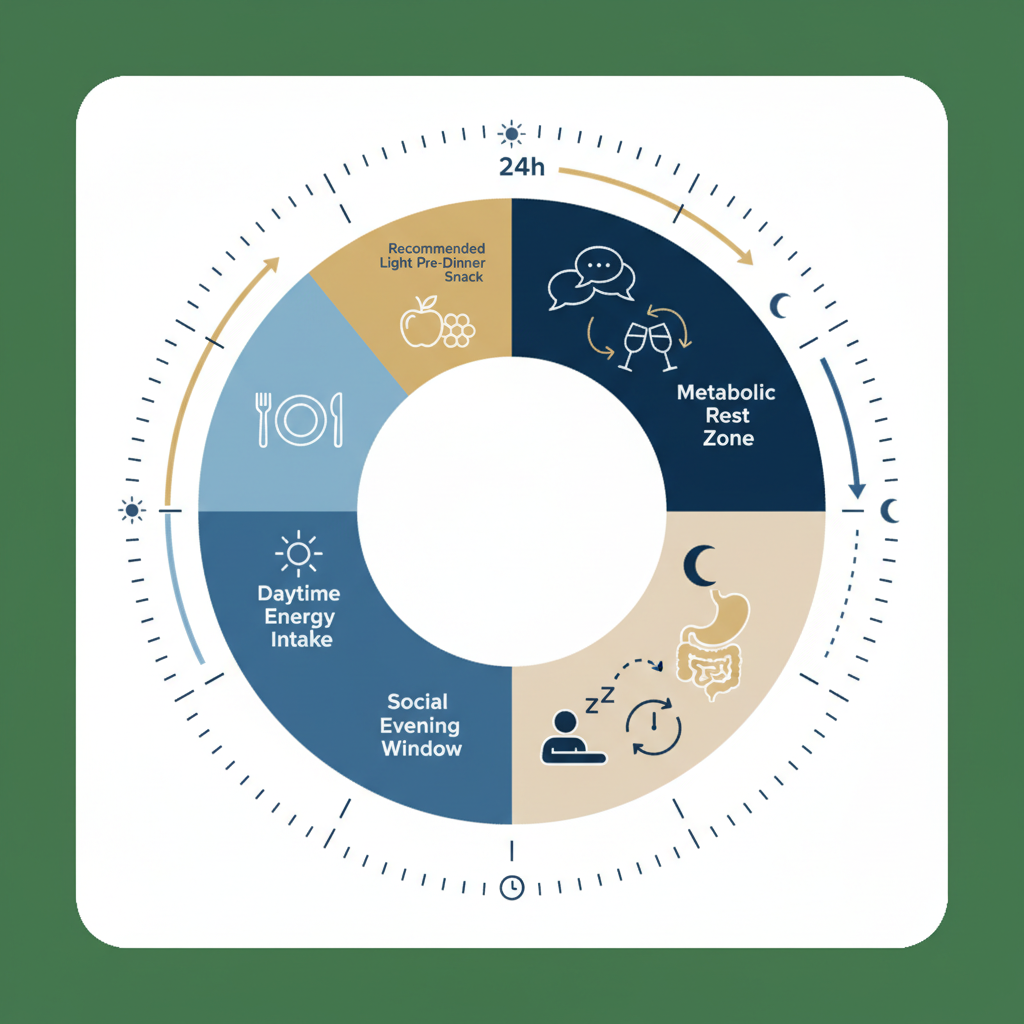
Myth vs. Fact: Decoding the Spanish Meal Schedule
To build a sustainable routine, we must first separate cultural tradition from physiological reality. Let's look at the common misconceptions surrounding late-night dining and metabolic health.
Myth 1: Eating after 8:00 PM automatically leads to weight gain.
Fact: Your body doesn't have a magical switch that turns calories into fat the moment the sun goes down. However, late eating is often associated with lower-quality food choices and disrupted sleep. In Spain, the late dinner is often followed by immediate sleep, which can affect digestion. The key is not necessarily the time on the clock, but the consistency of your eating window and the glycemic load of the meal. Understanding the glycemic index vs glycemic load is crucial here; a high-glycemic meal at 10:00 PM affects the body differently than a balanced one.
Myth 2: You must eat breakfast at 8:00 AM to 'jumpstart' your metabolism.
Fact: The idea that breakfast is the most important meal for metabolism is a common misconception. For those navigating late Spanish dinners, pushing the first meal of the next day later (often called 'brunch' or 'almuerzo') can actually help maintain a consistent fasting window. This helps the body manage blood sugar levels more effectively, especially if the previous night's meal was substantial.
Myth 3: Tapas culture is inherently unhealthy.
Fact: While tapas can be bread-heavy, the traditional Mediterranean approach focuses on small portions, variety, and social connection. The health impact depends on the choices made—opting for olives, seafood, and vegetables over fried items. The social aspect of Spanish dining, known as sobremesa (the conversation after the meal), may actually support digestion by preventing the 'eat and run' habit common in other cultures.
The Science of Timing: Blood Sugar and Circadian Rhythms
When we discuss a meal timing routine in Spain, we are really talking about circadian biology. Our bodies have internal clocks that regulate insulin sensitivity and digestion. Generally, insulin sensitivity is higher in the morning and decreases as the day progresses. For residents in Spain, this means that a heavy, carbohydrate-rich dinner at 10:30 PM may lead to higher blood sugar spikes compared to the same meal eaten at noon.
In Spain, medical professionals and organizations like the Ministerio de Sanidad and the Agencia Española de Seguridad Alimentaria y Nutrición (AESAN) provide general guidelines on balanced nutrition. While they emphasize the Mediterranean diet, the timing is often left to individual lifestyle. When monitoring your health, it is standard in Spain to measure blood glucose in mg/dL. If you are tracking how late meals affect you, observing these levels (under medical supervision) can provide insights into how your body handles the Spanish schedule.
Consistency is the bridge between culture and health. If you choose to eat late, doing so consistently allows your body to adapt its hormonal rhythms. Problems often arise when the schedule is erratic—eating at 6:00 PM one day and midnight the next. This is where a structured framework, such as the structured reflection approach, can provide the 'guardrails' needed to maintain a routine amidst a flexible social life.
Practical Strategies for the Spanish Lifestyle
How do you actually implement a healthy meal timing routine in Spain? It requires a shift in how you view your day.
- The 'Late Start' Strategy: If you know you will be dining at 10:00 PM, consider delaying your first meal of the day until 12:00 PM or 1:00 PM. This creates a natural 12-to-16-hour fasting window that accommodates the local culture.
- Prioritize the 'Comida': In Spain, lunch (la comida) is the largest meal. Embrace this. By making your mid-day meal the most nutrient-dense and substantial, you may find you need less at the late-night dinner, reducing the metabolic load before sleep.
- Fiber First: When out for tapas or a late dinner, start with fiber-rich options like a green salad or roasted vegetables. This can help moderate the glucose response of the subsequent courses.
Navigating the Healthcare Landscape in Spain
If you are concerned about how your meal timing is affecting your health—perhaps you’ve noticed changes in your energy or have concerns about your lipid profile—it is essential to consult with a professional. In Spain, you can access guidance through the public health system (Seguridad Social) or private providers. When discussing your health, you might encounter terms related to cholesterol or glucose; having a comprehensive guide to cholesterol test terms can help you advocate for yourself during appointments.
It is also wise to stay informed about how to evaluate health claims. The internet is full of 'miracle' diets for the Spanish lifestyle. Learning to distinguish between marketing and science is a vital skill. You can refer to a longevity research comparison guide to help you navigate the sea of information responsibly.
Conclusion: Finding Your Balance
Living in Spain offers a unique opportunity to embrace a slower, more social way of eating. While the late hours present a challenge to conventional health wisdom, they are not an insurmountable barrier. By focusing on consistency, understanding your body's glucose response (measured in mg/dL), and utilizing structured supports like the structured reflection approach to maintain your routine, you can enjoy the best of Spanish culture while supporting your long-term wellness.

Remember, no single method is a cure or a guarantee of health. The goal is to build a toolkit of habits that make healthy choices the 'path of least resistance' in your daily life. Whether you are in Madrid, Seville, or a small village in the north, your meal timing routine is a personal journey that should be discussed with healthcare professionals to ensure it meets your specific needs.
Next Step for Your Health Journey
Ready to see how your current habits align with your wellness goals? Take the first step toward a more structured routine by assessing your current metabolic markers and lifestyle habits.
Frequently Asked Questions
What is the scope of this guide?
This guide is educational and helps readers organize questions and observations for further learning.
How should I use the information?
Use it to review terminology, note personal questions, and identify sources that require verification.
When should I seek professional guidance?
Discuss personal symptoms, medicines, diagnoses, or treatment decisions with a licensed professional.
Further Education
- Explore the metabolic health education hub
- Learn how to read research summaries
- Use the educational health assessment
Explore health education with care
Use ATHAR’s educational guides and practical tools to choose your next learning step.