Seasonal Planning Guide: Adjusting Your Intermittent Fasting Schedule for Shorter Winter Days
Author: Feras Alayed
Published:
Updated:
Category: intermittent-fasting
Reading Time: 5 minutes
Key Takeaways
- Shifting your eating window earlier aligns with the natural early sunset in winter.
- Natural light exposure is crucial for regulating hunger hormones during shorter days.
- Flexibility allows you to enjoy seasonal social traditions without breaking your consistency.
TL;DR Summary
In winter, the body naturally craves food earlier due to the quick sunset. Seasonal planning involves shifting your eating window to align with daylight hours, supporting your biological clock and making fasting feel more natural and sustainable.The Winter Shift: Why Adjustments Matter
As the air turns crisp and the sun dips below the horizon earlier, many people notice a shift in their energy levels and hunger patterns. Adjusting your intermittent fasting schedule for shorter winter days isn't just a matter of convenience; it's a smart biological response to seasonal changes. In many cultures, winter nights are synonymous with long gatherings and warm meals. Before diving in, it’s helpful to revisit the essential questions considering fasting to ensure your goals align with your current lifestyle.
Winter presents unique challenges. Early darkness triggers the production of melatonin, the hormone that signals rest. If your eating window extends late into the night, you might find yourself fighting a natural urge to sleep or experiencing digestive sluggishness. Seasonal planning helps you make fasting work for you, not against you.
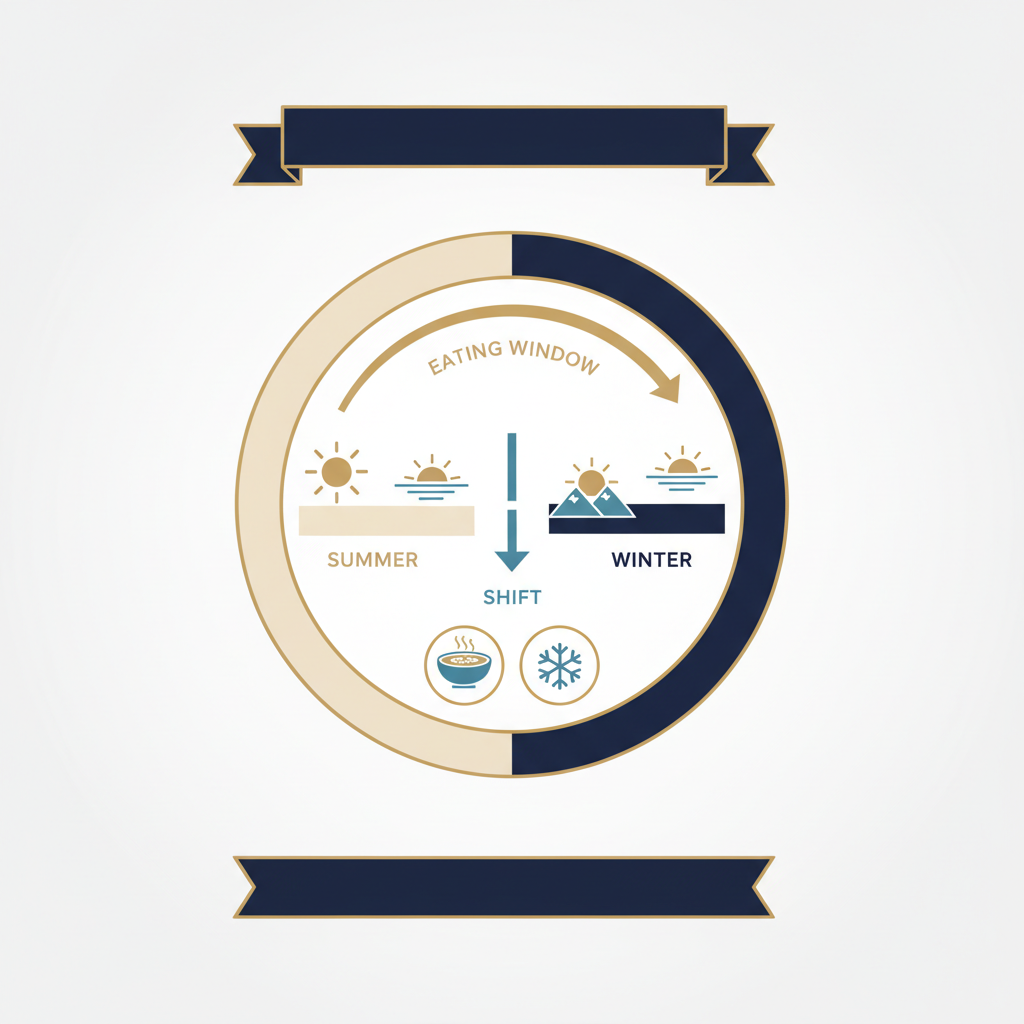
Steps for Adjusting Intermittent Fasting Schedule for Shorter Winter Days
To maximize your routine, consider moving your eating window earlier. If you follow a 16:8 protocol, instead of starting at 12 PM and ending at 8 PM, try starting at 10 AM and ending at 6 PM. This simple shift ensures you consume your last meal closer to sunset, when the body naturally begins to slow down its metabolic processes. This timing supports intermittent fasting and blood sugar control, as eating during daylight hours enhances the body's efficiency in handling glucose.
Tips for a Smooth Transition:
- Shift your last meal 15 minutes earlier every two days until you reach your target time.
- Prioritize warm, satiating meals like lentil soups or stews to boost fullness and warmth.
- Use bright indoor lighting in the morning to signal to your body that the fasting window has ended and activity time has begun.
Circadian Rhythms and Winter Meal Timing
The circadian rhythm is the internal clock regulating the sleep-wake cycle. In winter, this rhythm can be disrupted by lack of sunlight. Seasonally timed intermittent fasting acts as an "anchor" for this clock. By linking food intake to daylight hours, you send clear signals to your brain about energy and repair phases. This harmony reduces the likelihood of "midnight hunger" common in the colder months.
The Role of a Meal Timing Journal
Using a meal timing journal is an invaluable tool during seasonal transitions. Tracking when you felt most hungry and when your energy peaked helps you discover your ideal pattern. Do you feel sluggish after a late winter breakfast? Does warm tea in the evening help you complete your fast? These observations build a sustainable system. You can always visit the Hub Pillar Page for more educational tools on managing your daily routine.
Evaluating Fasting Claims in Cold Weather
Winter often brings myths that fasting makes you colder or weakens the immune system. When evaluating fasting claims, look at the educational facts. Fasting itself doesn't cause coldness, but a caloric deficit or lack of external warmth might. The solution isn't necessarily breaking the fast, but choosing nutrient-dense foods during your window and focusing on warm, non-caloric fluids like cinnamon or ginger tea during fasting hours.
Comparison: Summer vs. Winter Fasting Schedule
| Feature | Summer Schedule (Long Days) | Winter Schedule (Short Days) |
|---|---|---|
| Window Start | 1:00 PM | 10:00 AM |
| Window End | 9:00 PM | 6:00 PM |
| Preferred Meal Types | Salads, cold foods, fruits | Soups, stews, warm drinks |
| Primary Focus | Constant Hydration | Light & Warmth Syncing |
Navigating Winter Social Gatherings
Winter is a season of connection. If you have an evening social event that goes past your window, embrace flexibility. You can use the "shift" technique, starting your window a bit later the next day. Remember, fasting terminology like "metabolic flexibility" refers to your body's ability to adapt, not a rigid adherence that causes stress.
Your Seasonal Transition Roadmap (4 Weeks)
- Week 1: Observe your new hunger patterns as days shorten and record them in your journal.
- Week 2: Gradually move your dinner earlier to align with the early sunset.
- Week 3: Focus on high-quality protein and healthy fats in your final meal to curb late-night sugar cravings.
- Week 4: Solidify the new schedule and ensure adequate Vitamin D intake (via sun or supplements after consultation) to provides prompts for observing mood-related patterns.
Frequently Asked Questions (FAQ)
A: Not necessarily. You can maintain the same duration (e.g., 16 hours) but shift the window to fit the new daylight/darkness ratio.Q: I feel extremely hungry at night in winter, what should I do?
A: Ensure your last meal has enough fiber and protein. Warm, calorie-free drinks like chamomile or anise tea can help soothe the stomach.Q: Does the cold affect fat burning during fasting?
A: The body uses extra energy to maintain its temperature in the cold, which may naturally support metabolic activity, but balanced intake remains key.Q: How do I handle morning fatigue in winter?
A: Getting direct sunlight exposure immediately upon waking helps reset your circadian rhythm and reduces winter-related lethargy.
Medical Disclaimer: The information in this article is for educational purposes only and is not intended as medical advice. Always consult with a healthcare professional before making significant changes to your diet or starting a new fasting protocol, especially if you have underlying health conditions.
Related Articles

Explore health education
Review the educational guides and practical tools related to this topic.
Explore the education hub