Understanding Cholesterol Test Terms: A Visual Guide to Your Lipid Profile
Author: Feras Alayed
Published:
Category: heart-health
Reading Time: 6 minutes
Key Takeaways
- Cholesterol is not a single substance but a group of lipoproteins with different roles.
- LDL is 'bad' because it can build up; HDL is 'good' because it helps clean up.
- Triglycerides reflect how your body stores excess energy from calories.
- Understanding these terms empowers you to have better conversations with healthcare providers.
TL;DR Summary
A lipid profile is a map of the fats in your blood. It includes LDL (keep it low), HDL (keep it high), and triglycerides. Understanding these numbers helps you build a lifestyle routine that supports long-term heart health and consistency.Introduction: Why Lab Language Seems Complex
When you receive a blood test report, it can feel like reading a foreign language filled with acronyms like LDL, HDL, and VLDL. However, understanding cholesterol test terms is a powerful tool that allows you to grasp what is happening inside your arteries. Cholesterol itself is a waxy, fat-like substance your body needs to build cells and make hormones. The issue lies in the balance between its different types. In this guide, we will transform these complex symbols into clear visual concepts to help you monitor your health with confidence. Learning to read these results complements other skills like reading nutrition labels for heart health, giving you a holistic view of your lifestyle choices.
Decoding Good and Bad Cholesterol (LDL vs HDL)
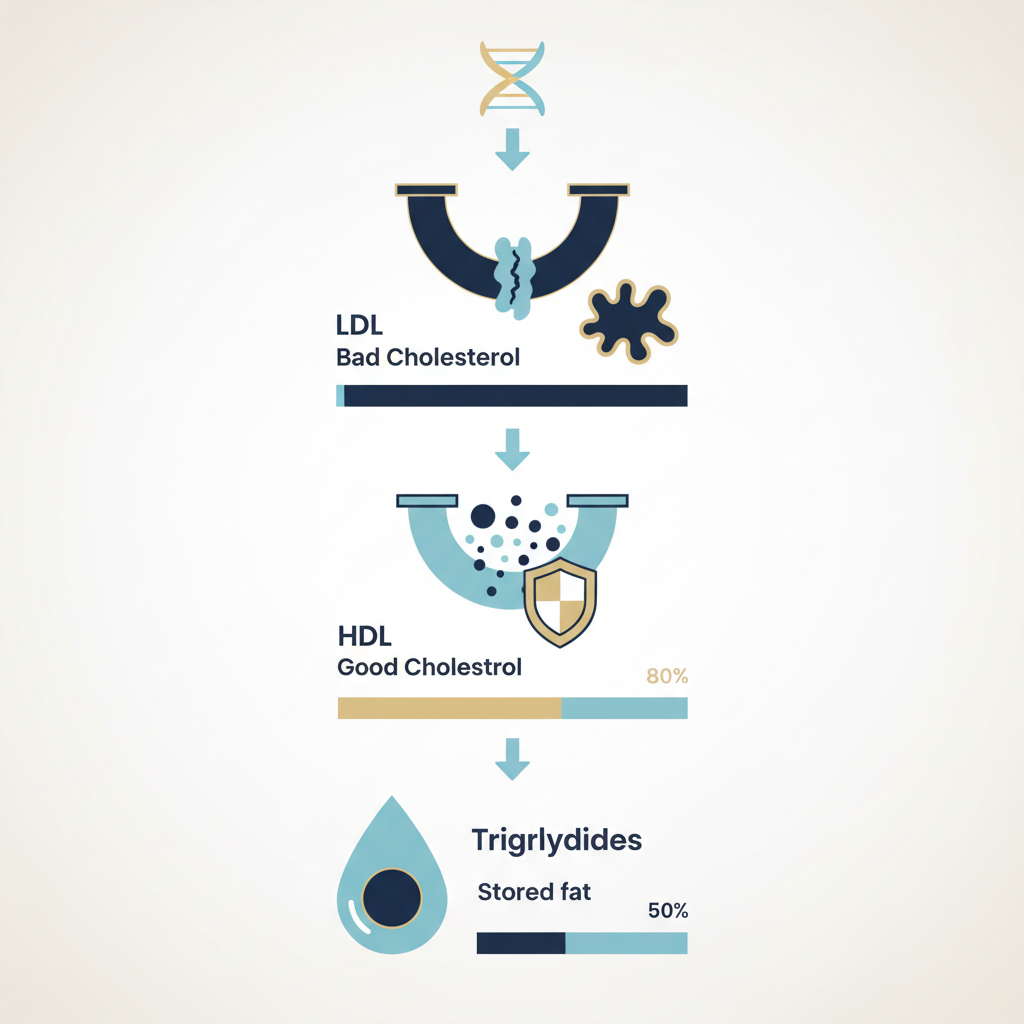
Lipoproteins are the 'trucks' that transport cholesterol through your bloodstream. There are two main types you should know well:
1. LDL (Low-Density Lipoprotein) - The 'Bad' One
It is called 'bad' because high levels can lead to plaque buildup in artery walls. Imagine LDL as delivery trucks that drop their cargo in narrow alleys; if there are too many trucks, the alley gets blocked. The goal is usually to keep these levels low to support smooth blood flow.
2. HDL (High-Density Lipoprotein) - The 'Good' One
This is the hero of our story. HDL acts as a scavenger, picking up excess cholesterol from the blood and taking it back to the liver to be broken down. High levels of HDL are considered a positive sign because they support the natural cleaning process of your blood vessels.
| Feature | LDL (Bad) | HDL (Good) |
|---|---|---|
| Function | Transports cholesterol to cells | Removes excess cholesterol |
| Artery Impact | May cause buildup | Helps protect walls |
| Typical Goal | Lower levels | Higher levels |
Triglycerides: Your Body's Energy Stores
Triglycerides are another type of fat found in your blood. When you eat, your body converts any calories it doesn't need to use right away into triglycerides, which are stored in your fat cells. If you regularly consume more calories than you burn, especially from high-carb or sugary foods, these levels may rise. To understand how to manage these levels more deeply, you can explore triglycerides lowering natural strategies which offer practical solutions based on lifestyle changes. High triglycerides combined with low HDL or high LDL can increase the challenges for heart health, making their monitoring an essential part of understanding cholesterol test terms.
Total Cholesterol and Ratios: The Big Picture
Total cholesterol is the sum of your blood's cholesterol content, calculated by adding HDL, LDL, and 20% of your triglycerides. However, the total number alone doesn't tell the whole story. Someone could have high total cholesterol but because of very high HDL (good) levels, which is positive. This is why specialists often look at 'ratios':
- Total Cholesterol to HDL Ratio: Obtained by dividing the total by the HDL number. This helps evaluate the balance between 'cleaning' fats and 'building' fats.
- VLDL: Very Low-Density Lipoprotein, which mainly carries triglycerides and is also a type we prefer to keep at lower levels.
The Modern Metric: Non-HDL Cholesterol
Many experts are now focusing on 'Non-HDL' cholesterol. This number is simple to calculate: (Total Cholesterol - HDL). Why does it matter? Because it includes all the 'bad' or potentially artery-clogging types of cholesterol (LDL, VLDL, and others). Many consider this a more accurate risk indicator because it doesn't ignore any harmful fat types. When preparing for your next check-up, you might want to add a question about this number to your heart health appointment question list to ensure a deeper understanding of your results.
Preparation and Practical Scenarios
To get the most accurate results for understanding cholesterol test terms, you are usually asked to fast for 9 to 12 hours before the blood draw. Water is typically allowed, but coffee and juices can affect the results.
Hypothetical Scenario: 'Ahmed's' Case
Ahmed took a test and found his total cholesterol was within the normal range. However, upon closer inspection, his LDL was high and his HDL was low. Thanks to his understanding of the terms, Ahmed realized the 'total number' was misleading. He began focusing on increasing physical activity to raise his HDL and improving food choices to lower his LDL. This awareness is what turns raw data into an effective action plan.
Fact or Myth?
Myth: The lower the cholesterol, the better, always.
Fact: We need cholesterol for vital functions; the goal is the right balance, especially maintaining healthy HDL levels.
Frequently Asked Questions
A: Some studies suggest chronic stress can indirectly affect lipid levels by influencing eating habits and hormones, but it isn't a direct factor in the test itself like fasting is.
Q: Why do I need to fast?A: Fasting ensures that your triglyceride levels aren't affected by a recent meal, providing a more accurate baseline of your blood fats.
Q: What is the difference between cholesterol and triglycerides?A: Cholesterol is used for building cells and hormones, while triglycerides are used to store and provide energy.
Q: Can LDL be too low?A: It is very rare, but for most people, the challenge is managing high levels rather than worrying about them being too low.
Medical Disclaimer: The information in this article is for educational purposes only and is not intended to diagnose or treat any health condition. Always consult with a doctor or qualified healthcare provider to interpret your medical test results and make decisions regarding your health.
Related Articles
- Reading Nutrition Labels for Heart Health
- Natural Strategies for Lowering Triglycerides
- Heart Health Appointment Guide

Explore health education
Review the educational guides and practical tools related to this topic.
Explore the education hub