Customer Service in Health Projects: Inquiry to Follow-up
Author: Feras Alayed
Published:
Updated:
Category: business-opportunity
Reading Time: 8 minutes
- Trust is built through transparent, evidence-based communication and ethical boundaries.
- Active listening and health literacy are essential for addressing client inquiries effectively.
- Follow-up protocols ensure long-term client satisfaction and project sustainability.
- Professionalism involves knowing when to refer clients to qualified medical experts.
- A service-first approach prioritizes education over high-pressure sales tactics.
The Foundation of Service in Health Projects
Customer service within the health and wellness sector is distinct from other industries due to the personal and often sensitive nature of the services provided. It is not merely about answering questions; it is about establishing a professional relationship built on trust, clarity, and ethical responsibility. In health projects, the service provider acts as a guide, helping individuals navigate complex information and make informed decisions about their wellbeing.
The Role of Empathy and Active Listening
The first point of contact—the inquiry—is the most critical moment for establishing rapport. Clients often approach health projects with specific concerns, goals, or even anxieties. Active listening involves more than just hearing words; it requires understanding the underlying needs and emotions. By practicing empathy, a service professional can create a safe environment where the client feels heard and respected. This approach is fundamental to a service-first content guide that prioritizes the human element over transactional interactions.
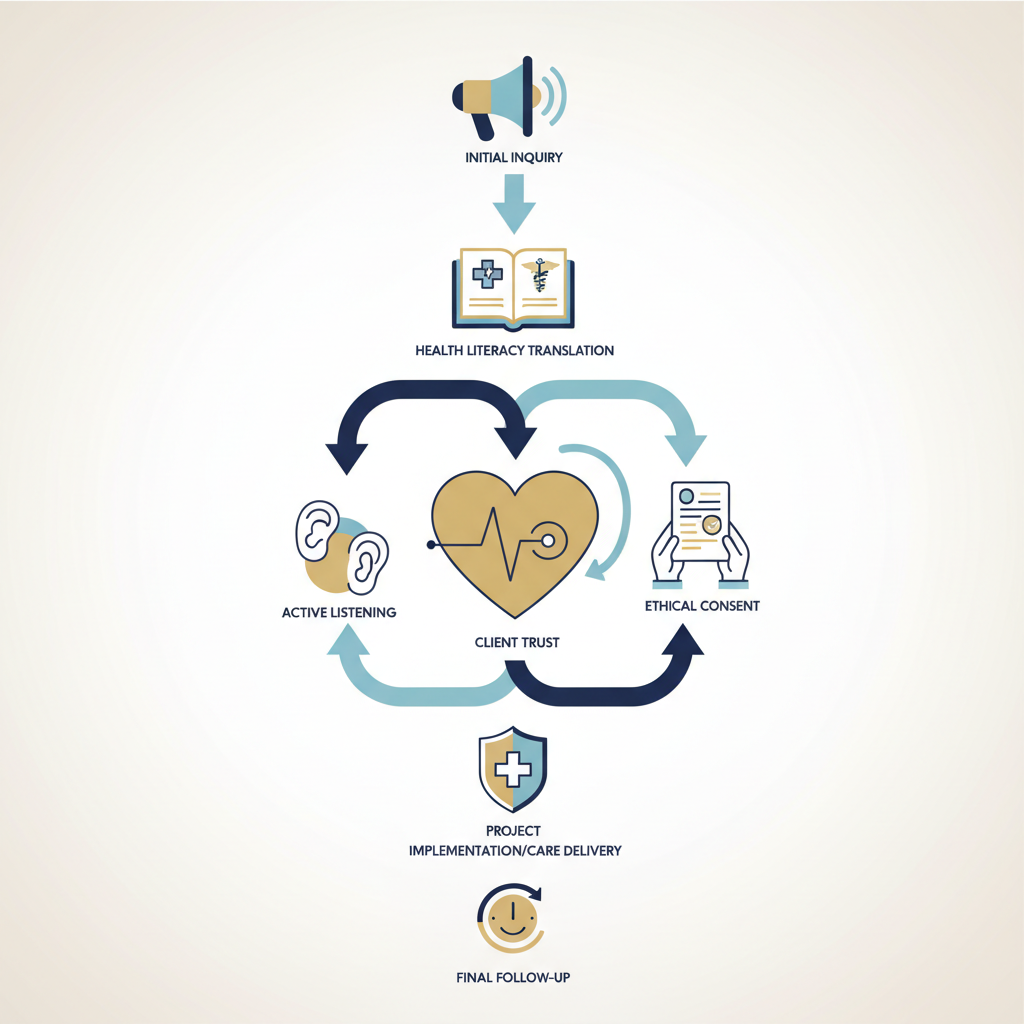
The Lifecycle of a Health Project Inquiry
Managing a client’s journey requires a structured yet flexible approach. This lifecycle can be broken down into four primary stages: Inquiry, Education, Decision Support, and Follow-up.
1. The Inquiry Phase: Clarifying Needs
When a potential client reaches out, the objective is to clarify their needs and determine if the project’s offerings align with their goals. This stage requires clear communication and the ability to explain complex concepts simply. For instance, if a client asks about specific health markers, the service provider must be equipped with resources like an understanding cholesterol test terms visual guide to provide clarity without offering medical diagnoses. The focus here is on information gathering and setting realistic expectations.
2. The Education Phase: Building Health Literacy
Education is the core of ethical service. A well-informed client is better equipped to commit to their health journey. This involves providing resources that enhance health literacy, ensuring the client understands the 'why' behind the recommendations. Whether it is debunking longevity myths vs. facts or explaining the importance of consistency, the goal is to empower the client with knowledge, not just instructions.
3. The Decision Support Phase: Ethical Guidance
In this phase, the service provider helps the client evaluate their options. This should never involve high-pressure tactics or guaranteed outcomes. Instead, it involves comparing different paths, such as using a responsible wellness program comparison guide, to help the client choose the best fit for their lifestyle and needs. Transparency regarding the effort required and the nature of the program is essential for maintaining ethical standards.
4. The Follow-up Phase: Sustaining Engagement
Service does not end once a decision is made. Consistent follow-up is necessary to monitor progress, address new questions, and provide ongoing support. This might include helping clients organize personal health information or providing context for weight trend tracking to ensure they stay focused on sustainable habits rather than short-term fluctuations.
Communication Strategies for Complex Topics
Health topics often involve technical terminology that can be overwhelming. A professional service provider must act as a translator, bridging the gap between technical data and practical application. For example, when discussing cardiovascular wellness, referring to an understanding heart health terminology guide can help ensure the client is not confused by medical jargon. The key is to be accurate yet accessible.
Handling Objections with Professionalism
Objections are a natural part of the inquiry process. They often stem from a lack of information or past negative experiences. Addressing these concerns requires patience and a commitment to transparency. Rather than dismissing an objection, a professional explores it, providing evidence-based information to address the client's specific worry. This builds credibility and demonstrates that the provider prioritizes the client's best interest over a quick sale.
The Importance of Professional Boundaries
One of the most critical aspects of customer service in health projects is maintaining professional boundaries. Service providers must clearly define their role: they are educators and facilitators, not medical doctors or licensed therapists (unless they hold those specific credentials). Ethical service means knowing when to say, "This is a question for your healthcare provider." This boundary protects both the client and the professional, ensuring that health decisions are made within the appropriate clinical framework.
How This Connects to the Partnership Path
The ATHAR partnership path is designed for individuals who are committed to mastering these service skills. It is a journey of professional development that focuses on leadership, ethical communication, and client care. The path is not a shortcut to success but a structured learning environment where partners are trained to provide high-quality service and support.
What to Expect in the Partnership Journey
The first 30 to 90 days of the partnership are focused on skill discovery and foundational training. Partners learn how to manage inquiries, build health literacy, and implement ethical follow-up protocols. This path suits those who value service, enjoy continuous learning, and are dedicated to helping others through education and professional support. It does not suit those looking for quick financial results or passive involvement without effort. Success in the partnership depends on consistency, the development of professional skills, and adherence to ethical guidelines.
Explore Whether the Partnership Path Suits You
If you are interested in developing professional skills in the health project sector and value an ethical, service-first approach, we invite you to explore the partnership-fit path. This process is designed to help you discover if your goals and values align with the responsibilities of a professional partner. Financial outcomes in this path are not guaranteed and depend entirely on individual effort, market conditions, and the application of learned skills.
People Also Ask
- What are the key skills for customer service in health projects? The primary skills include active listening, empathy, clear communication of complex health terms, and a strong understanding of ethical boundaries.
- How do you handle a client who has unrealistic expectations? Handling unrealistic expectations requires transparency. It is important to explain the role of consistency and effort, and to use evidence-based information to set realistic milestones.
- Why is health literacy important in customer service? Health literacy empowers clients to make informed decisions and understand the value of the services provided, leading to better long-term engagement and trust.
- What is the difference between health education and medical advice? Health education provides general information and resources to help clients understand wellness concepts, while medical advice involves diagnosing or treating specific conditions, which must be left to licensed professionals.
- How often should follow-up occur in a health project? The frequency of follow-up depends on the specific project and the client's needs, but it should be consistent enough to provide support without being intrusive.
Frequently Asked Questions (FAQ)
Does customer service in health projects require a medical degree?
While a medical degree is not required for many service and educational roles, a deep understanding of wellness principles and a commitment to health literacy are essential. Always stay within the scope of your specific training.

How do I manage client privacy in a health project?
Client privacy is paramount. Use secure communication channels and ensure that any personal information shared is handled according to professional privacy standards and applicable regulations.
What should I do if a client asks a question I cannot answer?
Honesty is the best policy. If you do not know the answer, inform the client that you will research the information or refer them to a qualified professional who can provide the necessary guidance.
How can digital tools improve customer service?
Digital tools like CRM systems and educational platforms can help organize client information and provide timely resources, but they should enhance, not replace, the human connection.
Is the partnership path suitable for everyone?
No, the partnership path requires a commitment to learning, ethical service, and consistent effort. It is best suited for those who are passionate about professional development in the health and wellness sector.
Further Education
- Explore the metabolic health education hub
- Learn how to read research summaries
- Use the educational health assessment
Evaluate the path with clarity
Use the decision guide to review eligibility, responsibilities, policies, and questions that require confirmation from official programme sources. No financial outcome is promised.
Continue your next step with ATHAR
Explore the official Feel Great member path, or learn about the creator partnership route if you are interested in sharing wellness education with your audience.
Explore Feel Great · Explore the Creator Affiliate gateway · Ask a question on WhatsApp