Diabetes Netherlands RIVM statistics 2026 — What the 2026 Health Monitor Shows
Author: Feras Alayed
Published:
Updated:
Category: dutch-health
Reading Time: 11 minutes
Key Takeaways
- Nearly 1.2 million people were registered with diabetes in primary care in recent Dutch counts; estimates including undiagnosed cases rise toward ~1.4–1.5 million. ([nivel.nl](https://www.nivel.nl/nl/nieuws/nederland-telt-bijna-12-miljoen-mensen-met-diabetes?utm_source=openai))
- The RIVM Gezondheidsmonitor and Nivel GP registries remain the most important national sources for regional and age-stratified diabetes data in 2026. ([rivm.nl](https://www.rivm.nl/gezondheidsmonitors?utm_source=openai))
- Key drivers in the Netherlands: ageing population, overweight/obesity patterns, socio-economic and migration-related disparities, and lower physical activity in some groups — despite a national cycling culture that helps overall activity. ([nivel.nl](https://www.nivel.nl/nl/nieuws/nederland-telt-bijna-12-miljoen-mensen-met-diabetes?utm_source=openai))
- Many lifestyle strategies (higher soluble fiber, time-restricted eating protocols, regular activity) show benefit on glycaemic markers in randomized and meta-analytic studies; these approaches may complement GP-led care and prevention programmes in the Dutch system. ([pmc.ncbi.nlm.nih.gov](https://pmc.ncbi.nlm.nih.gov/articles/PMC10500602/?utm_source=openai))
- The Feel Great system (Balance, Unimate, 4-4-12 fasting structure) is a lifestyle support option — not a medication — that may help people manage post-meal glucose responses and daytime energy when used alongside GP care and national guidance (Schijf van Vijf, huisarts follow-up).
TL;DR
RIVM Gezondheidsmonitor 2026 plus GP registry analyses show diabetes remains a major public health issue in the Netherlands with ~1.1–1.3M diagnosed and several hundred thousand possibly undiagnosed. Dutch data (Nivel, RIVM) and international evidence point to the role of diet, weight and activity; person-centred lifestyle tools such as increased viscous soluble fiber, targeted polyphenols (chlorogenic acids) and time-restricted eating can be considered as supportive measures within Dutch care pathways (huisarts, gecombineerde leefstijlinterventie), not as treatments. ([nivel.nl](https://www.nivel.nl/nl/nieuws/nederland-telt-bijna-12-miljoen-mensen-met-diabetes?utm_source=openai))
🇳🇱 Want to take action now? Try Feel Great → | Chat with a coach →
Introduction — a shocking Netherlands statistic
In the Netherlands in recent national counts nearly 1.2 million people were registered with diabetes in general practice — and national estimates that include people who don’t yet know they have diabetes push the number closer to 1.4–1.5 million. For a country of ~17–18 million this means roughly 1 in 12–13 people are living with diabetes or preclinical disease — a striking public-health challenge in 2026. ([nivel.nl](https://www.nivel.nl/nl/nieuws/nederland-telt-bijna-12-miljoen-mensen-met-diabetes?utm_source=openai))
Why the RIVM Gezondheidsmonitor 2026 matters
The RIVM Gezondheidsmonitor (the integrated Health Monitor run with GGD’en, CBS and local registries) is the authoritative source used by public health services and municipalities to plan prevention and care. The 2026 updates and related datasets provide regional, age and socio-economic breakdowns that are essential for local GGD interventions and for informing huisartsen and zorgverzekeraars. ([rivm.nl](https://www.rivm.nl/gezondheidsmonitors?utm_source=openai))
Current Dutch picture — prevalence, undiagnosed disease and trends
Key national sources (Nivel GP registrations, RIVM monitors, Diabetes Fonds analyses and Voedingscentrum overviews) show these headline points for 2024–2026: the number of people registered with diabetes in GP care is ~1.1–1.2M; about 85–90% of that group are estimated to have type 2 diabetes; cohort analyses suggest as many as ~400,000 people may have type 2 diabetes without a diagnosis. These numbers are derived from GP registrations, population surveys and cohort research used by RIVM and Nivel. ([nivel.nl](https://www.nivel.nl/nl/nieuws/nederland-telt-bijna-12-miljoen-mensen-met-diabetes?utm_source=openai))
Trends: incidence of newly diagnosed diabetes has stabilised or fallen in some age groups (partly linked to diagnostic changes and earlier detection), but absolute prevalence is increasing with population ageing and rising rates of overweight — resulting in growing demand for chronic care and prevention programmes. ([staatvenz.nl](https://www.staatvenz.nl/kerncijfers/diabetes-mellitus-aantal-pati%C3%ABnten-bekend-bij-de-huisarts?utm_source=openai))
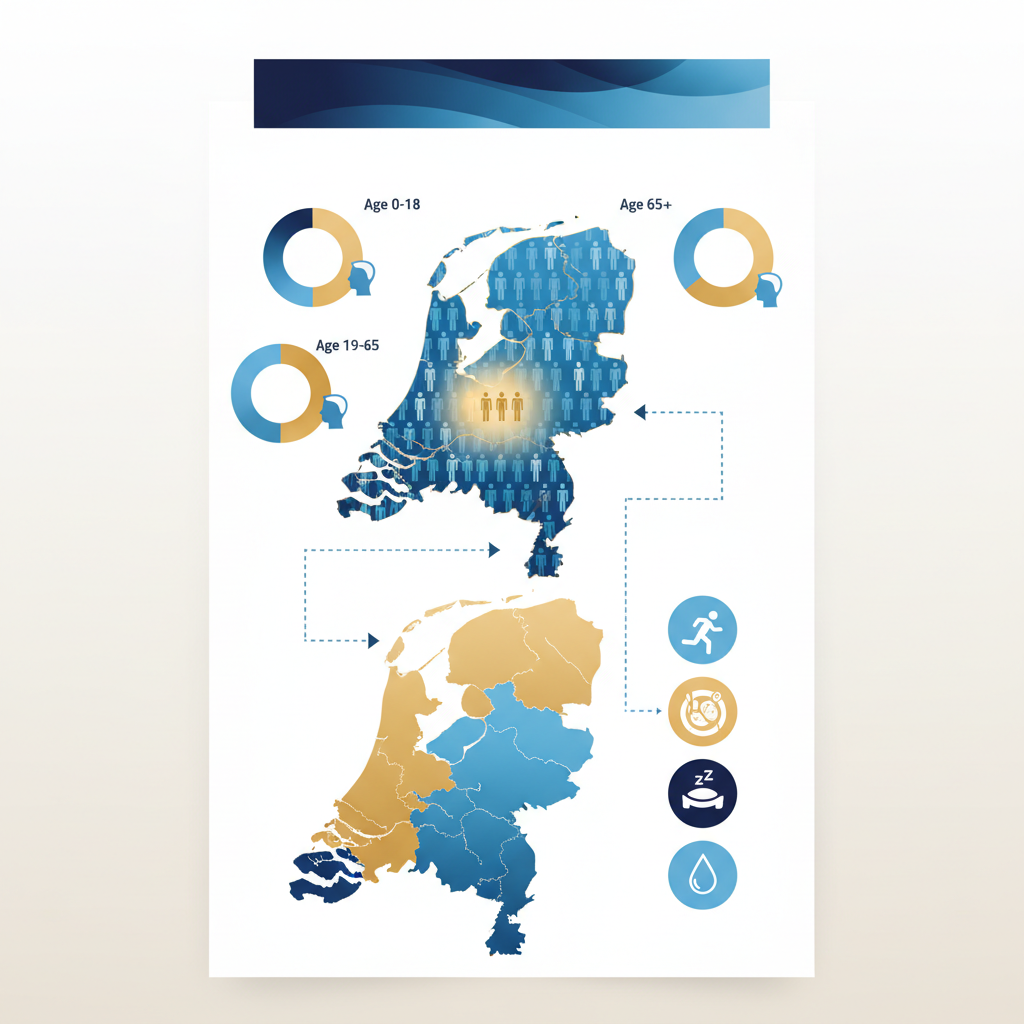
Regional and demographic patterns
- Higher prevalence in older age groups: prevalence rises steeply after age 50–60. ([vzinfo.nl](https://www.vzinfo.nl/diabetes-mellitus/leeftijd-en-geslacht?utm_source=openai))
- People with lower income and some migrant backgrounds have higher rates of type 2 diabetes (important for targeted municipal GGD strategies). ([richtlijnen.nhg.org](https://richtlijnen.nhg.org/standaarden/diabetes-mellitus-type-2?utm_source=openai))
- Urban-rural differences exist and local Gezondheidsmonitor dashboards help GGD and municipalities plan prevention. ([data.overheid.nl](https://data.overheid.nl/en/dataset/60306-gezondheidsmonitor--bevolking-18-jaar-of-ouder--regio--2024?utm_source=openai))
How diabetes is measured in the Netherlands (practical points for patients)
- Nuchter bloedglucose and HbA1c are the usual diagnostic tools in primary care; in the Netherlands blood glucose is reported in mmol/L — for example an HbA1c ≥6.5% is used for diagnosis and fasting plasma glucose ≥7.0 mmol/L is diagnostic. For impaired fasting glucose / prediabetes cut-offs used in monitoring and research differ but often use fasting glucose 6.1–6.9 mmol/L or HbA1c 5.7–6.4%. Always confirm with your huisarts. ([rivm.nl](https://www.rivm.nl/bibliotheek/rapporten/260221002.pdf?utm_source=openai))
- GP registration (Nivel) is the main source for annual prevalence statistics — which is why the number of people ‘known’ with diabetes depends on primary-care recording. ([nivel.nl](https://www.nivel.nl/nl/project/diabetes-mellitus-nederland-incidentie-prevalentie-en-comorbiditeiten-2022?utm_source=openai))
What drives the diabetes burden in the Netherlands?
Key modifiable drivers are overweight/obesity, diet quality (high processed foods and added sugars), physical inactivity and socio-economic disparities. The Dutch environment — food availability, marketing, and built environment — interacts with individual factors. The Netherlands has strengths (high cycling rates and many people meeting activity guidelines through active transport), but pockets of low activity and unhealthy food environments remain. The RIVM Leefstijlmonitor and Voedingscentrum workstreams document these patterns and inform policy (Schijf van Vijf guidance and food-based public campaigns). ([rivm.nl](https://www.rivm.nl/leefstijlmonitor?utm_source=openai))
Evidence-based lifestyle measures that feature in Dutch guidance
International and Dutch trials and meta-analyses show several consistent findings:
- Viscous soluble fiber (psyllium, β-glucan, glucomannan and similar) reduces fasting glucose and postprandial excursions and lowers HbA1c in people with or at risk of type 2 diabetes. These effects are supported by multiple systematic reviews and RCT meta-analyses. Recommend including high-fiber whole foods (oats, pulses, fruits, vegetables) consistent with Schijf van Vijf advice. ([pmc.ncbi.nlm.nih.gov](https://pmc.ncbi.nlm.nih.gov/articles/PMC10500602/?utm_source=openai))
- Time-restricted eating (TRE) / intermittent fasting shows promising improvements in fasting glucose, HbA1c and time-in-range in several recent meta-analyses; effects vary by timing (early TRE often better) and by individual factors — TRE can be a practical tool inside supervised programmes. The 4-4-12 approach (a structured daily schedule) is an example of a time-scheduled eating plan used in lifestyle support programmes; such protocols require individualisation and GP oversight for people on glucose-lowering medication. ([mdpi.com](https://www.mdpi.com/1422-0067/26/15/7310?utm_source=openai))
- Polyphenol-rich extracts (chlorogenic acids as found in yerba mate and green coffee) show modest benefits on fasting glucose and postprandial responses in some RCTs and meta-analyses; evidence is not conclusive for treatment but can be considered as part of dietary strategies for metabolic health. ([mdpi.com](https://www.mdpi.com/2072-6643/15/3/777?utm_source=openai))
Comparison table — selected strategies and evidence level
| Strategy | Typical effect on glycaemia | Evidence level | Notes for Dutch practice |
|---|---|---|---|
| Viscous soluble fiber (≥10–15 g/day supplementary) | Reductions in fasting glucose (~0.5–0.9 mmol/L) and modest HbA1c fall | Systematic reviews & meta-analyses of RCTs | Fits Schijf van Vijf; suitable as food-first plus supplements (discuss with huisarts). |
| Time-restricted eating (TRE, e.g., 10–12 h window or early TRE) | Fasting glucose decreases (~0.5–0.8 mmol/L in some trials), improved TIR | Multiple RCTs and meta-analyses (2021–2024) | Useful for motivated patients; adjust medication with GP. |
| Yerba mate / chlorogenic acids (supplement) | Small improvements in fasting glucose in some trials | Small RCTs and meta-analyses — moderate | May provide energy/clarity (Unimate-style extracts); treat as dietary supplement, not medicine. |
How the Dutch healthcare system fits in — huisarts and zorgverzekering
Most diabetes diagnosis and routine follow-up in the Netherlands happens via the huisarts and POH (praktijkondersteuner). Annual checks, HbA1c monitoring and referrals to dieticians or secondary care are coordinated through primary care; many diabetes prevention and combined lifestyle interventions (GLI / gecombineerde leefstijlinterventie) are reimbursed through zorgverzekering programmes when criteria are met. Use your huisarts as the primary contact for screening, medication review and safe implementation of fasting or supplements. ([richtlijnen.nhg.org](https://richtlijnen.nhg.org/standaarden/diabetes-mellitus-type-2?utm_source=openai))
Specific Netherlands-oriented, practical recommendations
- If you are over 45 or have risk factors (overweight, family history, migration background), ask your huisarts for a check including fasting glucose or HbA1c. Early detection matters. ([vzinfo.nl](https://www.vzinfo.nl/diabetes-mellitus/leeftijd-en-geslacht?utm_source=openai))
- Follow Schijf van Vijf principles: wholegrain oats and legumes, vegetables, limited processed sugary foods. Replace refined carbs with high-fibre options to reduce post-meal spikes (mmol/L-aware monitoring). ([voedingscentrum.nl](https://www.voedingscentrum.nl/encyclopedie/diabetes-type-2.aspxamp/?utm_source=openai))
- Use movement you enjoy — cycling and brisk walking — to maintain activity levels integrated into daily life. Municipal GGD programmes and local preventive services can help. ([rivm.nl](https://www.rivm.nl/leefstijlmonitor?utm_source=openai))
- If considering TRE or supplements (e.g., yerba mate/chlorogenic extracts or a soluble fiber supplement), discuss with your huisarts and, if on glucose-lowering medicines, get a medication plan to avoid hypoglycaemia. ([mdpi.com](https://www.mdpi.com/1422-0067/26/15/7310?utm_source=openai))
How Feel Great helps (balanced, evidence-informed, and Dutch-context friendly)
Feel Great is presented as a lifestyle support system (not a medication). Its elements connect to the evidence above:
- Balance — a soluble fiber matrix designed to affect post-meal glucose responses and slow absorption; this mirrors the viscous soluble fiber evidence base used in RCT meta-analyses. Use as a food-first adjunct consistent with Schijf van Vijf advice and GP guidance. ([pmc.ncbi.nlm.nih.gov](https://pmc.ncbi.nlm.nih.gov/articles/PMC10500602/?utm_source=openai))
- Unimate — yerba mate extract with chlorogenic acids, included for daytime focus and metabolic polyphenols; small RCTs suggest chlorogenic acid-containing extracts can modestly influence fasting glucose and energy parameters. Use as a supplement and review with huisarts. ([pmc.ncbi.nlm.nih.gov](https://pmc.ncbi.nlm.nih.gov/articles/PMC7822211/?utm_source=openai))
- The 4-4-12 intermittent fasting protocol — a structured time-restricted pattern that fits the TRE literature showing improvements in fasting glucose and TIR when timed appropriately; should be adapted to the person (medication, work, family) and coordinated with primary-care follow-up. ([mdpi.com](https://www.mdpi.com/1422-0067/26/15/7310?utm_source=openai))
- Clinical evidence & safety — Feel Great materials reference multiple clinical studies; users should combine lifestyle support with GP-led monitoring, particularly in the Netherlands where huisarts follow-up and zorgverzekering pathways (GLI) are central.
People also ask
- Q: How many people in the Netherlands have undiagnosed diabetes? — A: Recent analyses estimate ~300–400k people with type 2 diabetes may be unaware; local prevalence depends on age and region. ([diabetesfonds.nl](https://www.diabetesfonds.nl/nieuws/ruim-de-helft-van-de-nederlanders-onderschat-suikerinname-fors?utm_source=openai))
- Q: What fasting glucose in mmol/L should prompt a GP visit? — A: Fasting plasma glucose ≥7.0 mmol/L or HbA1c ≥6.5% typically prompts diagnostic follow-up; if fasting glucose is 6.1–6.9 mmol/L discuss prediabetes with your huisarts. ([rivm.nl](https://www.rivm.nl/bibliotheek/rapporten/260221002.pdf?utm_source=openai))
- Q: Can time-restricted eating be used with diabetes medication? — A: Only under GP supervision — medication adjustments may be required to avoid low blood sugar. ([mdpi.com](https://www.mdpi.com/1422-0067/26/15/7310?utm_source=openai))
- Q: Does cycling protect against diabetes? — A: Active transport like cycling contributes to daily activity and lowers risk; population-level effects depend on total activity and diet. ([rivm.nl](https://www.rivm.nl/leefstijlmonitor?utm_source=openai))
- Q: Where can I see local RIVM Gezondheidsmonitor data? — A: The RIVM Gezondheidsmonitors portal and local GGD dashboards publish regional data and datasets. ([rivm.nl](https://www.rivm.nl/gezondheidsmonitors?utm_source=openai))
FAQ
- Is diabetes increasing in the Netherlands? Absolute numbers are increasing due to ageing and overweight trends, though some age-specific incidence rates have stabilised. Watch municipal Gezondheidsmonitor updates for local trends. ([nivel.nl](https://www.nivel.nl/nl/nieuws/nederland-telt-bijna-12-miljoen-mensen-met-diabetes?utm_source=openai))
- Can a soluble fiber supplement lower my HbA1c? Meta-analyses report modest reductions in fasting glucose and HbA1c with viscous soluble fiber supplements in people with T2D; discuss dose and interactions with your huisarts. ([pmc.ncbi.nlm.nih.gov](https://pmc.ncbi.nlm.nih.gov/articles/PMC10500602/?utm_source=openai))
- What should I tell my huisarts if I want to try TRE? Tell your GP about your plan, current medications, blood glucose patterns, and work/sleep schedule; agree a monitoring plan for glucose and medication adjustments. ([mdpi.com](https://www.mdpi.com/1422-0067/26/15/7310?utm_source=openai))
- Are yerba mate supplements safe? Short-term trials show tolerability in many people; long-term safety and interactions vary — consult your huisarts, especially if you take medications or have cardiovascular issues. ([pmc.ncbi.nlm.nih.gov](https://pmc.ncbi.nlm.nih.gov/articles/PMC7822211/?utm_source=openai))
- How does Dutch policy support prevention? RIVM, GGD and national programmes (GLI) plus the Schijf van Vijf shape prevention; municipalities use Gezondheidsmonitor data to target interventions. Check with your gemeente for local offers. ([rivm.nl](https://www.rivm.nl/gezondheidsmonitors?utm_source=openai))
References & Scientific Sources
- RIVM Gezondheidsmonitors (Gezondheidsmonitor Volwassenen en Ouderen) — RIVM datasets and portal (2024–2026). ([rivm.nl](https://www.rivm.nl/gezondheidsmonitors?utm_source=openai))
- Nivel — Diabetes mellitus in Nederland: prevalentie en incidentie; Jaarcijfers huisartsenzorg / Nivel Zorgregistraties Eerste Lijn (2022–2025). ([nivel.nl](https://www.nivel.nl/nl/project/diabetes-mellitus-nederland-incidentie-prevalentie-en-comorbiditeiten-2022?utm_source=openai))
- Diabetes Fonds — analyses on undiagnosed diabetes and prediabetes in the Netherlands (2025–2026). ([diabetesfonds.nl](https://www.diabetesfonds.nl/nieuws/ruim-de-helft-van-de-nederlanders-onderschat-suikerinname-fors?utm_source=openai))
- Voedingscentrum — Diabetes type 2 overview; Schijf van Vijf guidance. ([voedingscentrum.nl](https://www.voedingscentrum.nl/encyclopedie/diabetes-type-2.aspxamp/?utm_source=openai))
- Wageningen University & Research — PERSON/RepEAT studies and nutrition–insulin resistance research (precision nutrition, postprandial responses). ([pmc.ncbi.nlm.nih.gov](https://pmc.ncbi.nlm.nih.gov/articles/PMC10751339/?utm_source=openai))
- Amsterdam UMC — diabetes research and outpatient patterns; national translational diabetes research. ([amsterdamumc.org](https://www.amsterdamumc.org/en/research/institutes/amsterdam-cardiovascular-sciences/programs/diabetes-hypertensive-diseases?utm_source=openai))
- BMJ / Systematic review & network meta-analysis of intermittent fasting strategies (2024). ([bmj.com](https://www.bmj.com/content/bmj/389/bmj-2024-082007.full.pdf?utm_source=openai))
- Systematic reviews/meta-analyses on viscous soluble dietary fiber and glycemic control (2021–2023). ([pmc.ncbi.nlm.nih.gov](https://pmc.ncbi.nlm.nih.gov/articles/PMC10500602/?utm_source=openai))
- Randomised human trials on yerba mate / chlorogenic acids and metabolic/ cognitive effects (selected RCTs and meta-analyses). ([pmc.ncbi.nlm.nih.gov](https://pmc.ncbi.nlm.nih.gov/articles/PMC7822211/?utm_source=openai))
- Lancet / GBD analysis of diabetes burden and projections (2021–2023). ([doi.org](https://doi.org/10.1016/S0140-6736%2823%2901301-6?utm_source=openai))
- IDF Diabetes Atlas / global context and undiagnosed diabetes estimates. ([pmc.ncbi.nlm.nih.gov](https://pmc.ncbi.nlm.nih.gov/articles/11057359/?utm_source=openai))
Medical disclaimer: This article is for information only and is not medical advice. Always check blood glucose values and treatment decisions with your huisarts or diabetes specialist. Lifestyle supports (supplements, fasting protocols) should be discussed with your GP — especially if you take glucose-lowering medication or have other chronic conditions.

Related ATHAR paths
🇳🇱 Ready to Start Your Health Transformation?
Join thousands across Netherlands who have improved their metabolic health with the Feel Great system. Backed by 50+ clinical studies and listed in the Physicians' Desk Reference (PDR).
✅ Free Delivery in Netherlands | 90-Day Money-Back Guarantee