Foundational Wellness Habits vs Biohacking: Decision Guide
Author: Feras Alayed
Published:
Category: sustainable-health
Reading Time: 15 minutes
Key Takeaways
- Foundational wellness habits are the daily pillars like sleep, nutrition, and movement, while biohacking focuses on optimizing performance through data and technology.
- There is no one-size-fits-all approach; the choice depends on your budget, time, and level of commitment.
- Building a strong foundation of sustainable habits is often the most logical first step before moving to advanced techniques.
- Combining both approaches can provide a comprehensive strategy for sustainable health if applied wisely.
TL;DR
This guide compares foundational wellness habits (like quality sleep and balanced nutrition) with biohacking (like tracking biomarkers and using advanced tech). Through a detailed comparison table, real-life scenarios, and a practical checklist, you will be able to determine which approach aligns with your goals, budget, and lifestyle, helping you build a sustainable health routine.
The Daily Dilemma: Where to Start Your Health Journey?
In today's information-rich world, you might feel overwhelmed when deciding to take a step toward better health. On one hand, you hear traditional advice urging you to drink more water, sleep for eight hours, and eat a balanced diet. On the other hand, social media fills your screen with complex terms like Heart Rate Variability (HRV) tracking, ice baths, DNA-based personalized supplements, and continuous glucose monitors. This apparent contradiction creates analysis paralysis; you find yourself wondering: Should I start with the simple basics that seem to yield slow results, or jump straight into advanced technologies that promise precise and rapid optimizations?
The real problem many face is not a lack of desire to change, but the difficulty of sustaining that change. Previous attempts to adopt health regimens often falter because they either lack a strong foundation or rely on complex, expensive tools that do not fit into the pressures of daily life. When you adopt an advanced technique without having a regular sleep routine, you are building a house on sand. Similarly, when you stick to the basics but ignore the data your body might be telling you, you might miss opportunities to optimize your energy in a personalized way. Understanding the difference between foundational wellness habits and biohacking is the key to untangling this confusion.
This article is not designed to tell you that one is absolutely better than the other, but rather to serve as a comparison and decision guide. We will deconstruct both concepts, explore their strengths and limitations, and provide you with practical tools to decide what is best for you at this stage of your life. Always remember that any approach you choose, whether it's the structured reflection approach or other structured systems, is merely a support tool within a broader lifestyle, not a magic cure or a substitute for professional medical care.
Core Definitions: Understanding Your Options
To make an informed decision, we must clearly define what we mean by each term. These concepts often overlap in modern marketing, but understanding the essence of each will help direct your efforts correctly.
What are Foundational Wellness Habits?
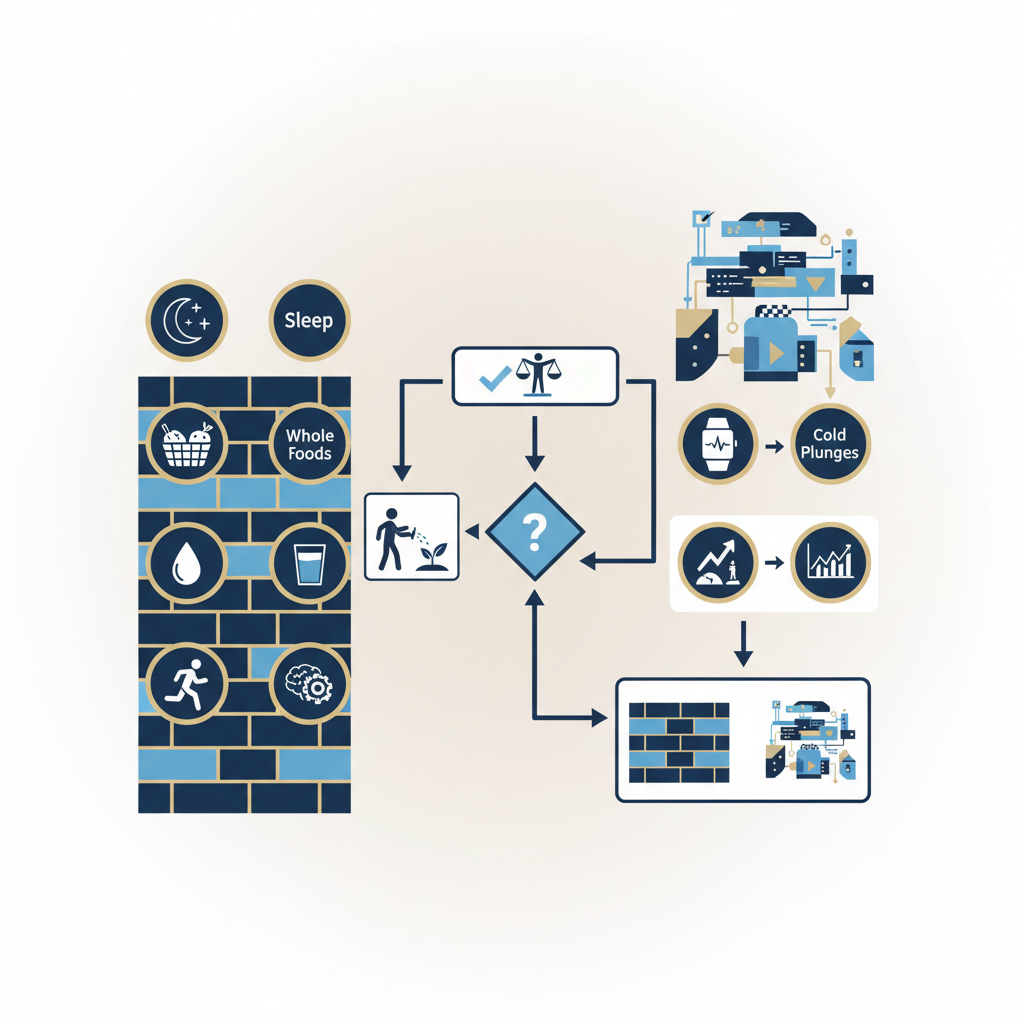
Foundational wellness habits are simple, sustainable daily practices that support the body's natural biological functions. They typically do not require complex devices or massive financial investments; rather, they rely on consistency and routine. These habits include:
- Sleep Quality: Adhering to a regular sleep schedule, reducing blue light exposure before bed, and providing a comfortable, cool environment.
- Balanced Nutrition: Focusing on whole foods, fiber, proteins, and healthy fats, while minimizing processed foods. You can explore more about the role of nutrition in sustainable weight management.
- Daily Movement: Integrating physical activity into daily life, such as walking, taking the stairs, and basic resistance training.
- Stress Management: Practices like deep breathing, simple meditation, or spending time in nature to lower cortisol levels.
- Hydration: Drinking adequate amounts of water regularly throughout the day.
These habits represent the cornerstone. They are akin to regularly servicing a car's engine to ensure it runs efficiently over the long term. To learn how to build these habits gradually, you can check out The 90-Day Health Challenge: Compound Habits for Sustainable Wellness in 2026.
What is Biohacking?
Biohacking is the attempt to control the internal and external environment of the body to optimize performance and health using data, technology, and specific interventions. This approach is based on the idea that the body is a system that can be precisely measured and tweaked. Biohacking practices range from simple to highly advanced, and include:
- Quantified Self: Using wearable devices to track sleep, heart rate, oxygen levels, and daily activity with extreme precision.
- Environmental Interventions: Such as red light therapy, ice baths, infrared saunas, and precise control of the sleep environment.
- Advanced Nutrition and Supplements: Using personalized supplements based on blood or DNA analysis, and applying complex fasting protocols. To understand the basics before diving deep, see the Comprehensive Beginner's Guide to Intermittent Fasting in 2026.
- Microbiome Optimization: Using precise interventions to improve gut health, a topic detailed in our article on how to improve your gut microbiome.
Biohacking is like upgrading specific parts of your car to achieve peak sports performance; it requires precision, data, and often a larger financial investment.
Comprehensive Comparison Table (8 Criteria)
To facilitate the comparison between the two approaches, we have summarized the main differences in the following table based on eight essential criteria. This table is designed to help you evaluate which path best aligns with your current resources and goals.
| Criterion | Foundational Wellness Habits | Biohacking |
|---|---|---|
| 1. Financial Cost | Low to none. Relies on lifestyle adjustments and daily food choices. | Medium to very high. Requires tracking devices, special supplements, and lab tests. |
| 2. Accessibility | Available to everyone, anytime, anywhere. No special equipment needed. | Requires access to technology, labs, and products that may not be universally available. |
| 3. Time Investment | Requires time to build the habit, but becomes an automatic part of the daily routine. | Requires ongoing time to analyze data, set up devices, and apply complex protocols. |
| 4. Reliance on Data | Low. Relies more on self-awareness and general feelings of energy and comfort. | Very high. Decisions are based on numbers, metrics, and precise analytics. |
| 5. Level of Personalization | General and broadly applicable. Basic principles apply to most humans. | Highly personalized. Tailored to fit precise individual biological responses. |
| 6. Risk Level | Very low. Practices are natural and safe for most people. | Variable. Some advanced interventions may carry risks if applied without expert supervision. |
| 7. Long-term Sustainability | Very high. Once established, it becomes a lifestyle that is hard to abandon. | Medium to low. Burnout from constant data tracking or costs may occur. |
| 8. Primary Focus | Overall balance, prevention, and supporting the body's natural functions. | Maximizing performance, breaking natural limits, and precise intervention. |
As the table illustrates, choosing between the two approaches is not a matter of right or wrong, but a matter of suitability for the phase you are in. If you suffer from a chaotic sleep schedule and rely on fast food, buying an advanced tracker might not solve the root problem. Conversely, if your foundations are strong and you are looking for an extra 5% improvement in athletic or mental performance, biohacking might be the right tool. You can read more about the importance of timing in Exercise Timing for Optimal Results.
Strengths and Limitations of Each Approach
Every health strategy comes with a set of advantages and challenges. Understanding these aspects transparently helps you set realistic expectations and avoid frustration.
Foundational Wellness Habits
Strengths:
- Flexibility and Adaptability: You can practice walking or choose healthy food whether you are at home, at work, or traveling.
- Solid Scientific Basis: Decades of research support the benefits of adequate sleep and balanced nutrition as pillars of public health.
- Stress Reduction: Focusing on the basics removes the anxiety associated with constantly monitoring numbers.
Limitations:
- Gradual Results: It may take time to notice significant changes, which can test your patience. As discussed in the article The Road to the World Cup Takes Years... And So Does the Road to Sustainable Health, patience is key.
- Difficulty Pinpointing Precise Issues: If you follow the basics and still feel tired, it can be hard to know the exact cause without additional data.
Biohacking
Strengths:
- Data Clarity: Numbers don't lie. Seeing the numerical impact of a late cup of coffee on your sleep quality can be a powerful motivator for change.
- Precise Problem Identification: Advanced testing can reveal specific vitamin deficiencies or abnormal blood sugar responses. For more on this, see Insulin Resistance: Symptoms, Tests, and When to Seek Care.
- Supportive Community: Those interested in biohacking often share their experiences and data, creating an environment of continuous learning.
Limitations:
- Data Fatigue: Obsessing over numbers can lead to health anxiety, where a person becomes stressed if their metrics aren't perfect.
- High Cost: Devices, monthly app subscriptions, and specialized supplements can pose a significant financial burden.
- Ignoring the Broader Context: A person might focus on optimizing one metric (like HRV) and ignore their overall feeling of exhaustion or personal happiness.
Decision Guide: Which Approach May Suit You?
Now that we understand the differences, how do you decide? The decision depends heavily on your personality, lifestyle, and current goals. Here is a breakdown to help you determine your path:
Foundational Wellness Habits may suit you if:
- You are just starting your health journey and feel overwhelmed by the abundance of information.
- You have a limited budget and prefer to invest your money in high-quality food rather than devices.
- You suffer from stress and anxiety, and prefer an approach that focuses on relaxation and intuition rather than tracking numbers.
- Your goal is general health, longevity, and feeling comfortable in your daily life without striving for professional athletic performance. You can draw inspiration for this approach from The Nordic Health Approach.
Biohacking may suit you if:
- You have already mastered the foundational habits (you sleep well, eat mindfully, and move regularly) and are looking for the next level.
- You love numbers and data, and find that tracking your progress quantitatively motivates you rather than stresses you out.
- You have a very specific goal, such as optimizing athletic performance for a tournament, or improving mental focus for highly demanding cognitive work.
- You are financially ready and able to invest in devices, tests, and personalized supplements.
The Hybrid Approach: The Best of Both Worlds
For many, the optimal solution is not choosing between one or the other, but smart integration. The hybrid approach begins by solidifying foundational habits first. Once these habits become part of your routine, you can selectively introduce biohacking tools. For example, you might rely on balanced nutrition as your core habit, but use a sleep tracker for just a few weeks to understand the impact of your room's environment on your rest, then take it off once you've made the necessary adjustments. This gives you the benefits of data without falling into the trap of continuous tracking fatigue. To understand how gut health can play a role in this comprehensive approach, read about Gut Health Foundations for Overall Wellness.
Hypothetical Real-Life Decision Scenarios
To illustrate what decision-making looks like in reality, let's review some hypothetical scenarios of people facing different health challenges:
Scenario 1: Tariq, the Busy Executive
The Challenge: Tariq works 10 hours a day, relies on coffee to stay awake, and sleeps sporadically. He heard about ice baths and nootropics and wants to try them to increase his productivity.
The Best Decision: Foundational habits first. If Tariq tries biohacking now, he is treating the symptoms and ignoring the root cause. Tariq needs to build a strict sleep routine, reduce afternoon caffeine, and allocate 20 minutes for a daily walk. After 3 months of committing to these basics, if he is still looking for further optimization, he can consider advanced techniques.
Scenario 2: Sara, the Health-Conscious Optimizer
The Challenge: Sara eats a healthy diet, practices yoga, and sleeps 7-8 hours regularly. However, she sometimes experiences mid-day brain fog and wants to know the exact cause to improve her energy.
The Best Decision: Targeted biohacking (The Hybrid Approach). Since Sara's foundations are strong, she can benefit from using a Continuous Glucose Monitor (CGM) for a few weeks to see how her blood sugar responds to certain foods, or taking comprehensive blood tests to identify any slight vitamin deficiencies and tailor her supplements accordingly.
Scenario 3: Laila, the Working Mother on a Budget
The Challenge: Laila wants to lose some weight and increase her energy to keep up with her kids and job, but she doesn't have the budget for monthly app subscriptions or expensive wearable devices.
The Best Decision: Foundational habits with free tools. Laila can focus on preparing balanced meals at home, doing bodyweight exercises using free videos, and applying simple intermittent fasting principles (like a 12-hour overnight fast) without the need for any paid tools. This approach is financially and practically sustainable for her busy life.
Verification Questions Before You Decide
Before you commit to any new approach, especially if it involves buying products or making drastic lifestyle changes, ask yourself these questions to ensure your safety and a wise investment:
- Is this approach backed by reliable scientific evidence? Look for independent studies, not just the marketing claims of device or supplement manufacturers.
- Does this intervention require medical consultation? Any major change in diet, use of potent supplements, or application of extreme fasting protocols should be done after consulting a licensed physician, especially if you have pre-existing health conditions.
- What is the data privacy policy? If you use biohacking apps or trackers, read the privacy policy. Where does your health data go? Is it sold to third parties?
- Can I maintain this change for a full year? If the answer is no, the approach might be too complex or expensive, and should be simplified.
- Does this approach add stress to my life or reduce it? Health should support your quality of life, not become a second job that causes you anxiety.
Informed Decision Checklist
Use this checklist as a practical tool to guide your next step:
- [ ] Assess the Basics: Do I sleep 7-8 hours with good quality? Do I drink enough water? Do I move daily? (If the answer is no, start here).
- [ ] Clearly Define the Goal: What do I want to achieve? (Sustainable energy, improved focus, weight management, athletic performance).
- [ ] Determine the Budget: How much am I willing to invest monthly in my health? (Time and money).
- [ ] Choose the Right Tool: Based on the previous assessment, do I need to adjust a daily habit (free) or use a tracking technology (paid)?
- [ ] Trial Period: Set a timeframe (e.g., 30 days) to test the chosen approach and monitor your overall feeling without preconceived judgments.
- [ ] Review and Adjust: After the trial period, ask yourself: Has my energy improved? Is this sustainable? Adjust based on the results.
Frequently Asked Questions (FAQ)
Can I practice biohacking without focusing on foundational habits?
Technically yes, but it is inefficient and can be harmful. Using advanced techniques without a strong foundation of sleep and nutrition is like putting jet fuel in a car with a broken engine; you won't get the desired performance and you might increase stress on your body.
What is the easiest foundational habit to start with?
Hydration and improving your sleep environment are the easiest. Drinking a glass of water upon waking, and keeping your phone away from the bed 30 minutes before sleep are simple steps that require no time or money and make a big difference.
Do I need expensive devices to track my health?
No. Wearable devices are useful for providing precise data, but you can track your health using a simple journal where you record your sleep hours, energy levels, and overall mood. Self-awareness is a powerful and free tool.
When should I transition from foundational habits to biohacking?
When foundational habits become an automatic part of your life (you stick to them 80% of the time without major effort), and you reach a plateau in your results or want to optimize a very specific goal that requires precise measurement.
Is intermittent fasting considered a foundational habit or a biohack?
It can be both. Simple fasting (like 12 hours overnight) is considered a foundational habit to support digestion. However, complex and prolonged fasting protocols relying on ketone and glucose measurements fall under biohacking.
How do I deal with the anxiety caused by tracking health data?
If you feel that tracking numbers causes you stress, take a break. Data should be a tool to make better decisions, not a judgment on your worth or health. Returning to focus on your internal feeling (body intuition) is the best solution in this case.
Conclusion and Your Next Step
Ultimately, choosing between foundational wellness habits and biohacking is not a final, irreversible decision. Your journey toward sustainable health is an ongoing process of learning and adaptation. Always start by building a solid foundation; good sleep, real food, and regular movement are investments with guaranteed returns. When you feel ready to dive deeper, use biohacking tools wisely and with clear intent to support your goals, not as a replacement for the basics.
Medical Disclaimer: The information provided in this article is for educational purposes only and does not constitute a substitute for professional medical advice. Do not use this information to diagnose or treat any health condition. Always consult your physician before starting any new health regimen, especially if you have pre-existing medical conditions or are taking medications.
Are you ready to find out where you should start based on your current situation? Start your health assessment internally now to determine the most appropriate first step for your goals.

Ready to choose a clearer health starting point?
Start with a short educational assessment to explore tools and resources that may fit your goal. It is not a medical diagnosis.
Continue learning at Sustainable Health.