Insulin resistance research Max Planck Germany — key discoveries
Author: Feras Alayed
Published:
Updated:
Category: german-health
Reading Time: 10 minutes
Key Takeaways
- New Max Planck work highlights the role of the endothelium and adrenomedullin signalling in obesity‑linked insulin resistance (Insulinresistenz), shifting focus beyond classic metabolic organs. ([mpg.de](https://www.mpg.de/24120190/adrenomedullin-causes-diabetes-in-overweight-people?utm_source=openai))
- In Germany ~8–10% of adults have diagnosed diabetes; many more have insulin resistance or prediabetes (Nüchtern‑Glukose 5.6–6.9 mmol/L). Early detection via Hausarzt and statutory screening matters. ([diabsurv.rki.de](https://diabsurv.rki.de/Webs/Diabsurv/DE/diabetes-in-deutschland/2-112_Praevalenz_dokumentierter_Diabetes.html?utm_source=openai))
- Large international trials and meta‑analyses (time‑restricted eating, soluble fibers, chlorogenic acids/yerba mate) show mixed but promising effects on post‑meal glucose and insulin sensitivity; benefits often depend on timing, dose, and weight change. ([nature.com](https://www.nature.com/articles/s41467-022-28662-5?utm_source=openai))
- German research centres (Max Planck, Helmholtz, Charité) are producing biomarkers and mechanistic insights that may improve early risk stratification and targeted prevention across all Bundesländer. ([nature.com](https://www.nature.com/articles/s41467-023-36549-2?utm_source=openai))
- Feel Great (Balance soluble‑fiber matrix, Unimate yerba mate, 4‑4‑12 protocol) is a lifestyle support approach — not a medication — that may help manage post‑meal glucose responses as part of a plan coordinated with Hausarzt and Krankenkasse (GKV). Clinical supervision recommended.
TL;DR
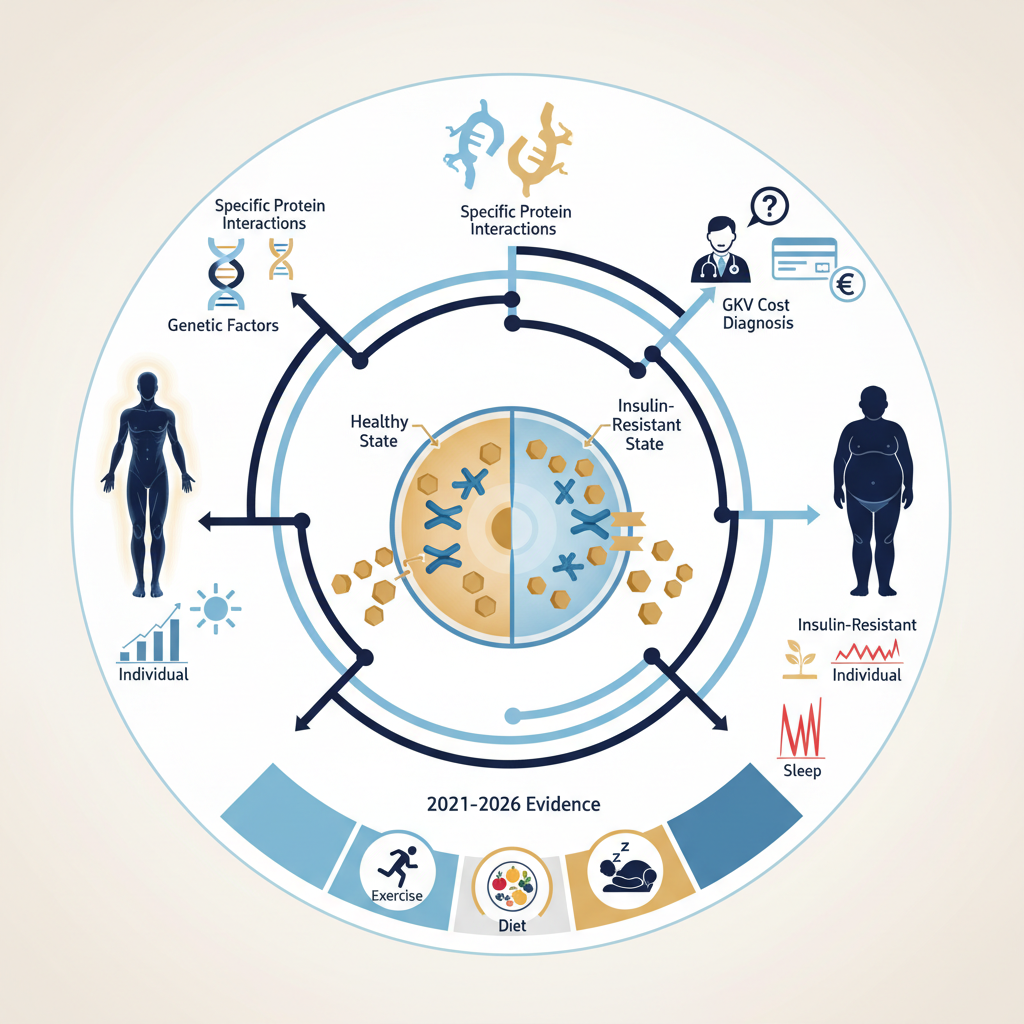
Max Planck teams in Germany recently showed that endothelial dysfunction—driven by increased adrenomedullin signalling—contributes to obesity‑associated insulin resistance, reframing prevention targets beyond muscle and liver. Translational evidence from Germany and international randomized trials suggests that targeted dietary fibers, time‑restricted eating, and compounds such as chlorogenic acids (found in yerba mate/coffee) may help lower postprandial glucose peaks (values expressed in mmol/L). Always coordinate care with your Hausarzt and Krankenkasse (GKV). ([mpg.de](https://www.mpg.de/24120190/adrenomedullin-causes-diabetes-in-overweight-people?utm_source=openai))
🇩🇪 Want to take action now? Try Feel Great → | Chat with a coach →
Introduction — a shocking Germany statistic
Insulin resistance (Insulinresistenz) is already widespread in Germany: depending on the data source, about 7–10% of adults have diagnosed diabetes and many more have prediabetes or elevated insulin resistance years before diagnosis. In population surveys the prevalence of known diabetes has risen over the last two decades and regional differences exist across the Bundesländer. That means millions of Germans are at increased metabolic risk and could benefit from earlier, targeted preventive action. ([gbe.rki.de](https://www.gbe.rki.de/DE/Themen/Gesundheitszustand/KoerperlicheErkrankungen/DiabetesMellitus/diabetesmellitus_node.html?utm_source=openai))
Why the recent Max Planck discoveries matter
Historically, insulin resistance research focused on liver, fat and skeletal muscle. Recent studies from the Max Planck Institute for Heart and Lung Research (Bad Nauheim) showed a previously underappreciated mechanism: insulin signalling in the vascular endothelium—especially when altered by increased adrenomedullin activity—can drive insulin resistance in adipose tissue and skeletal muscle, impairing glucose uptake and whole‑body glucose control. This reframes how we think about early pathophysiology and potential intervention points. ([mpg.de](https://www.mpg.de/24120190/adrenomedullin-causes-diabetes-in-overweight-people?utm_source=openai))
Bottom line from Max Planck
- The endothelium can become insulin‑resistant, limiting insulin and glucose delivery to muscle and liver.
- Adrenomedullin signalling appears to be a key upstream modulator in obesity‑linked insulin resistance in animal and human translational datasets. ([pubmed.ncbi.nlm.nih.gov](https://pubmed.ncbi.nlm.nih.gov/39913566/?utm_source=openai))
- Targeting vascular‑metabolic cross‑talk may complement classic metabolic approaches (diet, activity, weight management).
How German centres are connecting mechanisms to population health
Max Planck findings are being integrated with work from Helmholtz Zentrum München (biomarkers, muscle/fat gene expression) and clinical groups at Charité and other university hospitals that study insulin resistance across tissues and ages. Together these institutions provide a German research ecosystem—from basic mechanism to patient cohorts—that helps translate discoveries into screening and personalised prevention strategies delivered by Hausarzt (primary care) and covered by Gesetzliche Krankenversicherung (GKV) when guideline‑based. ([helmholtz-munich.de](https://www.helmholtz-munich.de/newsroom/news/artikel/diabetes-typ-2-neue-biomarker-zur-patientenklassifizierung-und-interventionsvorhersage-identifiziert?utm_source=openai))
What the international evidence says — interventions that may help
Translational discoveries point to targets; randomized trials and meta‑analyses show which lifestyle adjustments may influence insulin sensitivity (measured by HOMA‑IR, fasting glucose and postprandial responses in mmol/L). Below are evidence highlights (2021–2026 focus):
Time‑restricted eating / intermittent fasting
Randomized trials of time‑restricted eating (TRE) show mixed but often beneficial effects on insulin resistance and daily glucose patterns. Early time‑restricted feeding (eating earlier in the day) has improved insulin sensitivity in several RCTs; other TRE formats show smaller or weight‑mediated effects. Systematic reviews conclude TRE can reduce HOMA‑IR and improve postprandial glucose in some populations, especially when weight loss also occurs. ([nature.com](https://www.nature.com/articles/s41467-022-28662-5?utm_source=openai))
Viscous soluble fiber (Balance concept)
Multiple randomized trials and meta‑analyses show that viscous, gel‑forming soluble fibers (psyllium, guar, β‑glucan, galactomannans) reduce postprandial glucose peaks and improve fasting glucose/HbA1c in people with impaired glucose tolerance or T2D. Acute studies demonstrate lowered 2‑hour glucose excursions and reduced insulin AUC after meals when high‑viscosity fibers are consumed. This is why soluble fiber matrices that form an in‑meal gel are central to nutritional products aimed at reducing post‑meal glycaemic response. ([pmc.ncbi.nlm.nih.gov](https://pmc.ncbi.nlm.nih.gov/articles/PMC10500602/?utm_source=openai))
Chlorogenic acids / yerba mate (Unimate link)
Clinical trials on chlorogenic acids and yerba mate report improvements in fasting glucose, HOMA‑IR and some postprandial measures in at‑risk adults; effects vary by dose and duration. Recent randomized controlled trials combining catechins and chlorogenic acids found acute reductions in postprandial glycemia and changes in incretin responses. Animal and small human studies support plausible mechanisms (antioxidant, anti‑inflammatory, modulation of insulin signalling). ([pubmed.ncbi.nlm.nih.gov](https://pubmed.ncbi.nlm.nih.gov/36501092/?utm_source=openai))
Mechanistic omics and phosphoproteomics (Max Planck + international)
Large omics studies including phosphoproteomics have revealed network‑level rewiring of insulin signalling in adipocytes and muscle—helping to explain why single‑target interventions sometimes fail and why multi‑modal lifestyle strategies can be more effective. These systems‑level studies (including Max Planck collaborators) are recent and provide the molecular maps for targeted prevention. ([nature.com](https://www.nature.com/articles/s41467-023-36549-2?utm_source=openai))
Practical comparison: interventions and expected metabolic signals
| Approach | Typical target effect | Key evidence (2021–2026) |
|---|---|---|
| Viscous soluble fiber before/with meal (Balance) | Lower 2‑hour postprandial glucose peak; reduced insulin AUC (mmol/L scale) | RCTs & meta‑analyses show consistent reductions in postprandial glycaemia. ([pmc.ncbi.nlm.nih.gov](https://pmc.ncbi.nlm.nih.gov/articles/PMC10500602/?utm_source=openai)) |
| Time‑restricted eating (4–12 h windows; eTRF) | Lower fasting insulin, improved HOMA‑IR in some trials; benefits depend on timing and weight loss | Randomized trials and systematic reviews show mixed but promising results. ([nature.com](https://www.nature.com/articles/s41467-022-28662-5?utm_source=openai)) |
| Yerba mate / chlorogenic acids (Unimate) | Small to moderate improvements in fasting glucose and insulin sensitivity markers | Randomized crossover and longer trials indicate dose‑dependent effects. ([pubmed.ncbi.nlm.nih.gov](https://pubmed.ncbi.nlm.nih.gov/40263915/?utm_source=openai)) |
| Exercise and weight loss | Robust improvements across tissues; often largest effect on insulin sensitivity | Clinical and cohort data; recommended by German guidelines (DGE, RKI) as core strategies. ([gbe.rki.de](https://www.gbe.rki.de/DE/Themen/Gesundheitszustand/KoerperlicheErkrankungen/DiabetesMellitus/diabetesmellitus_node.html?utm_source=openai)) |
How to interpret blood sugar values (mmol/L) in Germany
Common clinical thresholds used in Germany: fasting plasma glucose <5.6 mmol/L (normal), 5.6–6.9 mmol/L (prediabetes / impaired fasting glucose), and ≥7.0 mmol/L (diabetes). Postprandial (2‑hour) glucose >11.1 mmol/L is diagnostic for diabetes in an oral glucose tolerance test (OGTT). Use these values as guides and discuss results with your Hausarzt. ([dge.de](https://www.dge.de/gesunde-ernaehrung/diaeten-und-fasten/heilfasten/weitere-diaeten/glyx-diaet/?utm_source=openai))
How Feel Great Helps (practical, evidence‑aware — not a medication)
Feel Great is positioned as a lifestyle support system (not a drug) designed for daily use alongside medical guidance from your Hausarzt and local Krankenkasse (GKV) covered care pathways. Key elements linked to mechanisms described above:
- Balance — a soluble fiber matrix that forms a viscous gel in the gut. Clinical evidence shows viscous fibers can lower post‑meal glucose peaks and reduce insulin AUC; Balance is intended to act in this same physiological space and therefore may help moderate postprandial glycaemia (measured in mmol/L). ([pmc.ncbi.nlm.nih.gov](https://pmc.ncbi.nlm.nih.gov/articles/PMC10500602/?utm_source=openai))
- Unimate — a standardized yerba mate extract rich in chlorogenic acids. RCTs and crossover trials report chlorogenic acid / yerba mate can improve fasting glucose and some insulin sensitivity markers; Unimate provides that phytochemical profile and may help with energy and mental clarity when used responsibly. ([pubmed.ncbi.nlm.nih.gov](https://pubmed.ncbi.nlm.nih.gov/40263915/?utm_source=openai))
- 4‑4‑12 intermittent fasting protocol — a structured, time‑restricted eating schedule. Time‑restricted eating trials show potential benefits for HOMA‑IR and postprandial control in some people; the 4‑4‑12 schedule is a behavioural framework to combine eating windows with Balance and Unimate. Always consult your Hausarzt before significant fasting changes, especially if you have diabetes or take medications. ([nature.com](https://www.nature.com/articles/s41467-022-28662-5?utm_source=openai))
- Evidence base — the Feel Great approach references >50 clinical studies listed in product documentation (PDR/portfolio). It is marketed as a lifestyle support system and not as therapy; claims are discussed in behavior‑change terms — "may help" or "may support" metabolic control rather than therapeutic promises.
Logistics for Germany: Feel Great options are delivered across all Bundesländer, and many elements of lifestyle and nutritional counselling can be discussed within pathways reimbursed or partially supported by Gesetzliche Krankenversicherung (GKV) if tied to guideline‑based medical care (check with your Krankenkasse and Hausarzt).
Clinical implications for German primary care (Hausarzt) and GKV
Primary care in Germany (Hausarzt) remains the cornerstone for early detection (screening for fasting glucose, HbA1c, OGTT) and long‑term monitoring of insulin resistance and diabetes. Current German surveillance recommends targeted action for people with prediabetes and increased cardiometabolic risk; collaboration between primary care, diabetes centres, and local public health programmes across Bundesländer is increasing. If a patient chooses lifestyle supports such as Balance or Unimate, document this in the medical record and review glycemic markers (mmol/L) regularly. ([diabsurv.rki.de](https://diabsurv.rki.de/Webs/Diabsurv/DE/diabetes-in-deutschland/2-112_Praevalenz_dokumentierter_Diabetes.html?utm_source=openai))
People Also Ask
- What did the Max Planck Institute discover about insulin resistance? — They identified endothelial insulin resistance and adrenomedullin signalling as key contributors to obesity‑linked insulin resistance. ([mpg.de](https://www.mpg.de/24120190/adrenomedullin-causes-diabetes-in-overweight-people?utm_source=openai))
- Can soluble fiber lower blood sugar? — Viscous, gel‑forming soluble fibers have consistent trial evidence reducing postprandial glucose peaks and improving some glycemic markers. ([pmc.ncbi.nlm.nih.gov](https://pmc.ncbi.nlm.nih.gov/articles/PMC10500602/?utm_source=openai))
- Does yerba mate affect insulin sensitivity? — Trials report modest improvements in fasting glucose and HOMA‑IR in some at‑risk groups; effects depend on dose and duration. ([pubmed.ncbi.nlm.nih.gov](https://pubmed.ncbi.nlm.nih.gov/40263915/?utm_source=openai))
- Is intermittent fasting safe for people with diabetes? — It can be effective for some but requires medical supervision and medication adjustment via your Hausarzt to avoid hypoglycaemia. ([pmc.ncbi.nlm.nih.gov](https://pmc.ncbi.nlm.nih.gov/articles/PMC8970877/?utm_source=openai))
- Will GKV pay for lifestyle programmes? — Some structured programmes and medical nutrition therapy are reimbursed or partly supported by GKV if prescribed or connected to guideline‑based care; check with your Krankenkasse. ([bundesgesundheitsministerium.de](https://www.bundesgesundheitsministerium.de/themen/praevention/gesundheitsgefahren/diabetes/seite?utm_source=openai))
FAQ
- Q: What is insulin resistance (Insulinresistenz)?
A: It is a reduced cellular response to insulin leading to higher circulating insulin and glucose; clinically it precedes many cases of type 2 diabetes and is measured with indices like HOMA‑IR or via fasting glucose in mmol/L. ([ajcn.nutrition.org](https://ajcn.nutrition.org/article/S0002-9165%2822%2902669-7/fulltext?utm_source=openai)) - Q: How do doctors test for it in Germany?
A: Typical tests include fasting plasma glucose (mmol/L), HbA1c, and OGTT; primary care (Hausarzt) performs initial screening and refers to specialists if needed. ([diabsurv.rki.de](https://diabsurv.rki.de/Webs/Diabsurv/DE/diabetes-in-deutschland/2-112_Praevalenz_dokumentierter_Diabetes.html?utm_source=openai)) - Q: Can a product like Balance replace medication?
A: No. Nutritional supports may help moderate post‑meal glucose but are not a substitute for prescribed medication. Always coordinate with your Hausarzt. - Q: Are Max Planck findings actionable now?
A: They inform mechanistic understanding and may lead to new prevention targets; clinical translation (new drugs or protocols) requires further trials, but the results already reinforce multi‑modal lifestyle strategies. ([mpg.de](https://www.mpg.de/24120190/adrenomedullin-causes-diabetes-in-overweight-people?utm_source=openai)) - Q: Where can I get tested and advice in Germany?
A: Start with your Hausarzt (primary care doctor). Many Krankenkassen (GKV) offer preventive counselling or covered programmes when clinically indicated. Regional diabetes centres (DZD, university hospitals) provide advanced diagnostics and trials. ([bundesgesundheitsministerium.de](https://www.bundesgesundheitsministerium.de/themen/praevention/gesundheitsgefahren/diabetes/seite?utm_source=openai))
References & Scientific Sources
- Max Planck Institute press release & study on adrenomedullin and endothelial insulin resistance. ([mpg.de](https://www.mpg.de/24120190/adrenomedullin-causes-diabetes-in-overweight-people?utm_source=openai))
- PubMed: 'Endothelial insulin resistance induced by adrenomedullin mediates obesity‑associated diabetes' (Max Planck authors). ([pubmed.ncbi.nlm.nih.gov](https://pubmed.ncbi.nlm.nih.gov/39913566/?utm_source=openai))
- Nature Communications 2023 — Phosphoproteomics rewiring of insulin signalling. ([nature.com](https://www.nature.com/articles/s41467-023-36549-2?utm_source=openai))
- Nature Communications 2022 — Randomized controlled trial on time‑restricted eating. ([nature.com](https://www.nature.com/articles/s41467-022-28662-5?utm_source=openai))
- Systematic review & meta‑analysis: viscous soluble fiber and glucose/lipid metabolism (RCTs). ([pmc.ncbi.nlm.nih.gov](https://pmc.ncbi.nlm.nih.gov/articles/PMC10500602/?utm_source=openai))
- Clinical trials on chlorogenic acids / yerba mate (randomized, crossover, 2021–2024). ([pubmed.ncbi.nlm.nih.gov](https://pubmed.ncbi.nlm.nih.gov/36501092/?utm_source=openai))
- Robert Koch‑Institut (RKI) — Diabetes surveillance, prevalence in Germany. ([diabsurv.rki.de](https://diabsurv.rki.de/Webs/Diabsurv/DE/diabetes-in-deutschland/2-112_Praevalenz_dokumentierter_Diabetes.html?utm_source=openai))
- Bundesministerium für Gesundheit — diabetes overview and public health activities in Germany. ([bundesgesundheitsministerium.de](https://www.bundesgesundheitsministerium.de/themen/praevention/gesundheitsgefahren/diabetes/seite?utm_source=openai))
- Deutsche Gesellschaft für Ernährung (DGE) — carbohydrate and fiber guidance (DGE resources). ([dge.de](https://www.dge.de/fileadmin/dok/wissenschaft/leitlinien/kohlenhydrate/Literaturtabelle-Diabetes-DGE-Leitlinie-KH.pdf?utm_source=openai))
- Helmholtz Zentrum München — biomarker and muscle/adipose gene expression work on insulin resistance. ([helmholtz-munich.de](https://www.helmholtz-munich.de/newsroom/news/artikel/diabetes-typ-2-neue-biomarker-zur-patientenklassifizierung-und-interventionsvorhersage-identifiziert?utm_source=openai))
- Deutsches Ärzteblatt / DGK — German clinical perspectives on insulin resistance and cardiovascular links. ([aerzteblatt.de](https://www.aerzteblatt.de/news/insulinresistenz-koennte-bei-typ-2-diabetes-progression-restriktiver-lungenerkrankungen-beguenstigen-b1a4d661-ee67-4b34-a199-6a943809f0b0?utm_source=openai))
- Reviews and systematic evidence on TRE and intermittent fasting (2021–2024). ([pmc.ncbi.nlm.nih.gov](https://pmc.ncbi.nlm.nih.gov/articles/PMC8970877/?utm_source=openai))
Medical disclaimer
This article is informational and not medical advice. It does not replace diagnosis or treatment by a qualified physician. Discuss any changes (dietary supplements, fasting, exercise, or medication adjustments) with your Hausarzt or specialist. If you have diabetes and take glucose‑lowering drugs, changes to eating patterns may require medication review to avoid hypoglycaemia. Products mentioned (Balance, Unimate, Feel Great) are lifestyle supports and not medications; benefits may vary and are not guaranteed.

Related ATHAR paths
🇩🇪 Ready to Start Your Health Transformation?
Join thousands across Germany who have improved their metabolic health with the Feel Great system. Backed by 50+ clinical studies and listed in the Physicians' Desk Reference (PDR).
✅ Lieferung in alle Bundesländer | 90-Tage-Geld-zurück-Garantie