Meal Timing Journal Basics: Your Practical Checklist for Intermittent Fasting Success
Author: Feras Alayed
Published:
Updated:
Category: intermittent-fasting
Reading Time: 6 minutes
Key Takeaways
- Journaling is not just about numbers; it's a tool to increase awareness of the link between food and energy.
- Defining your eating window accurately helps maintain discipline and consistency.
- Using a daily checklist reduces mental friction and makes decision-making easier.
TL;DR Summary
This article focuses on Meal Timing Journal Basics as an organizational tool to support your intermittent fasting journey. Through a practical checklist, you will learn how to record meal times, hunger levels, and energy, helping you build a routine that fits your daily life without complexity.
Understanding Meal Timing Journal Basics
When you begin exploring the world of intermittent fasting, you might feel overwhelmed by various terms and methods. This is where meal timing journal basics come in as a cornerstone of your educational journey. Journaling isn't just about recording what you eat; it's about documenting "when" you eat and how your body feels about it. Before starting, it is essential to answer some essential questions before considering fasting to ensure you choose the pattern that fits your lifestyle.
Journaling helps you transform fasting from a daunting task into a conscious process. Instead of relying on memory, a paper or digital log provides a consistent reference you can return to for evaluating your progress. In many cultures, where meals are often social, journaling helps you plan ahead and avoid random decisions that might affect your fasting window.
Why Tracking is the Key to Success
Understanding the relationship between meal timing and body response is the essence of success. For instance, journaling helps you monitor how intermittent fasting and blood sugar control affect your activity levels throughout the day. When you record that you felt sluggish after a specific meal at a specific time, you can adjust the timing the next day to improve your performance.
Journaling also supports "consistency." Consistency is what turns a fleeting practice into a solid habit. By seeing a series of successful days in your log, your motivation to continue increases. It also helps you in evaluating fasting claims based on your unique personal experience, not just based on what you read online.
The Ultimate Meal Timing Journal Checklist
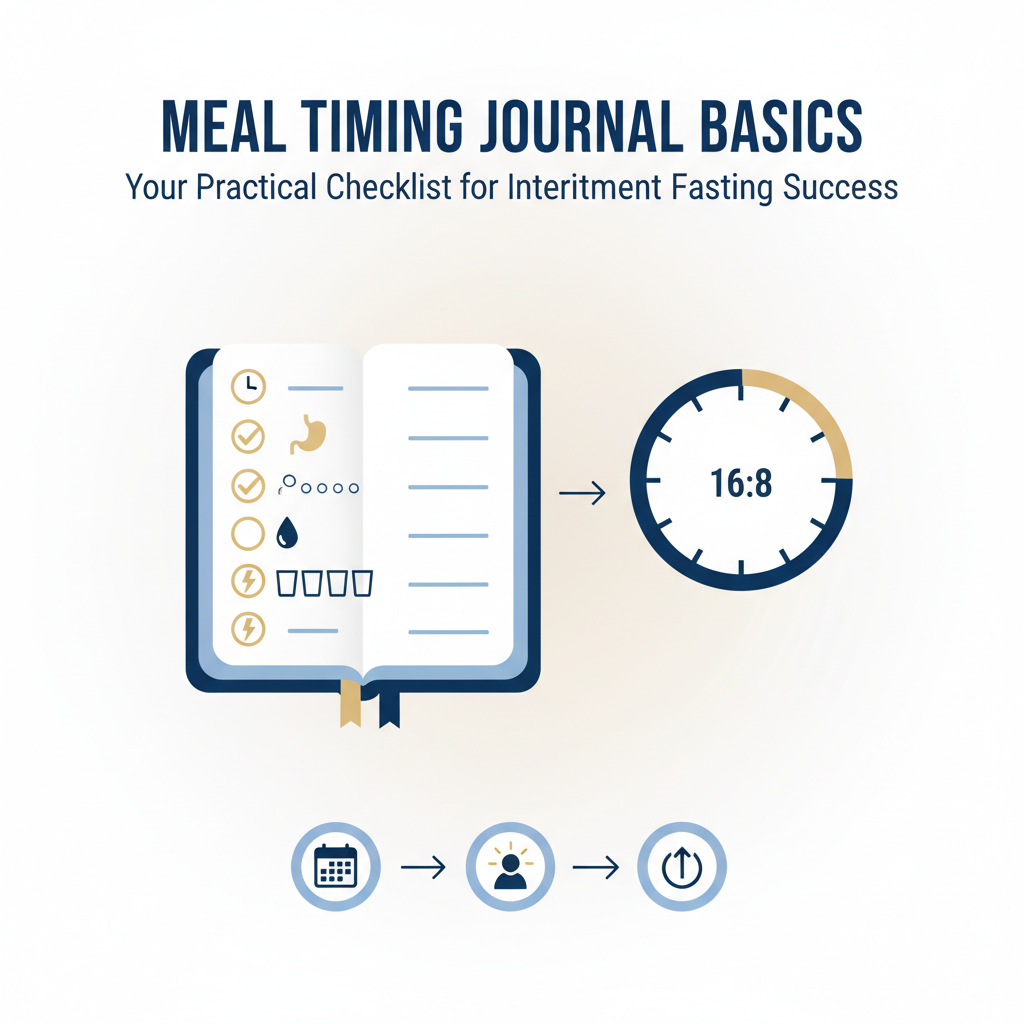
Here is the essential checklist your journal should include to ensure maximum benefit from meal timing journal basics:
- Start and End Times: Record the exact time of your first bite and last bite of the day. This clearly defines your "eating window."
- Hunger Level Before Meal: Use a scale of 1 to 10. Are you eating because you are truly hungry or because it's time?
- Energy Level 2 Hours After Meal: Do you feel energetic or sleepy? This helps you link food types and timing to your vitality.
- Previous Night's Sleep Quality: Sleep directly affects hunger hormones. Recording it helps you understand why fasting might be harder on some days.
- Emotional Notes: Did you have a snack outside the window due to stress or boredom? Noting this increases your awareness of emotional eating triggers.
- Water Intake: Fasting requires good hydration. Make sure to record your water consumption during fasting hours.
Analyzing Patterns and Self-Awareness
After a week of consistent journaling using meal timing journal basics, you will start to notice certain patterns. You might discover that you feel best when your eating window starts at 12 PM instead of 10 AM. Or you might notice that eating a heavy meal right before closing your window negatively affects your sleep quality.
This analysis is what we call "self-learning." It helps you customize your fasting protocol to be comfortable and sustainable. Remember, the goal is not perfection, but understanding. If you have a day where you didn't stick to the schedule, don't delete it from the log; instead, note the circumstances that led to it. Was it a family gathering? Was it work stress? This type of data is the most valuable for developing future strategies.
Overcoming Common Journaling Challenges
Many people find it difficult to keep up with journaling. Here are some tips to make meal timing journal basics an easy part of your day:
- Keep it Simple: You don't need to write essays. Simple words or emojis are enough to express the state and level.
- Timing is Everything: Log immediately after finishing a meal or starting your fast. Delaying leads to forgetting fine details.
- Use Technology to Your Advantage: There are many apps that facilitate tracking, but a paper notebook remains an excellent option for those who prefer to disconnect from screens.
It is also important to realize that journaling is a means, not an end. If you feel that journaling is causing you psychological pressure, take a break or reduce the details you record. The goal is to support your journey in intermittent fasting education, not to add a new burden.
Frequently Asked Questions about Meal Timing Journaling
A: Not necessarily. The focus in meal timing journal basics is on timing and physical response. If your goal is calorie tracking, you can do that, but the priority here is understanding the fasting window and its impact.
A: Don't worry. Start fresh the next day. Long-term consistency is more important than one missed day. Try to remember the broad outlines of the previous day and note them briefly.
A: Indirectly, yes. By recording hunger levels, you will learn to distinguish between true hunger and false hunger caused by habit or boredom, making it easier to stick to fasting periods.
A: We recommend continuing for at least 21 to 30 days. This period is sufficient to observe patterns and solidify new habits.
Medical Disclaimer: The information in this article is for educational and informational purposes only and is not a substitute for professional medical advice. Always consult your healthcare provider before starting any new fasting regimen, especially if you have chronic medical conditions.

Explore health education
Review the educational guides and practical tools related to this topic.
Explore the education hub