Meal Timing Journal Basics: Your Practical Guide to Organizing Intermittent Fasting
Author: Feras Alayed
Published:
Category: intermittent-fasting
Reading Time: 5 minutes
- A meal timing journal focuses on the 'when' to optimize metabolic flexibility.
- Consistency is built through tracking small daily windows and energy shifts.
- Data from your journal helps debunk generic health myths.
The Importance of a Meal Timing Journal
In the world of intermittent fasting education, we often focus heavily on what to eat, but the 'when' is equally transformative. A meal timing journal acts as a mirror, reflecting your true habits versus your perceived ones. By mastering meal timing journal basics, you shift your focus from restriction to synchronization. You begin to see how your body responds to different fasting durations and how your schedule influences your hunger cues. This practice supports consistency and makes the decision-making process clearer, allowing you to adjust your routine based on facts rather than feelings. It’s about building a sustainable rhythm that feels natural to your daily life.
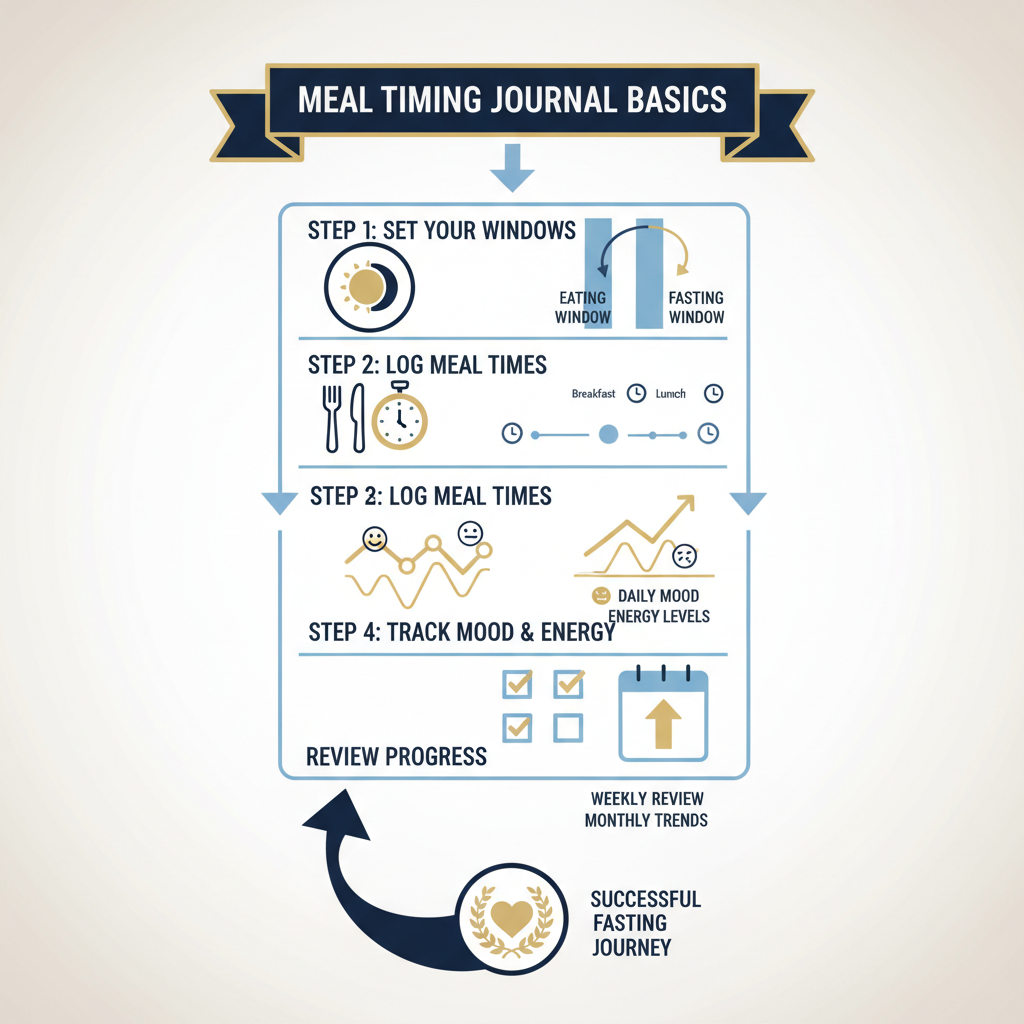
The Practical Checklist for Success
To get the most out of your tracking, you need a structured approach. Here is a practical checklist you can use to set up your journal:
- First Bite Timestamp: Record the exact time you break your fast.
- Last Bite Timestamp: Record when you finish your final meal or snack.
- Total Fasting Duration: Calculate the hours between your last meal yesterday and your first meal today.
- Hunger Intensity: Rate your hunger on a scale of 1-10 before each meal.
- Post-Meal Mood: Note if you feel energized, bloated, or tired after eating.
- Hydration Levels: Track your water intake during the fasting window.
- Sleep Correlation: Note if an earlier or later last meal improved your sleep quality.
Mastering Fasting Terminology
Using accurate fasting terminology in your journal helps you stay organized and professional in your approach. Terms like 'Circadian Fasting' (aligning meals with daylight) or 'Window Shifting' (moving your eating hours to accommodate events) should become part of your vocabulary. When you write down 'Started a 16:8 protocol today,' you are defining a clear boundary for your body. This clarity reduces the mental fatigue of deciding when to eat, as the journal holds the plan you’ve already committed to. It encourages following through on your intentions by providing a visual record of your discipline.
Tracking Energy and Glucose Patterns
One of the most profound insights you can gain comes from observing intermittent fasting and blood sugar control. While you may not be using a glucose monitor, your journal can track the symptoms of blood sugar fluctuations. Do you feel a 'crash' at 3 PM? Did you break your fast with high-carb foods that led to a nap? By documenting these moments, you learn how to stabilize your energy. You might find that a specific meal timing helps you maintain focus during work hours, making your fast feel effortless rather than a struggle. This data-driven approach turns your journal into a powerful tool for personal optimization.
Adapting to Social Dynamics
Life isn't lived in a vacuum, and social dining is a huge part of our culture. A meal timing journal shouldn't be a rigid cage; it should be a flexible map. Use it to plan for social gatherings. If you know you have a dinner party, you can use your journal to 'budget' your fasting hours, perhaps starting your fast later the previous night or shortening your window the next day. This flexibility is key to making intermittent fasting a lifelong habit rather than a short-term diet. It allows you to participate in life’s joys without breaking your commitment to your routine, providing a sense of control and balance.
Evaluating Claims with Personal Data
The internet is full of conflicting advice, making evaluating fasting claims a difficult task. However, your journal provides the only evidence that truly matters: how your body reacts. If a popular influencer claims that 'One Meal a Day' (OMAD) is the best for everyone, but your journal shows that your energy plummets and your sleep suffers on that schedule, you have the confidence to choose a different path. Your journal empowers you to ignore the noise and focus on what works for you. It transforms you from a passive consumer of health trends into an active, informed participant in your own wellness journey.
Related Articles
- Essential Questions Before Considering Fasting: A Comprehensive Guide
- Intermittent Fasting and Blood Sugar Control: A Deep Dive
- The Ultimate Intermittent Fasting Education Pillar

Explore health education
Review the educational guides and practical tools related to this topic.
Explore the education hub