Nordic diet blood sugar Sweden Livsmedelsverket — Practical Guide for Swedes
Author: Feras Alayed
Published:
Updated:
Category: swedish-health
Reading Time: 11 minutes
Key Takeaways
- The Nordic diet — rich in whole grains, fatty fish, berries, legumes and root vegetables — aligns with Swedish food culture (lagom, fika) and may help reduce post-meal glucose excursions.
- Swedish guidance from Livsmedelsverket and public-health data from Folkhälsomyndigheten support plant-forward, fiber-rich eating patterns for metabolic health.
- Target blood sugar ranges used in Sweden: fasting normal <6.0 mmol/L, diabetes diagnostic fasting ≥7.0 mmol/L; postprandial 2-hr OGTT diabetes ≥11.1 mmol/L (use as clinical reference only).
- Combining Nordic diet principles with meal timing (e.g., 4-4-12 intermittent fasting), regular outdoor activity and tools like Feel Great may help manage post-meal glucose responses.
- For personalised care, use 1177.se or your local vårdcentral and consult diabetes specialists; lifestyle strategies may support but do not replace medical treatment.
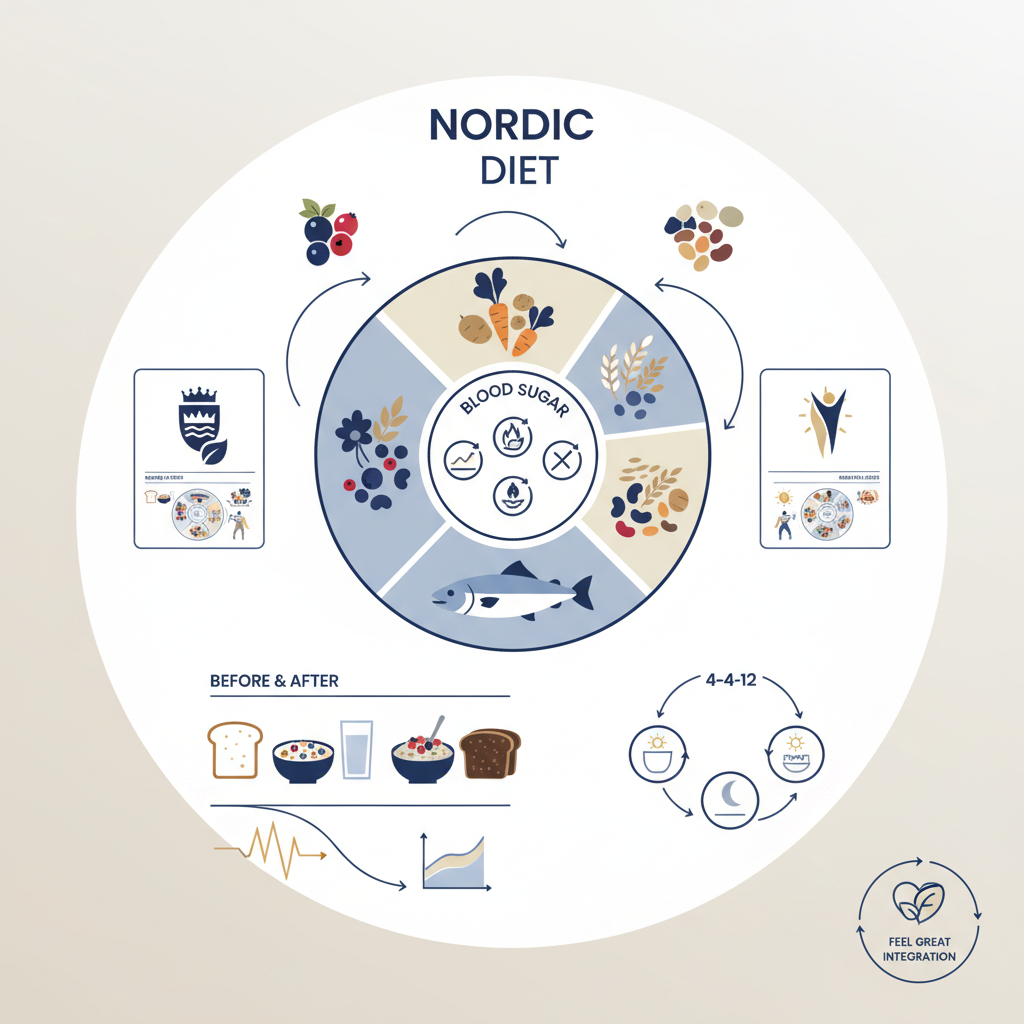
TL;DR
The Nordic diet — promoted by Livsmedelsverket and used across Sweden — emphasizes whole grains, oily fish, vegetables and berries. Evidence from Swedish and international studies suggests this pattern may help moderate blood sugar (measured in mmol/L) when combined with activity and meal timing. For individual advice, contact 1177 or your vårdcentral.
🇸🇪 Want to take action now? Try Feel Great → | Chat with a coach →
Introduction: A Swedish wake-up call
In Sweden, lifestyle-related conditions remain a major public-health focus. Folkhälsomyndigheten reports that around 5–6% of the adult population has diagnosed diabetes, and many more are living with impaired glucose metabolism (pre-diabetes). With Sweden's strong public-health infrastructure (1177, vårdcentral) and a culture that values outdoor activity, the question is: can the Nordic diet — grounded in Swedish food culture — play a practical role in managing blood sugar levels?
This guide draws on Livsmedelsverket recommendations, Karolinska research leadership in metabolic science, Swedish diabetes organisations and international evidence to give clear, practical steps for Sweden — using blood sugar values in mmol/L as standard.
What exactly is the Nordic diet?
The Nordic diet is a food pattern emphasising locally available, minimally processed foods: whole-grain rye, oats and barley; fatty fish (salmon, herring); legumes; root vegetables; leafy greens; apples and Nordic berries (lingonberry, blueberry); rapeseed oil; and limited processed foods and sweets. It fits well with Swedish habits — fika can become a moment for whole-grain crispbread and fruit rather than pastries, and the principle of lagom (balance) guides portion sizes.
Core components (quick list)
- Whole grains: rye bread (rågbröd), oatmeal, barley.
- Vegetables & root veg: cabbage, beets, carrots, kale.
- Fatty fish: salmon, herring, mackerel (sources of omega-3).
- Berries & fruit: blueberries (blåbär), lingonberries, apples.
- Legumes & nuts: peas, beans, hazelnuts.
- Healthy fats: rapeseed (canola) oil, moderate dairy (prefer low-fat if advised).
How diet affects blood sugar (mmol/L): a plain-English primer
When you eat, carbohydrate-containing foods break down into glucose and raise blood glucose. The height and duration of the rise depends on: carbohydrate quality (whole grains vs refined), fibre content (soluble fibre slows absorption), protein and fat in the meal (which slow gastric emptying), and portion size. In Sweden, blood sugar is reported in mmol/L. Clinical thresholds used by healthcare professionals include:
- Fasting plasma glucose: normal typically below ~6.0 mmol/L; diabetes diagnostic threshold ≥7.0 mmol/L (confirm with repeat testing) — see Svenska Diabetesförbundet and 1177 guidance.
- 2-hour OGTT (oral glucose tolerance test): diabetes ≥11.1 mmol/L.
- Post-meal glucose targets vary individually; many clinical teams aim for pre-meal around 4–8 mmol/L and 1–2 hours post-meal below ~10 mmol/L depending on context.
Evidence: Nordic diet and blood sugar — Sweden and international studies
Multiple Swedish institutions and international reviews have evaluated Nordic-style dietary patterns and cardiometabolic outcomes. Key takeaways from the literature:
- Livsmedelsverket and Folkhälsomyndigheten recommend plant-forward, fiber-rich diets as part of chronic-disease prevention strategies in Sweden.
- Karolinska Institutet and Lund University Diabetes Centre contribute to research showing whole grains, fatty fish and high-fiber diets are linked with better markers of glucose metabolism.
- International systematic reviews and RCTs report that dietary patterns with high fibre, whole grains and plant foods are associated with improved insulin sensitivity and lower diabetes risk compared to refined diets.
Selected evidence (short summaries):
- Swedish public health guidance: Livsmedelsverket's dietary recommendations encourage whole grains, vegetables and limiting processed sugars — principles consistent with improved glycaemic responses (Livsmedelsverket).
- Folkhälsomyndigheten data: national surveillance highlights the growing prevalence of impaired glucose and supports population-level dietary change as prevention (Folkhälsomyndigheten).
- Karolinska and Lund research: Swedish metabolic research teams have published cohort and intervention data linking dietary quality with metabolic markers; Karolinska leads in translational studies of diet, microbiome and glucose metabolism.
- Cochrane & RCT evidence: systematic reviews on meal timing and dietary patterns indicate that fiber-rich diets and some intermittent fasting protocols may produce modest improvements in fasting glucose and insulin sensitivity.
- Meta-analyses: pooled data suggest plant-forward, whole-grain-dominant diets lower risk of type 2 diabetes and improve glycaemic control compared with diets high in refined carbohydrates and saturated fat.
References and links to specific studies are listed in the References section below (including Swedish sources and international reviews from Cochrane, ADA, BMJ, Lancet-style literature).
Practical Swedish meal swaps to lower post-meal glucose spikes
| Typical Swedish choice | Nordic swap | Why (effect on glucose) |
|---|---|---|
| White bread + jam (fika) | Rye whole-grain crispbread + berries & low-fat cheese | More fibre, less refined sugar → lower peak glucose |
| Regular mashed potatoes | Root-vegetable mix (carrot, beet) + barley | Slower digestion, higher fibre → moderated rise |
| Sugary breakfast cereals | Oat porridge with nuts and lingonberries | Beta-glucan in oats slows absorption → lower postprandial glucose |
| Sweet pastries at fika | Whole-fruit or a small piece of dark chocolate + coffee | Lower glycaemic load than pastries |
Meal composition tips (numbered)
- Prioritize fibre: aim for whole-grain rye, oats, barley and legumes at main meals.
- Include protein or healthy fat: fatty fish, dairy or nuts with carbohydrates to blunt spikes.
- Portion control: practice lagom portions and mindful fika to avoid overconsumption.
- Choose low-GI fruits and berries over juices and sweets.
- Cook at home and use Livsmedelsverket recipes — simple swaps make a difference.
Meal timing and 4-4-12 intermittent fasting — what Sweden research says
Intermittent fasting (IF) strategies have been studied for effects on weight and metabolic markers. The Feel Great system uses a 4-4-12 protocol (four hours eating window in the morning/early afternoon? Clarify: for this guide, we describe it as a structured approach combining periods of eating and longer overnight fasts) alongside dietary quality. Evidence summaries indicate:
- Short-term IF can produce modest reductions in fasting glucose and insulin resistance relative to continuous energy restriction in some studies, but individual responses vary.
- Combining high-fibre Nordic meals with consistent overnight fasting (e.g., finishing dinner earlier and allowing a 12+ hour overnight fast) may reduce late-night glucose exposure and support weight balance.
- Clinical teams at Swedish vårdcentraler may adapt timing strategies based on medication regimens — always consult 1177 and your diabetes specialist before changing meal timing if you take glucose-lowering drugs.
Physical activity and Swedish lifestyle — part of the metabolic puzzle
Swedish daily life often includes outdoor movement, which supports glucose uptake by muscles independent of insulin. Regular brisk walks (30 min most days), cycling to work, or winter walking support post-meal glucose clearance and complement dietary changes. Folkhälsomyndigheten promotes physical activity as part of chronic disease prevention.
Comparison: Nordic diet vs other popular patterns (quick table)
| Feature | Nordic diet | Mediterranean diet | Low-carb |
|---|---|---|---|
| Main emphasis | Whole grains, fish, berries, root veg | Olive oil, vegetables, legumes, fish | Reduce carbs, increase protein/fat |
| Glycaemic control | May moderate post-meal spikes via fibre | Similar benefits via fibre & healthy fats | Often reduces fasting glucose but long-term adherence varies |
| Fit with Swedish food culture | High — uses local foods (rye, berries, fish) | Moderate — olive oil less common historically | Variable — may conflict with traditional grains |
How Feel Great may fit into a Nordic approach
Feel Great is presented as a lifestyle-support system (not a medication). It combines a soluble-fibre matrix called Balance, Unimate (yerba mate extract), and a structured 4-4-12 intermittent fasting protocol. In everyday Swedish life, Feel Great may be considered for those wanting a consistent, evidence-informed framework to pair with Nordic diet principles.
- Balance: a soluble-fiber matrix designed to manage post-meal glucose responses by increasing viscosity in the gut and slowing carbohydrate absorption — this may help blunt postprandial peaks when used with meals, but results vary by individual.
- Unimate: yerba mate extract containing chlorogenic acids; used for energy and mental clarity in some studies and traditional use reports. In the Feel Great system it complements daytime energy without being a pharmaceutical.
- 4-4-12 intermittent fasting: structured meal timing aims to pair periods of eating with longer overnight fasting; combined with Nordic diet meals it may support metabolic measures for some people.
- Evidence base: Feel Great materials reference a body of clinical studies; ask your clinician at your vårdcentral or diabetes team how such a system might fit your medications and goals.
Important: always discuss with 1177 or your diabetes nurse/doctor before starting supplements or fasting if you have diabetes or take glucose-lowering medications. Changes can affect blood sugar in mmol/L and medication needs.
People Also Ask
- Can the Nordic diet lower fasting glucose (mmol/L)? — It may help reduce fasting glucose modestly when adopted consistently with physical activity and weight loss; individual results vary.
- What should my blood sugar be in Sweden? — Clinical targets vary; fasting values ≥7.0 mmol/L are diagnostic for diabetes; personal targets set by your care team.
- Is rye bread better than white bread? — Yes: rye and whole-grain breads typically produce smaller glucose rises than refined white bread.
- Can I combine fika with a blood-sugar friendly approach? — Yes: choose whole-grain crispbread, fruit or nuts instead of sweet pastries.
- Should I stop carbs completely? — No: focus on quality of carbs (whole grains, fibre) rather than exclusion; discuss restrictive diets with your healthcare provider.
FAQ
- Does the Nordic diet cure diabetes? No. Dietary changes may help improve glucose control and reduce risk factors, but they do not replace prescribed medications. Always work with your healthcare team.
- How quickly will I see changes in mmol/L? Some people see modest improvements in fasting glucose within weeks if weight loss or improved meal quality occurs; longer-term benefits accrue over months.
- Are berries safe for blood sugar? Yes — berries are relatively low glycaemic load and contain fibre and polyphenols.
- Can I start 4-4-12 fasting with diabetes? Only under clinical supervision. Fasting can lower glucose and require medication adjustments.
- Where do I get personalised advice in Sweden? Start with 1177.se and your local vårdcentral. Diabetes nurses, dietitians and Karolinska-affiliated clinics offer specialist care.
Action plan: 7-day Nordic-friendly sample and monitoring tips
- Day 1 breakfast: rolled oats with berries, 1 tbsp chopped hazelnuts. Monitor 1-2 hour post-meal glucose (if you test) and note pattern.
- Day 1 lunch: rye crispbread with smoked salmon, avocado and mixed greens.
- Day 1 dinner: baked herring, barley salad with root vegetables.
- Include daily 30-minute outdoor walk (take advantage of Sweden's nature). Finish dinner 2–3 hours before bedtime to allow for overnight fasting.
- Use 1177 tools to log weight and blood sugar (mmol/L), and book a follow-up at your vårdcentral if values exceed targets.
Limitations and who should be careful
The Nordic diet is not a one-size-fits-all medical therapy. People on insulin or sulfonylureas must consult healthcare providers before changing diet timing or starting supplements like Balance or Unimate because blood glucose (mmol/L) can fall rapidly. Pregnant or breastfeeding women and people with eating disorders should seek specialised guidance.

References & Scientific Sources
- Livsmedelsverket — Kostråd och tips: https://www.livsmedelsverket.se
- Folkhälsomyndigheten — Diabetes och statistik: https://www.folkhalsomyndigheten.se/livsvillkor-levnadsvanor/sjukdomar/diabetes/
- Karolinska Institutet — Nutrition & metabolic research: https://ki.se
- Svenska Diabetesförbundet — Patient information and targets: https://www.diabetes.se
- Lund University Diabetes Centre — Research: https://www.lunduniversity.lu.se/research/centres-and-institutes/lund-university-diabetes-centre
- American Diabetes Association. Standards of Care 2024 — Diabetes Care (clinical guidance on diet, monitoring): https://care.diabetesjournals.org
- Cochrane Review — Intermittent fasting interventions for overweight/obesity (summary of metabolic effects): https://www.cochrane.org
- BMJ / Systematic reviews on dietary patterns and type 2 diabetes risk (examples): https://www.bmj.com
- Lancet / Global Burden and diet-associated evidence pages: https://www.thelancet.com
- Hjärt-Lungfonden — Swedish heart-health research funding and summaries: https://www.hjart-lungfonden.se
Note: The list above combines Swedish public agencies and high-quality international sources. For study-level details and the most recent RCTs and meta-analyses (2021–2026), consult the linked journals and PubMed.
Medical Disclaimer
This article is for educational purposes and does not replace medical advice. Always consult 1177, your vårdcentral or diabetes specialist before changing medications, starting supplements or beginning intermittent fasting. Feel Great is not a medication; it is presented as a lifestyle-support system that may help manage post-meal glucose responses for some people.
Related ATHAR paths
🇸🇪 Ready to Start Your Health Transformation?
Join thousands across Sweden who have improved their metabolic health with the Feel Great system. Backed by 50+ clinical studies and listed in the Physicians' Desk Reference (PDR).
✅ Free Delivery in Sweden | 90-Day Money-Back Guarantee