Visual Checklist: Skills for Tracking Daily Blood Sugar Patterns and Decoding Metabolic Terms
Author: Feras Alayed
Published:
Category: insulin-resistance
Reading Time: 14 minutes
Key Takeaways
- A single blood sugar reading doesn't tell the whole story; daily patterns are what truly matter.
- Using a visual checklist helps connect food choices, sleep, and stress to your energy levels.
- Understanding metabolic terms like insulin resistance demystifies your health reports.
- Tracking patterns is an educational skill to support better choices, not a self-diagnostic tool.
TL;DR
This article provides a practical guide and a blood sugar pattern awareness checklist to help you transition from staring at random numbers to understanding daily trends. You will learn how your meals, sleep, and stress impact your metabolic response, and how to decode complex medical terms to build sustainable, health-supporting habits.
Why Tracking Blood Sugar Feels Overwhelming
Many people start their journey toward better health with great enthusiasm, purchasing blood glucose monitors or eagerly reading about metabolic wellness. However, this excitement often turns into frustration. The problem most people face isn't the act of measuring itself, but trying to make sense of isolated numbers. You might wake up one day and find your morning reading completely different from the day before, even though you ate the exact same dinner. This apparent inconsistency can make sustaining health-tracking habits feel difficult and mentally draining.
The real reason behind this confusion is focusing on static snapshots rather than the entire movie. Your body is not a simple calculator; it is a complex ecosystem influenced by dozens of factors simultaneously. Sleep quality, stress levels, meal timing, food composition, and even hormonal shifts all play a role in determining how your body handles glucose. Without a structured framework to connect these dots, the numbers become a source of anxiety rather than a tool for empowerment. This is where the importance of shifting from a single-reading mindset to a pattern-awareness mindset becomes crucial.
What Exactly is a Blood Sugar Pattern?
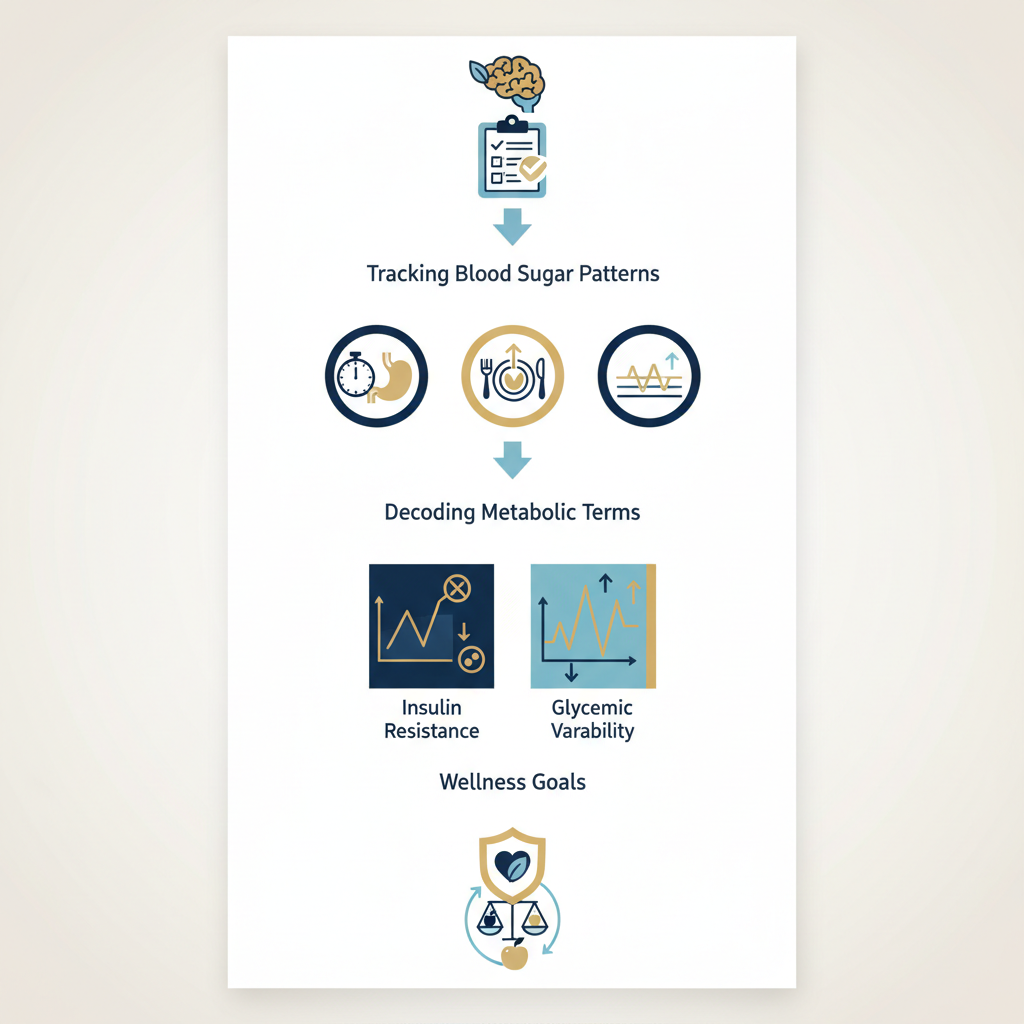
A blood sugar pattern is the consistent, recurring trend of how your blood glucose levels rise and fall throughout the day in response to various lifestyle choices. Instead of fixating on one number at one specific moment, a pattern looks at the overall curve: How quickly does it rise after a meal? How sharp is the drop? And how long does it take for the body to return to its baseline?
To understand patterns, we must recognize that blood sugar fluctuations are a completely normal response. When you eat, it is natural for blood sugar to rise. The goal is not to achieve a perfectly flat line, but to avoid extreme volatility (the high peaks and deep valleys) that lead to energy crashes and mood swings. By observing these patterns, you can begin to see how insulin resistance or sensitivity relates to your daily habits, giving you a clear roadmap to adjust your routine.
The Core Blood Sugar Pattern Awareness Checklist
To make tracking easier and integrate it into your daily life without complexity, we have designed this blood sugar pattern awareness checklist. You can use this visual guide as a daily tool to evaluate your body's responses and jot down your observations.
| Skill / Checkpoint | What to Look For? | Practical Application |
|---|---|---|
| ✅ Tracking the Morning Baseline (Fasting) | Is the reading stable or does it vary wildly day-to-day? | Log the reading right after waking up, before coffee or food. Correlate it with your sleep quality from the night before. |
| ✅ Monitoring Meal Response (2 Hours Post-Meal) | Does your blood sugar return close to baseline after eating? | Note the difference between pre-meal and 2-hour post-meal readings. This helps evaluate meal composition (protein, fat, fiber). |
| ✅ Identifying Sharp Spikes | Do you feel extremely sleepy or experience brain fog shortly after eating? | Link physical symptoms (like a post-lunch slump) to the type of carbohydrates you consumed. |
| ✅ Spotting Reactive Crashes | Do you get intense sugar cravings or feel shaky 3-4 hours after a meal? | Record times of sudden hunger. A sharp rise is often followed by a sharp drop, triggering these cravings. |
| ✅ Factoring in Stress and Movement | How do numbers change on busy workdays versus rest days? | Add a quick note about your stress level (high/low) or if you took a walk after your meal. |
Using this checklist regularly helps organize your routine, supports consistency, and makes choices clearer. It is not about achieving perfection, but about gathering personal data that helps you understand your body's unique language.
Decoding the Metabolic Language: Terms You Need to Know
As you begin tracking your patterns, you will inevitably encounter various medical and metabolic terms. Understanding these terms is a foundational step to empowering yourself on your health journey. Here is a simplified breakdown of these key concepts:
- Insulin Resistance: This is a condition where the body's cells (especially muscle, liver, and fat cells) become less responsive to the hormone insulin. As a result, glucose struggles to enter the cells, prompting the pancreas to produce even more insulin. You can learn more about this in our comprehensive guide on insulin resistance symptoms and testing.
- Prediabetes: This is a warning window where blood sugar levels are higher than normal, but not yet high enough to be diagnosed as type 2 diabetes. It is a golden opportunity for intervention and lifestyle modification. Learn about the warning signs of prediabetes to stay proactive.
- Metabolic Flexibility: This is the body's ability to efficiently switch between burning carbohydrates (glucose) and burning fat for fuel, based on what is available. People with high metabolic flexibility experience stable energy throughout the day.
- Chronic Inflammation: This is a long-term, low-grade immune response, often linked to highly processed diets and chronic stress. Chronic inflammation can exacerbate blood sugar issues. Read more in our nutrition guide for chronic inflammation.
Daily Scenarios: Translating Numbers into Lifestyle Choices
To make these concepts more relatable to your daily life, let's explore some hypothetical scenarios that illustrate how blood sugar patterns work in reality:
Scenario A: The Fast-Carb Breakfast vs. The Balanced Breakfast
Imagine you start your morning with a large bowl of sweetened cereal and a glass of orange juice. About 45 minutes later, you might feel a surge of energy (a blood sugar spike). But by mid-morning, you experience profound fatigue, brain fog, and an urgent need for a snack (a reactive crash). Conversely, if you eat eggs with avocado and vegetables, the rise in blood sugar is gradual and gentle, providing you with sustained energy until lunchtime without the urgent sugar cravings.
Scenario B: The Impact of a Poor Night's Sleep
Suppose you only slept for 4 hours due to a stressful work deadline. The next morning, you might notice that your fasting blood sugar reading is higher than usual, even though you didn't eat anything different the night before. Poor sleep increases stress hormones like cortisol, which in turn prompts the liver to release more glucose into the blood and reduces cellular insulin sensitivity for that day. Understanding this pattern prevents you from blaming your food choices and redirects your focus toward improving your sleep hygiene.
Myths vs. Facts in Blood Sugar Tracking
In a world full of conflicting health information, it is easy to fall into the trap of misconceptions. Here is a breakdown of some common myths:
- Myth: Only people with diabetes need to pay attention to blood sugar patterns.
Fact: Blood sugar pattern awareness is beneficial for everyone. Extreme fluctuations can impact energy levels, focus, mood, and weight management in healthy individuals as well. It is a powerful preventive tool. - Myth: Any rise in blood sugar after eating is dangerous and should be completely avoided.
Fact: A rise in blood sugar after a meal is a normal physiological response. The issue only arises with excessively high spikes or remaining at elevated levels for prolonged periods without returning to baseline. - Myth: If my fasting reading is normal, it means everything is perfectly fine.
Fact: The fasting reading is just one piece of the puzzle. Some people may have normal fasting numbers but experience sharp, prolonged spikes after meals, which can be an early sign of metabolic strain.
When to Share Your Patterns with a Healthcare Professional
While the visual checklist is an excellent tool for self-education and adjusting daily habits, it does not replace professional medical care. You should compile your observations and discuss them with a licensed physician or a registered dietitian in the following situations:
First, if you notice that your morning (fasting) blood sugar readings consistently exceed recommended normal ranges over several weeks. Second, if you experience frequent symptoms of hypoglycemia (sweating, shakiness, severe dizziness) that interfere with your ability to perform daily tasks. Third, if you are making significant lifestyle changes and do not see any stabilization in your energy levels or patterns. Always remember that this article is intended for behavioral support and education, and does not offer medical diagnosis or treatment.
Your Next Step: Building a Sustainable Observation Routine
Now that you are armed with a deeper understanding of how to read blood sugar patterns and decode metabolic terms, the most important step is sustainable application. Do not try to change everything in one day. Pick one skill from the checklist, such as monitoring your body's response to breakfast, and focus on it for a week. Observe how this awareness encourages you to make progressively better choices.
If you are ready to take the next step and design a more comprehensive plan, we recommend checking out The Ultimate Prediabetes Reversal Guide: A Step-by-Step Plan for 2026. To understand your current position on your health journey and determine the most appropriate next step for your goals, start your internal health assessment today to build a routine that supports your long-term wellness.
Medical Disclaimer: This content is for educational and informational purposes only and is not intended as a substitute for professional medical advice, diagnosis, or treatment. Always consult your physician before making any changes to your diet or lifestyle.
Frequently Asked Questions
What is the scope of this guide?
This guide is educational and helps readers organize questions and observations for further learning.
How should I use the information?
Use it to review terminology, note personal questions, and identify sources that require verification.
When should I seek professional guidance?
Discuss personal symptoms, medicines, diagnoses, or treatment decisions with a licensed professional.

Ready to choose a clearer health starting point?
Start with a short educational assessment to explore tools and resources that may fit your goal. It is not a medical diagnosis.
Continue learning at Insulin Resistance.