Nordic diet blood sugar Sweden Livsmedelsverket — Guide to eating for better glucose (Sweden)
Author: Feras Alayed
Published:
Updated:
Category: swedish-health
Reading Time: 10 minutes
Key Takeaways
- The Nordic diet—high in whole grains, berries, vegetables, legumes, rapeseed oil and fatty fish—aligns with Livsmedelsverket guidance and Nordic Nutrition Recommendations (NNR). ([doczz.net](https://doczz.net/doc/7207075/h%C3%A4lsosam-helhet---livsmedelsverket?utm_source=openai))
- In Sweden about 6% of the population had diagnosed diabetes in recent national reports; diet, physical activity and weight remain core prevention and management tools. ([skr.se](https://skr.se/download/18.7bc31c4019afcc28a8019f5e/1765257531334/Halsoochsjukvardsrapport2025.pdf?utm_source=openai))
- Randomized trials and meta-analyses (including the SYSDIET program) show the healthy Nordic diet can improve markers linked to glucose metabolism (fasting glucose, insulin sensitivity, HbA1c trends). Effects vary by study design and population. ([pmc.ncbi.nlm.nih.gov](https://pmc.ncbi.nlm.nih.gov/articles/PMC3749468/?utm_source=openai))
- Practical Swedish swaps—oat/rye porridge, berries instead of sweet buns, fatty fish twice weekly, rapeseed oil—can reduce post‑meal glucose spikes (postprandial rise) and increase fiber intake (soluble and insoluble). Evidence for beta‑glucan (oats/barley) lowering postprandial glucose is strong. ([doi.org](https://doi.org/10.1038/s41430-021-00875-9?utm_source=openai))
- Feel Great (soluble fiber Balance, Unimate yerba mate, 4-4-12 fasting protocol) may be used as a lifestyle support system alongside Livsmedelsverket advice; it is not a medication and may help manage post-meal glucose response when combined with food and activity. Include healthcare follow-up via vårdcentral/1177. ([doczz.net](https://doczz.net/doc/7207075/h%C3%A4lsosam-helhet---livsmedelsverket?utm_source=openai))
TL;DR
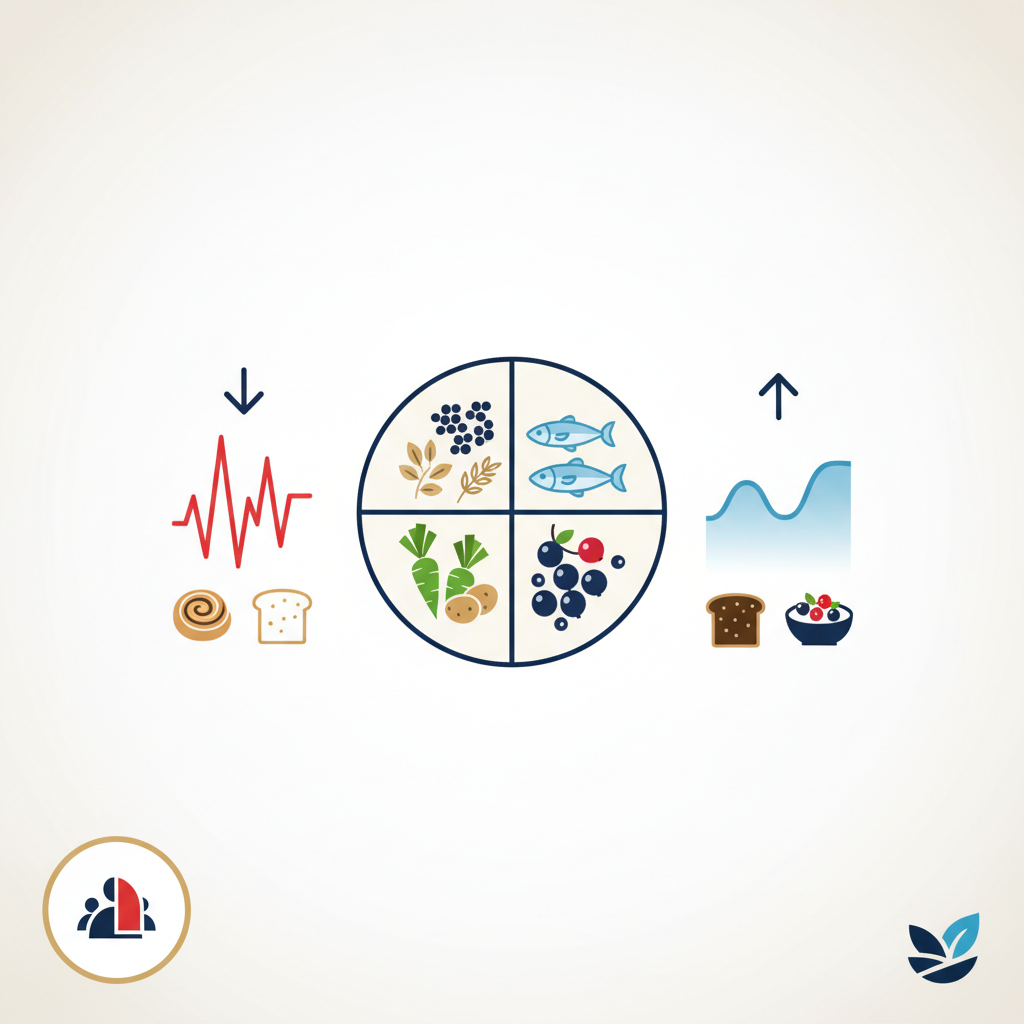
The Nordic diet recommended by Livsmedelsverket and NNR emphasizes whole grains (oats/rye), berries, vegetables, legumes, rapeseed oil and fish. Swedish and international trials (SYSDIET, Diabetologia review, beta‑glucan meta‑analyses) show this pattern may lower postprandial glucose and improve insulin sensitivity versus average diets. For people in Sweden, combine Nordic food choices, physical activity (outdoors culture) and primary care follow-up (vårdcentral / 1177). ([doczz.net](https://doczz.net/doc/7207075/h%C3%A4lsosam-helhet---livsmedelsverket?utm_source=openai))
🇸🇪 Want to take action now? Try Feel Great → | Chat with a coach →
Introduction — a striking Sweden statistic
Recent Swedish health reports estimate that just over 6% of the population had diabetes in 2024–2025 (type 1 and type 2 combined), with increases in type 2 incidence linked to overweight and social determinants. That means roughly 1 in 16 Swedes are living with diabetes today, and many more have prediabetes or elevated fasting glucose. Addressing everyday food choices — using familiar Swedish ingredients — is a practical public‑health opportunity. ([skr.se](https://skr.se/download/18.7bc31c4019afcc28a8019f5e/1765257531334/Halsoochsjukvardsrapport2025.pdf?utm_source=openai))
What is the Nordic diet (and how does Livsmedelsverket view it)?
The Nordic diet describes a food pattern rooted in Scandinavian food culture: whole‑grain rye and oats, root vegetables and cabbage, wild and cultivated berries, pulses, rapeseed (canola) oil, low‑fat dairy and fatty fish (herring, salmon). Livsmedelsverket and the Nordic Nutrition Recommendations position the healthy Nordic diet alongside Mediterranean and DASH patterns as consistent, food‑based advice to promote metabolic health and sustainability. ([doczz.net](https://doczz.net/doc/7207075/h%C3%A4lsosam-helhet---livsmedelsverket?utm_source=openai))
How the Nordic diet links to blood sugar (biological rationale)
- High fiber (soluble + insoluble): slows gastric emptying and carbohydrate absorption → lower postprandial glucose peaks (measured in mmol/L). Beta‑glucan from oats/barley shows consistent reductions in post‑meal glucose. ([doi.org](https://doi.org/10.1038/s41430-021-00875-9?utm_source=openai))
- Lower refined carbohydrate and added sugar: reduces glycaemic load and repeated glucose spikes that promote insulin resistance. (SBU review summarizes evidence for low‑GI and Mediterranean‑style diets). ([sbu.se](https://www.sbu.se/sv/publikationer/SBU-utvarderar/mat-vid-diabetes2/?lang=sv&pub=91386&utm_source=openai))
- Healthy fats (rapeseed oil, fatty fish): improve lipid profile and may improve insulin sensitivity compared with diets high in saturated fat. NNR and Nordic trials include fat‑quality as a key component. ([pub.norden.org](https://pub.norden.org/nord2023-003/about-this-publication?utm_source=openai))
- Polyphenols in berries and whole grains: experimental and cohort data link specific metabolites with lower diabetes risk and improved glucose metabolism in Swedish cohorts (Karolinska research). ([jn.nutrition.org](https://jn.nutrition.org/article/S0022-3166%2822%2916686-1/fulltext?utm_source=openai))
What the trials and reviews say — a Sweden‑centred evidence snapshot
Key high‑quality studies and syntheses relevant to Sweden:
- SYSDIET randomized program and follow-ups: multicentre Nordic trials (including Lund, Uppsala and Karolinska collaborators) compared a healthy Nordic diet to control diets in people with metabolic syndrome. Findings included improvements in insulin sensitivity markers, inflammation markers and blood lipids; metabolic profiling analyses later showed beneficial shifts linked to glucose metabolism. ([pmc.ncbi.nlm.nih.gov](https://pmc.ncbi.nlm.nih.gov/articles/PMC3749468/?utm_source=openai))
- Diabetologia systematic review & meta‑analysis of Nordic dietary patterns (prospective cohorts and RCTs) found consistent associations between higher adherence to Nordic patterns and better cardiometabolic outcomes, including lower incidence of type 2 diabetes in cohort analyses and improved glycaemic markers in trials. ([pubmed.ncbi.nlm.nih.gov](https://pubmed.ncbi.nlm.nih.gov/36008559/?utm_source=openai))
- SBU (Swedish Agency for Health Technology Assessment) 2022 report “Mat vid diabetes” synthesizes evidence on diet in diabetes care; it highlights that several established patterns (Mediterranean, low‑GI, Nordic‑like) may reduce HbA1c and body weight over 6–12 months, though quality and heterogeneity vary. Socialstyrelsen used this to update national guidance. ([sbu.se](https://www.sbu.se/sv/publikationer/SBU-utvarderar/mat-vid-diabetes2/?lang=sv&pub=91386&utm_source=openai))
- Oats / beta‑glucan meta‑analyses and EFSA opinions: multiple randomized trials and meta‑analyses show oat beta‑glucan reduces acute postprandial glycaemic responses; processed and portion details matter. This supports recommending porridge/whole‑grain rye/oats as practical swaps in Sweden. ([doi.org](https://doi.org/10.1038/s41430-021-00875-9?utm_source=openai))
- Yerba mate (Unimate) evidence: recent systematic reviews and randomized trials suggest yerba mate extracts (rich in chlorogenic acids) may affect glycaemic markers, appetite and energy metabolism in some trials. Evidence is still emerging and results vary by dose and formulation. In Sweden, yerba mate is a dietary supplement option rather than a medical therapy. ([frontiersin.org](https://www.frontiersin.org/journals/endocrinology/articles/10.3389/fendo.2025.1641592/pdf?utm_source=openai))
Practical blood sugar targets and Swedish healthcare pathways
For people with diabetes in Sweden, targets and follow‑up are individualized and documented in national knowledge supports and 1177 guidance. Typical clinical references report post‑meal glucose goals under 8.0 mmol/L (1 hour after starting a meal) for many situations, and HbA1c targets are set with your clinician based on age and comorbidity. Use your vårdcentral or 1177.se to coordinate care. ([folkhalsaochsjukvard.rjl.se](https://folkhalsaochsjukvard.rjl.se/api/evolution/pdf/44d21f83-9d78-4022-8edb-66404834bfdd?pageid=175262&utm_source=openai))
Everyday Swedish food swaps that may lower postprandial glucose
Simple, culturally aligned choices:
- Breakfast: Replace white toast or sugary pastry with overnight oat or warm rye porridge (havregryn eller råggröt) topped with mixed berries (blåbär, lingon) and a spoon of crushed seeds. Oat beta‑glucan reduces postprandial glucose responses. ([doi.org](https://doi.org/10.1038/s41430-021-00875-9?utm_source=openai))
- Lunch/Dinner: Aim for a plate with half vegetables, a quarter whole grains (korn/rye/potatis with skin) and a quarter protein (fatty fish like salmon or herring twice weekly). Rapeseed oil (rapsolja) for dressing. ([doczz.net](https://doczz.net/doc/7207075/h%C3%A4lsosam-helhet---livsmedelsverket?utm_source=openai))
- Snack: Swap a cinnamon bun (kanelbulle) for skyr/yoghurt with berries and a small handful of nuts — slows glucose rise and increases satiety. ([pmc.ncbi.nlm.nih.gov](https://pmc.ncbi.nlm.nih.gov/articles/PMC3795297/?utm_source=openai))
- Sweets & drinks: Reduce sugar‑sweetened beverages and limit added sugar; when sweet cravings occur, fresh berries or a small piece of dark chocolate with tea/coffee is preferable. ([doczz.net](https://doczz.net/doc/7207075/h%C3%A4lsosam-helhet---livsmedelsverket?utm_source=openai))
How to measure improvements — what to track (mmol/L)
Meaningful, patient‑level measures include:
- Fasting plasma glucose (in mmol/L); normal fasting <6.0 mmol/L for many adults, but clinical thresholds vary — discuss with your clinician. ([vardpersonal.1177.se](https://vardpersonal.1177.se/Sormland/kunskapsstod/kliniska-kunskapsstod/diabetes--glukossankande-lakemedelsbehandling-vid-typ-2-diabetes/?selectionCode=profession_primarvard&utm_source=openai))
- Postprandial glucose: 1–2 hours after a meal — many guidelines target <8.0 mmol/L at 1 hour for nonpregnant adults, depending on context. Use self‑monitoring or CGM where indicated. ([folkhalsaochsjukvard.rjl.se](https://folkhalsaochsjukvard.rjl.se/api/evolution/pdf/44d21f83-9d78-4022-8edb-66404834bfdd?pageid=175262&utm_source=openai))
- HbA1c (mmol/mol): longer‑term glycaemic control — national care pathways set individualized goals. ([vardpersonal.1177.se](https://vardpersonal.1177.se/Sormland/kunskapsstod/kliniska-kunskapsstod/diabetes--glukossankande-lakemedelsbehandling-vid-typ-2-diabetes/?selectionCode=profession_primarvard&utm_source=openai))
How Feel Great may be used in a Sweden‑friendly plan (non‑therapeutic)
Feel Great is presented as a lifestyle support system (not a medication). Components that fit with Nordic living:
- Balance: a soluble fiber matrix that may help moderate post‑meal glucose response when taken with carbohydrate‑containing meals — pairs naturally with oats/rye and legumes from the Nordic plate. Evidence for soluble fiber (including beta‑glucan and other fibers) shows reductions in postprandial glucose and modest improvements in fasting markers. ([pmc.ncbi.nlm.nih.gov](https://pmc.ncbi.nlm.nih.gov/articles/PMC12447000/?utm_source=openai))
- Unimate (yerba mate): a source of chlorogenic acids and xanthines. Recent trials and systematic reviews suggest potential small effects on glycaemic markers and energy; results are mixed and dose dependent. In Sweden it may be considered as a dietary supplement for mental clarity and adjunctive lifestyle support, not as treatment. ([doi.org](https://doi.org/10.1002/mnfr.70065?utm_source=openai))
- 4‑4‑12 intermittent fasting protocol: time‑restricted eating can be aligned with Nordic lifestyles (lagom, outdoor activity). Intermittent fasting protocols may reduce overall energy intake and improve metabolic outcomes for some people, but effects vary and medical advice is recommended if you have diabetes or take glucose‑lowering medications. ([pubmed.ncbi.nlm.nih.gov](https://pubmed.ncbi.nlm.nih.gov/34348965/?utm_source=openai))
- Clinical evidence base: the Feel Great materials reference >50 clinical studies in the PDR; use the product as a lifestyle adjunct alongside Livsmedelsverket food guidance and primary care (vårdcentral) follow‑up. Always inform your clinician when adding supplements. ([doczz.net](https://doczz.net/doc/7207075/h%C3%A4lsosam-helhet---livsmedelsverket?utm_source=openai))
Numbered quick action plan (for Swedish readers)
- Talk with your vårdcentral or diabetes team (1177.se) to set personal glucose/HbA1c targets. ([vardpersonal.1177.se](https://vardpersonal.1177.se/Sormland/kunskapsstod/kliniska-kunskapsstod/diabetes--glukossankande-lakemedelsbehandling-vid-typ-2-diabetes/?selectionCode=profession_primarvard&utm_source=openai))
- Start with 1–2 swaps per week: oats/rye for breakfast, berries for sweets, rapeseed oil for cooking. Track post‑meal glucose (1h) if you self‑monitor. ([doi.org](https://doi.org/10.1038/s41430-021-00875-9?utm_source=openai))
- Aim for ≥90 g whole grains/day (NNR guidance) and at least 2 servings of fatty fish weekly. ([pub.norden.org](https://pub.norden.org/nord2023-003/about-this-publication?utm_source=openai))
- Consider adding a soluble fiber product (Balance) with meals and Unimate (yerba mate) for energy if you tolerate them; discuss with your clinician if on diabetes drugs. ([pmc.ncbi.nlm.nih.gov](https://pmc.ncbi.nlm.nih.gov/articles/PMC12447000/?utm_source=openai))
- Keep active daily (Nordic outdoor culture helps) and use primary care for follow‑ups every 3–12 months depending on targets. ([skr.se](https://skr.se/download/18.7bc31c4019afcc28a8019f5e/1765257531334/Halsoochsjukvardsrapport2025.pdf?utm_source=openai))
People also ask
- Does the Nordic diet lower blood sugar? Short answer: it may help moderate post‑meal glucose and improve insulin sensitivity in many studies, but results depend on adherence and individual factors. ([pubmed.ncbi.nlm.nih.gov](https://pubmed.ncbi.nlm.nih.gov/35007813/?utm_source=openai))
- Can I follow the Nordic diet if I have diabetes? Yes — it aligns with Swedish dietary guidance; work with your diabetes team for medication adjustments and monitoring. ([sbu.se](https://www.sbu.se/sv/publikationer/SBU-utvarderar/mat-vid-diabetes2/?lang=sv&pub=91386&utm_source=openai))
- Which Swedish foods are best for blood sugar? Oats, rye, berries, legumes, fatty fish, rapeseed oil and vegetables. ([doczz.net](https://doczz.net/doc/7207075/h%C3%A4lsosam-helhet---livsmedelsverket?utm_source=openai))
- How much can oats reduce post‑meal glucose? Oat beta‑glucan shows reproducible reductions in acute postprandial glucose in controlled trials; effect size varies with beta‑glucan dose and food matrix. ([doi.org](https://doi.org/10.1038/s41430-021-00875-9?utm_source=openai))
- Is yerba mate safe for blood sugar control? Yerba mate extracts show promising signals in trials but evidence is not definitive; talk to your clinician, especially if on diabetic medication. ([frontiersin.org](https://www.frontiersin.org/journals/endocrinology/articles/10.3389/fendo.2025.1641592/pdf?utm_source=openai))
FAQ
- Q: Will switching to a Nordic diet normalize my fasting glucose? A: It may lower fasting glucose and improve HbA1c modestly when combined with weight loss and activity; individual response varies and medical follow‑up is needed. ([pubmed.ncbi.nlm.nih.gov](https://pubmed.ncbi.nlm.nih.gov/35007813/?utm_source=openai))
- Q: Are carbohydrate counts still needed on the Nordic diet? A: For people on insulin or advanced insulin systems, carbohydrate counting remains important; for many others, focusing on quality (whole grains, fiber) and portion control is effective. ([folkhalsaochsjukvard.rjl.se](https://folkhalsaochsjukvard.rjl.se/dokument/evo/dd03c5b1-5cda-4ebf-b91e-2313ecc60fb7?pageId=175262&utm_source=openai))
- Q: How quickly will I see changes in mmol/L? A: Acute post‑meal improvements can be seen within hours (lower peak 1–2h glucose). Longer changes in fasting glucose or HbA1c take weeks to months. ([jn.nutrition.org](https://jn.nutrition.org/article/S0022-3166%2822%2900044-X/fulltext?utm_source=openai))
- Q: Can kids adopt this eating style? A: The Nordic diet is family‑friendly and based on common foods; pediatric diabetes care should involve specialist guidance. ([endodiab.barnlakarforeningen.se](https://endodiab.barnlakarforeningen.se/vardprogram/kostrad-till-barn-och-ungdomar-med-diabetes/?utm_source=openai))
- Q: Where can I get reliable Swedish guidance? A: Livsmedelsverket, Folkhälsomyndigheten, Socialstyrelsen and 1177.se are primary national sources for diet and diabetes guidance. ([doczz.net](https://doczz.net/doc/7207075/h%C3%A4lsosam-helhet---livsmedelsverket?utm_source=openai))
References & Scientific Sources
- Nordic Nutrition Recommendations (NNR) / NORD 2023. Nordic cooperation on nutrition guidance. ([pub.norden.org](https://pub.norden.org/nord2023-003/about-this-publication?utm_source=openai))
- Livsmedelsverket — Hälsosam helhet / food‑based guidance and Nordic food descriptions. ([doczz.net](https://doczz.net/doc/7207075/h%C3%A4lsosam-helhet---livsmedelsverket?utm_source=openai))
- SBU 2022 — Mat vid diabetes (systematic review for Sweden). ([sbu.se](https://www.sbu.se/sv/publikationer/SBU-utvarderar/mat-vid-diabetes2/?lang=sv&pub=91386&utm_source=openai))
- SYSDIET randomized trials and 2021 metabolic profiling analysis (Healthy Nordic Diet effects). ([pmc.ncbi.nlm.nih.gov](https://pmc.ncbi.nlm.nih.gov/articles/PMC3749468/?utm_source=openai))
- Diabetologia 2022 systematic review & meta‑analysis of Nordic dietary patterns and cardiometabolic outcomes. ([pubmed.ncbi.nlm.nih.gov](https://pubmed.ncbi.nlm.nih.gov/36008559/?utm_source=openai))
- EFSA / meta‑analyses and systematic reviews on oat beta‑glucan and postprandial glycaemic responses (2020–2021 meta‑analyses). ([pmc.ncbi.nlm.nih.gov](https://pmc.ncbi.nlm.nih.gov/articles/PMC12447000/?utm_source=openai))
- Yerba mate systematic reviews and RCTs (recent meta‑analysis and trials 2024–2025). ([frontiersin.org](https://www.frontiersin.org/journals/endocrinology/articles/10.3389/fendo.2025.1641592/pdf?utm_source=openai))
- Karolinska Institutet — nutrition epidemiology work and systematic reviews on Nordic foods (Agneta Åkesson). ([pmc.ncbi.nlm.nih.gov](https://pmc.ncbi.nlm.nih.gov/articles/PMC3795297/?utm_source=openai))
- 1177 / Socialstyrelsen clinical guidance and care pathways for diabetes and glucose targets (vårdcentral context). ([vardpersonal.1177.se](https://vardpersonal.1177.se/Sormland/kunskapsstod/kliniska-kunskapsstod/diabetes--glukossankande-lakemedelsbehandling-vid-typ-2-diabetes/?selectionCode=profession_primarvard&utm_source=openai))
- Additional international meta‑analyses on dietary patterns and T2D risk (Journal of Nutrition, JAMA, etc.). ([jn.nutrition.org](https://jn.nutrition.org/article/S0022-3166%2822%2910762-5/fulltext?utm_source=openai))
Medical disclaimer
This article is for informational purposes only and does not replace medical advice. If you have diabetes, prediabetes, take glucose‑lowering medication or have other health conditions, consult your vårdcentral, diabetes team or 1177.se before changing diet, starting supplements (including yerba mate) or trying intermittent fasting. Feel Great is a lifestyle support system, not a medication. ([vardpersonal.1177.se](https://vardpersonal.1177.se/Sormland/kunskapsstod/kliniska-kunskapsstod/diabetes--glukossankande-lakemedelsbehandling-vid-typ-2-diabetes/?selectionCode=profession_primarvard&utm_source=openai))

Related ATHAR paths
🇸🇪 Ready to Start Your Health Transformation?
Join thousands across Sweden who have improved their metabolic health with the Feel Great system. Backed by 50+ clinical studies and listed in the Physicians' Desk Reference (PDR).
✅ Free Delivery in Sweden | 90-Day Money-Back Guarantee