Organic Marketing for Beginners: Service-First Content Guide
Author: Feras Alayed
Published:
Category: business-opportunity
Reading Time: 7 minutes
Key Takeaways
- Organic marketing focuses on long-term relationship building rather than immediate transactional gains.
- Service-first content establishes authority and trust, which are critical in the health and wellness sector.
- Consistency and community engagement are the primary drivers of organic growth.
- Ethical marketing requires transparency, avoiding hyperbolic claims, and focusing on education.
- Success in organic marketing is measured by engagement, trust, and community retention over time.
TL;DR
Organic marketing for health projects involves creating valuable, educational content that addresses audience needs without relying on paid advertising. By prioritizing service over sales, businesses build sustainable trust and a loyal community, laying the foundation for ethical growth and long-term partnership success.Introduction: The Shift from Selling to Serving
In the modern digital landscape, consumers are increasingly resistant to traditional, high-pressure sales tactics. This is particularly true in the health and wellness industry, where trust is the most valuable currency. The question for many beginners is: How do you grow a project without a massive advertising budget? The answer lies in organic marketing for health projects.
Organic marketing is not about shouting the loudest; it is about providing the most value. It asks a fundamental question: "How can I help my audience today?" before asking "How can I sell to them?" This approach requires a shift in mindset from a transactional focus to a relational one. When you provide solutions, education, and support, you position yourself as a leader rather than just a vendor.
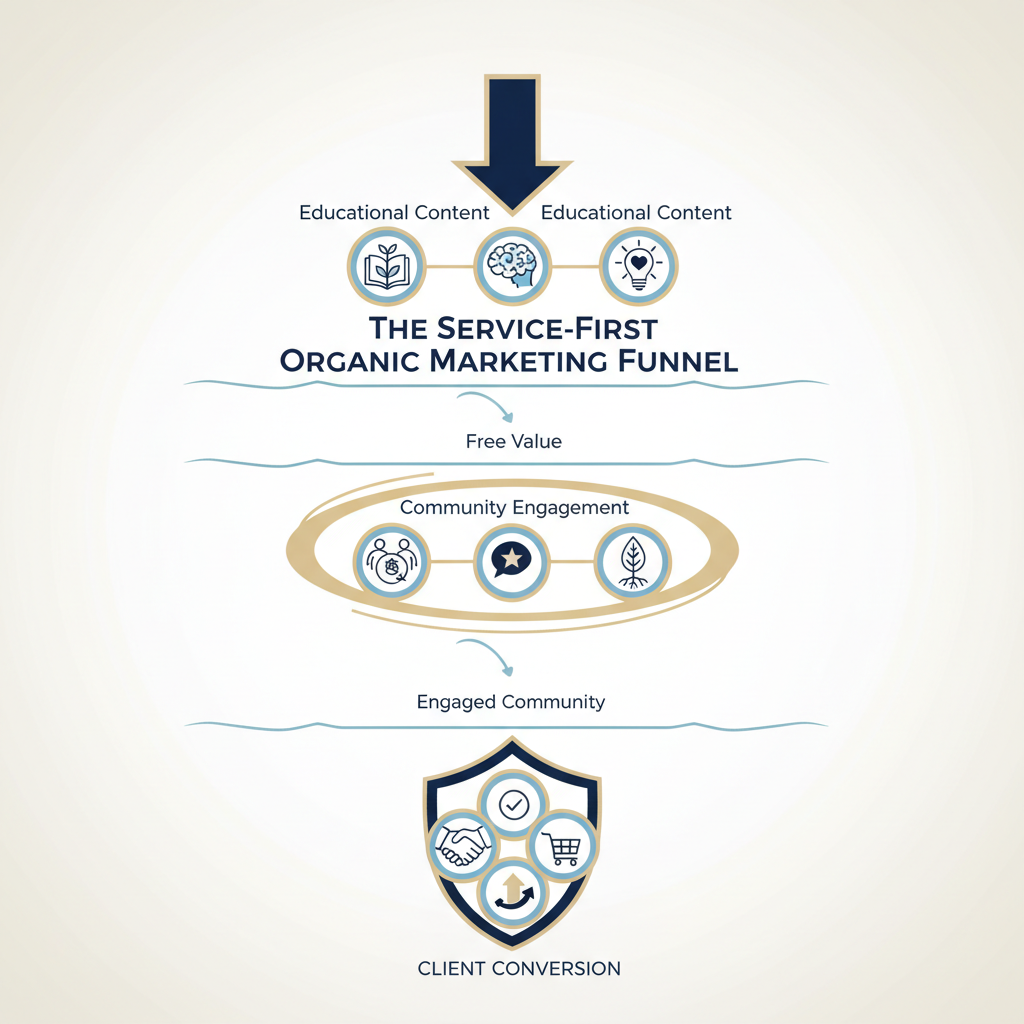
Understanding Organic Marketing for Health Projects
Organic marketing refers to any strategy that generates traffic, engagement, and leads naturally over time, rather than through paid placement. In the context of health projects, this means creating content that resonates with the personal challenges, goals, and health literacy of your audience. For those looking to deepen their understanding of health communication, exploring a health literacy guide can provide essential context on how to bridge the gap between complex information and consumer understanding.
Why Service-First Content Matters
Service-first content is designed to solve a problem or answer a question without an immediate expectation of a purchase. In health-related fields, people are often looking for clarity amidst a sea of misinformation. By offering clear, evidence-based guidance, you build a foundation of credibility. This is closely linked to enhancing health awareness, which serves the community while naturally highlighting your expertise.
The Core Pillars of Organic Strategy
To succeed in organic marketing, beginners should focus on three primary pillars: Education, Inspiration, and Community.
1. Educational Content
Education is the cornerstone of trust. This includes explaining how certain processes work, debunking myths, or providing practical tools. For example, a guide on how to organize personal health information provides immediate utility to the reader. Educational content should be easy to digest and actionable.
2. Inspirational Content
Health journeys are often difficult. Providing inspiration through stories of resilience, consistency, and realistic progress helps humanize your brand. It is important to avoid "miracle" stories and instead focus on the reality of sustainable habits, as discussed in guides regarding sustainable weight tracking habits.
3. Community Engagement
Organic marketing is a two-way street. It involves listening to your audience, responding to comments, and participating in relevant conversations. This builds a sense of belonging and shows that there are real people behind the project who care about the community's well-being.
Comparison: Organic vs. Paid Marketing
| Feature | Organic Marketing | Paid Marketing (Ads) |
|---|---|---|
| Cost | Primarily time and effort | Direct financial investment |
| Speed of Results | Slow and cumulative | Immediate visibility |
| Trust Building | High; built through value | Lower; often perceived as intrusive |
| Longevity | Content continues to work forever | Stops when the budget runs out |
| Primary Goal | Authority and Community | Reach and Conversion |
Developing a 90-Day Organic Roadmap
For those entering a partnership or starting a new project, a structured approach is essential. Success does not happen overnight; it is the result of consistent, ethical effort.
Days 1-30: The Foundation
Focus on understanding your audience's pain points. What questions are they asking? What are their misconceptions? During this phase, you should also focus on your own workday wellness routine to ensure you have the stamina for long-term content creation. Start by posting educational content twice a week.
Days 31-60: Engagement and Refinement
Begin engaging more deeply with your followers. Use polls, Q&A sessions, and direct messages to understand what content resonates most. This is also the time to address common myths, such as those found in longevity myths vs. facts, to establish your project as a source of truth.
Days 61-90: Scaling and Leadership
Once you have a rhythm, look at market expansion strategies. This doesn't necessarily mean spending money, but rather finding new communities or platforms where your message can serve more people. Transition from a participant to a thought leader in your niche.
Ethical Considerations in Health Marketing
Marketing in the health sector carries a heavy responsibility. It is vital to avoid making health claims that are not backed by evidence or promising specific medical outcomes. Ethical marketing focuses on the process, the support, and the educational resources provided. When comparing different approaches, a responsible wellness program comparison can help set the standard for what ethical service looks like.
How This Connects to the Partnership Path
The principles of organic marketing are central to the partnership path at ATHAR. This path is not a shortcut to financial success, but a journey of skill acquisition and service. Partners learn how to communicate effectively, build communities, and represent wellness values with integrity.
The partnership involves a commitment to learning and professional development. It suits individuals who are patient, service-oriented, and willing to put in the work required to build a reputation. Financial outcomes in this path are not guaranteed; they depend entirely on an individual's effort, their ability to apply these marketing skills, and the prevailing market conditions. The focus remains on leadership and the quality of care provided to the community.
People Also Ask
- What is the best platform for organic health marketing? The best platform depends on where your audience spends time. LinkedIn is excellent for professional networking, while Instagram and TikTok are better for visual storytelling and community building.
- How often should I post content? Quality is more important than quantity. Starting with 2-3 high-value posts per week is often more sustainable than daily low-quality updates.
- Can I do organic marketing without being an expert? You can share your learning journey and curate high-quality information from verified sources, provided you are transparent about your role and qualifications.
- How long does it take to see results? Organic growth is a marathon. It typically takes 6 to 12 months of consistent effort to see significant community growth and trust.
- Do I need professional equipment for videos? No. Authenticity often performs better than high-end production. A modern smartphone and good lighting are usually sufficient to start.
Frequently Asked Questions
- Does organic marketing require a large following to be effective? No. A small, highly engaged audience that trusts your advice is far more valuable than a large, indifferent one.
- Is organic marketing really "free"? While there is no direct ad spend, it requires a significant investment of time, creativity, and research.
- How do I handle negative comments organically? Address them with professionalism and empathy. Use them as an opportunity to clarify your values or provide more educational context.
- Should I ever use paid ads? Paid ads can complement an organic strategy, but they should not replace the trust-building foundation that organic content provides.
- How do I know if my content is "serving"? Look at the questions you receive. If people are asking for more information or thanking you for a specific tip, your content is providing service.
Explore whether the partnership path suits you: If you are interested in developing these skills within a structured, ethical framework, we invite you to explore our partnership suitability resources. This is a path for those dedicated to service and professional growth.

Disclaimer: The information provided in this article is for educational purposes only and does not constitute financial, legal, or medical advice. Success in any business partnership depends on individual effort, skills, and market variables. ATHAR does not guarantee specific income levels or health outcomes. All program policies and eligibility requirements must be independently verified with official documentation before enrollment.
Further Education
- Explore the metabolic health education hub
- Learn how to read research summaries
- Use the educational health assessment
Evaluate the path with clarity
Use the decision guide to review eligibility, responsibilities, policies, and questions that require confirmation from official programme sources. No financial outcome is promised.