Winter health tips Canada metabolism: Keep your metabolism active this winter
Author: Feras Alayed
Published:
Updated:
Category: canadian-health
Reading Time: 12 minutes
Key Takeaways
- Winter in Canada changes daylight, activity and diet patterns; deliberate steps (movement, nutrition, vitamin D) help keep metabolism resilient during long, cold months. ([www150.statcan.gc.ca](https://www150.statcan.gc.ca/n1/daily-quotidien/251017/dq251017b-eng.pdf?utm_source=openai))
- Aim for at least 150 minutes/week of moderate activity plus strength training to maintain resting metabolic rate and insulin sensitivity during winter. ([www150.statcan.gc.ca](https://www150.statcan.gc.ca/n1/pub/82-003-x/2023010/article/00002-eng.pdf?utm_source=openai))
- Simple meal shifts — more protein and soluble fibre at meals — can blunt post-meal glucose peaks; Diabetes Canada provides practical glucose targets in mmol/L. ([diabetes.ca](https://www.diabetes.ca/DiabetesCanadaWebsite/media/FilesUploaded/Quick_Reference_Guide_PRINT_10_24-2.pdf?utm_source=openai))
- Vitamin D (Health Canada suggests 400 IU/day when sun exposure is limited) and sleep/circadian hygiene are low-cost, high-value winter strategies. ([canada.ca](https://www.canada.ca/en/health-canada/services/nutrients/vitamin-d.html?utm_source=openai))
- Cold exposure and winter exercise can activate brown adipose tissue (BAT) and increase short-term energy use, but individual responses vary—use cold strategies cautiously and in combination with diet and exercise. ([pmc.ncbi.nlm.nih.gov](https://pmc.ncbi.nlm.nih.gov/articles/PMC9273773/?utm_source=openai))
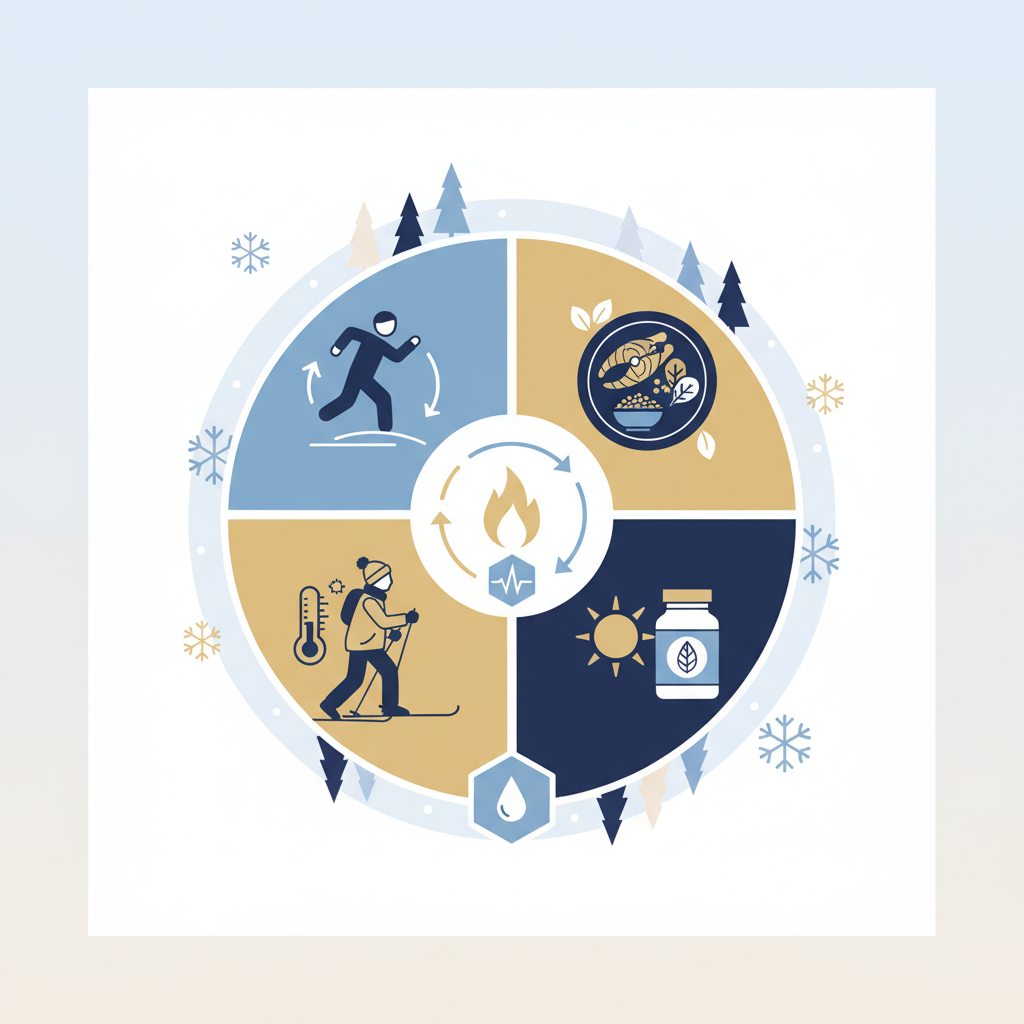
TL;DR
Canadian winters can pull people away from healthy routines. Evidence-based winter health tips — daily movement (150 min/week), protein + soluble fibre, vitamin D awareness, sleep hygiene, and safe cold-adaptive practices — help keep metabolism active. Screening and glucose targets use mmol/L per Diabetes Canada; consult provincial health resources for local services. ([diabetes.ca](https://www.diabetes.ca/DiabetesCanadaWebsite/media/FilesUploaded/Quick_Reference_Guide_PRINT_10_24-2.pdf?utm_source=openai))
🇨🇦 Thousands of Canadians are using Feel Great to support their metabolic health naturally. Learn more & order here →
Winter Health in Canada: Staying Metabolically Active
Introduction — a Canadian winter statistic that matters: Recent national surveys and measurements show many Canadians fall short of movement guidelines during much of the year; combined with seasonal increases in blood pressure and cardiovascular events, winter becomes a metabolic risk period unless we act. This article gives Canada-centred, evidence-aligned winter health tips that support metabolism and blood glucose control (with mmol/L values and references to Canadian authorities). ([www150.statcan.gc.ca](https://www150.statcan.gc.ca/n1/daily-quotidien/251017/dq251017b-eng.pdf?utm_source=openai))
How winter influences metabolism
Shorter daylight, cold air and lifestyle adaptations (more indoor time, changed diets) influence appetite, circadian rhythms and physical activity. Health Canada and Canada’s Food Guide remind us to prioritise nutritious, balanced meals while public surveillance shows physical activity and sedentary time trends that matter for metabolic health. ([canada.ca](https://www.canada.ca/en/health-canada/services/food-guide.html?utm_source=openai))
Key physiological pathways
- Vitamin D and sun exposure: low winter sun reduces cutaneous vitamin D synthesis; Health Canada recommends many Canadians take 400 IU (10 µg) daily in months of limited sun. ([canada.ca](https://www.canada.ca/en/health-canada/services/nutrients/vitamin-d.html?utm_source=openai))
- Cold and brown adipose tissue: mild cold can activate BAT, increasing glucose and lipid uptake and raising short-term energy expenditure. Systematic reviews find consistent acute effects, but long-term clinical outcomes are mixed. ([pmc.ncbi.nlm.nih.gov](https://pmc.ncbi.nlm.nih.gov/articles/PMC9273773/?utm_source=openai))
- Activity and sedentary time: Canadian surveillance shows important gaps in meeting the 150 min/week moderate-intensity guideline and rising sedentary behaviour in some groups; winter routines can help bridge these gaps. ([www150.statcan.gc.ca](https://www150.statcan.gc.ca/n1/pub/82-003-x/2023010/article/00002-eng.pdf?utm_source=openai))
Practical winter health tips (Canada-specific)
Below are practical, province-aware tips you can implement across Canada—from Vancouver winters to Labrador storms.
1. Keep moving — the 150-minute rule and strength work
Public-health guidance and Canadian surveillance emphasise 150 min/week of moderate activity plus strength training twice weekly. Break activity into manageable sessions (e.g., 20–30 minute bouts) and include simple resistance work (bands, bodyweight) to preserve lean mass and resting metabolic rate. For children and youth, follow the Canadian 24-Hour Movement Guidelines. ([www150.statcan.gc.ca](https://www150.statcan.gc.ca/n1/pub/82-003-x/2023010/article/00002-eng.pdf?utm_source=openai))
2. Layer up and choose safe winter activities
Heart & Stroke’s winter advice includes warming up before exertion and being cautious with heavy shovelling; choose lower-risk activities if you have heart disease or uncontrolled hypertension. Across provinces, municipal arenas, community centres and ski hills often offer low-cost ways to stay active — check local schedules. ([heartandstroke.ca](https://www.heartandstroke.ca/articles/stay-heart-healthy-in-the-winter?utm_source=openai))
3. Focus meals on protein + soluble fibre
Meals with adequate protein and soluble fibre slow glucose absorption and help satiety. Diabetes Canada’s quick reference lists common glucose targets (e.g., fasting/preprandial targets for many people with diabetes are 4.0–7.0 mmol/L; 2-hour postprandial targets 5.0–10.0 mmol/L), and moderating postprandial peaks is an achievable winter goal. Use Canada’s Food Guide plate to plan balanced meals with vegetables, whole grains and protein foods. ([diabetes.ca](https://www.diabetes.ca/DiabetesCanadaWebsite/media/FilesUploaded/Quick_Reference_Guide_PRINT_10_24-2.pdf?utm_source=openai))
4. Mind vitamin D — safe supplementation and food choices
Health Canada suggests a daily vitamin D supplement of 400 IU (10 µg) for many people when sunlight is insufficient. Fortified foods are part of Canada’s strategy; check labels and discuss testing with your clinician if you have risk factors for deficiency. Avoid very high-dose supplementation without medical supervision. ([canada.ca](https://www.canada.ca/en/health-canada/services/nutrients/vitamin-d.html?utm_source=openai))
5. Protect your sleep and circadian rhythm
Consistent sleep times, morning light exposure when possible, and limiting late-evening large meals help keep hormone rhythms aligned — beneficial for insulin sensitivity and appetite control. Consider light therapy for significant seasonal affective symptoms and speak to provincial mental-health services if mood or function are impacted. ([www150.statcan.gc.ca](https://www150.statcan.gc.ca/n1/daily-quotidien/251017/dq251017b-eng.pdf?utm_source=openai))
6. Consider cautious cold exposure
Mild cold exposure—cool indoor temps, brisk outdoor walks, or short cold-water exposure—can transiently increase energy expenditure and activate BAT. Systematic reviews and RCTs indicate acute metabolic effects, but variability is high and safety is paramount: avoid extreme cold exposure if you have cardiovascular disease, uncontrolled hypertension or other contraindications. ([pmc.ncbi.nlm.nih.gov](https://pmc.ncbi.nlm.nih.gov/articles/PMC9273773/?utm_source=openai))
Weekly winter plan (easy to adapt)
- Monday — 30-minute brisk walk (outdoor or treadmill) + 10-minute resistance band work.
- Tuesday — 20–30 minute strength circuit (home) focusing on major muscle groups.
- Wednesday — outdoor activity (skating, cross-country skiing, snowshoeing) 30–45 minutes, keep intensity moderate.
- Thursday — short intervals or stair climbs 20 minutes; include post-exercise protein-rich meal.
- Friday — mobility, yoga or restorative movement; prioritise early daylight exposure.
- Weekend — one longer outdoor adventure, plan meals using Canada’s Food Guide plate proportions. ([canada.ca](https://www.canada.ca/en/health-canada/services/food-guide/eating-support/cooking/make-healthy-meals-plate.html?utm_source=openai))
Evidence snapshot: cold exposure, brown fat and metabolism
Meta-analyses and reviews show acute cold exposure increases energy expenditure and BAT activity in many adults. The magnitude of effect varies by BMI, age and habituation. BAT activation increases glucose uptake into adipose tissue, which may improve short-term glucose clearance; however, long-term metabolic impact requires more study. Use cold strategies as an adjunct to movement and nutrition. ([pmc.ncbi.nlm.nih.gov](https://pmc.ncbi.nlm.nih.gov/articles/PMC9273773/?utm_source=openai))
Safety and when to seek care
- Emergency signs: chest pain, fainting, sudden severe breathlessness — call 911. Winter has higher rates of heart attack and stroke; take symptoms seriously. ([heartandstroke.ca](https://www.heartandstroke.ca/articles/dont-fall-victim-to-the-holiday-heart-attack?utm_source=openai))
- Blood glucose concerns: repeated fasting glucose ≥7.0 mmol/L or symptomatic highs/lows warrant urgent review and discussion of monitoring strategies per Diabetes Canada. ([diabetes.ca](https://www.diabetes.ca/health-care-providers/clinical-practice-guidelines/chapter-3?utm_source=openai))
- Medication adjustments: people on glucose-lowering drugs should consult their clinician before changing diet timing (intermittent fasting) or adopting prolonged cold exposure. ([guidelines.diabetes.ca](https://guidelines.diabetes.ca/cpg/chapter-9-2021-update?utm_source=openai))
How Feel Great may support your winter plan
Feel Great is a lifestyle support system—not a medicine—designed to be used with healthy meals, movement and medical care. Key components relevant in winter:
- Balance (soluble-fibre matrix): Soluble fibre at meals may help reduce the rate of glucose absorption and increase satiety, which can help blunt postprandial excursions. This aligns with Diabetes Canada’s emphasis on post-meal glucose management. Look for Health Canada NPNs on labels where applicable and consult your clinician. ([diabetes.ca](https://www.diabetes.ca/DiabetesCanadaWebsite/media/FilesUploaded/Quick_Reference_Guide_PRINT_10_24-2.pdf?utm_source=openai))
- Unimate (yerba mate extract): Contains chlorogenic acids and polyphenols; in combination with movement, some botanical polyphenols may help energy and adherence to activity routines. Evidence is supportive but not conclusive; avoid high stimulant loads and check product labelling. ([pubmed.ncbi.nlm.nih.gov](https://pubmed.ncbi.nlm.nih.gov/35640259/?utm_source=openai))
- The 4-4-12 protocol: An intermittent fasting framework people use to reduce late-night eating and stabilise patterns — may complement sleep/circadian strategies but should be medically supervised in people with diabetes or other conditions. ([pubmed.ncbi.nlm.nih.gov](https://pubmed.ncbi.nlm.nih.gov/35816192/?utm_source=openai))
Feel Great ships across Canada (BC to Newfoundland). Check product packaging for Health Canada Natural Product Numbers (NPN) and consult your family physician or pharmacist before starting new supplements—especially if you take prescription medicines.
People also ask
- Will cold showers boost my metabolism? — Cold exposure can increase short-term energy use, but effects vary; cold showers are a mild method and may be used safely by healthy adults. ([pmc.ncbi.nlm.nih.gov](https://pmc.ncbi.nlm.nih.gov/articles/PMC9273773/?utm_source=openai))
- How much vitamin D do I need in winter? — Many Canadians are advised to take 400 IU (10 µg) daily when sun exposure is limited; testing or higher doses should be guided by a clinician. ([canada.ca](https://www.canada.ca/en/health-canada/services/nutrients/vitamin-d.html?utm_source=openai))
- Is intermittent fasting good in the winter? — Some people find structured eating windows reduce evening snacking and improve glucose profiles; medical supervision is important for people on medications or with chronic conditions. ([pubmed.ncbi.nlm.nih.gov](https://pubmed.ncbi.nlm.nih.gov/35816192/?utm_source=openai))
- Does shovelling snow count as exercise? — Yes, but it can be vigorous. Heart & Stroke advises caution for people with cardiovascular risk factors; warm up and pace yourself. ([heartandstroke.ca](https://www.heartandstroke.ca/articles/stay-heart-healthy-in-the-winter?utm_source=openai))
- Where can I find local winter programs? — Provincial health websites and municipal recreation centres list winter programming; check your provincial portal and local municipality listings. CIHI and StatCan document provincial variation in service access. ([cihi.ca](https://www.cihi.ca/sites/default/files/document/health-system-context-series-population-health-man-report-en.pdf?utm_source=openai))
FAQ
- Q: Can cold exposure cure obesity or diabetes? A: No. Cold exposure can increase energy expenditure transiently and activate BAT in some adults, but it is not a cure. Use it as an adjunct to diet, exercise and medical care. ([pmc.ncbi.nlm.nih.gov](https://pmc.ncbi.nlm.nih.gov/articles/PMC9273773/?utm_source=openai))
- Q: What fasting glucose needs attention? A: A fasting plasma glucose ≥7.0 mmol/L is diagnostic for diabetes per Diabetes Canada; impaired fasting glucose is 6.1–6.9 mmol/L. Repeat testing and clinical assessment are required. ([diabetes.ca](https://www.diabetes.ca/health-care-providers/clinical-practice-guidelines/chapter-3?utm_source=openai))
- Q: Are supplements safe in winter? A: Many are safe at recommended doses (e.g., vitamin D 400 IU) but check Health Canada NPNs and consult a pharmacist or physician if you take prescription medications. ([canada.ca](https://www.canada.ca/en/health-canada/services/nutrients/vitamin-d.html?utm_source=openai))
- Q: Should older adults attempt cold exposure? A: Older adults have different thermoregulatory responses and higher cardiovascular risk—avoid intentional cold exposure without medical clearance. Prioritise safe, moderate activity and nutrition. ([heartandstroke.ca](https://www.heartandstroke.ca/articles/dont-fall-victim-to-the-holiday-heart-attack?utm_source=openai))
- Q: How do I measure success this winter? A: Track consistent activity (minutes/week), sleep regularity, weight/stable waist circumference, and for those at risk, fasting and postprandial glucose values per your clinician’s plan (mmol/L). Use provincial resources and primary care follow-up for tailored targets. ([www150.statcan.gc.ca](https://www150.statcan.gc.ca/n1/pub/82-003-x/2023010/article/00002-eng.pdf?utm_source=openai))
References & Scientific Sources
Key Canadian sources: Health Canada — Vitamin D and Canada’s Food Guide; Diabetes Canada — Clinical Practice Guidelines and Quick Reference; Heart & Stroke Foundation — winter health guidance; Statistics Canada & CIHI — activity surveillance and provincial chronic-disease context. ([canada.ca](https://www.canada.ca/en/health-canada/services/nutrients/vitamin-d.html?utm_source=openai))

Selected international research: Systematic reviews and meta-analyses on cold exposure and BAT, translational BAT reviews, and RCT/meta-analyses on vitamin D and mood/metabolism (PubMed). Practical winter guidance from Harvard Health and Mayo Clinic. ([pmc.ncbi.nlm.nih.gov](https://pmc.ncbi.nlm.nih.gov/articles/PMC9273773/?utm_source=openai))
- Health Canada — Vitamin D, Canada’s Food Guide. ([canada.ca](https://www.canada.ca/en/health-canada/services/nutrients/vitamin-d.html?utm_source=openai))
- Diabetes Canada — Clinical Practice Guidelines & Quick Reference (glucose thresholds in mmol/L). ([diabetes.ca](https://www.diabetes.ca/health-care-providers/clinical-practice-guidelines/chapter-3?utm_source=openai))
- Heart & Stroke Foundation — winter safety and activity tips. ([heartandstroke.ca](https://www.heartandstroke.ca/articles/stay-heart-healthy-in-the-winter?utm_source=openai))
- Statistics Canada & Canadian Health Measures Survey — physical activity and sedentary-time surveillance. ([www150.statcan.gc.ca](https://www150.statcan.gc.ca/n1/daily-quotidien/251017/dq251017b-eng.pdf?utm_source=openai))
- CIHI — population health and health-system context. ([cihi.ca](https://www.cihi.ca/sites/default/files/document/health-system-context-series-population-health-man-report-en.pdf?utm_source=openai))
- Effect of Acute Cold Exposure on Energy Metabolism and Activity of Brown Adipose Tissue in Humans: systematic review and meta-analysis. ([pmc.ncbi.nlm.nih.gov](https://pmc.ncbi.nlm.nih.gov/articles/PMC9273773/?utm_source=openai))
- Brown Adipose Tissue: A Translational Perspective (review). ([pubmed.ncbi.nlm.nih.gov](https://pubmed.ncbi.nlm.nih.gov/35640259/?utm_source=openai))
- Vitamin D supplementation and depressive symptoms — systematic review/meta-analysis. ([pubmed.ncbi.nlm.nih.gov](https://pubmed.ncbi.nlm.nih.gov/35816192/?utm_source=openai))
- Harvard Health: winter workouts and cold adaptation. ([health.harvard.edu](https://www.health.harvard.edu/healthy-aging-and-longevity/the-wonders-of-winter-workouts?utm_source=openai))
- Mayo Clinic: vitamin D and winter health practical tips. ([mayoclinic.org](https://www.mayoclinic.org/drugs-supplements-vitamin-d/art-20363792?utm_source=openai))
Medical Disclaimer
This article is for information only and does not replace medical advice. If you have chronic conditions (diabetes, heart disease, pregnancy, or are on medications), talk to your family doctor before starting new diets, supplements or cold-exposure routines. For emergency symptoms (chest pain, severe hypoglycaemia, breathing problems), call 911 or go to the nearest emergency department.
Related ATHAR paths
🇨🇦 Ready to Start Your Health Transformation?
Join thousands of Canadians who have improved their metabolic health with the Feel Great system. Backed by 50+ clinical studies and listed in the Physicians' Desk Reference (PDR).
✅ Ships to all provinces: BC, Alberta, Saskatchewan, Manitoba, Ontario, Quebec, New Brunswick, Nova Scotia, PEI, Newfoundland & Labrador | 90-Day Money-Back Guarantee