Seasonal Habit Stacking: Adapting Wellness Routines for Seasonal Changes
Author: Feras Alayed
Published:
Category: sustainable-health
Reading Time: 11 minutes
TL;DR
Adapting wellness routines for seasonal changes is essential for long-term consistency. "Seasonal habit stacking" involves linking new, weather-appropriate behaviors to your existing daily habits. By following 8 practical steps and avoiding the trap of a rigid routine, you can maintain your movement, nutrition, and sleep hygiene through extreme summer heat or winter cold without frustration or burnout.
The Problem: Why Routines Fail When Seasons Change
You start the year with incredible momentum. You build a fantastic morning routine that includes an outdoor walk, balanced meals, and optimal hydration. You keep it up for weeks, finally feeling like you've found your rhythm. Then, the environment shifts. The summer heat in the Arab region spikes to 45°C, or winter arrives with short days and freezing mornings. Suddenly, that morning walk feels impossible, your appetite changes, and you find yourself dropping habits one by one.
The issue here isn't your willpower or a lack of discipline. The problem is trying to force a "summer" routine into a "winter" environment, or vice versa. Life is dynamic, and our environment is constantly shifting, which means building sustainable health requires flexibility, not rigidity. This is where "seasonal habit stacking" becomes a powerful tool, helping you seamlessly adapt your routine to each new season.
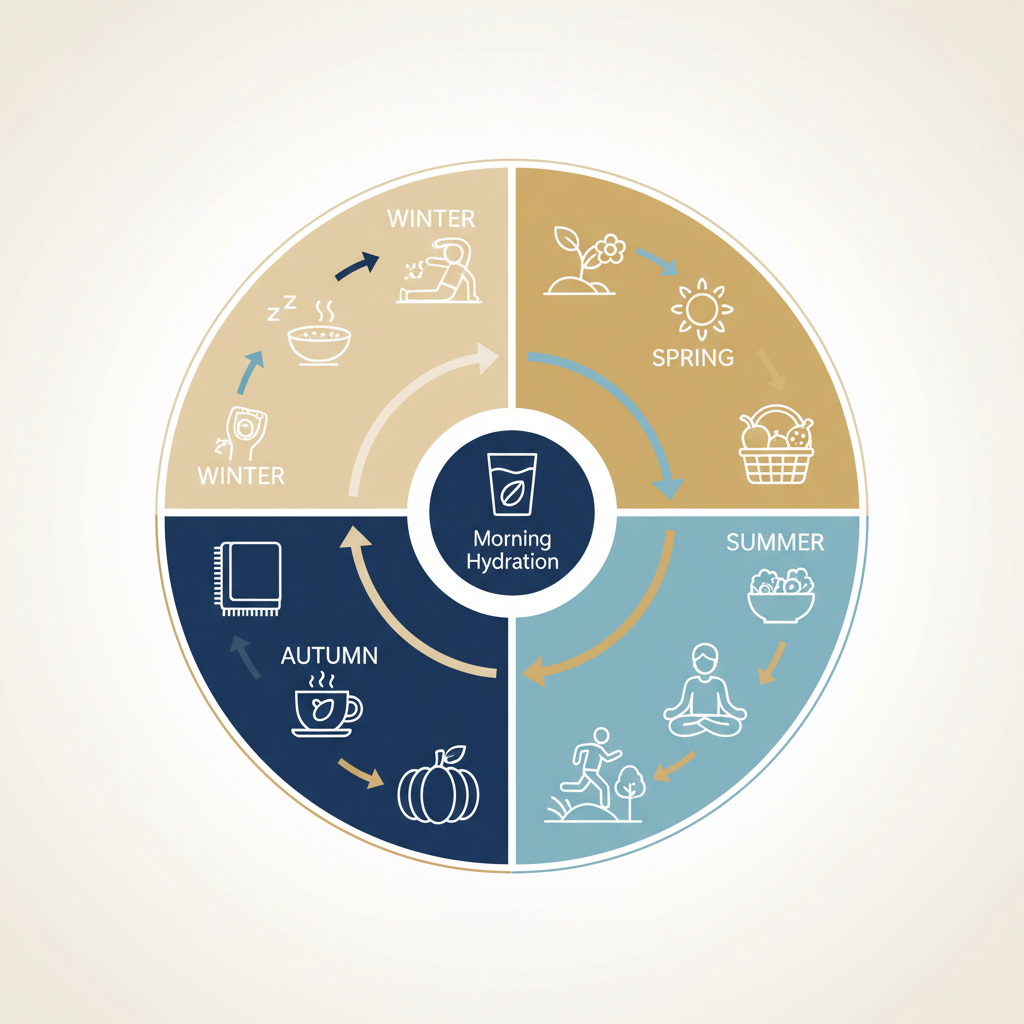
What is Seasonal Habit Stacking?
Seasonal habit stacking is: A behavioral strategy that involves linking new, season-appropriate health behaviors (like drinking warm tea in winter or doing indoor workouts in summer) to existing, non-negotiable daily habits (like brushing your teeth or drinking morning coffee). This approach ensures your routine evolves naturally with changes in weather, daylight, and social schedules, supporting year-round consistency.
8 Steps for Adapting Wellness Routines for Seasonal Changes
To successfully implement this strategy, follow these detailed steps to help you in choosing the right wellness routine for your current reality:
Step 1: Assess Current Seasonal Demands
Before adding any habit, you must understand your new environment. Each season brings different challenges and opportunities. In winter, the challenge might be a lack of sunlight, while in summer, it might be extreme heat preventing outdoor activity.
- Educational Tool: The Seasonal Audit. Write down 3 weather-related challenges impacting your routine right now.
- Verification Question: What is the biggest environmental barrier preventing me from practicing my health habits this week?
Step 2: Identify Your "Anchor Habits"
An anchor habit is a behavior you do daily without thinking, regardless of the weather or circumstances (e.g., waking up, praying, brushing teeth, commuting). These habits will serve as the foundation for stacking new seasonal behaviors.
- Educational Tool: Habit Mapping. Identify 5 anchor habits in your day.
- Verification Question: Do I perform this habit every single day, 100% of the time, no matter what?
Step 3: Temperature-Adjusted Hydration
Your body's hydration cues change. In summer, you lose fluids rapidly and need constant reminders. In winter, your thirst response diminishes, and you may prefer warm drinks, which can lead to hidden dehydration.
- Educational Tool: Visual Hydration Cues. In summer, stack drinking a cold glass of water with "arriving at your desk." In winter, stack a warm herbal tea with "sitting down to watch evening TV."
- Verification Question: Have I adjusted the temperature and type of fluids I consume to encourage better hydration this season?
Step 4: Sun-Synced Movement
You cannot run at midday in August in the Gulf, just as waking up at 6 AM for a walk in a freezing January might be unsustainable. Adapting wellness routines for seasonal changes requires shifting the timing and type of movement.
- Educational Tool: The 12-Hour Shift. In summer, move your activity to early mornings or indoor spaces (malls, gyms). In winter, utilize your lunch break for a walk to get midday sun exposure.
- Verification Question: Does my current workout timing align with safe temperatures and my natural energy peaks?
Step 5: Modify Nutritional Focus
Our bodies naturally crave different foods as seasons change. Cold salads and watermelon are perfect for summer, while warm soups and stews support warmth and satiety in winter. Nutrition for sustainable weight management relies heavily on listening to these seasonal cues.
- Educational Tool: Seasonal Plate Builder. Stack the habit of "preparing dinner" with adding one abundant seasonal ingredient.
- Verification Question: Do my meals reflect seasonal food availability and support my body's temperature regulation?
Step 6: Light Management for Sleep Hygiene
Daylight hours shift drastically between summer and winter, directly impacting your circadian rhythm and melatonin production.
- Educational Tool: Lux Control. In winter, stack "drinking morning coffee" with sitting near a bright window. In summer, stack "shutting down the laptop" with dimming the house lights.
- Verification Question: Am I getting enough morning light and blocking artificial evening light appropriately for the current day length?
Step 7: Re-evaluate Fasting Windows (If Applicable)
If you practice intermittent fasting, you might notice that a 16-hour fast is much easier during short winter days than during long, hot summer days. You can read our intermittent fasting beginner's guide to understand how to adjust these windows.
- Educational Tool: The Sliding Window Technique. Stack breaking your fast with "sunset" or "family lunch time" rather than sticking to a rigid clock hour.
- Verification Question: Is my current fasting window supporting my energy levels, or is it causing unnecessary stress?
Step 8: Plan for Seasonal Social Events
Every season has its social rhythm: summer BBQs, vacations, or long winter family gatherings. A successful routine leaves room for these events without collapsing.
- Educational Tool: The Event Buffer. Stack the habit of "leaving for a gathering" with a preceding habit like "eating a high-protein snack" to avoid arriving overly hungry.
- Verification Question: Do I have a flexible plan to enjoy social events without abandoning my core health goals?
Common Mistakes in Seasonal Transitions
When trying to adapt wellness routines for seasonal changes, many fall into easily correctable traps:
- The "All-Weather" Illusion: Expecting to have the exact same energy levels in December as you did in May. It is natural to need more rest in winter.
- The "Wait Until Monday/Next Season" Trap: Pausing all health habits waiting for a heatwave or cold snap to end. Instead, find temporary micro-habits (like 10 minutes of indoor stretching).
- Overhauling Everything at Once: Trying to completely restructure your day on the first day of Autumn. Gradual transition is the key to success.
Flexible Routine Building: Core vs. Flex
The secret to maintaining a health routine year-round is distinguishing between "Core" (the outcome you want) and "Flex" (how you achieve it). For example:
- Core: Move the body for 30 minutes daily.
- Flex (Summer): Swimming or walking in an air-conditioned mall.
- Flex (Winter): A brisk outdoor walk at noon or indoor cycling.
This flexibility makes choices clearer, encourages consistency, and helps organize your routine without the guilt of missing a day due to weather. You can explore more about building these habits in our 90-day health challenge: compound habits for sustainable wellness.
Quick-Start Seasonal Checklist
Use this checklist at the start of every new season to update your routine:
- [ ] I have identified the biggest environmental challenge this season (heat, cold, light).
- [ ] I have adjusted the timing of my physical activity to suit the temperature.
- [ ] I have added seasonal foods (warming or cooling) to my grocery list.
- [ ] I have updated my hydration strategy and visual cues.
- [ ] I have reviewed my sleep environment (lighting and temperature) for the new season.
Daily Decision Scenarios: Summer vs. Winter
To understand how seasonal habit stacking works in daily life, let's look at these hypothetical scenarios:
Scenario A: The Summer Heatwave
- Situation: You usually walk after work at 5 PM, but it is currently 42°C outside.
- Rigid Decision: "It's too hot; I'll stop walking until October."
- Habit Stacking Decision: "I will stack my morning podcast listening (anchor habit) with 15 minutes of light resistance training in the AC before taking my morning shower."
Scenario B: The Winter Slump
- Situation: You feel constantly hungry and crave sweets while watching TV on cold winter nights.
- Rigid Decision: "I will use willpower and stop eating entirely." (Often fails).
- Habit Stacking Decision: "I will stack turning on the TV (anchor habit) with preparing a large mug of warm cinnamon tea or a bowl of hot broth to support warmth and satiety."
When to Seek Professional Help
While adapting your seasonal routine supports general wellness, some seasonal changes might mask underlying health challenges that require medical intervention. You should consult a doctor or healthcare professional if you experience:
- Severe, persistent fatigue that does not improve with sleep or nutrition adjustments.
- Sharp mood changes linked to changing seasons (such as Seasonal Affective Disorder).
- Extreme difficulty managing hunger or thirst, which could be among the symptoms of insulin resistance or other metabolic issues.
Medical Disclaimer: The information provided in this article is for educational purposes only and is not a substitute for professional medical advice. Always consult your doctor before making significant changes to your diet or physical routine, especially if you have pre-existing health conditions.
Your Next Step
Adapting wellness routines for seasonal changes is a skill that improves with practice. You don't need a perfect routine; you need a responsive one that adapts to your body and environment. Start today with one simple step: identify one habit that is no longer working this season and adjust it. To learn more about building habits that last and evolve with you, read our comprehensive guide on The 90-Day Health Challenge: Compound Habits for Sustainable Wellness in 2026 and start designing your flexible plan today.
Frequently Asked Questions
What is the scope of this guide?
This guide is educational and helps readers organize questions and observations for further learning.
How should I use the information?
Use it to review terminology, note personal questions, and identify sources that require verification.
When should I seek professional guidance?
Discuss personal symptoms, medicines, diagnoses, or treatment decisions with a licensed professional.
Further Education
- Explore the metabolic health education hub
- Learn how to read research summaries
- Use the educational health assessment
Ready to choose a clearer health starting point?
Start with a short educational assessment to explore tools and resources that may fit your goal. It is not a medical diagnosis.
Continue learning at Sustainable Health.