Myths vs. Facts: Evaluating Common Claims About Intermittent Fasting Schedules
Author: Feras Alayed
Published:
Updated:
Category: intermittent-fasting
Reading Time: 7 minutes
- Intermittent fasting is a tool for meal timing, not a restrictive diet.
- Flexibility in schedules is the key to long-term consistency and success.
- Nutrient quality during the eating window is as important as the fasting duration.
Introduction to Evaluating Fasting Claims
When you begin your journey into intermittent fasting education, you will likely encounter a flood of conflicting information. Some call it a miracle, while others warn of health risks. The process of evaluating common claims about intermittent fasting schedules requires a discerning and objective eye, moving beyond anecdotal evidence or limited personal experiences. The goal is to understand how this pattern can support your daily consistency and clarify your nutritional decisions.
In many cultures, where social gatherings and meals are tied to specific times, adhering to a rigid fasting schedule can seem daunting. However, understanding fasting terminology correctly helps you adapt these schedules to your lifestyle rather than the other way around. Before choosing a specific protocol, it is helpful to review these essential questions before considering fasting to ensure you are starting from a place of full awareness.
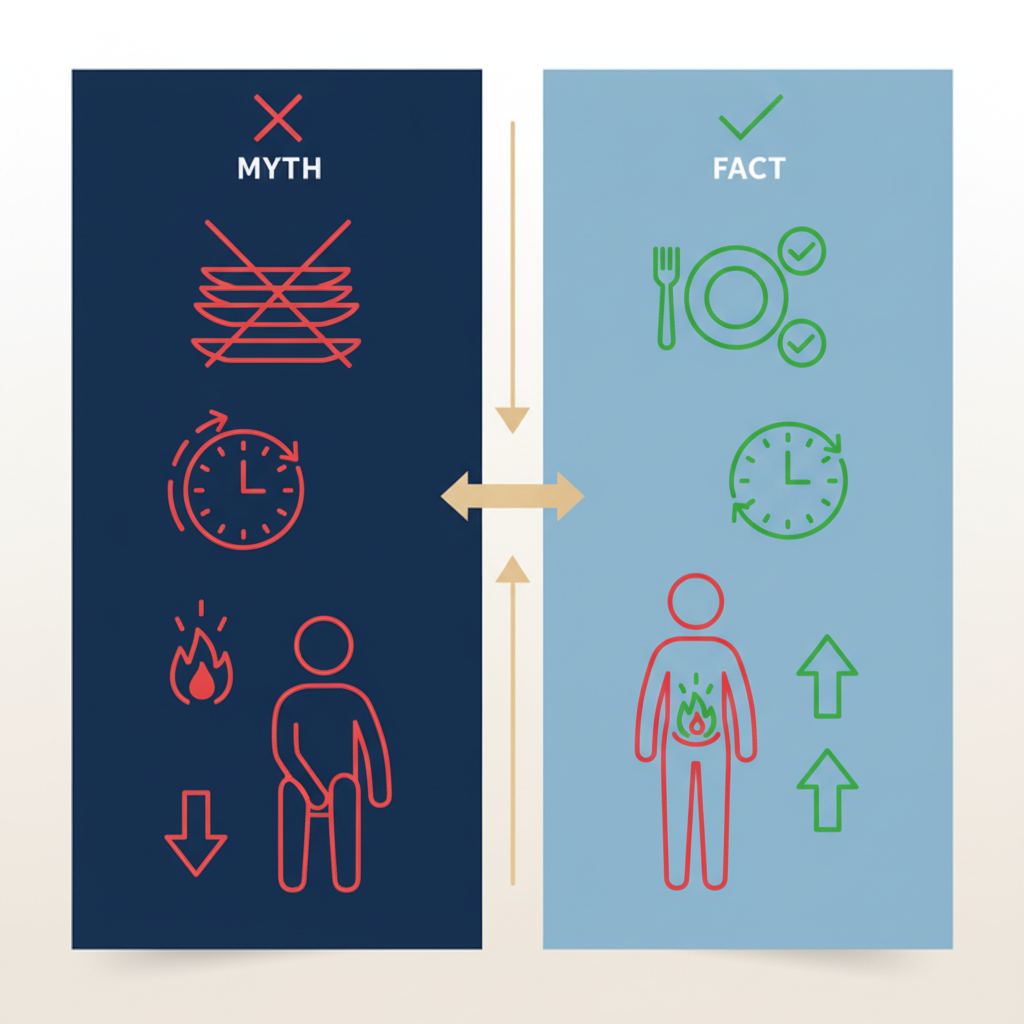
Myth 1: Skipping Breakfast is Harmful to Health and Focus
We’ve long been told that "breakfast is the most important meal of the day." In the context of intermittent fasting, this is one of the most frequently debated claims. The truth is that the timing of your first meal depends entirely on your biological clock and lifestyle. For many, delaying the first meal until noon helps increase morning focus and reduces the distraction of meal prep.
The claim that skipping breakfast causes a sharp drop in blood sugar isn't accurate for everyone. In fact, intermittent fasting and blood sugar control work together to enhance the body's ability to use stored energy efficiently. Instead of relying on morning meal sugar, your body learns to switch to burning stored fat. This doesn't mean breakfast is bad; it means its timing is flexible and can be adjusted to fit your professional or family schedule.
Myth 2: Intermittent Fasting Inevitably Leads to Muscle Loss
Many fitness enthusiasts fear that fasting will "eat away" at their muscles. This claim lacks scientific accuracy when evaluating intermittent fasting schedules properly. The body does not start burning muscle simply because you fasted for 16 or 18 hours. In fact, fasting supports the secretion of growth hormones that help preserve muscle tissue.
The key here isn't the fasting itself, but what you eat during your eating window. If you consume enough protein and engage in resistance training, intermittent fasting can be an excellent tool for improving body composition. Using a meal timing journal can help ensure you meet your protein and calorie needs during eating hours, protecting your muscle mass and supporting your physical goals.
Myth 3: You Can Eat Anything (and Any Amount) During the Eating Window
This myth is a primary reason many fail to see positive results. Some believe that fasting for 16 hours gives them a "blank check" to consume fast food and sweets in unlimited quantities. The truth is that nutrient quality remains the foundation. Intermittent fasting is a time frame, not an excuse for poor nutrition.
When evaluating fasting claims, we find that success comes from combining smart timing with whole food choices. Consuming fiber, healthy proteins, and good fats during the eating window helps maintain satiety longer and makes the subsequent fasting hours much easier. Adhering to a schedule does not override the laws of energy balance and nutritional value.
Myth 4: Intermittent Fasting Slows Down Metabolism and Triggers "Starvation Mode"
This is another common claim that causes anxiety. The concept of "starvation mode" typically occurs during extreme and prolonged calorie deprivation, not during organized fasting schedules. In fact, studies suggest that short-term fasting (like 16:8 or 20:4 schedules) may slightly boost metabolism due to increased levels of norepinephrine in the blood.
Intermittent fasting encourages what is known as "metabolic flexibility"—the body's ability to switch between burning carbohydrates and burning fat. This shift is a sign of metabolic health, not a slowdown. If you feel constantly lethargic, the cause might be food quality or dehydration rather than the fasting schedule itself. Evaluating these claims requires understanding that the human body is historically designed to handle periods without food.
Myth 5: Intermittent Fasting is Unsuitable for Women and Disrupts Hormones
This claim contains a grain of truth but is wrongly generalized. While women's bodies may be more sensitive to hunger signals and energy deficits, this doesn't mean fasting is off-limits. The secret lies in gradual progression and flexibility. Instead of starting with a harsh 20-hour schedule, women might start with 12 or 14 hours and evaluate their body's response.
Listening to your body is the golden rule. If fasting causes excessive stress or affects sleep quality, the schedule should be adjusted. Intermittent fasting should be a tool to provides prompts for observing stress-related patterns in your life (by simplifying your routine) rather than an additional source of psychological or physical pressure. Proper evaluation of schedules requires considering individual differences and biological cycles.
Practical Tool: Myth vs. Fact Comparison
| Claim (Myth) | Scientific/Practical Fact | Actionable Tip |
|---|---|---|
| You must fast the same hours every day | Flexibility is key; you can change the schedule based on your day | Use different schedules for weekends |
| Black coffee breaks a fast | Coffee without additives (sugar/milk) doesn't break a fast and supports focus | Drink coffee in moderation to avoid dehydration |
| Fasting causes permanent headaches | Headaches are often from salt deficiency or dehydration, not fasting itself | Add a pinch of sea salt to your water during fasting |
| Results appear in two days | Fasting requires medium to long-term commitment for real changes | Be patient and focus on feeling energetic first |
FAQ About Intermittent Fasting Schedules
Yes, exercising at the end of a fasting period can be very effective, but start with low intensity until your body adapts to using fat as fuel.
What should I do if I feel extremely hungry before my fast ends?Drink water, green tea, or black coffee. If the hunger is unbearable, you can break the fast with a light snack and adjust your schedule the next day. Consistency is more important than perfection in one day.
Does intermittent fasting affect work focus?On the contrary, many report an increase in mental clarity and focus due to stable blood sugar levels and the absence of "post-meal slump."
Should I count calories while fasting?While fasting naturally reduces food intake, being aware of calories and nutrient quality ensures better results and prevents overeating.
In conclusion, evaluating common claims about intermittent fasting schedules is an ongoing process that requires awareness and conscious personal experimentation. There is no one-size-fits-all formula, but there are solid principles that support success. Always remember that fasting is a means to improve your quality of life, not a constraint that prevents you from enjoying it.

Explore health education
Review the educational guides and practical tools related to this topic.
Explore the education hub