Reading Nutrition Labels for Heart Health: A Comprehensive Guide to Smart Food Choices
Author: Feras Alayed
Published:
Updated:
Category: heart-health
Reading Time: 9 minutes
Serving size is the foundation for understanding all other nutrients on the label.
Trans fats should ideally be zero to protect arterial health.
Sodium is often hidden in non-salty foods like bread and sauces.
High fiber intake is linked to lower LDL cholesterol levels.
Front-of-package marketing claims require verification via the Nutrition Facts panel.
Reading nutrition labels for heart health is a vital skill that empowers you to control what enters your body. This guide focuses on identifying harmful ingredients like trans fats and high sodium while promoting heart-protective choices like fiber and healthy fats. By understanding labels, you can transform a routine shopping trip into a proactive step for cardiovascular protection.
Understanding Serving Sizes, Calories, and Their Impact on the Heart
The journey of reading nutrition labels for heart health always begins at the top: the serving size. A common misconception is that the numbers listed on the label apply to the entire package. In reality, a single package often contains multiple servings. For instance, a small bag of crackers might contain three servings; if you eat the whole bag, you must triple all the values, including calories, sodium, and fats. Portion control is a cornerstone of maintaining a healthy weight, which is essential for reducing the workload on your heart muscle. Excess calories, even from partially healthy sources, lead to weight gain and visceral fat accumulation, increasing the risk of cardiovascular disease. When comparing two products, ensure you check if the serving sizes are comparable for an accurate assessment. In daily life, we often encounter 'family size' packs where the serving size is surprisingly small. Being mindful of this detail changes your perspective on consumption. Understanding heart health education starts with these small details that accumulate to define your long-term wellness.
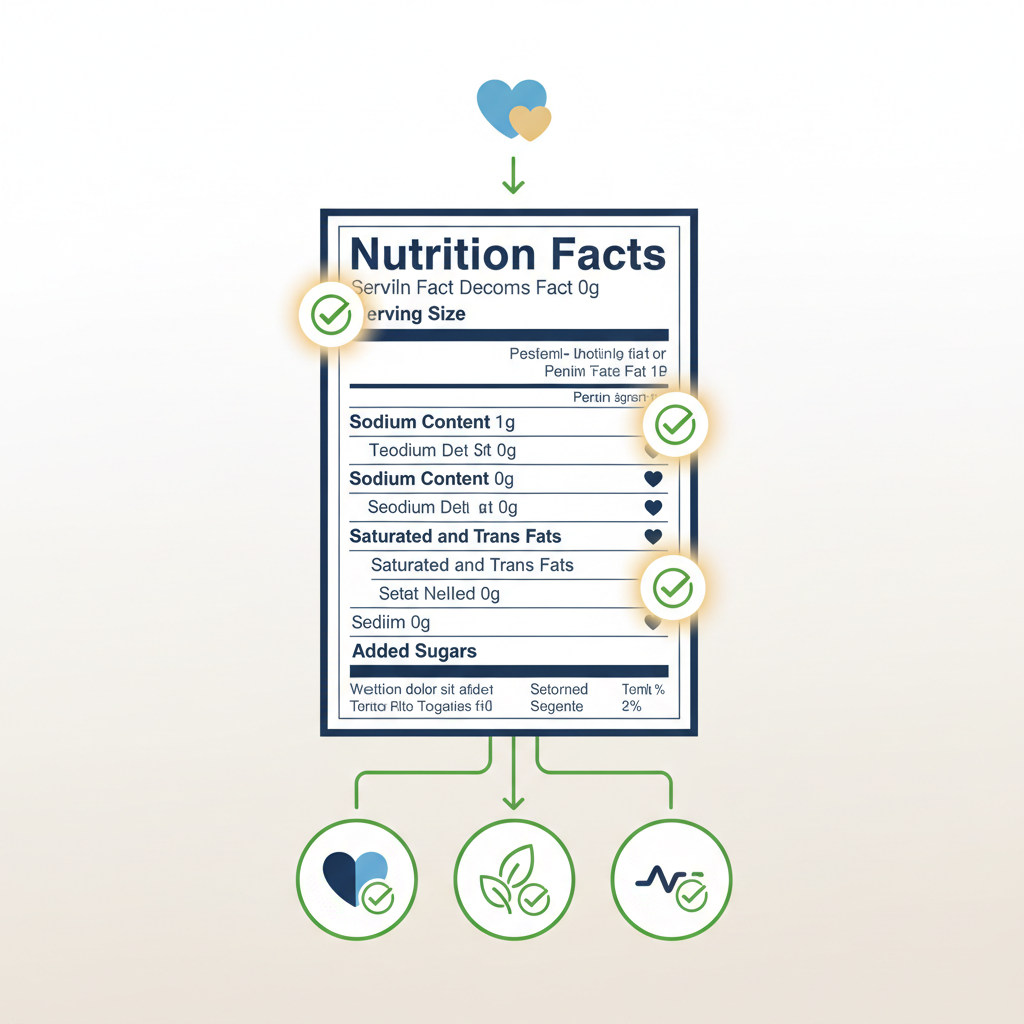
A step-by-step guide to decoding nutrition labels specifically highlighting heart-healthy metrics like sodium, saturated fats, and fiber.
Decoding Fats: Saturated, Trans, and Unsaturated
Fats are among the most discussed elements on nutrition labels, but for heart health, the rules are clear. The focus should be on minimizing saturated fats and completely avoiding trans fats. Saturated fats are prevalent in animal products and certain tropical oils like palm and coconut oil; high intake is linked to elevated LDL (bad) cholesterol. Trans fats, resulting from partial hydrogenation of oils, are the most dangerous as they raise LDL while lowering HDL (good) cholesterol. When reading a label, look for 'partially hydrogenated oils' in the ingredients list, even if the label claims 0g trans fat, as regulations often allow rounding down. Conversely, seek out unsaturated fats (monounsaturated and polyunsaturated), which are heart-friendly and found in olive oil, nuts, and fish. When discussing fats, it is essential to consider Triglycerides Lowering Natural Strategies: A Practical, Evidence‑Based Guide (Heart Health) to understand how different fat types impact your blood lipid profile. Replacing saturated fats with unsaturated ones is one of the best dietary decisions you can make for your arteries.
The Sodium Trap: Hidden Salt in Processed Foods
Sodium is the silent enemy of blood pressure and heart health. Much of our sodium intake doesn't come from the salt shaker but from processed and packaged foods. Reading nutrition labels for heart health requires special attention to the % Daily Value (%DV) for sodium. As a general rule, 5% DV or less is considered low, while 20% DV or more is high. Sodium is used not just for flavor but as a preservative in products that might not even taste salty, such as bread, canned vegetables, and breakfast cereals. High sodium consumption leads to fluid retention and increased pressure on arterial walls, straining the heart over time. Always opt for products labeled 'low sodium' or 'no salt added.' A practical tip is to rinse canned beans or vegetables under water, which can significantly reduce the sodium content. Reducing sodium is a direct way to support healthy blood pressure levels and overall cardiovascular resilience.
Fiber and Carbohydrates: The Role of Whole Grains in Heart Protection
Not all carbohydrates are created equal when it comes to the heart. Dietary fiber is the unsung hero of the nutrition label. Soluble fiber, found in oats, barley, and legumes, acts like a sponge, binding to cholesterol in the digestive tract and preventing it from entering the bloodstream. When reading labels, look for products with at least 3 grams of fiber per serving. On the flip side, be wary of 'Added Sugars.' High sugar intake is not just about weight; it raises heart disease risk by increasing inflammation and triglyceride levels. Many 'healthy' yogurts or granolas are packed with added sugars that negate their benefits. Choose whole grains (like brown rice, quinoa, and whole-wheat pasta) over refined grains. Whole grains retain the bran and germ, which are the primary sources of fiber and micronutrients that support heart function. Identifying these on the label is key to a heart-protective diet.