اختبار مقاومة الإنسولين في كندا: أين وكيف تحصل عليه؟
Author: Feras Alayed
Published:
Updated:
Category: canadian-health
Reading Time: 12 minutes
Key Takeaways
- In Canada roughly 6–8% of adults report diagnosed diabetes and an additional sizeable group has prediabetes — early insulin resistance is common and often undetected. ([www150.statcan.gc.ca](https://www150.statcan.gc.ca/n1/pub/82-570-x/82-570-x2024001-eng.pdf?utm_source=openai))
- Standard screening in Canada uses fasting plasma glucose (FPG), HbA1c and a 75 g OGTT; fasting insulin / HOMA‑IR are available but are not routine screening tests in Diabetes Canada guidance. ([guidelines.diabetes.ca](https://guidelines.diabetes.ca/health-care-provider-tools/screening-and-diagnosis-algorithm?utm_source=openai))
- HOMA‑IR (fasting insulin × fasting glucose / 22.5) gives an accessible estimate of insulin resistance but cut‑offs vary by population — clinical interpretation must consider labs, units (insulin in µU/mL, glucose in mmol/L) and context. ([pmc.ncbi.nlm.nih.gov](https://pmc.ncbi.nlm.nih.gov/articles/PMC9542105/?utm_source=openai))
- In Canada you can get tested through your family doctor (publicly covered if medically necessary), walk‑in or endocrinology referral, or pay for direct‑to‑consumer/private lab testing (prices vary). Check provincial rules (Ontario, Alberta, BC) for requisition and coverage. ([img1.wsimg.com](https://img1.wsimg.com/blobby/go/47c78ccf-d12f-481a-82c2-f7dc3b6ca738/downloads/safofikafaxili.pdf?utm_source=openai))
- If testing suggests insulin resistance, first steps focus on evidence‑based lifestyle changes (weight loss, physical activity, time‑restricted eating), metabolic follow‑up and working with primary care—supplements or products (e.g., components of the Feel Great system) may help as supportive tools but are not medications. ([pubmed.ncbi.nlm.nih.gov](https://pubmed.ncbi.nlm.nih.gov/35371260/?utm_source=openai))
TL;DR
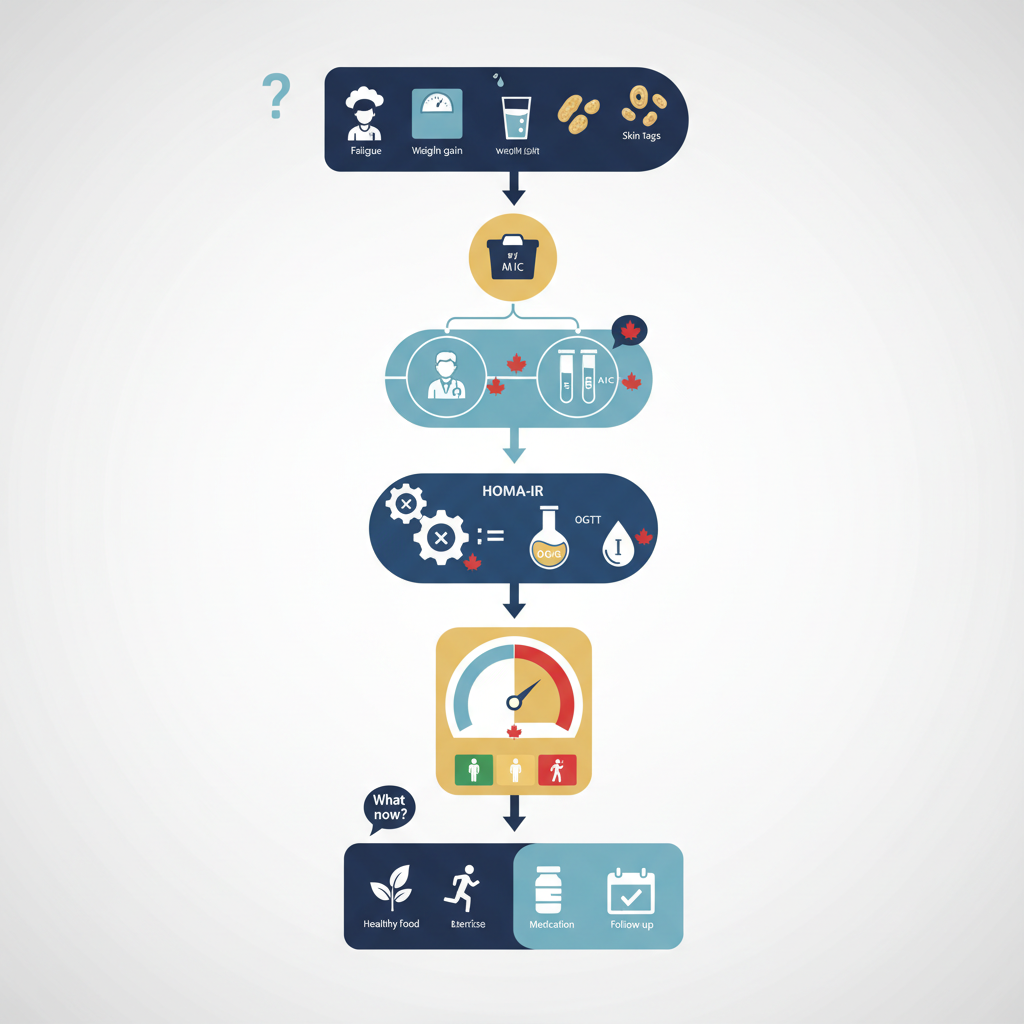
Canada screens for diabetes with fasting glucose, HbA1c and OGTT; fasting insulin + HOMA‑IR can detect early insulin resistance years before glucose abnormalities but is not yet standard screening. Ask your family doctor for a fasting glucose and (if appropriate) a fasting insulin to calculate HOMA‑IR, or consider a private lab if you need a test sooner. Management begins with lifestyle steps; specialty care or medication may follow if risk is high. ([guidelines.diabetes.ca](https://guidelines.diabetes.ca/health-care-provider-tools/screening-and-diagnosis-algorithm?utm_source=openai))
🇨🇦 آلاف الكنديين يستخدمون Feel Great لدعم صحتهم الأيضية بشكل طبيعي. اعرف المزيد واطلب من هنا ←
Introduction — a striking Canadian number
Insulin resistance is the metabolic disturbance that often comes before type 2 diabetes and many cardiovascular conditions. In recent national estimates about 8.0% of Canadians aged 18 and older reported living with diabetes in 2023, while measured prediabetes is also common — meaning many Canadians have early insulin dysfunction that could be identified sooner. These are not just individual problems: diabetes and related complications drive major health system costs in Canada. ([www150.statcan.gc.ca](https://www150.statcan.gc.ca/n1/pub/82-570-x/82-570-x2024001-eng.pdf?utm_source=openai))
Why test for insulin resistance (IR)?
Testing for insulin resistance can find metabolic dysfunction before average blood sugars (A1C) or fasting glucose move into the prediabetes/diabetes ranges. Early detection gives a window of opportunity: lifestyle changes often have greater impact earlier in the course of metabolic decline. However, opinions differ on who should be tested and which test is ideal — national screening guidance in Canada prioritizes FPG, A1C and OGTT but many clinicians and researchers use fasting insulin/HOMA‑IR or OGTT‑with‑insulin in selected cases. ([guidelines.diabetes.ca](https://guidelines.diabetes.ca/health-care-provider-tools/screening-and-diagnosis-algorithm?utm_source=openai))
Which tests are used to detect insulin resistance in Canada?
1) Routine screening tests used across Canada (Diabetes Canada)
Diabetes Canada recommends: fasting plasma glucose (FPG), hemoglobin A1c (A1C) and a 75 g oral glucose tolerance test (OGTT) for screening and diagnosis of prediabetes and type 2 diabetes. These tests define impaired fasting glucose (IFG), impaired glucose tolerance (IGT) and A1C‑based prediabetes. They are the backbone of provincial screening programmes and are widely available through primary care and hospital/community labs. ([guidelines.diabetes.ca](https://guidelines.diabetes.ca/health-care-provider-tools/screening-and-diagnosis-algorithm?utm_source=openai))
2) Fasting insulin and HOMA‑IR (fast, inexpensive estimate)
HOMA‑IR formula (HOMA1): HOMA‑IR = (fasting insulin [µU/mL] × fasting glucose [mmol/L]) / 22.5. Use insulin measured in micro‑units per millilitre (µU/mL) and glucose in mmol/L. A practical example: fasting glucose 5.0 mmol/L with fasting insulin 15 µU/mL → HOMA‑IR = (15 × 5) / 22.5 = 3.33. Many studies and clinics consider values above ~2–2.5 or higher as suggestive of insulin resistance, but cut‑offs vary by age, sex and ethnicity — there is no single universal HOMA‑IR threshold. Interpret results with your clinician. ([pmc.ncbi.nlm.nih.gov](https://pmc.ncbi.nlm.nih.gov/articles/PMC9542105/?utm_source=openai))
3) OGTT with insulin sampling (dynamic test)
A full OGTT with insulin measures how insulin rises and falls after a 75 g glucose load (often measured at fasting, 30, 60 and 120 minutes). OGTT‑insulin provides dynamic information about insulin secretion and peripheral sensitivity — more informative than fasting insulin alone, but more time‑consuming and usually reserved for research, complex cases (for example PCOS or atypical presentations) or specialist assessment. ([pubmed.ncbi.nlm.nih.gov](https://pubmed.ncbi.nlm.nih.gov/35676014/?utm_source=openai))
4) Gold standard: euglycaemic hyperinsulinaemic clamp (research only)
The insulin clamp is the research gold standard for measuring insulin sensitivity but is time‑intensive and only available in research or specialist centres. For clinical practice, validated surrogate measures such as HOMA‑IR, QUICKI, TyG index and OGTT‑derived metrics are more practical. ([ncbi.nlm.nih.gov](https://www.ncbi.nlm.nih.gov/books/NBK278954/?utm_source=openai))
5) Emerging/adjunct tests: TyG index, CGM
The triglyceride‑glucose (TyG) index and measures from continuous glucose monitoring (CGM) are being studied as screening tools for early dysglycaemia and insulin resistance; the evidence base is growing with several systematic reviews describing diagnostic performance and limitations. CGM may detect post‑prandial dysglycaemia that fasting tests miss. ([pmc.ncbi.nlm.nih.gov](https://pmc.ncbi.nlm.nih.gov/articles/PMC7085845/?utm_source=openai))
How accurate are HOMA‑IR and fasting insulin?
HOMA‑IR correlates reasonably with clamp measures at the population level and is widely used in clinical research as a practical index of hepatic/whole‑body insulin resistance. However, cross‑study comparisons are complicated by different assay methods for insulin, ethnic differences and varying cut‑offs. Systematic reviews show that HOMA‑IR can predict metabolic risk but emphasise the need for population‑specific thresholds. In short: HOMA‑IR is useful for screening and monitoring trends, but clinical decisions should combine HOMA‑IR with other tests, risk factors and clinical findings. ([pmc.ncbi.nlm.nih.gov](https://pmc.ncbi.nlm.nih.gov/articles/PMC9542105/?utm_source=openai))
Where to get an insulin resistance test in Canada — step‑by‑step
- Start with your primary care provider (family doctor / nurse practitioner) — they can order FPG, A1C, OGTT and fasting insulin when clinically indicated. Public provincial coverage usually pays for medically necessary lab tests ordered by a clinician; check your province for details. ([guidelines.diabetes.ca](https://guidelines.diabetes.ca/getmedia/6c07d660-33a6-4cfa-abb0-e521eb4bb67d/2024-CPG-Quick-Reference-Guide_1.pdf?utm_source=openai))
- Walk‑in clinics and community labs — most community labs (hospital labs, provincial lab networks) accept clinician requisitions; some tests may require an appointment and specific fasting instructions. Provincial lab networks (Alberta Health Services, BC’s Laboratory Services, Ontario community labs) are the common routes. ([myhealth.alberta.ca](https://myhealth.alberta.ca/Find-Health-Care/Facilities/Pages/Profile.aspx?facilityid=2&serviceid=1000871&utm_source=openai))
- Private / direct‑to‑consumer (DTC) labs — companies such as JustLabs and independent pathology services sell fasting insulin tests or panels if you prefer to pay privately or lack timely access to a requisition. Prices vary (example: JustLabs lists fasting insulin testing options starting at modest prices). If using a private test, confirm the assay units (µU/mL) and lab reference range. ([justlabs.health](https://justlabs.health/tests/insulin-fasting?utm_source=openai))
- Endocrinology referral — if results are unclear, you have PCOS, worsening metabolic disease, or complex needs, your family doctor can refer to an endocrinologist who may order OGTT‑with‑insulin, clamp testing (rare) or specialist metabolic assessments. ([cmaj.ca](https://www.cmaj.ca/sites/default/files/additional-assets/site/pdfs/focus_on_diabetes.pdf?utm_source=openai))
- What to expect on the day — fasting 8–12 hours for fasting glucose/insulin; avoid strenuous exercise, alcohol and caffeine for 24 hours when possible; bring a list of medications (some alter insulin levels). Ask the lab which units they report so you can calculate HOMA‑IR correctly. ([testing.com](https://www.testing.com/tests/fasting-insulin-test/?utm_source=openai))
Provincial differences — practical points for Ontario, Alberta and BC
Coverage models and how you access testing differ by province. Publicly funded lab testing generally requires a clinician’s requisition and is covered when medically necessary. For example, Ontario’s laboratory services guidance lists which community lab services are covered by OHIP and notes that some specialised or non‑routine tests may not be covered; Alberta’s laboratory services similarly accept clinician orders via Alberta Health Services. If you need faster access or a test not covered, private DTC labs operate across provinces (shipping / collection points from BC to Newfoundland). Always check local lab menus and confirm whether fasting insulin is on the standard public panel. ([img1.wsimg.com](https://img1.wsimg.com/blobby/go/47c78ccf-d12f-481a-82c2-f7dc3b6ca738/downloads/safofikafaxili.pdf?utm_source=openai))
Interpreting results — practical thresholds and pitfalls
Key interpretation points:
- Units matter: fasting insulin is typically reported in µU/mL (or pmol/L — conversion: 1 µU/mL ≈ 6 pmol/L). Use insulin in µU/mL with glucose in mmol/L in the HOMA‑IR formula above. ([pmc.ncbi.nlm.nih.gov](https://pmc.ncbi.nlm.nih.gov/articles/PMC9542105/?utm_source=openai))
- HOMA‑IR variability: commonly used cut‑offs range from ~1.5–3.0 depending on population; recent systematic reviews stress that thresholds are context‑dependent. Use trends (serial tests) rather than a single absolute number when possible. ([pmc.ncbi.nlm.nih.gov](https://pmc.ncbi.nlm.nih.gov/articles/PMC12411212/?utm_source=openai))
- False reassurance: normal A1C or fasting glucose does not always exclude early IR — OGTT, fasting insulin or CGM can reveal earlier abnormalities. Conversely, a single elevated fasting insulin without context is hard to act on. ([diabetes.ca](https://www.diabetes.ca/health-care-providers/clinical-practice-guidelines/chapter-4?utm_source=openai))
Which test should you choose? (short comparison)
| Test | What it measures | Pros | Cons |
|---|---|---|---|
| FPG (fasting plasma glucose) | Fasting glucose (mmol/L) | Inexpensive, standard screening | Misses early post‑prandial dysglycaemia |
| HbA1c | Average glycaemia 2–3 months | No fasting; widely used | Can miss early IR; affected by hemoglobinopathies |
| OGTT (2‑hr glucose) | Glucose tolerance after 75 g | Detects IGT / early dysglycaemia | Time‑consuming; requires fasting and 2‑hr wait |
| Fasting insulin + HOMA‑IR | Estimate of insulin sensitivity | Detects hyperinsulinaemia before glucose rises | Assay variability; variable cut‑offs; not standard everywhere |
| OGTT with insulin | Dynamic insulin response | Most informative clinically | Usually specialist / research |
What to do if your test suggests insulin resistance
- Discuss results with your primary care team — they will put labs in context with risk factors (age, BMI, family history, ethnicity). ([guidelines.diabetes.ca](https://guidelines.diabetes.ca/getmedia/6c07d660-33a6-4cfa-abb0-e521eb4bb67d/2024-CPG-Quick-Reference-Guide_1.pdf?utm_source=openai))
- Start evidence‑based lifestyle steps: weight loss (5–10% can improve insulin sensitivity), increased physical activity (aerobic + resistance), and dietary adjustments — Mediterranean/DASH‑style patterns show benefit. Intermittent time‑restricted eating (e.g., 4‑4‑12 style windows) and supervised fasting protocols have evidence for improving HOMA‑IR in some trials. ([pubmed.ncbi.nlm.nih.gov](https://pubmed.ncbi.nlm.nih.gov/35371260/?utm_source=openai))
- Referral to diabetes education, dietitian or endocrinology if risk is high (A1C in prediabetes range or multiple cardiometabolic risk factors). Diabetes Canada provides clear follow‑up and prevention pathways. ([guidelines.diabetes.ca](https://guidelines.diabetes.ca/health-care-provider-tools/screening-and-diagnosis-algorithm?utm_source=openai))
- Medications such as metformin may be considered in high‑risk people — discuss risks, benefits and provincial coverage with your clinician. (Clinical practice guidelines determine when medication is appropriate.) ([guidelines.diabetes.ca](https://guidelines.diabetes.ca/getmedia/6c07d660-33a6-4cfa-abb0-e521eb4bb67d/2024-CPG-Quick-Reference-Guide_1.pdf?utm_source=openai))
How the Feel Great system fits (supportive, not a medication)
For Canadians looking for structured, evidence‑informed supportive tools, the Feel Great system combines dietary fibre matrices (Balance), yerba mate extract (Unimate), and the 4‑4‑12 intermittent eating window. These components may help people manage post‑meal glucose responses and energy/clarity and can be used alongside medical care. For example, meta‑analyses and RCTs show that time‑restricted eating and intermittent fasting can reduce HOMA‑IR and fasting insulin in metabolically at‑risk adults, and there is randomized evidence that yerba mate / chlorogenic acid‑containing products produce modest improvements in HOMA‑IR and fasting glucose in some populations. Always discuss supplements and dietary programmes with your healthcare provider; check Health Canada’s Licensed Natural Health Products Database (LNHPD) for NPN licensing before purchase. Feel Great is a lifestyle support system — not a medication — and should be used with routine medical care. ([pubmed.ncbi.nlm.nih.gov](https://pubmed.ncbi.nlm.nih.gov/35371260/?utm_source=openai))
People‑Also‑Ask
- How do I request a fasting insulin test in Canada? — Ask your family doctor or nurse practitioner to include fasting insulin with fasting glucose on your lab requisition; if you need it sooner, consider a private DTC lab. ([img1.wsimg.com](https://img1.wsimg.com/blobby/go/47c78ccf-d12f-481a-82c2-f7dc3b6ca738/downloads/safofikafaxili.pdf?utm_source=openai))
- Is fasting insulin covered by provincial health plans? — Often yes if ordered by a clinician for a medically justified reason, but policies and coverage differ by province; private testing is available for a fee. ([img1.wsimg.com](https://img1.wsimg.com/blobby/go/47c78ccf-d12f-481a-82c2-f7dc3b6ca738/downloads/safofikafaxili.pdf?utm_source=openai))
- What HOMA‑IR value indicates insulin resistance? — There is no single universally accepted cut‑off; many studies use values >2–2.5 as suggestive but thresholds vary by population. Use trends and clinical context. ([pmc.ncbi.nlm.nih.gov](https://pmc.ncbi.nlm.nih.gov/articles/PMC12411212/?utm_source=openai))
- Can I calculate HOMA‑IR myself? — Yes, if you have fasting glucose (mmol/L) and fasting insulin (µU/mL): (insulin × glucose) / 22.5. Confirm units and assay method with the lab first. ([pmc.ncbi.nlm.nih.gov](https://pmc.ncbi.nlm.nih.gov/articles/PMC9542105/?utm_source=openai))
- What lifestyle steps most quickly lower HOMA‑IR? — Weight loss (5–10%), regular aerobic and resistance exercise, dietary quality (Mediterranean/DASH patterns) and some time‑restricted eating protocols have the best evidence. ([pubmed.ncbi.nlm.nih.gov](https://pubmed.ncbi.nlm.nih.gov/35371260/?utm_source=openai))
FAQ
- Q: Should everyone be screened with fasting insulin?
A: Not currently. Diabetes Canada recommends FPG, A1C and OGTT for routine screening. Fasting insulin / HOMA‑IR is useful in selected patients (PCOS, strong family history, early metabolic signs) but is not universally mandated — discuss individual risk with your clinician. ([guidelines.diabetes.ca](https://guidelines.diabetes.ca/health-care-provider-tools/screening-and-diagnosis-algorithm?utm_source=openai))

- Q: How long do I need to fast?
A: Generally 8–12 hours for fasting glucose and fasting insulin. Avoid alcohol and heavy exercise the day before and check lab instructions. ([testing.com](https://www.testing.com/tests/fasting-insulin-test/?utm_source=openai))
- Q: My A1C is normal but my HOMA‑IR is high — what now?
A: This suggests compensatory hyperinsulinaemia — early insulin resistance. Your provider may recommend lifestyle changes, closer follow‑up, OGTT, CGM or referral depending on overall risk. ([diabetes.ca](https://www.diabetes.ca/health-care-providers/clinical-practice-guidelines/chapter-4?utm_source=openai))
- Q: Can supplements fix insulin resistance?
A: No supplement alone is a cure. Some ingredients (chlorogenic acid/yerba mate, curcumin, fibre) show modest benefits on HOMA‑IR in trials; they may be supportive when combined with lifestyle changes. Always check Health Canada licensing (NPN) and talk to your provider. ([pubmed.ncbi.nlm.nih.gov](https://pubmed.ncbi.nlm.nih.gov/41244043/?utm_source=openai))
- Q: Is HOMA‑IR reliable for people of all ethnicities?
A: HOMA‑IR is useful but cut‑offs differ by ethnicity, age and assay. Population‑specific reference ranges and clinical context are important; consult your clinician. ([pmc.ncbi.nlm.nih.gov](https://pmc.ncbi.nlm.nih.gov/articles/PMC12411212/?utm_source=openai))
References & Scientific Sources
- Public Health Agency of Canada — Snapshot of Diabetes in Canada, 2023. ([canada.ca](https://www.canada.ca/en/public-health/services/publications/diseases-conditions/snapshot-diabetes-canada-2023.html?utm_source=openai))
- Health Infobase — Diabetes in Canada interactive report (Health Canada / PHAC). ([health-infobase.canada.ca](https://health-infobase.canada.ca/diabetes/?utm_source=openai))
- Statistics Canada — Diabetes among Canadian adults (analysis and tables). ([statcan.gc.ca](https://www.statcan.gc.ca/o1/en/plus/5103-diabetes-among-canadian-adults?utm_source=openai))
- Diabetes Canada — Clinical Practice Guidelines, Screening & Diagnosis (CPG chapters / Quick Reference). ([guidelines.diabetes.ca](https://guidelines.diabetes.ca/health-care-provider-tools/screening-and-diagnosis-algorithm?utm_source=openai))
- Canadian Institute for Health Information (CIHI) — Equity in diabetes care and diabetes‑associated hospitalizations/amputations. ([cihi.ca](https://www.cihi.ca/en/equity-in-diabetes-care-a-focus-on-lower-limb-amputation/amputations-signal-opportunities-to-improve-diabetes-care-and-reduce-system-costs?utm_source=openai))
- Measuring and estimating insulin resistance in clinical and research settings — review (NCBI / Endotext). ([pmc.ncbi.nlm.nih.gov](https://pmc.ncbi.nlm.nih.gov/articles/PMC9542105/?utm_source=openai))
- HOMA‑IR systematic review and meta‑analysis (PubMed): HOMA as predictor of outcomes. ([pubmed.ncbi.nlm.nih.gov](https://pubmed.ncbi.nlm.nih.gov/36181637/?utm_source=openai))
- Systematic review/meta‑analysis — intermittent fasting and insulin resistance improvements. ([pubmed.ncbi.nlm.nih.gov](https://pubmed.ncbi.nlm.nih.gov/35371260/?utm_source=openai))
- Yerba mate systematic review / RCT evidence (effects on HOMA‑IR, glycaemia). ([pubmed.ncbi.nlm.nih.gov](https://pubmed.ncbi.nlm.nih.gov/41244043/?utm_source=openai))
- TyG index diagnostic accuracy systematic review. ([pmc.ncbi.nlm.nih.gov](https://pmc.ncbi.nlm.nih.gov/articles/PMC7085845/?utm_source=openai))
- Licensed Natural Health Products Database (Health Canada — LNHPD) — checking NPNs. ([canada.ca](https://www.canada.ca/en/health-canada/services/drugs-health-products/natural-non-prescription/applications-submissions/product-licensing/licensed-natural-health-products-database.html?utm_source=openai))
- JustLabs — fasting insulin direct‑to‑consumer testing (example pricing and availability in Canada). ([justlabs.health](https://justlabs.health/tests/insulin-fasting?utm_source=openai))
Medical disclaimer: This article is for Canadian general information only and does not replace personalised medical advice. Tests, interpretation and treatment should be done with a licensed healthcare provider. For urgent issues, contact your family doctor, local emergency services or call 811 in most provinces for health navigation. The Feel Great system is described here as a supportive lifestyle option; it is not a drug and should not replace medical care. See Health Canada Licensed Natural Health Products Database for NPN and safety information before using any supplement. ([canada.ca](https://www.canada.ca/en/health-canada/services/drugs-health-products/natural-non-prescription/applications-submissions/product-licensing/licensed-natural-health-products-database.html?utm_source=openai))
مسارات مرتبطة داخل ATHAR
🇨🇦 هل أنت مستعد لبدء تحولك الصحي؟
انضم لآلاف الكنديين الذين حسّنوا صحتهم الأيضية مع نظام Feel Great. مدعوم بأكثر من 50 دراسة سريرية ومدرج في مرجع الأطباء (PDR).
✅ شحن لجميع المقاطعات: بريتش كولومبيا، ألبرتا، ساسكاتشوان، مانيتوبا، أونتاريو، كيبك، نيو برونزويك، نوفا سكوشا، جزيرة الأمير إدوارد، نيوفاوندلاند | ضمان استرداد 90 يوم