Building a Service-Based Sales System Through Listening
Author: Feras Alayed
Published:
Category: business-opportunity
Reading Time: 8 minutes
- Service-based sales prioritize long-term customer well-being over short-term transaction volume.
- Active listening is a diagnostic tool, not just a communication skill, used to identify genuine suitability.
- Qualification involves determining if a solution is truly beneficial for the client, which may include advising against a purchase.
- Ethical sales systems require structured follow-up and education to ensure the client maximizes the value of the service.
- Success in this model is measured by customer retention and trust rather than aggressive closing rates.
Introduction: The Shift from Transaction to Transformation
In the modern business landscape, the question is no longer 'How can I sell this?' but rather 'Does this person actually need what I have to offer?' This fundamental shift defines a service-based sales system. Unlike traditional models that focus on high-pressure tactics and closing ratios, a service-oriented approach focuses on the human element: listening, understanding, and determining suitability. When a professional operates from a place of service, the goal is to provide a solution that improves the client's situation. If the solution does not fit, the ethical response is to step back. This article explores the mechanics of building such a system, the skills required, and how it integrates into a professional partnership path.
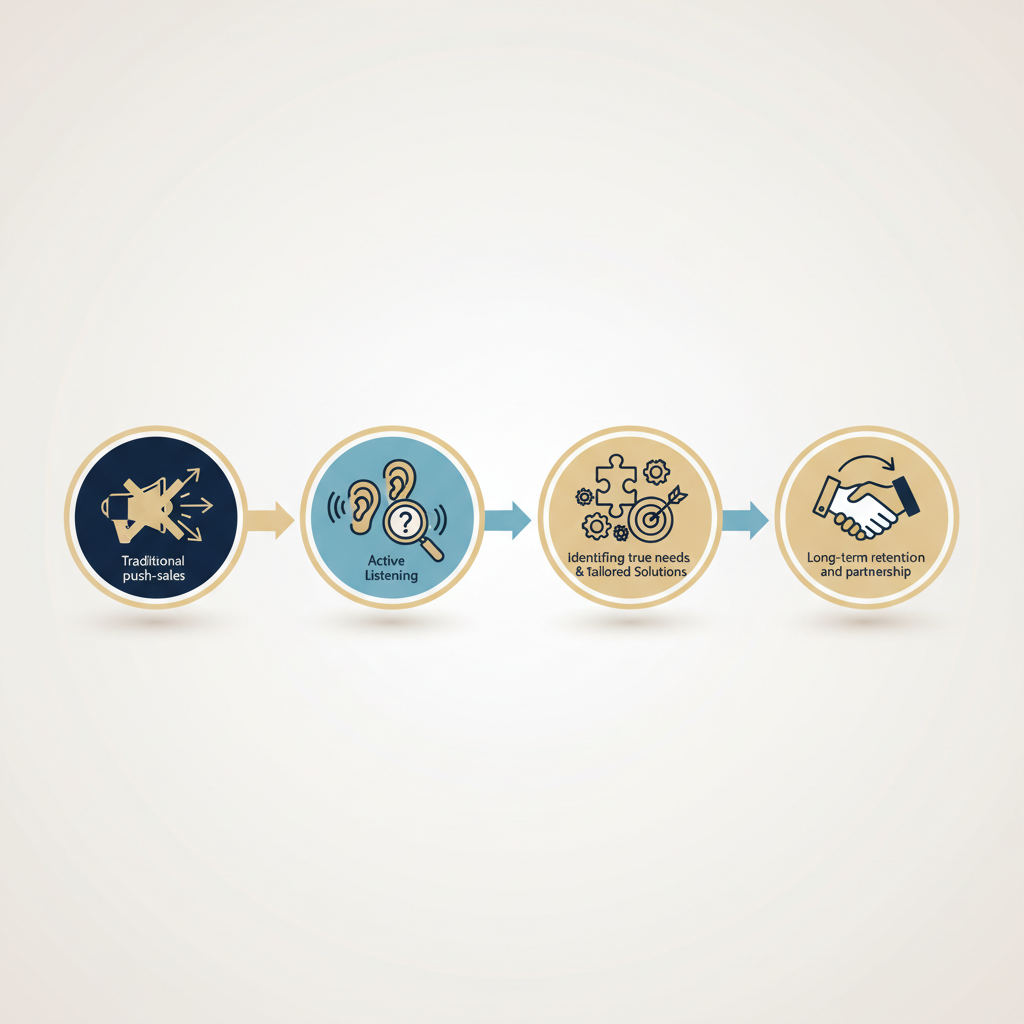
The Core Principles of a Service-Based Sales System
A service-based system is built on a foundation of ethics and clarity. It requires a departure from the 'always be closing' mindset and an adoption of the 'always be helping' philosophy. This transition involves several key pillars:
1. Active Listening as a Diagnostic Tool
Listening is the most undervalued skill in professional sales. In a service-based model, listening is not a passive act; it is a diagnostic process. By asking open-ended questions and allowing the client to speak 80% of the time, the professional can uncover the underlying challenges the client faces. This is similar to a medical professional diagnosing a condition before prescribing a treatment. Without deep listening, any solution offered is merely a guess.
2. The Concept of Suitability
Suitability is the filter through which all potential partnerships must pass. It involves assessing whether the client's goals, resources, and expectations align with the service provided. If there is a mismatch, a service-based professional will prioritize the client's interests by explaining why the service may not be the right fit at this time. This builds immense trust and protects the professional's reputation.
3. Education-First Communication
Instead of pitching features, a service-based system focuses on educating the client. This involves explaining the 'why' behind a solution and helping the client understand their own needs better. For instance, in the context of wellness or metabolic health, education might involve helping a client understand their own data, such as understanding cholesterol test terms, before discussing any supportive programs. This empowers the client to make an informed decision.
Implementing the System: The Process of Qualification
Building a service-based system requires a structured process that ensures consistency and quality. This process is often referred to as 'qualification' rather than 'prospecting.'
| Phase | Traditional Sales Focus | Service-Based Focus |
|---|---|---|
| Initial Contact | Pitching the product quickly | Building rapport and identifying needs |
| Discovery | Finding 'pain points' to exploit | Understanding the client's current reality |
| Solution Design | Standardized packages | Customized recommendations based on fit |
| Closing | Overcoming objections through pressure | Confirming suitability and mutual agreement |
| Follow-up | Moving to the next lead | Ensuring implementation and satisfaction |
The Role of the D2B System in Service
A robust follow-up mechanism is essential for maintaining a service-based approach. The D2B system is a prime example of how structured follow-up can enhance customer service excellence. By maintaining consistent contact and providing ongoing support, the professional ensures that the client is never left alone after the initial agreement. This creates a cycle of service that extends far beyond the point of sale.
Developing the Skills for Ethical Leadership
Transitioning to a service-based system requires a specific set of skills that go beyond basic communication. These skills are developed through practice, mentorship, and a commitment to personal growth.
- Empathy: The ability to see the world through the client's eyes.
- Patience: Understanding that the client's decision-making process may take time.
- Critical Thinking: Analyzing complex situations to determine the best course of action.
- Integrity: The courage to say 'no' when a solution is not in the client's best interest.
For those in the Eastern Province or elsewhere, developing health literacy and general professional literacy is a key component of being able to serve clients effectively. The more a professional knows, the better they can guide others.
How This Connects to the Partnership Path
The partnership path at ATHAR is not a recruitment drive; it is a journey of qualification and skill discovery. It is designed for individuals who are committed to the principles of service-based sales and ethical leadership. When exploring this path, candidates undergo a process similar to the one they will eventually lead their clients through.
What to Expect in the First 90 Days
The first 90 days of the partnership path are focused on learning and alignment:
- Day 1-30: Focus on understanding the core philosophy of service, learning the diagnostic tools, and observing experienced partners.
- Day 31-60: Beginning to apply active listening skills in supervised environments and learning the nuances of suitability.
- Day 61-90: Taking a more active role in client education and beginning to manage the follow-up process using systems like D2B.
This path is suitable for those who value long-term relationships and professional integrity. It is not suitable for those looking for 'quick wins' or high-pressure environments. Success in this path depends on individual effort, the ability to learn new skills, and a genuine desire to serve others. For a deeper look at what this entails, one might consider evaluating the Firas Al-Ayed partnership opportunity as a case study in service-based business models.
People Also Ask
1. What is the difference between a service-based system and a product-based system?
A service-based system focuses on the outcome and the relationship, whereas a product-based system often focuses on the features and volume of the item being sold.
2. Can anyone learn to be a service-based professional?
While the skills can be learned, it requires a fundamental mindset shift toward empathy and ethics. It suits individuals who are naturally inclined toward helping others.
3. How do you handle a client who is not a good fit?
In a service-based model, you politely explain the reasons why the current solution may not meet their needs and, if possible, refer them to a more appropriate resource.
4. Does this approach work in all industries?
Yes, whether you are in wellness, finance, or technology, prioritizing the client's needs and suitability leads to higher trust and better long-term outcomes.
5. How is success measured in this system?
Success is measured by client satisfaction, the quality of the relationship, and the long-term impact of the solution provided, rather than just the number of transactions.

FAQ
Q: Is there a specific training program for this?
A: Yes, the partnership path includes structured training on active listening, qualification, and the use of support systems. Eligibility is determined through a suitability interview.
Q: Do I need prior sales experience?
A: Not necessarily. A background in service, education, or healthcare can be very beneficial, as the focus is on communication and empathy rather than traditional sales tactics.
Q: How does the D2B system help in this process?
A: The D2B system provides a framework for consistent follow-up, ensuring that the service continues long after the initial agreement, which is crucial for building trust.
Q: What are the ethical guidelines for this system?
A: The primary guideline is to always act in the best interest of the client, ensuring transparency in all communications and never promising results that cannot be verified.
Q: How can I start exploring this path?
A: The first step is to visit our partnership-fit page to see if your values and goals align with our service-based approach.
Disclaimer
This article is for educational and informational purposes only. The concepts discussed regarding service-based sales and professional partnerships do not guarantee any specific financial outcome, income level, or business success. Financial results in any partnership depend on individual effort, market conditions, skill acquisition, and adherence to official programme policies. ATHAR does not provide medical advice, disease diagnosis, or treatment claims. All health-related information, such as references to cholesterol or metabolic health, should be verified with a qualified healthcare professional. Partnership eligibility and policies must be independently verified through official channels before any commitment is made.
If you are interested in a career built on ethics, service, and professional growth, the next step is to explore whether this approach aligns with your personal values.
اكتشف هل الشراكة تناسبك | Explore whether the partnership path suits youFurther Education
- Explore the metabolic health education hub
- Learn how to read research summaries
- Use the educational health assessment
Evaluate the path with clarity
Use the decision guide to review eligibility, responsibilities, policies, and questions that require confirmation from official programme sources. No financial outcome is promised.