Building a Trusted Personal Brand in Health and Wellness
Author: Feras Alayed
Published:
Updated:
Category: business-opportunity
Reading Time: 7 minutes
- Trust is the primary currency in the health and wellness sector, built through consistent, ethical communication.
- Personal branding is a journey of skill discovery and professional development, not just social media presence.
- Ethical documentation and health literacy are essential components of a credible professional identity.
- Success in branding depends on long-term commitment, service-oriented leadership, and market adaptability.
- A structured partnership path provides the framework for learning, support, and professional evaluation.
Introduction: The Responsibility of a Health-Focused Personal Brand
When you decide to build a personal brand in the health and wellness space, you are stepping into a role that carries significant responsibility. Unlike general lifestyle branding, health-related communication impacts the well-being and decisions of your audience. The central question for any aspiring professional is: Are you prepared to prioritize ethical service and evidence-based education over quick visibility? Building a 'healthy personal brand' (بناء علامة شخصية صحية) is not about achieving fame; it is about establishing yourself as a reliable resource through consistent value and professional integrity.
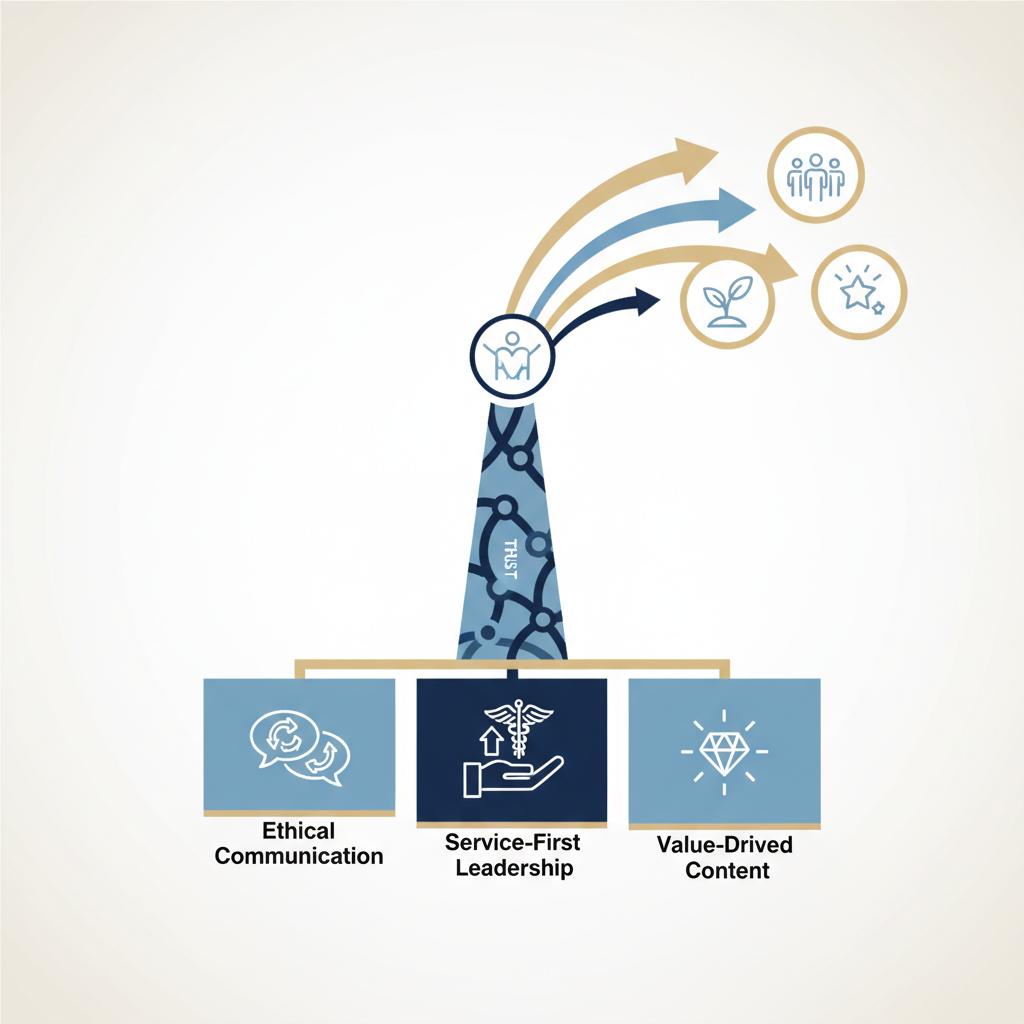
The Foundations of Ethical Branding in Wellness
Credibility is not granted; it is earned through transparency and a commitment to high standards. In an era where information is abundant but often contradictory, a trusted brand stands out by being a filter of quality. This involves understanding the nuances of family health literacy and ensuring that every piece of information shared is vetted for accuracy and ethical alignment.
1. Professional Integrity and Service-First Mindset
An ethical brand prioritizes the needs of the community. This means focusing on service rather than sales. When you approach your brand with a service-first strategy, you build a foundation that can withstand market fluctuations. This approach is deeply rooted in organic marketing strategies that value long-term relationships over short-term gains.
2. Ethical Documentation
Transparency in how you work, the sources you use, and the boundaries of your expertise is vital. Implementing ethical documentation practices ensures that your professional journey is recorded with honesty, providing a clear trail of your development and the value you provide to others.
Strategic Steps to Build Your Personal Brand
Building a brand is a systematic process. It requires a blend of soft skills, technical knowledge, and a deep understanding of your audience's needs.
Defining Your Professional Niche
Attempting to speak to everyone often results in speaking to no one. In the health sector, specialization allows you to deepen your knowledge and provide more targeted value. Whether your focus is on thyroid health literacy or broader wellness education, defining your niche helps you become a recognized authority in that specific area.
| Feature | Traditional Branding | Ethical Health Branding |
|---|---|---|
| Primary Goal | Visibility and Sales | Trust and Education |
| Content Focus | Trends and Hype | Evidence and Literacy |
| Relationship | Transactional | Service-Oriented |
| Success Metric | Follower Count | Community Impact & Trust |
Developing a Content Strategy Based on Health Literacy
Your content is the voice of your brand. To build trust, your content must empower your audience to make informed decisions. This is particularly important for residents in specific regions, such as the Eastern Province or Al Ahsa, where local context and cultural nuances play a significant role in health communication.
Skills and Responsibilities of a Wellness Leader
Leadership in the wellness space is not about directing others; it is about guiding them through education and example. This requires a commitment to continuous learning and the development of specific professional skills.
- Critical Thinking: The ability to evaluate health claims critically and distinguish between evidence-based information and marketing myths.
- Communication: Translating complex health concepts into accessible, actionable information for the layperson.
- Consistency: Maintaining a sustainable and trackable routine in your professional activities and content delivery.
- Empathy: Understanding the challenges faced by your audience and addressing them with compassion and professional boundaries.
How This Connects to the Partnership Path
The journey of building a personal brand is often best navigated within a structured framework. The partnership path is designed for individuals who are committed to professional growth, ethical service, and community leadership. It is not a shortcut to success, but a rigorous process of qualification and skill discovery.
What to Expect in the First 90 Days
The initial phase of the partnership path is focused on learning and alignment. It is a time to discover if this professional direction suits your skills and long-term goals.
- Day 1-30: Foundation and Orientation. Focus on understanding the ethical standards, the service model, and the core values of the partnership. This is a period of intense learning and self-evaluation.
- Day 31-60: Skill Application and Mentorship. Beginning to apply learned principles under guidance. This phase emphasizes communication skills and the development of a service-first mindset.
- Day 61-90: Evaluation and Integration. Assessing the progress made and determining the suitability for long-term partnership. This involves reviewing consistency, ethical alignment, and the ability to provide value to the community.
It is important to note that financial outcomes in this path are not guaranteed. They depend entirely on an individual's effort, skill acquisition, consistency, and adherence to professional policies. The path is a commitment to a professional standard, not a promise of specific results.
People Also Ask
- What is the most important factor in building a health brand? Trust is the most critical factor, built through ethical communication and consistent value.
- Do I need a medical degree to build a personal brand in wellness? While professional qualifications are valuable, a brand can also be built on health literacy, education, and service, provided you stay within the ethical boundaries of your expertise.
- How long does it take to see results? Building a credible brand is a long-term process. The focus should be on the quality of service and skill development rather than a specific timeline.
- Can I build a brand while working another job? Many professionals start their branding journey alongside other commitments, but it requires a sustainable and trackable routine to maintain consistency.
- What are the risks of health branding? The primary risks involve the spread of misinformation and the ethical responsibility of influencing others' health decisions.
Frequently Asked Questions (FAQ)
Is this partnership path a form of employment?
No, the partnership path is a collaborative professional relationship focused on independent leadership and service. It is a path of qualification and skill discovery.
What kind of support is provided to partners?
Partners receive access to educational resources, mentorship, and a structured framework for professional development, focusing on ethical service and leadership skills.
Are there specific requirements to start?
The primary requirements are a commitment to ethical standards, a willingness to learn, and a service-oriented mindset. Suitability is determined through a qualification process.
How does the partnership handle health information?
The partnership prioritizes health literacy and evidence-based education. Partners are expected to avoid making health claims or providing medical advice, focusing instead on wellness education.
What is the primary goal of the ATHAR partnership?
The goal is to empower individuals to become ethical leaders in the wellness space, providing high-quality service and education to their communities.
Further Education
- Explore the metabolic health education hub
- Learn how to read research summaries
- Use the educational health assessment
Evaluate the path with clarity
Use the decision guide to review eligibility, responsibilities, policies, and questions that require confirmation from official programme sources. No financial outcome is promised.