Building a Trusted Personal Brand in Health and Wellness
Author: Feras Alayed
Published:
Updated:
Category: business-opportunity
Reading Time: 9 minutes
- Trust is built through consistent, evidence-based education rather than hype.
- Ethical boundaries are essential when communicating health-related information.
- A service-first mindset distinguishes professional leaders from temporary influencers.
- Continuous skill development in health literacy is a non-negotiable requirement.
- Long-term success depends on professional suitability and alignment with ethical standards.
The Foundation of a Healthy Personal Brand
In the modern landscape of health and wellness, the concept of a personal brand has evolved. It is no longer just about visual aesthetics or social media presence; it is about the weight of one's word and the depth of their professional integrity. When we discuss building a healthy personal brand, we are referring to the creation of a professional identity that prioritizes the well-being of the community over short-term gains. This foundation is built on three pillars: credibility, consistency, and care.
Defining Your Core Values
Before sharing a single piece of content, a professional must define their core values. In the wellness space, these values often include transparency, empathy, and scientific literacy. A personal brand that lacks a clear ethical compass risks losing the trust of its audience. For instance, understanding health literacy is not just a skill but a commitment to ensuring that information is accessible and accurate for all demographics. Values act as the filter through which all professional decisions are made, ensuring that every interaction adds value to the recipient's life.
The Shift from Influence to Leadership
There is a significant difference between being an 'influencer' and being a 'leader' in the health sector. Influencers often focus on trends and metrics, whereas leaders focus on impact and education. A leader understands that their role is to serve as a guide. This shift requires a commitment to building a service-based system where listening to the needs of the community takes precedence over broadcasting a message. Leadership in wellness is about empowering others with the tools they need to make informed decisions about their own lives.
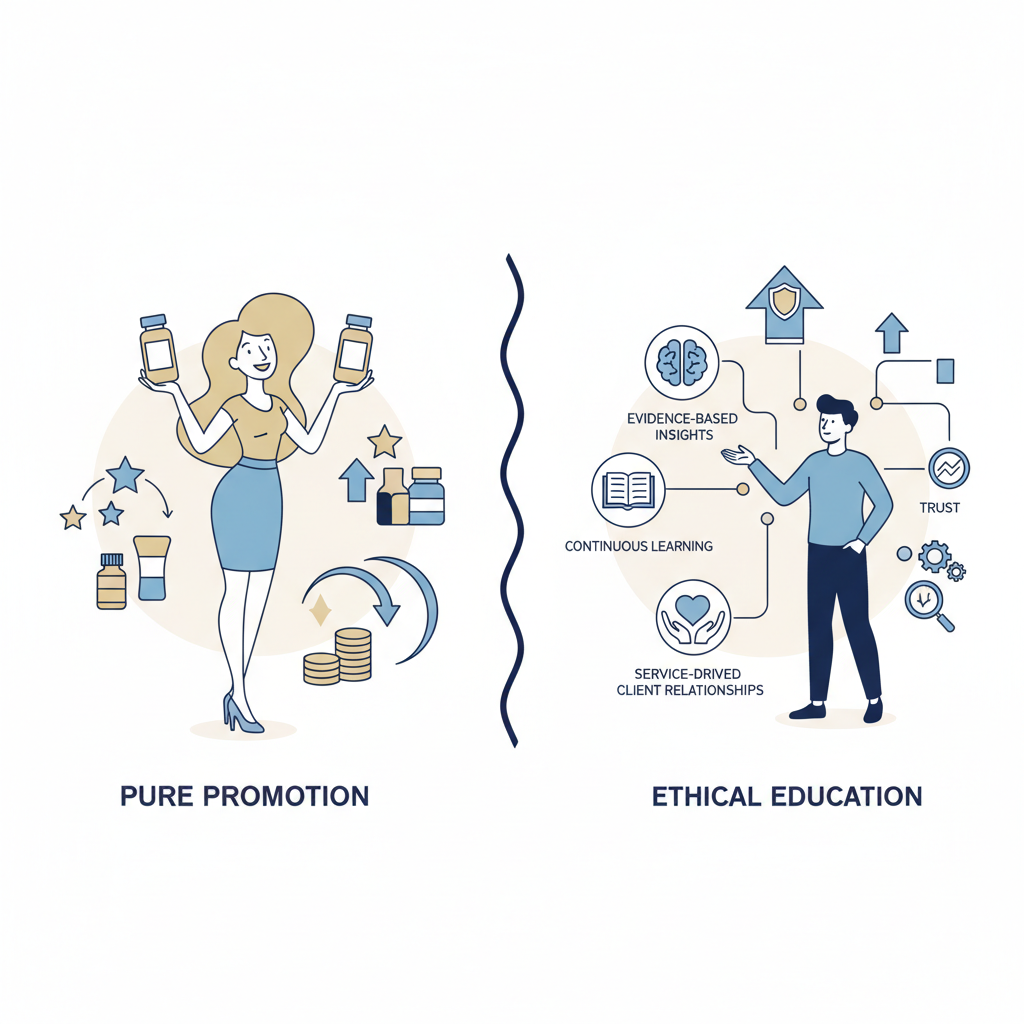
Ethical Communication in Wellness
Communication in the health and wellness industry carries a higher level of responsibility than in almost any other field. The information shared can directly impact a person's lifestyle choices and physical well-being. Therefore, ethical communication is the cornerstone of a trusted brand. This involves a rigorous commitment to avoiding misinformation and staying within the boundaries of one's professional scope.
Avoiding Misinformation and Hype
The temptation to use sensationalist headlines or make grand promises is high in a crowded digital marketplace. However, a trusted brand avoids these pitfalls. Instead of promising 'miracle results,' a professional brand focuses on the process of improvement and the importance of consistency. For example, when discussing complex topics like metabolic health, the focus should remain on educational frameworks and lifestyle factors rather than quick-fix solutions. Authenticity is maintained by admitting the limitations of current knowledge and encouraging professional consultation.
Respecting Professional Boundaries
A key aspect of building a healthy personal brand is knowing when to refer an individual to a specialist. A professional in wellness does not attempt to be a doctor, a nutritionist, and a therapist all at once unless they hold the specific, verified credentials for each. Respecting these boundaries actually increases trust. It shows the audience that the professional values their safety above the desire to appear all-knowing. This approach aligns with the principles of ethical service and long-term relationship building.
Skill Development and Continuous Learning
A personal brand is only as strong as the knowledge behind it. In a field that is constantly evolving with new research and methodologies, continuous learning is a requirement, not an option. This involves staying updated on industry standards and refining one's ability to interpret data. For example, a professional should be able to explain cholesterol test terms or the nuances of dietary fiber in a way that is both accurate and easy to understand.
The Importance of Verified Sources
In the era of information overload, the ability to curate and present information from verified sources is a high-value skill. A trusted brand does not rely on hearsay or unverified trends. Instead, it looks toward peer-reviewed research, official health guidelines, and expert consensus. By citing sources and encouraging others to do their own research, a professional builds a brand that is synonymous with reliability. This practice also helps in debunking common myths, such as those often found in wellness trends, by providing a factual counter-narrative.
Developing Practical Tools for the Community
Beyond sharing information, a trusted brand provides practical tools that help people track their own progress. This could include educational guides or a visual checklist for tracking patterns. These tools move the brand from a passive source of information to an active partner in the individual's journey. Providing value through utility is one of the fastest ways to establish professional authority and demonstrate a commitment to service.
Building a Service-Based System
The most successful personal brands in the health sector are those that operate as a service rather than a product. This means the primary goal is to solve problems and support others. A service-based approach requires a high level of emotional intelligence and the ability to build meaningful professional relationships.
Active Listening and Empathy
Building a brand is not just about talking; it is about listening. By understanding the common challenges, fears, and goals of their community, a professional can tailor their educational content to be more relevant. Active listening allows a leader to identify gaps in the market and provide solutions that are truly needed. This empathetic approach fosters a sense of community and belonging, which is essential for long-term brand loyalty.
Professional Suitability and Alignment
Not every professional path is suitable for every individual. Part of building a trusted brand is evaluating one's own suitability for the role. This involves an honest assessment of one's skills, temperament, and long-term goals. When considering a partnership opportunity, it is vital to look beyond the surface and understand the underlying values and expectations. A brand that is aligned with its partners and its community is more likely to be sustainable and impactful.
Comparison: Promotional vs. Professional Branding
| Feature | Promotional Branding | Professional/Healthy Branding |
|---|---|---|
| Primary Goal | Sales and Metrics | Education and Service |
| Content Focus | Hype and Trends | Evidence and Ethics |
| Communication | One-way Broadcasting | Two-way Engagement |
| Trust Level | Short-term/Fragile | Long-term/Resilient |
| Approach | Transactional | Relationship-based |
The 30/60/90 Day Learning Path
Building a brand is a marathon, not a sprint. A structured approach to learning and implementation is necessary for those entering the wellness space. This path focuses on qualification and skill discovery.
- Day 1-30: Discovery and Foundations. Focus on understanding the ethical landscape, identifying core values, and learning the basics of health literacy. This is a time for observation and internal alignment.
- Day 31-60: Skill Application and Content Creation. Begin developing educational materials based on verified sources. Focus on building a service-oriented mindset and engaging with the community through active listening.
- Day 61-90: System Integration and Leadership. Refine the service-based system. Evaluate professional suitability for deeper partnerships and focus on long-term community impact through consistent, ethical leadership.
How This Connects to the Partnership Path
The journey of building a healthy personal brand is intrinsically linked to the concept of partnership. At ATHAR, we view the partnership path not as a recruitment process, but as a journey of qualification and skills discovery. This path is designed for individuals who are committed to ethical service and professional excellence in the health and wellness sector. Through this process, individuals can explore whether their values align with a larger mission of community well-being. The partnership provides the training, support, and systems necessary to transition from an individual contributor to a professional leader. Success in this path is not guaranteed and depends entirely on an individual's effort, consistency, and adherence to ethical standards. It is a path for those who seek to serve first and lead by example. Explore whether the partnership path suits you.
People Also Ask
- What is a healthy personal brand? It is a professional identity in the wellness space built on ethical communication, verified education, and a service-first mindset.
- How do I start building trust in the health industry? Trust is built by consistently providing accurate, evidence-based information and prioritizing the needs of your community over self-promotion.
- Do I need a medical degree to have a wellness brand? While specific medical advice requires a degree, a wellness brand can be built on health coaching, education, and lifestyle support, provided you stay within your professional scope.
- How often should I post content? Consistency is more important than frequency. It is better to post high-quality, educational content once a week than low-quality content daily.
- Can I build a brand while working a full-time job? Yes, many professionals begin their journey by dedicating specific hours to learning and community service, gradually building their brand over time.
FAQ
How long does it take to see results in brand building?
Building a trusted brand is a long-term commitment. There is no fixed timeline, as it depends on the consistency of your efforts and the quality of the relationships you build. Focus on the process of service rather than immediate outcomes.
Is the partnership path suitable for everyone?
No, the partnership path requires a specific set of skills, a commitment to ethical standards, and a service-oriented mindset. It is a process of discovery to see if there is a mutual fit between the individual and the professional community.
What are the most important skills for a wellness leader?
Key skills include health literacy, active listening, ethical communication, and the ability to interpret and share verified information clearly.
How do I handle misinformation in my community?
Address misinformation by providing factual, evidence-based alternatives without being confrontational. Use verified sources to support your points and encourage critical thinking.
What is the first step in the ATHAR partnership?
The first step is a suitability assessment and a period of skills discovery to ensure that the individual's goals and values align with the professional standards of the partnership.
Further Education
- Explore the metabolic health education hub
- Learn how to read research summaries
- Use the educational health assessment
Evaluate the path with clarity
Use the decision guide to review eligibility, responsibilities, policies, and questions that require confirmation from official programme sources. No financial outcome is promised.