Chronic Inflammation Canada: The Root of Modern Disease
Author: Feras Alayed
Published:
Updated:
Category: canadian-health
Reading Time: 10 minutes
Key Takeaways
- Chronic, low‑grade inflammation is a common driver behind many chronic diseases in Canada — roughly 45% of Canadians live with at least one chronic disease. ([www150.statcan.gc.ca](https://www150.statcan.gc.ca/n1/pub/82-570-x/2024001/section2-eng.htm?kref=PDHQ79dnafoQ&kuid=d2764e67-718a-4ae1-9ab0-df56eaf7fd8b-1762732800&utm_source=openai))
- Blood markers such as high‑sensitivity C‑reactive protein (hs‑CRP) and interleukins are linked to higher risk of type 2 diabetes and cardiovascular events in meta‑analyses. ([pubmed.ncbi.nlm.nih.gov](https://pubmed.ncbi.nlm.nih.gov/33686799/?utm_source=openai))
- Dietary patterns aligned with Canada’s Food Guide, regular activity, sleep and weight loss reduce inflammatory markers and disease risk. ([canada.ca](https://www.canada.ca/en/health-canada/services/food-guide.html?utm_source=openai))
- Targeted anti‑inflammatory drugs (e.g., canakinumab, colchicine) reduced cardiovascular events in selected trials, but they are not population‑level solutions. ([pubmed.ncbi.nlm.nih.gov](https://pubmed.ncbi.nlm.nih.gov/42291081/?utm_source=openai))
- Non‑pharmacologic supports such as the Feel Great system (Balance, Unimate, 4‑4‑12 fasting) may help manage post‑meal glucose and energy — use as part of a broader, evidence‑based plan under healthcare supervision.
TL;DR
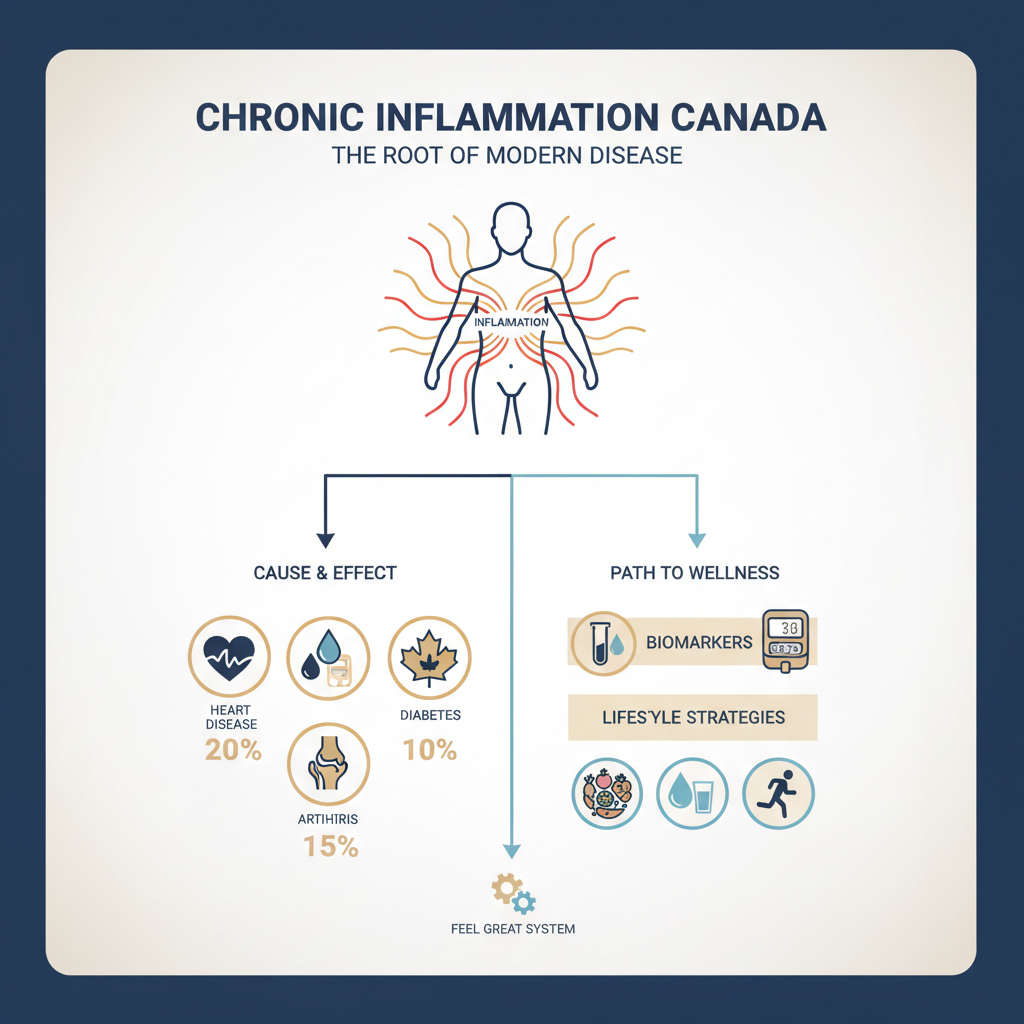
Chronic inflammation in Canada underpins many modern diseases — heart disease, type‑2 diabetes, fatty liver and more. National data show a high burden of chronic conditions; evidence from systematic reviews and trials indicates lifestyle changes (diet per Canada’s Food Guide, physical activity, weight loss and sleep) reduce inflammatory markers. Complementary lifestyle supports like Feel Great may be useful but are not replacements for medical care. ([health-infobase.canada.ca](https://health-infobase.canada.ca/ccdi/?utm_source=openai))
🇨🇦 Thousands of Canadians are using Feel Great to support their metabolic health naturally. Learn more & order here →
Chronic Inflammation in Canada: The Root of Modern Disease
Introduction — A shocking Canadian statistic
Nearly half of Canadians live with at least one chronic disease: national surveillance reports a chronic‑disease prevalence around 45% (Canadian Community Health Survey and CCDI summaries). That population burden tracks closely with the rising prevalence of metabolic risk factors — obesity, insulin resistance and sedentary lifestyles — which fuel chronic, low‑grade inflammation. ([www150.statcan.gc.ca](https://www150.statcan.gc.ca/n1/pub/82-570-x/2024001/section2-eng.htm?kref=PDHQ79dnafoQ&kuid=d2764e67-718a-4ae1-9ab0-df56eaf7fd8b-1762732800&utm_source=openai))
What is chronic inflammation?
Inflammation is the immune system’s response to injury, infection or stress. Acute inflammation is adaptive and resolves; chronic inflammation is persistent, low‑grade and systemic. Researchers often use the term “inflammaging” to describe age‑related chronic inflammation that accelerates multimorbidity. Persistent elevation of inflammatory mediators (hs‑CRP, IL‑6, IL‑1β, TNF‑α) contributes to tissue damage, metabolic dysfunction and progressive disease. ([pubmed.ncbi.nlm.nih.gov](https://pubmed.ncbi.nlm.nih.gov/35159168/?utm_source=openai))
How inflammation is measured clinically
Clinicians measure systemic inflammation with biomarkers such as hs‑CRP and cytokine panels. High hs‑CRP correlates with greater risk of future type‑2 diabetes and cardiovascular events in pooled analyses. These tests can be useful adjuncts for risk stratification but should be interpreted with clinical context. ([pubmed.ncbi.nlm.nih.gov](https://pubmed.ncbi.nlm.nih.gov/33686799/?utm_source=openai))
Canadian burden and provincial differences
Data from Statistics Canada and CIHI demonstrate rising multimorbidity and variable provincial patterns in chronic disease. For example, surveillance reports show provincial variation in chronic disease prevalence, influenced by age structure, rural/urban distribution and social determinants. Access to primary care and provincial prevention programmes differs — Ontario, BC, Alberta and Quebec maintain distinct delivery models that influence early detection and management. ([www150.statcan.gc.ca](https://www150.statcan.gc.ca/n1/pub/82-570-x/82-570-x2024001-eng.pdf?utm_source=openai))
Why inflammation is the ‘root’ — evidence across diseases
Type 2 diabetes (T2D)
Meta‑analyses and cohort studies link pro‑inflammatory diets and elevated biomarkers to incident T2D. Diabetes Canada acknowledges inflammation and insulin resistance as core pathways; Canadian clinical practice guidelines use fasting plasma glucose (FPG) ≥7.0 mmol/L or A1C ≥6.5% for diagnosis and recommend glycaemic targets for most people of fasting/preprandial BG 4.0–7.0 mmol/L and 2‑hr postprandial 5.0–10.0 mmol/L. Managing post‑meal spikes is therefore an important anti‑inflammatory strategy. ([pubmed.ncbi.nlm.nih.gov](https://pubmed.ncbi.nlm.nih.gov/35685508/?utm_source=openai))
Cardiovascular disease (CVD)
Atherosclerosis is fundamentally inflammatory. Randomized controlled trials targeting inflammation (e.g., canakinumab) and meta‑analyses of colchicine trials show reduced major adverse cardiovascular events (MACE) in selected populations, demonstrating that reducing inflammation can change outcomes. These therapies have indications and risks and are complementary to lipid‑lowering and blood‑pressure management. ([nejm.org](https://www.nejm.org/doi/full/10.1056/NEJMoa2021372?utm_source=openai))
Liver disease, brain health and cancer
Nonalcoholic fatty liver disease progression is driven by metabolic stress and inflammatory signalling. Chronic inflammation also contributes to neurodegenerative disease and plays roles in tumour microenvironments. Reviews of inflammaging highlight the interconnected nature of metabolic, immune and age‑related pathways. ([pubmed.ncbi.nlm.nih.gov](https://pubmed.ncbi.nlm.nih.gov/35219904/?utm_source=openai))
What the evidence says about reducing inflammation
Ranked by evidence strength, systematic reviews and meta‑analyses show that dietary patterns (Mediterranean / plant‑forward), sustained weight loss, and regular exercise reduce CRP and selected cytokines. Nutritional interventions that lower the Dietary Inflammatory Index score associate with lower T2D risk. Interventions that blunt post‑prandial glucose (e.g., fibre, mixed meals, timing strategies) reduce glycaemia‑triggered inflammatory responses. ([pubmed.ncbi.nlm.nih.gov](https://pubmed.ncbi.nlm.nih.gov/35685508/?utm_source=openai))
Practical, evidence‑based anti‑inflammatory plan for Canadians
Use this stepwise approach aligned to Canadian guidance:
- Follow Canada’s Food Guide plate — half vegetables & fruit, whole grain foods, and protein foods with emphasis on plant sources and oily fish. ([canada.ca](https://www.canada.ca/en/health-canada/services/food-guide.html?utm_source=openai))
- Aim for 150 minutes of moderate aerobic activity weekly plus two strength sessions; physical activity lowers CRP and IL‑6. ([pubmed.ncbi.nlm.nih.gov](https://pubmed.ncbi.nlm.nih.gov/35219904/?utm_source=openai))
- Prioritise sleep (7–9 hours) and stress management; both modulate inflammatory signalling. ([pubmed.ncbi.nlm.nih.gov](https://pubmed.ncbi.nlm.nih.gov/35588939/?utm_source=openai))
- Target achievable weight loss (5–10%) to lower systemic inflammation and improve insulin sensitivity. ([pubmed.ncbi.nlm.nih.gov](https://pubmed.ncbi.nlm.nih.gov/35685508/?utm_source=openai))
- Monitor and manage blood glucose to Canadian targets (fasting 4.0–7.0 mmol/L; postprandial 5.0–10.0 mmol/L for most individuals with diabetes). ([diabetes.ca](https://www.diabetes.ca/DiabetesCanadaWebsite/media/FilesUploaded/Quick_Reference_Guide_PRINT_10_24-2.pdf?utm_source=openai))
- Use primary care for screening (lipids, BP, glucose, hs‑CRP where indicated) and access provincially delivered prevention services. ([cihi.ca](https://www.cihi.ca/en/quick-stats?utm_source=openai))
Pharmacologic anti‑inflammatory approaches: role and limits
Targeted anti‑inflammatory drugs demonstrated efficacy in reducing cardiovascular events in RCTs, but their cost, side‑effect profiles and niche indications limit broad use. Lifestyle strategies remain the first‑line public health approach. Ongoing research is refining who benefits most from targeted anti‑inflammatory therapy. ([pubmed.ncbi.nlm.nih.gov](https://pubmed.ncbi.nlm.nih.gov/42291081/?utm_source=openai))
How Feel Great helps — responsible, evidence‑aligned support
Feel Great is positioned as a lifestyle support system (not a drug). Its three components are: Balance — a soluble fibre matrix to blunt post‑meal glucose rises; Unimate — a yerba mate extract with chlorogenic acids for energy and cognition; and the 4‑4‑12 intermittent fasting protocol to consolidate eating windows. Clinical rationale: reducing postprandial glycaemic spikes and improving consistency of energy and appetite regulation can indirectly lower metabolic inflammation. Users should view Feel Great as supportive—may help manage post‑meal glucose and energy—and consult their healthcare provider, especially if they have diabetes or take glucose‑lowering medications. Feel Great ships across Canada (BC to Newfoundland) and follows product safety registration best practices (check Health Canada NPNs where applicable).
People also ask
- Can chronic inflammation be cured? — Many causes are modifiable and inflammation can be reduced, but some inflammatory diseases require medical treatment. ([pubmed.ncbi.nlm.nih.gov](https://pubmed.ncbi.nlm.nih.gov/35219904/?utm_source=openai))
- Does sugary food cause inflammation? — Diets high in ultra‑processed foods and added sugars increase inflammatory biomarkers; whole‑food patterns reduce them. ([food-guide.canada.ca](https://food-guide.canada.ca/sites/default/files/artifact-pdf/Evidence%20review%20supporting%20Canada%27s%20food%20guide%20-%202025%20summary.pdf?utm_source=openai))
- Is hs‑CRP used in Canada? — Yes, sometimes for risk stratification in cardiovascular risk assessment; discuss with your clinician. ([pubmed.ncbi.nlm.nih.gov](https://pubmed.ncbi.nlm.nih.gov/33686799/?utm_source=openai))
- What fasting targets are safe for Canadians? — Time‑restricted eating can be safe for many adults; people on medications (e.g., insulin) should consult their provider. ([pubmed.ncbi.nlm.nih.gov](https://pubmed.ncbi.nlm.nih.gov/35219904/?utm_source=openai))
- Which provinces have better access to prevention programmes? — Access varies; large provinces (Ontario, Quebec, BC, Alberta) have extensive programmes, but rural and remote communities face access gaps. ([cihi.ca](https://www.cihi.ca/en/quick-stats?utm_source=openai))
FAQ
- 1. What blood glucose numbers matter for inflammation?
- For people with or at risk of diabetes, Canadian guideline targets for most adults are fasting/preprandial 4.0–7.0 mmol/L and 2‑hour postprandial 5.0–10.0 mmol/L; reducing excursions within these ranges helps lower glycaemic‑driven inflammation. ([diabetes.ca](https://www.diabetes.ca/DiabetesCanadaWebsite/media/FilesUploaded/Quick_Reference_Guide_PRINT_10_24-2.pdf?utm_source=openai))
- 2. Should I take anti‑inflammatory supplements?
- Some supplements (omega‑3s, vitamin D if deficient, certain polyphenols) show modest benefits in trials, but they supplement—not replace—diet and lifestyle changes. Discuss with your healthcare provider and check Health Canada NPNs. ([pubmed.ncbi.nlm.nih.gov](https://pubmed.ncbi.nlm.nih.gov/35219904/?utm_source=openai))
- 3. Can intermittent fasting lower inflammation?
- Evidence suggests time‑restricted eating and some intermittent fasting protocols improve metabolic markers and can reduce inflammatory signals, especially when combined with a healthy diet and weight loss. Individual responses vary. ([pubmed.ncbi.nlm.nih.gov](https://pubmed.ncbi.nlm.nih.gov/35219904/?utm_source=openai))
- 4. Is chronic inflammation tested in routine labs?
- Routine labs sometimes include hs‑CRP if clinically indicated; broader cytokine panels are mainly research tools. Use results alongside clinical assessment. ([pubmed.ncbi.nlm.nih.gov](https://pubmed.ncbi.nlm.nih.gov/33686799/?utm_source=openai))
- 5. When should I see a specialist?
- If you have unexplained systemic symptoms, rising A1C or fasting glucose ≥7.0 mmol/L, progressive organ dysfunction, or autoimmune diagnoses, your family doctor can refer you to appropriate specialists (endocrinology, cardiology, hepatology, rheumatology). ([diabetes.ca](https://www.diabetes.ca/health-care-providers/clinical-practice-guidelines/chapter-3?utm_source=openai))
References & Scientific Sources
- Statistics Canada / PHAC: Health outcomes and chronic disease prevalence (Canadian Community Health Survey summary). ([www150.statcan.gc.ca](https://www150.statcan.gc.ca/n1/pub/82-570-x/2024001/section2-eng.htm?kref=PDHQ79dnafoQ&kuid=d2764e67-718a-4ae1-9ab0-df56eaf7fd8b-1762732800&utm_source=openai))
- Public Health Agency of Canada — Canadian Chronic Disease Indicators (CCDI). ([health-infobase.canada.ca](https://health-infobase.canada.ca/ccdi/?utm_source=openai))
- CIHI Quick Stats (hospitalization and chronic disease data). ([cihi.ca](https://www.cihi.ca/en/quick-stats?utm_source=openai))
- Health Canada — Canada’s Food Guide and Dietary Guidance. ([canada.ca](https://www.canada.ca/en/health-canada/services/food-guide.html?utm_source=openai))
- Diabetes Canada — Clinical Practice Guidelines (diagnosis, glycaemic targets). ([diabetes.ca](https://www.diabetes.ca/health-care-providers/clinical-practice-guidelines/chapter-3?utm_source=openai))
- Heart & Stroke Foundation — Anti‑inflammatory diet resources (Canada). ([heartandstroke.ca](https://www.heartandstroke.ca/articles/the-anti-inflammatory-diet?utm_source=openai))
- Dietary Inflammatory Index and Type 2 Diabetes — Meta‑analysis (PubMed). ([pubmed.ncbi.nlm.nih.gov](https://pubmed.ncbi.nlm.nih.gov/35685508/?utm_source=openai))
- Systematic review: IL‑1β in Type 2 Diabetes (PubMed). ([pubmed.ncbi.nlm.nih.gov](https://pubmed.ncbi.nlm.nih.gov/35966098/?utm_source=openai))
- High‑sensitivity CRP and risk of T2D — Cohort + meta‑analysis (PubMed). ([pubmed.ncbi.nlm.nih.gov](https://pubmed.ncbi.nlm.nih.gov/33686799/?utm_source=openai))
- Anti‑inflammatory agents and cardiovascular outcomes — Recent systematic review & meta‑analysis. ([pubmed.ncbi.nlm.nih.gov](https://pubmed.ncbi.nlm.nih.gov/42291081/?utm_source=openai))
- Colchicine trials & NEJM LoDoCo2 trial. ([nejm.org](https://www.nejm.org/doi/full/10.1056/NEJMoa2021372?utm_source=openai))
- Reviews on inflammaging and nutrition (PubMed reviews 2021–2022). ([pubmed.ncbi.nlm.nih.gov](https://pubmed.ncbi.nlm.nih.gov/35159168/?utm_source=openai))
Medical disclaimer
This article is for education and does not replace medical advice. Consult your family physician or provincial health services for diagnosis and treatment. The Feel Great system is a lifestyle support system and not a medication; discuss with your healthcare provider before starting if you have diabetes, are pregnant, breastfeeding, or taking prescription medications.

Related ATHAR paths
🇨🇦 Ready to Start Your Health Transformation?
Join thousands of Canadians who have improved their metabolic health with the Feel Great system. Backed by 50+ clinical studies and listed in the Physicians' Desk Reference (PDR).
✅ Ships to all provinces: BC, Alberta, Saskatchewan, Manitoba, Ontario, Quebec, New Brunswick, Nova Scotia, PEI, Newfoundland & Labrador | 90-Day Money-Back Guarantee