Educational Guide to Circadian Rhythm Science Terminology
Author: Feras Alayed
Published:
Updated:
Category: sleep-energy
Reading Time: 29 minutes
Key Takeaways
- The circadian rhythm is an internal biological system that regulates the sleep-wake cycle and various physiological processes over an approximate 24-hour period.
- Understanding circadian rhythm science terminology empowers you to organize your observations and communicate more precisely with licensed healthcare providers.
- Environmental cues, known scientifically as Zeitgebers (such as light exposure and meal timing), play a crucial role in synchronizing your internal biological clock with the external world.
- General health information found online or in print is intended strictly for educational purposes and is not a substitute for professional medical diagnosis, evaluation, or personalized advice.
- Systematically organizing your daily observations regarding sleep patterns, energy fluctuations, and lifestyle habits is a foundational step toward a productive, evidence-based dialogue with your medical doctor.
TL;DR
This comprehensive educational guide provides a detailed explanation of circadian rhythm science terminology and the complex mechanisms of the sleep-wake cycle. The primary objective is to equip you with the foundational vocabulary necessary to understand how the human body interacts with various environmental cues throughout a 24-hour period. By learning these scientific terms, you can critically evaluate general health information and separate educational facts from marketing claims. Furthermore, organizing your daily observations using this precise terminology will enable you to have clearer, more effective, and highly structured discussions with medical professionals regarding your lifestyle and biological patterns.
Introduction: Understanding Your Body's Language
You might sometimes find yourself lying in bed for an extended period, attempting to initiate sleep, yet your mind remains entirely alert and active. Alternatively, you may experience awakenings in the middle of the night and find it challenging to return to a state of rest, leading to observable changes in your energy levels the following day. These daily experiences are widely documented among the general population and often prompt individuals to search for quick answers or to cycle through various new routines. However, attempting to alter habits without a foundational understanding of the underlying biological mechanisms can make it difficult to maintain consistency over time.
The challenge in navigating these experiences does not necessarily stem from a lack of discipline, but rather from an informational gap regarding how the human body regulates its natural, internal cycles. This is precisely where the importance of learning circadian rhythm science terminology becomes apparent. When you familiarize yourself with these specific terms, you are not receiving a medical diagnosis, nor are you acquiring a universal solution to health challenges. Instead, you are acquiring a new, precise vocabulary. This specialized language provides a framework that allows you to monitor your daily habits, identify recurring patterns in your energy and rest phases, and describe your physiological experiences with much greater accuracy when consulting your healthcare provider.
Consider how difficult it is to explain a mechanical issue in a vehicle without knowing the names of the engine parts. You might describe a sound or a feeling, but the mechanic must translate that into technical terms to investigate further. The human body operates on a similar principle of communication. By learning the names of the biological "parts" and "processes" involved in the sleep-wake cycle, you bridge the communication gap between your personal experience and the clinical expertise of your doctor. You transition from stating general feelings of tiredness to describing specific observations about your sleep drive, your light exposure, and your daily biological timing.
This guide is meticulously designed to serve as a purely educational reference. Its sole aim is to clarify complex scientific concepts using simple, neutral, and objective language. It is crucial to remember that any lifestyle modification or behavioral adjustment should always be viewed as one component of a comprehensive, professionally guided approach to well-being. This article makes no promises of specific health outcomes, medical results, or diagnostic conclusions. It simply places cognitive and organizational tools in your hands, fostering a deeper awareness of your bodily processes and preparing you for informed discussions with licensed medical professionals.
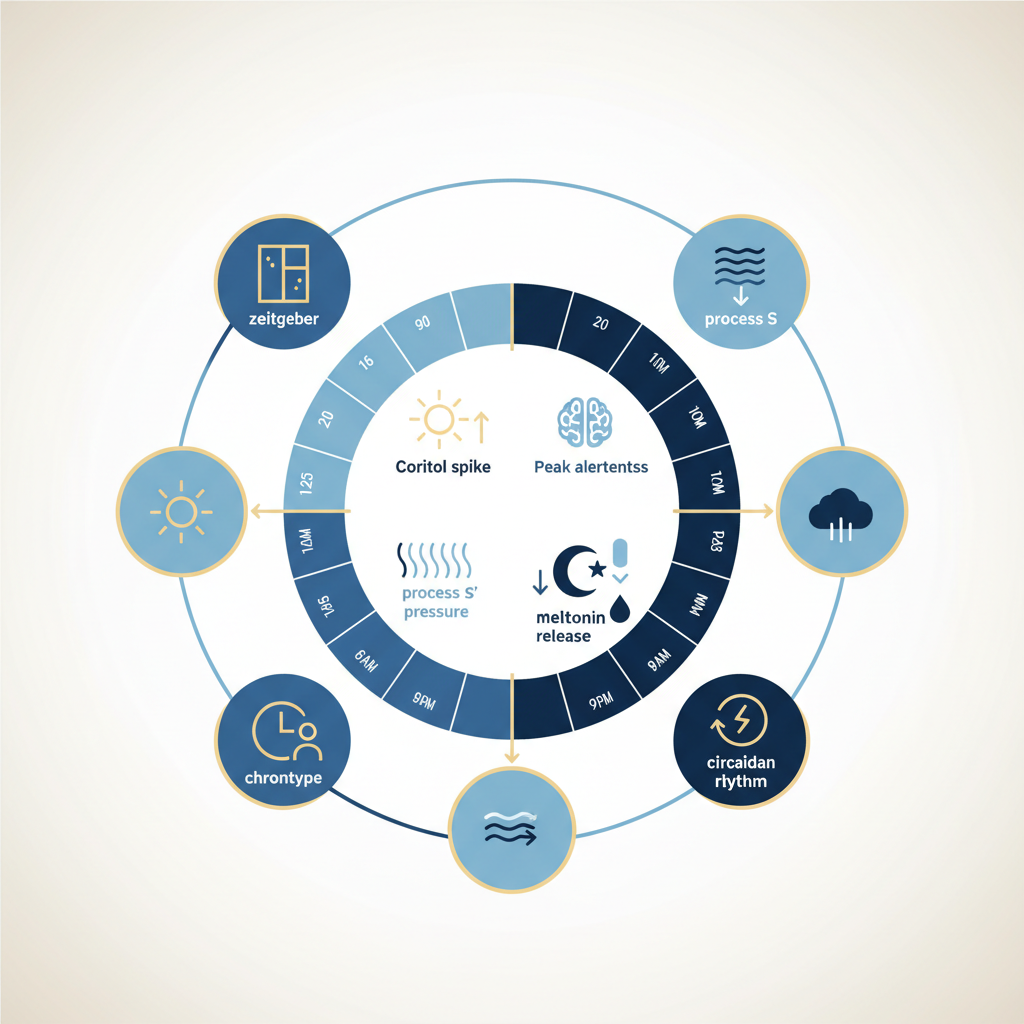
What is the Circadian Rhythm?
The term "circadian" originates from the Latin words "circa," meaning "around," and "diem," meaning "day." Therefore, the circadian rhythm refers to a natural, internal time-keeping system that regulates the sleep-wake cycle and a multitude of other physiological functions over an approximate 24-hour period. These rhythmic cycles exist in virtually all living organisms, including plants, animals, and microbes, allowing them to anticipate and adapt to the predictable environmental changes associated with the Earth's rotation, most notably the transitions between light and darkness.
At the anatomical core of this complex system in humans is a distinct cluster of thousands of nerve cells located in the hypothalamus of the brain, known as the Suprachiasmatic Nucleus (SCN). The SCN functions as the body's master biological clock. It is strategically positioned just above the optic chiasm, the area where the optic nerves from the eyes cross. This placement is not coincidental; the SCN receives direct sensory signals from specialized light-sensitive cells in the retina regarding the presence and intensity of light in the surrounding environment.
Based on this continuous stream of photic (light-related) information, the SCN transmits signals to various other regions of the brain and throughout the body. These signals orchestrate the timing of numerous biological activities, including the secretion of specific hormones, the regulation of core body temperature, the modulation of cellular metabolism, and the fluctuation of systemic energy levels. For instance, as daylight diminishes, the SCN processes this lack of light and signals the pineal gland to initiate the production of melatonin, a hormone associated with the onset of the sleep phase.
It is highly important to understand that the circadian rhythm operates not merely as a simple on-off switch for sleep and wakefulness, but rather as a highly complex and synchronized symphony of biological processes working in tandem. The master clock in the brain communicates with peripheral clocks located in nearly every tissue and organ system, including the liver, pancreas, and skeletal muscles. When this overarching rhythm is closely synchronized with your external environment, you may observe a stable pattern in your daily energy levels and sleep onset.
Conversely, when there is a mismatch or disruption in this synchronization—a state often referred to as circadian misalignment—you might observe significant variations in your bodily functions. This misalignment frequently occurs due to modern lifestyle factors such as traveling rapidly across multiple time zones (jet lag), engaging in shift work that requires nighttime wakefulness, or experiencing exposure to artificial light at unusual times of the biological night. Such disruptions can alter the timing of sleep signals and metabolic processes. For more detailed information on how bodily stability interacts with sleep quality, you can read our educational article on blood sugar stability and evening routines.
Why Understanding Circadian Rhythm Science Terminology Matters
In an era characterized by an unprecedented flow of health information from digital media, news outlets, and social platforms, it is very easy to feel overwhelmed or lost amidst complex scientific jargon. Taking the time to understand circadian rhythm science terminology offers several highly practical advantages for navigating your daily life and managing your personal health records.
1. Structuring Communication with Medical Professionals
When you schedule an appointment with a doctor or a licensed healthcare professional to discuss observations regarding your sleep patterns, time is often limited. Using precise terminology to describe your daily experiences helps structure the conversation efficiently. Instead of relying on vague descriptors such as 'I do not sleep well' or 'I feel tired all the time,' you can articulate specific observations. For example, you might explain how you notice a delay in your 'sleep onset,' how your body responds to different 'environmental cues' in the evening, or how your 'sleep drive' fluctuates during the afternoon. This level of detail provides your physician with a clearer, more objective picture of your daily habits, facilitating a more targeted clinical evaluation.
2. Critically Evaluating Health Information
The internet hosts a vast array of advice, articles, and videos concerning sleep and energy management. Knowing the foundational terminology enables you to act as an informed reader, distinguishing between educational content grounded in established scientific principles and marketing materials that utilize exaggerated claims. When you understand the biological function of the SCN or the nature of homeostatic sleep pressure, you are better equipped to evaluate whether an article is based on a genuine understanding of the sleep-wake cycle. You will learn to identify red flags, such as content that ignores the complexity of peripheral clocks or oversimplifies the role of hormones.
3. Organizing Personal Observations
Scientific knowledge provides a structured framework for organizing your daily observations. Without this framework, you might view your sleep patterns as random or unpredictable events. However, when you understand the specific roles of light, darkness, and meal timing, you can begin to notice correlations in your own life. You might start documenting how your evening lighting choices correlate with your perceived sleepiness, or how the timing of your last meal aligns with your core body temperature changes at night. This systematic self-awareness is a crucial preliminary step toward establishing observable patterns. You can explore more about the process of organizing these habits in our comprehensive guide on building a consistent bedtime routine.
Comprehensive Glossary of Sleep-Wake Cycle Terminology
To navigate the science of sleep with greater confidence, it is highly beneficial to familiarize yourself with the specific terms utilized by researchers, sleep specialists, and medical professionals. Below is an expanded and detailed glossary of the most important concepts in circadian rhythm science:
Suprachiasmatic Nucleus (SCN)
A distinct, bilateral group of cells situated in the anterior part of the hypothalamus in the brain. The SCN is universally recognized in chronobiology as the body's 'master clock.' Its primary function is to coordinate all the peripheral biological clocks distributed throughout various organs and tissues, ensuring they operate in a synchronized manner. The SCN receives photic (light) information directly from the retina via the retinohypothalamic tract, allowing it to align internal biological time with the external solar day.
Melatonin
Often referred to in scientific literature as the 'hormone of darkness' rather than simply a 'sleep hormone.' Melatonin is synthesized and secreted by the pineal gland, a small endocrine gland in the brain, strictly in response to darkness. Its primary biological role is to signal to the entire body that the external environment has transitioned to nighttime, thereby facilitating the physiological preparations for sleep. It is critical to note that exposure to bright light, particularly short-wavelength blue light emitted by electronic screens, can rapidly suppress the secretion of melatonin.
Dim Light Melatonin Onset (DLMO)
A specific clinical and research marker used to determine the exact timing of an individual's circadian clock. DLMO refers to the specific point in the evening when melatonin levels in the blood or saliva begin to rise significantly above daytime baseline levels. Observing DLMO helps specialists understand an individual's natural biological night and is often used to assess circadian phase timing.
Cortisol
While popularly recognized primarily as the body's main stress hormone, cortisol plays an absolutely vital role in the regulation of the daily wake cycle. Under standard physiological conditions, cortisol levels exhibit a pronounced rise in the early morning hours—a phenomenon known as the Cortisol Awakening Response (CAR). This surge plays a role in transitioning the body from sleep to wakefulness and mobilizing energy reserves for the day. Cortisol levels then follow a diurnal curve, gradually declining throughout the afternoon and reaching their lowest observable levels during the late evening and nighttime hours.
Zeitgebers (Environmental Cues)
A term derived from German, literally translating to 'time givers.' In chronobiology, Zeitgebers refer to any external environmental cues that entrain, or synchronize, the internal biological clock with the external 24-hour cycle. Solar light is the most potent and primary Zeitgeber for humans. However, non-photic Zeitgebers also play significant roles; these include the timing of food intake, the timing of physical exertion, and even the scheduling of social interactions. Regulating the timing of meals can have an observable interaction with peripheral clocks, a concept we discuss extensively in our intermittent fasting beginner's guide.
Sleep Drive (Homeostatic Sleep Pressure)
This concept describes the biological accumulation of the need for sleep, which increases continuously the longer an individual remains awake. It operates independently of the circadian rhythm. Researchers observe that the gradual buildup of a specific neuromodulator called adenosine in the brain correlates with this rising sleep pressure. When you sleep, the brain clears the accumulated adenosine, resetting the sleep drive for the next day. The continuous interaction between the homeostatic sleep drive and the circadian rhythm determines the timing of sleep onset and wakefulness.
Adenosine
A chemical compound that functions as an inhibitory neurotransmitter in the brain. It is a byproduct of cellular energy metabolism. As your cells consume energy throughout the waking hours, adenosine levels rise, binding to specific receptors in the brain and promoting feelings of sleepiness. Caffeine is known to interact with this process by temporarily blocking adenosine receptors, thereby masking the sensation of sleep pressure without actually clearing the adenosine from the brain.
Chronotype
This term refers to an individual's natural, biologically driven inclination to sleep and wake at specific times of the 24-hour day. Chronotypes are heavily influenced by genetics. Individuals are typically categorized into descriptive groups such as 'morning types' (often called early birds, who naturally prefer waking and sleeping at earlier hours) and 'evening types' (often called night owls, who naturally prefer staying awake late and waking later in the day). Understanding your specific chronotype allows you to organize your daily schedule in a manner that aligns with your genetic predisposition.
Core Body Temperature Rhythm
The human body does not maintain a perfectly static temperature throughout the day. Instead, core body temperature follows a distinct circadian curve. It typically reaches its peak in the late afternoon or early evening and begins to drop slightly as the body prepares for sleep. The lowest point of core body temperature usually occurs in the very early hours of the morning, just before waking. Observing the environment of your sleeping space in relation to this temperature drop is a common practice in sleep hygiene.
Sleep Architecture
This term describes the basic structural organization of normal sleep. Sleep is not a uniform state; it is divided into multiple cycles, each lasting approximately 90 to 120 minutes. Each cycle consists of different stages, broadly categorized into Non-Rapid Eye Movement (NREM) sleep and Rapid Eye Movement (REM) sleep. NREM sleep is further divided into lighter and deeper stages. Observing the progression through these stages is essential for sleep specialists when conducting clinical sleep studies (polysomnography).
Phase Advance and Phase Delay
These terms describe shifts in the timing of the circadian rhythm. A 'phase advance' occurs when sleep and wake times move to earlier in the day (e.g., shifting sleep from 11:00 PM to 9:00 PM). A 'phase delay' occurs when these times shift to later in the day (e.g., shifting sleep from 11:00 PM to 1:00 AM). These concepts are frequently discussed when analyzing the effects of travel across time zones or the impact of shift work schedules.
Social Jetlag
A modern chronobiological concept that describes the discrepancy between an individual's internal biological clock (their chronotype) and the external social clock (the demands of work, school, or social obligations). It is most commonly observed when individuals maintain early sleep and wake times during the workweek but shift to significantly later sleep and wake times during the weekend. This weekly shifting mimics the biological confusion of traveling across time zones, hence the term 'social jetlag.'
How to Read and Evaluate Sleep Health Information
With the vast abundance of information readily available online, it is absolutely essential to develop strong critical thinking skills when consuming any health-related content, particularly concerning the topics of sleep and daily energy. Cultivating a discerning eye helps you filter out noise and focus on scientifically grounded education. Here are several practical, step-by-step methods for evaluating the information you encounter:
1. Examine the Source and Credentials
Always investigate who is publishing the information. Is the article hosted by a recognized medical institution, a university research department, or a reputable health education organization? Does the author possess relevant credentials, or do they rely on clear, traceable scientific references? It is advisable to approach articles with caution if they do not cite their sources, if they rely entirely on undocumented personal anecdotes, or if they are published on platforms primarily focused on selling unrelated items.
2. Analyze the Language for Absolutes
Medical and biological sciences are fields characterized by complexity and individual variability. Therefore, credible scientific writing rarely employs definitive, absolute language such as 'ultimate cure,' '100% guaranteed,' or 'instant fix.' Reliable educational articles utilize balanced, objective language such as 'researchers observe,' 'studies suggest,' 'it is associated with,' or 'evidence indicates.' If an article or video promises a magical, overnight solution to complex sleep patterns, that language serves as a significant indicator that the content may lack scientific rigor.
3. Distinguish Between Correlation and Causation
In scientific observation, just because two events occur simultaneously does not mean that one event directly causes the other. For example, an observational study might note that individuals who report stable sleep patterns also happen to consume a specific type of grain for breakfast. This correlation does not necessarily mean the grain is the direct cause of the stable sleep; there could be numerous other shared lifestyle factors, such as overall daily activity levels or consistent wake times. Reading health information with a firm understanding of the difference between correlation and causation protects you from jumping to inaccurate conclusions.
4. Consult Licensed Professionals Before Application
General educational information is highly useful for expanding your vocabulary and understanding broad biological concepts, but it fundamentally cannot take your unique, individual medical history into account. Before deciding to make any drastic changes to your daily sleep routines, dietary schedules, or light exposure habits, it is always the wisest course of action to discuss this information directly with your doctor. This is especially critical if you have underlying health conditions or are taking prescription medications. To understand more about how various biological systems are intricately interconnected, you can read our detailed educational piece on insulin resistance symptoms.
Common Concepts vs. What Needs Verification
There are numerous widely circulated ideas regarding sleep that may contain a foundational grain of truth but require much more precise context and clinical verification. The following table illustrates several of these common concepts and demonstrates how to approach them from a strictly educational and observational perspective, rather than accepting them as universal rules:
| Common Concept | What Needs Verification and Monitoring (Not Diagnosis) |
|---|---|
| Everyone must sleep exactly 8 continuous hours every single night. | Biological sleep needs vary significantly from person to person based on genetics and age. The most important practice is to monitor your own sleep duration alongside your daytime alertness levels, and discuss any persistent observations of fatigue with a medical doctor. |
| Melatonin is a natural sleep aid that can be taken at any time of day. | Melatonin functions as a chronobiotic; it regulates the timing of the biological clock and does not induce sleep directly like a sedative. The specific timing and dosage of any supplement must be discussed with a licensed healthcare professional to avoid unintentionally shifting or disrupting the circadian phase. |
| Waking up in the middle of the night automatically means you have clinical insomnia. | Transient awakenings between sleep cycles can be a normal part of human sleep architecture. However, if these awakenings cause distress, last for extended periods, or affect your daytime function, this is a critical observation to document and share with your doctor for a proper evaluation. |
| You can easily make up for lost weekday sleep by sleeping in late on weekends. | This practice frequently leads to the phenomenon known as 'Social Jetlag,' which can create a mismatch between the biological clock and the social schedule. Monitoring the consistency of your sleep and wake times across all seven days of the week provides better data for understanding your rhythms. |
| Snoring is just a harmless nuisance that does not affect the sleep cycle. | While common, loud or persistent snoring is an important physical observation. It should be documented and discussed with a medical professional, as they may wish to rule out structural respiratory phenomena or order a polysomnography to observe your breathing patterns during sleep. |
| You can train your body to function perfectly on only 4 hours of sleep. | The biological need for sleep is largely determined by internal physiological factors, not willpower. Attempting to restrict sleep requires careful observation of cognitive and physical responses, and any severe restriction should be evaluated by a healthcare provider. |
Common Informational Mistakes and How to Correct Them
When individuals attempt to understand and apply concepts related to circadian rhythm science, they frequently fall into common informational traps resulting from the misinterpretation of generalized advice. Recognizing and understanding these mistakes is an integral part of your ongoing educational journey:
Mistake 1: Ignoring Individual Differences in Chronotypes
A very common mistake is attempting to force the body into a specific daily routine that fundamentally conflicts with its natural, genetically influenced chronotype. For example, an individual might read a popular article suggesting that 'highly successful people wake up at 5:00 AM' and subsequently attempt to adopt this schedule, despite their body naturally leaning toward an evening chronotype. The educational correction here is understanding that chronotypes vary widely across the population. The objective is not to copy the schedule of others, but to observe your own natural inclinations and find a routine that accommodates your biological timing alongside your necessary life commitments.
Mistake 2: Focusing Exclusively on the Hour Before Bed
Many individuals operate under the assumption that sleep preparation is solely about the activities performed in the final sixty minutes before getting into bed. In biological reality, the circadian rhythm is continuously influenced by actions taken from the very moment of waking. Exposure to natural morning sunlight, the specific timing of meals throughout the day, and the distribution of physical activity are all critical Zeitgebers that interact with the master clock. The correction is to view the entire 24-hour cycle as an interconnected continuum, where daytime habits directly relate to nighttime biological processes.
Mistake 3: Confusing Physical Fatigue with Circadian Rhythm Disorders
It is common for a person to experience periods of severe exhaustion and immediately assume that their internal biological clock is broken or misaligned. However, physical fatigue is a non-specific symptom that can be associated with a vast array of factors, including nutritional variations, prolonged psychological stress, physical exertion, or underlying medical conditions. The correction is to avoid self-diagnosis. Instead, use your knowledge of terminology to record accurate, detailed observations about exactly when you feel tired, how long you sleep, and what your daily habits entail, and then present this comprehensive picture to your doctor for a proper clinical evaluation. You can explore more about the complex relationship between daily habits and energy on our dedicated Sleep & Energy hub page.
Mistake 4: Misinterpreting the Role of Light and Darkness
Another frequent misunderstanding involves the intensity and spectrum of light. Some individuals believe that merely dimming the overhead lights is sufficient for signaling the biological night, while they continue to use brightly lit electronic screens close to their face. The SCN is particularly sensitive to short-wavelength (blue) light. The correction involves observing the different types of light sources in your environment and understanding that the biological clock relies on distinct contrasts between bright daytime illumination and near-complete nighttime darkness to regulate hormone secretion accurately.
Mistake 5: Over-Relying on Single Metrics from Wearable Devices
With the rise of consumer sleep trackers, a common mistake is becoming overly fixated on a single 'sleep score' generated by an algorithm, rather than observing how one actually feels during the day. While these devices provide interesting data points regarding movement and heart rate, they are not clinical diagnostic tools. The correction is to use wearable data as just one of many observational tools, combining it with a written sleep diary and personal notes on daytime alertness, to provide a more holistic view of your patterns.
Practical Questions for Your Licensed Specialist
The primary goal of educating yourself on circadian rhythm science terminology is not to attempt to diagnose yourself or to design your own medical protocols. Rather, the goal is to prepare yourself for a highly constructive, structured, and fruitful dialogue with your doctor, sleep specialist, or licensed healthcare provider. Before visiting a medical professional, it is immensely helpful to organize your observations systematically. Here are several detailed questions and topics you can bring up during your appointment:
- "I have been keeping a sleep diary and noticed that I experience a significant drop in alertness at specific times of the day (e.g., mid-afternoon), coupled with a delay in sleep onset at night. Can we discuss how this pattern aligns with the typical function of the circadian rhythm?"
- "My current employment requires me to work rotating shifts, and I am observing fluctuations in my daily energy levels. What specific medical or behavioral strategies do you recommend to help my biological systems adapt to these changing schedules?"
- "I have been reading educational materials about the role of environmental cues, specifically morning light exposure (Zeitgebers). Based on my personal medical history and current health status, are there specific recommendations you have regarding how I should manage my daily light exposure?"
- "I am documenting frequent awakenings in the middle of the night that disrupt my sleep architecture. Are there specific clinical tests, such as a polysomnography (sleep study), that you would recommend to rule out any underlying respiratory or medical causes?"
- "Could we review my current list of prescriptions and supplements? I would like to understand if any of these medications are known to interact with or alter the natural secretion patterns of cortisol or melatonin in my body."
- "I have been tracking my sleep using a consumer wearable device, and it indicates a low amount of deep sleep. How should I interpret this data in the context of my overall health, and what clinical observations should we prioritize instead?"
When preparing for your appointment, remember to bring a detailed, written log of your observations. This log should ideally cover at least fourteen consecutive days and include your specific sleep and wake times, the schedules of your daily meals, your estimated light exposure, and notes on your perceived daytime energy levels. This real-world, organized data will be highly valuable to the specialist in understanding your unique biological patterns.
Connecting Knowledge to Daily Life
To truly grasp the concepts of the circadian rhythm, it is highly beneficial to project this scientific terminology onto the canvas of our daily lives. Our modern, industrialized lifestyle is filled with routines and habits that directly intersect with, and often challenge, the natural sleep-wake cycle.
Consider a typical weekday. The alarm rings, initiating the wake phase. If the first action of the day is remaining in a dimly lit room rather than seeking out natural sunlight, the SCN receives a weak signal, potentially delaying the cessation of melatonin production and the rise of morning cortisol. Later, the commute to an office environment often involves spending hours under artificial fluorescent lighting, which lacks the dynamic spectrum of natural daylight. These environmental factors represent constant interactions with the biological clock.
Furthermore, modern social life frequently peaks during the late evening hours. Late-night social gatherings, the consumption of heavy meals close to the intended bedtime, and prolonged exposure to bright indoor lighting and digital screens are all potent environmental cues. These late-night Zeitgebers can send conflicting signals to the SCN, essentially communicating to the brain that it is still daytime. This biological confusion can delay the Dim Light Melatonin Onset (DLMO) and make the process of waking up early the following day a significant physiological challenge.
Understanding your specific chronotype and recognizing how your homeostatic sleep drive accumulates throughout the day can assist you in planning an evening routine that accommodates your social and personal commitments without entirely disregarding your biological timing. The objective is not to rigidly cancel all social habits or enforce a strict, inflexible schedule. Instead, the goal is to cultivate a deep awareness of how these activities interact with your internal systems. By organizing your environment—such as dimming lights earlier in the evening or being mindful of late-night food intake—you create conditions that align more closely with your natural physiological processes.
Frequently Asked Questions (FAQ)
Below are detailed, educational answers to some of the most common questions regarding the circadian rhythm, based entirely on general scientific observation and biological understanding:
What is the circadian rhythm in short?
It is a natural, internal biological time-keeping system that regulates the sleep-wake cycle, hormone secretion, and other vital physiological functions in the body over an approximate 24-hour period. It is primarily influenced by the environmental transitions between light and darkness.
Can an individual permanently change their chronotype?
Chronotype has a strong, documented genetic basis, meaning it is biologically difficult to change it drastically or permanently. However, individuals can adjust their daily habits, meal timings, and light exposure schedules to better adapt their biological rhythms to the specific requirements of their daily life and social obligations.
How does blue light specifically interact with sleep?
Short-wavelength blue light, commonly emitted by digital electronic screens and LED lighting, closely mimics the spectrum of natural daylight. When this light enters the eye, it signals the Suprachiasmatic Nucleus (SCN) that it is daytime. This signal can lead to the suppression or significant delay of natural melatonin secretion, which alters the body's readiness for sleep.
What are the most important environmental cues (Zeitgebers)?
Solar light is universally recognized as the strongest and most primary cue for the master clock in the brain. However, other significant cues include the timing of meals (which strongly influences peripheral clocks in the digestive system), the timing of physical activity, and the regularity of social interactions. The consistency of these factors plays a role in the daily synchronization of the biological clock.
Why do people experience physical fatigue after flying?
This phenomenon is scientifically known as Jet Lag. It occurs when an individual travels rapidly across multiple time zones. This rapid travel creates a sudden, significant mismatch between the internal biological clock (which is still aligned with the departure time zone) and the external environmental cues of the new local time zone. The body requires time to gradually resynchronize to the new light-dark cycle.
Do daytime naps interact with the circadian rhythm?
Napping primarily interacts with the homeostatic sleep drive rather than the circadian rhythm itself. Long naps or naps taken late in the afternoon can clear accumulated adenosine, thereby reducing the 'sleep drive.' This reduction can alter the time it takes to fall asleep at night. Short, early-afternoon naps generally have a less pronounced interaction with nighttime sleep onset.
Does the timing of meals relate to sleep?
Yes, meal timing acts as a potent non-photic Zeitgeber. The digestive system contains peripheral biological clocks. Consuming heavy meals late at night activates digestive processes and can alter core body temperature, which may interact with the natural physiological signals that prepare the body for the sleep phase.
How can one observe if their biological clock is misaligned?
Observations such as persistent difficulty initiating sleep at the desired time, frequent awakenings throughout the night, noticeable variations in daytime alertness, and a heavy reliance on caffeine or other stimulants to maintain wakefulness can be indicators of misalignment. It is highly important to document these specific observations and discuss them with a medical doctor for an accurate clinical assessment.
What is a peripheral clock?
While the SCN is the master clock in the brain, peripheral clocks are localized time-keeping mechanisms found in almost every other tissue and organ in the body, such as the liver, heart, and muscles. These clocks regulate the specific functions of their respective organs and are synchronized by both the SCN and external cues like food intake and physical activity.
How does core body temperature relate to the sleep cycle?
Core body temperature follows a 24-hour rhythm, peaking in the late afternoon and dropping to its lowest point in the early morning hours. The initiation of sleep is strongly associated with the phase when core body temperature begins to decline. Observing the ambient temperature of your sleeping environment can be a part of understanding this biological process.
Conclusion and Next Steps
Taking the time to understand circadian rhythm science terminology is far more than a simple academic exercise; it represents a highly practical and foundational step toward building a deeper, more objective awareness of how your body functions. By familiarizing yourself with the specific roles of the Suprachiasmatic Nucleus, the mechanisms of melatonin and cortisol, and the profound influence of environmental Zeitgebers, you become significantly better equipped to observe the signals your body naturally produces. Furthermore, this vocabulary makes you much more proficient at critically evaluating the vast amounts of health information you encounter in daily life.
It is essential to reiterate that this comprehensive guide is intended strictly for the purposes of education and conceptual guidance. It is not designed to provide ready-made medical solutions, diagnostic criteria, or clinical advice. Every human body operates with unique genetic predispositions and medical histories, meaning that an observation or routine that applies to one individual may not be applicable to another. The most important practices you can adopt are continuous, neutral observation of your daily habits, the systematic organization of this data, and the willingness to seek professional medical guidance when evaluating your health.
If you feel prepared to take a practical, observational step toward a deeper understanding of your lifestyle and its interaction with your daily energy and sleep patterns, we encourage you to begin organizing your daily observations into a structured format. Start your health assessment internally by keeping a detailed log to identify specific areas where a simple adjustment in your daily routine might be observed, and discover the appropriate, professionally guided step for your personal goal to understand your daily quality of life.
Medical Disclaimer: The information provided in this comprehensive article is intended strictly for educational and informational purposes only. It does not constitute, nor should it be considered a substitute for, professional medical advice, clinical diagnosis, or medical treatment. Please consult your medical doctor or a licensed healthcare provider before making any significant changes to your lifestyle, dietary habits, or sleep routine.
Further Education
- Explore the metabolic health education hub
- Learn how to read research summaries
- Use the educational health assessment

Ready to choose a clearer health starting point?
Start with a short educational assessment to explore tools and resources that may fit your goal. It is not a medical diagnosis.
Continue learning at Sleep & Energy.