Visualizing the Hallmarks of Aging: A Clearer Choice for Understanding Longevity
Author: Feras Alayed
Published:
Category: longevity
Reading Time: 5 minutes
Key Takeaways
- Aging is not a single process but a collection of interconnected biological changes.
- Understanding the 'Hallmarks of Aging' helps you make informed nutritional choices.
- Functional nutrition focuses on supporting cellular functions from the roots.
- Social connections and physical activity in 'Blue Zones' enhance life quality.
Introduction: Why We Need to 'See' Aging
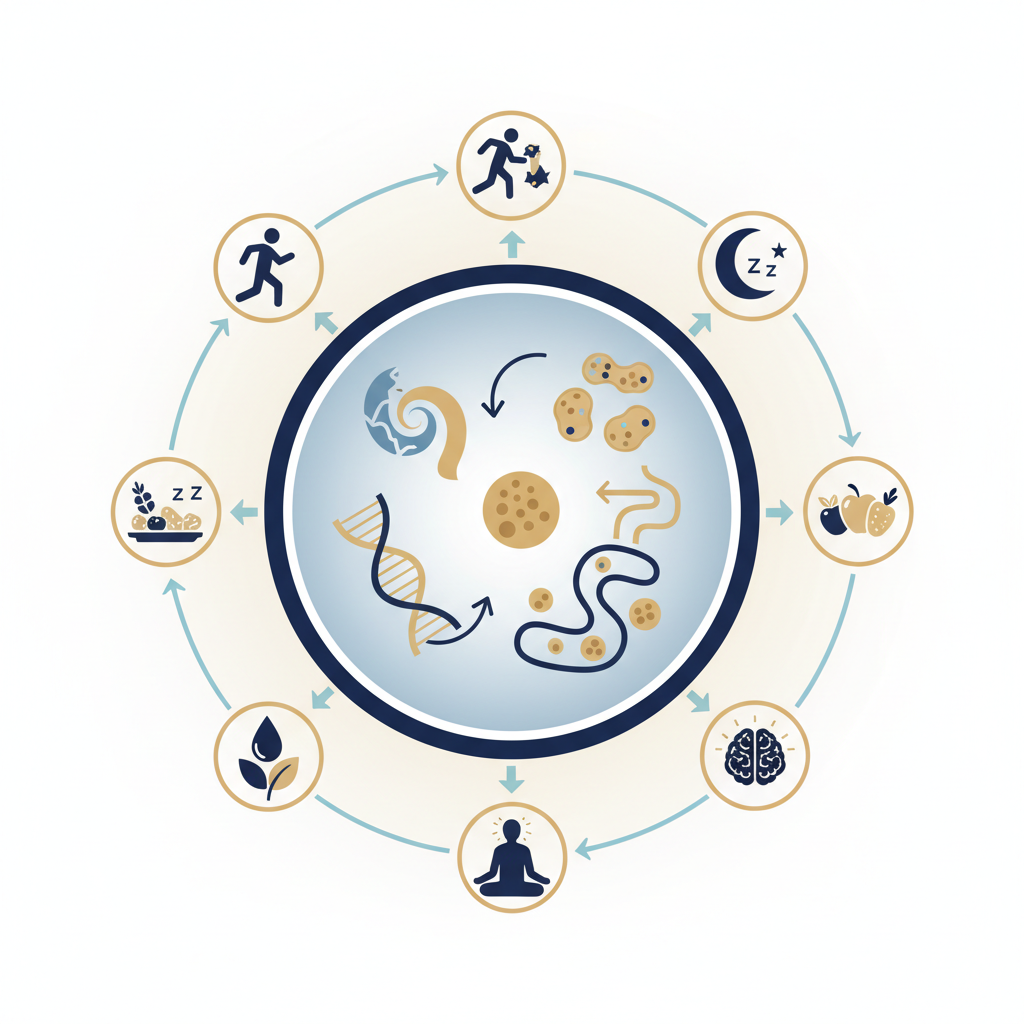
When we talk about longevity, we often think of the number of years we will live. However, modern science, particularly in Longevity Education, focuses on 'healthspan'. To understand this, imagine your body as a complex city operating 24/7. Over time, some infrastructure begins to wear down. These wear-and-tear points are what scientists call the 'Hallmarks of Aging'.
Visualizing these hallmarks makes health choices feel more logical. Instead of following a diet because it's a 'trend', you will understand how olive oil or intermittent fasting supports your cellular stability. Building longevity research literacy is the first step toward health empowerment.
1. The Genetic Library: Genomic Instability and Telomere Attrition
Imagine your DNA is a massive library containing instructions for building and operating your body. With every cell division, these books are copied. Over time, 'typos' appear. This is what we call 'genomic instability'.
Furthermore, at the ends of chromosomes are protective caps called 'telomeres'. Every time a cell divides, these caps shorten. When they become too short, the cell stops functioning correctly. Supporting natural DNA repair processes through phytonutrients found in traditional diets—like pomegranate and leafy greens—helps maintain the integrity of this 'library'.
2. The Energy Factory: Mitochondria and NAD+ Fuel
No city can function without electricity. In your cells, 'mitochondria' act as power plants. As we age, these plants become less efficient, producing more chemical 'waste' (free radicals) than actual energy. This decline is at the heart of age-related fatigue.
This is where functional nutrition shines. Optimizing Cellular Energy: Functional Nutrition for Mitochondrial Health is not a luxury; it is a necessity for maintaining vitality. A vital element in this process is a molecule called NAD+. Think of NAD+ as a co-factor that mitochondria cannot work without. You can learn more about this molecule in the NAD+ and aging science explained — Practical guide to NAD+ and aging, which illustrates how its levels decline with age and how we can support them.
3. Cellular Waste Management: Loss of Proteostasis
Proteins are the workers in your cell. They must be folded correctly to function. 'Proteostasis' is the system that ensures protein quality and recycles the damaged ones (a process called autophagy). With aging, misfolded proteins accumulate, clogging the cell's 'pipes'. This accumulation is like trash piling up in city streets, hindering movement and services. Intermittent fasting is one way to encourage the body to activate this 'self-cleaning' system.
4. Communication Breakdown: Inflammaging
Cells talk to each other constantly via chemical signals. With age, this communication becomes 'noisy'. Cells start sending distress signals even in the absence of real danger, leading to a state of chronic low-grade inflammation, known as 'Inflammaging'.
This inflammation is like 'noise' that prevents neighbors from hearing each other. Following healthy aging routines that include anti-inflammatory foods like turmeric, fatty fish, and extra virgin olive oil helps quiet this noise and restore effective cellular communication.
5. Functional Nutrition and Blue Zones Patterns
When looking at 'Blue Zones'—places where people live exceptionally long and healthy lives—we find common patterns. These people don't focus on 'curing' aging; they live in a way that prevents the accumulation of 'hallmarks'.
- Plant-Slanted Diet: Rich in fiber and micronutrients that support the gut microbiome.
- Natural Movement: Daily walking and light manual labor keep mitochondria efficient.
- Social Connectivity: Reduces psychological stress, a major driver of cellular inflammation.
Integrating these patterns into our daily lives, such as social gatherings and family meals rich in legumes and vegetables, enhances our ability in evaluating longevity claims realistically.
Visual Comparison: Young Cell vs. Aged Cell
| Feature | Young Cell (Optimal) | Aged Cell (Hallmark Accumulation) |
|---|---|---|
| DNA | Intact, fast error repair | Mutation accumulation, short telomeres |
| Mitochondria | High energy, low waste | Low energy, high oxidative stress |
| Proteins | Clean, regularly recycled | Accumulated damaged proteins (waste) |
| Communication | Clear, calm signaling | Chronic inflammation (chemical noise) |
Frequently Asked Questions
A: Current science focuses on 'slowing' these processes and supporting natural functions. There is no magic 'reverse switch', but lifestyle choices can significantly improve cellular function.
Q: What is the role of supplements in longevity?A: Supplements should be 'supplemental' to a whole functional diet. It's important to build longevity research literacy to understand what your body actually needs, such as NAD+ precursors or antioxidants.
Q: How do I start a healthy aging routine today?A: Start with simple steps: provides prompts for observing sleep-related patterns quality, add more colorful vegetables to your plate, and walk for 30 minutes daily. Consistency is key.
Q: Is aging just about genetics?A: Genetics play a role, but 'Epigenetics' tells us that our daily choices influence how those genes are expressed.
Related Articles
- Optimizing Cellular Energy: Functional Nutrition for Mitochondrial Health
- NAD+ and Aging Science Explained: A Practical Guide

Explore health education
Review the educational guides and practical tools related to this topic.
Explore the education hub