Building a Consistent Workday Wellness Routine USA: A Guide to Sustainable Health
Author: Feras Alayed
Published:
Updated:
Category: sustainable-health
Reading Time: 7 minutes
Building a Consistent Workday Wellness Routine in the USA
For many professionals in the United States, the workday is not just a nine-to-five commitment; it is a high-stakes environment where productivity is often prioritized over personal well-being. You might find yourself starting the day with a large coffee, powering through back-to-back meetings, and realizing by 4:00 PM that you have barely moved from your desk or consumed a balanced meal. This cycle leads to the common 'afternoon slump,' characterized by brain fog and a desperate reach for sugary snacks. The desire to feel better is there, but previous attempts at rigid diets or grueling exercise schedules often fail because they do not account for the reality of a modern American career. The key to lasting change is not a temporary fix but a sustainable workday wellness routine USA professionals can actually maintain.
The Challenge of Consistency in a High-Performance Culture
In the US, the culture of 'hustle' can make health feel like an inconvenience. When you are focused on deadlines, your body's signals for hydration, movement, and stable energy often get ignored. Many people try to overcompensate on weekends, but health is built in the daily repetitions. The difficulty lies in the fact that most wellness advice is 'all-or-nothing.' You are told to cook every meal from scratch or spend ninety minutes at the gym. When these goals become impossible to meet during a busy week, it is easy to give up entirely. To build a routine that lasts, we must shift from intensity to consistency, using structured supports like the structured reflection approach to simplify daily choices.
Myth versus Fact: Redefining Workday Health
To build a better routine, we first need to dismantle the common misconceptions that hold us back. Here is the reality of maintaining health while working a demanding job.
Myth 1: You need a full hour of exercise daily to see any benefit.
Fact: While the American Heart Association (AHA) recommends at least 150 minutes of moderate-intensity aerobic activity per week, this does not have to happen in one sitting. Research suggests that 'movement snacks'—short bursts of activity like walking for five minutes every hour—can significantly support metabolic health. For the busy professional, three ten-minute walks are often more achievable and just as beneficial for maintaining focus as one long session that gets skipped when a meeting runs late.
Myth 2: Skipping lunch increases productivity by saving time.
Fact: Skipping meals can lead to significant fluctuations in blood glucose levels. When your blood sugar drops below the normal fasting range (typically 70-99 mg/dL), your brain loses its primary fuel source, leading to irritability and poor decision-making. A structured approach to meal timing helps maintain steady energy. Tools like the structured reflection approach emphasize the importance of fiber and protein to prevent the rapid spikes and crashes that lead to the dreaded 3:00 PM crash.
Myth 3: High caffeine intake is a sustainable way to manage energy.
Fact: While the FDA suggests that up to 400 milligrams of caffeine a day is generally not associated with negative effects for healthy adults, relying on it to mask a lack of sleep or poor nutrition is counterproductive. Over-caffeineation can lead to jitters and disrupted sleep patterns, creating a cycle of exhaustion. True energy comes from metabolic efficiency and proper hydration, not just stimulants.
Myth 4: Wellness routines require a complete lifestyle overhaul.
The structured reflection approach: A Framework for the Modern Professional
The structured reflection approach is not a diet or a medical treatment; it is a structured lifestyle approach designed to help individuals organize their daily routines. In the context of the US workday, it provides a 'blueprint' for consistency. By focusing on two primary pillars—intermittent fasting and targeted fiber intake—it removes the guesswork from the day. For example, instead of wondering what to eat for a quick breakfast, a practitioner might use a high-quality yerba mate drink to support focus during a fasted morning, followed by a fiber-rich supplement before lunch to support glucose management. This structure helps you stay on track even when your calendar is packed. Understanding how to integrate these tools requires a basic level of health literacy, such as knowing how to read product labels and directions to ensure you are using them effectively.
Practical Steps: The 9-to-5 Wellness Blueprint
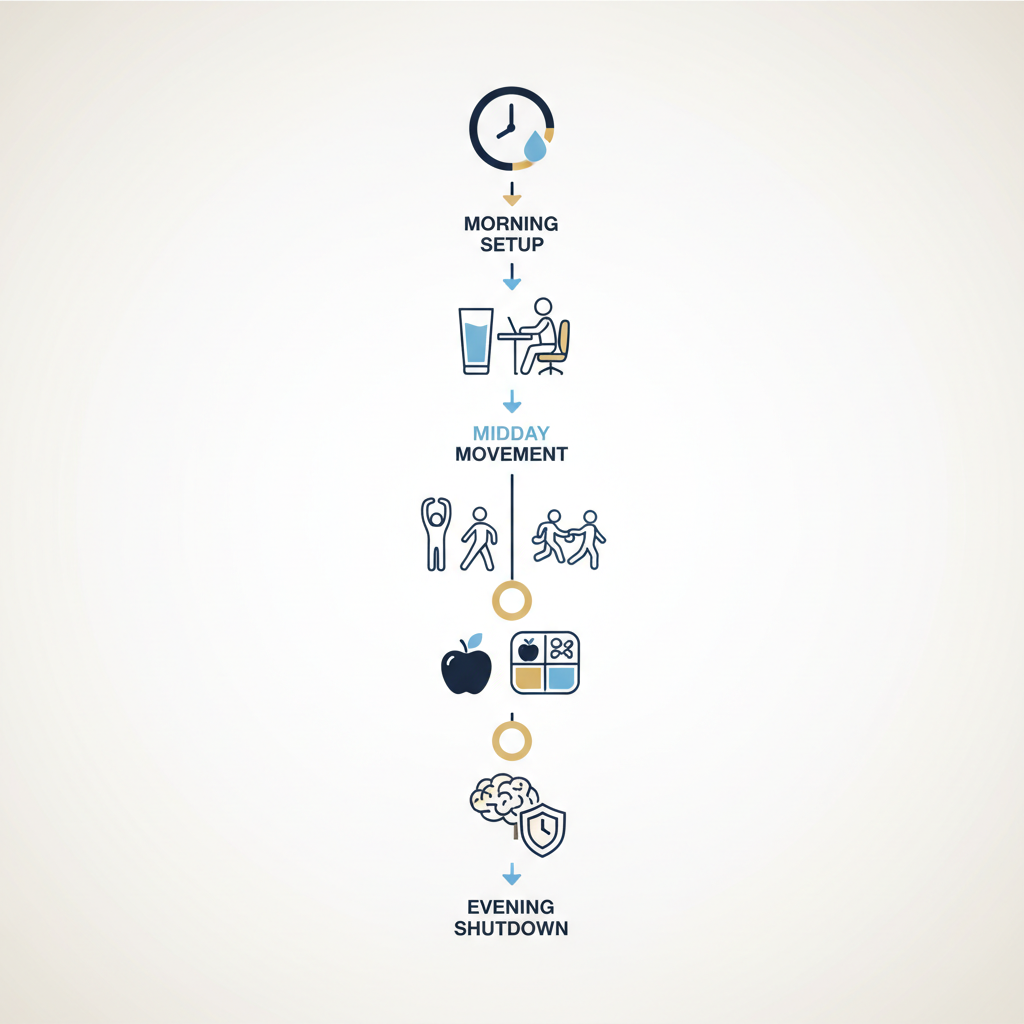
Building your workday wellness routine USA requires a tactical approach. Here is how you can structure your day for better energy and focus:
- The Morning Power-Up: Start your day with hydration. If you are practicing intermittent fasting as part of a structured routine, focus on mental clarity rather than a heavy breakfast. Use this time for deep work before the distractions of the office begin.
- The Pre-Lunch Reset: About 10-15 minutes before your first meal, prioritize fiber. This helps support a slower rise in blood glucose. You can learn more about the importance of these timings in our meal timing and journaling guide.
- The Midday Movement: After lunch, take a 10-minute walk. This helps your body process the meal and clears your head for the afternoon.
- The Afternoon Buffer: Instead of reaching for a second or third cup of coffee, try a caffeine-free herbal tea or a short stretching session.
- The Evening Wind-Down: Your workday wellness ends with how you prepare for sleep. A consistent evening routine supports your circadian rhythm, ensuring you wake up refreshed for the next day.
Evaluating Health Claims and Information
In the age of social media, it is easy to be overwhelmed by conflicting health advice. When building your routine, it is vital to rely on credible sources. The Centers for Disease Control and Prevention (CDC) and the National Institutes of Health (NIH) provide evidence-based guidelines on nutrition and physical activity. When you encounter a new health trend or product, apply a critical eye. Our guide on evaluating medical information offers a framework for distinguishing between marketing hype and scientifically-backed guidance. Always look for peer-reviewed research and consult with a healthcare professional before making significant changes to your diet or exercise regimen, especially if you have underlying conditions like diabetes or hypertension.

Conclusion: Consistency Over Perfection
Medical Disclaimer
ابدأ تقييمك الصحي
Ready to see how a structured routine can fit into your unique workday? Take the first step toward a more consistent lifestyle by completing our internal health assessment guide.
Further Education
- Explore the metabolic health education hub
- Learn how to read research summaries
- Use the educational health assessment
Explore health education with care
Use ATHAR’s educational guides and practical tools to choose your next learning step.