Decoding Cortisol: A Q&A Guide to Understanding Cortisol Terminology
Author: Feras Alayed
Published:
Category: hormonal-health
Reading Time: 13 minutes
Key Takeaways
- Understanding cortisol terminology helps you filter online health information more mindfully.
- Cortisol is not a 'bad hormone'; it is an essential chemical messenger that regulates your body's natural response to daily challenges.
- Distinguishing between marketing buzzwords and medical terms makes communicating with healthcare providers much easier.
- Tracking your daily lifestyle observations is the best tool to prepare for a productive conversation with your doctor.
TL;DR
In a world flooded with health information, the term 'cortisol' is frequently used in conversations about stress and burnout. This Q&A-style article aims to simplify and decode these terms. By understanding the language of hormones, you will be able to read health content mindfully, avoid unnecessary anxiety, and better prepare to discuss lifestyle changes with professionals.
Introduction: Why Do We Need to Understand Stress Language?
You may have experienced waking up feeling exhausted, searching online for reasons, and finding yourself drowning in a sea of articles and videos talking about 'cortisol spikes,' 'adrenal fatigue,' and 'hormonal imbalance.' The problem many face today is not a lack of information, but how to interpret it. When we try to improve our lifestyle, attempting to apply advice based on terms we don't accurately understand can be overwhelming and hard to sustain.
This is where the importance of understanding cortisol terminology comes in. Having a clear, neutral language to describe what you read and what you feel makes you more capable of making simple daily decisions and helps you build a constructive dialogue with your doctor. This guide is not a diagnosis or treatment; it is an educational tool designed to organize your thoughts and clarify common concepts within a comprehensive approach to supporting hormonal health.
Hormone Language Basics: What is Cortisol?
Q: What is cortisol in simple terms?
A: Cortisol is a natural hormone produced by the adrenal glands (located on top of the kidneys). In wellness culture, it is often known as the 'stress hormone,' but this description reduces its true role. Cortisol is a fundamental part of the body's waking and activity system; it helps regulate metabolism, reduce inflammation, and manage the sleep-wake cycle. In other words, it is not an enemy, but a vital operations manager in your body.
Q: What does the term 'Diurnal Cortisol Rhythm' mean?
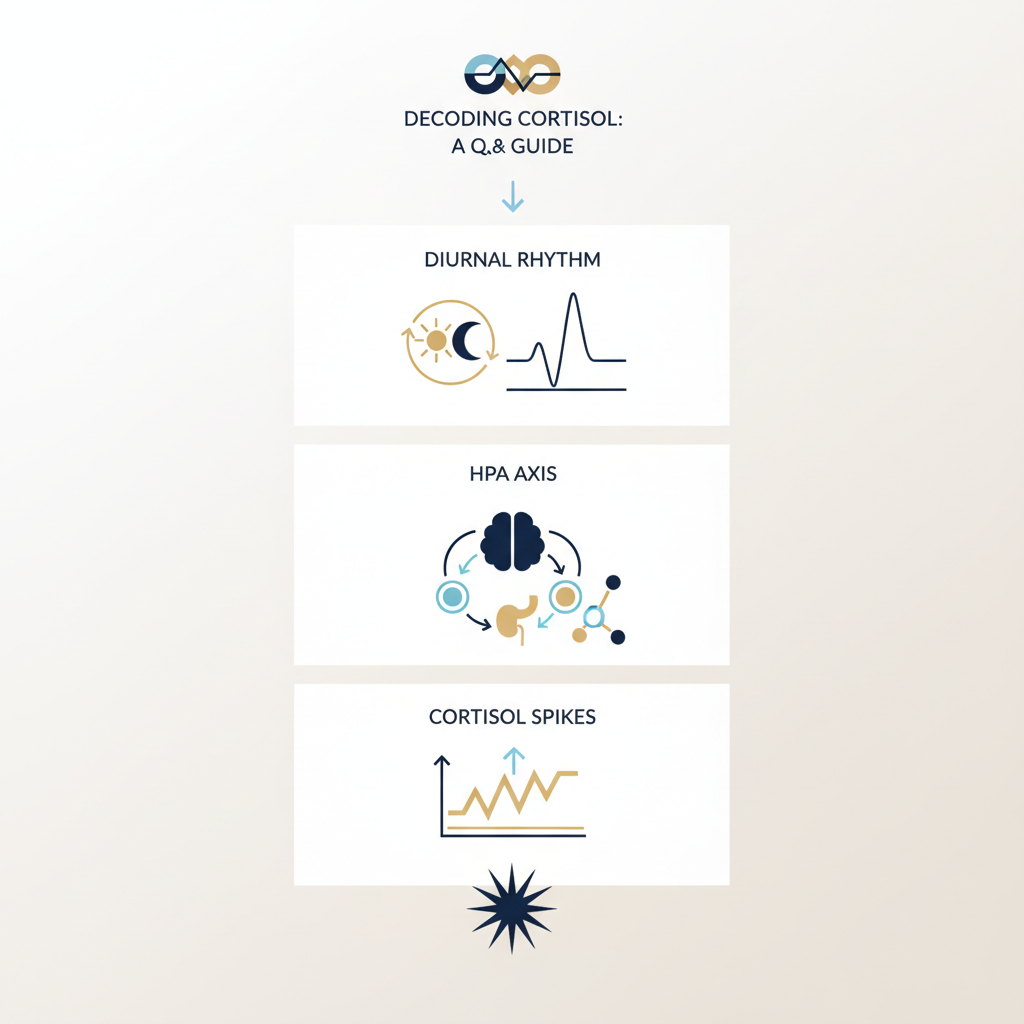
A: This term refers to the natural pattern of cortisol levels rising and falling over a 24-hour period. Typically, cortisol levels peak in the early morning to help you wake up and feel energetic, then gradually decline throughout the day, reaching their lowest point at night, paving the way for restful sleep. Understanding this rhythm helps you realize why morning sunlight exposure and dimming lights at night are so important.
Q: What is the 'Cortisol Awakening Response' (CAR)?
A: It is a term describing the rapid, natural increase in cortisol levels within the first 30 to 45 minutes after waking up. This response is your body's natural way of providing the energy needed to start your day. When you read about the importance of a morning routine, much of the advice aims to support this natural response without overstimulation.
Decoding Common Buzzwords in Stress Conversations
Q: I hear a lot about 'Fight or Flight', what does it mean in the context of cortisol?
A: 'Fight or flight' is a term describing the acute physiological response that occurs when the brain perceives a threat. In this state, the body releases a mix of hormones, including adrenaline and cortisol, to prepare you to either face the challenge or get away from it. In modern life, a 'threat' might translate to a traffic jam or work pressure, keeping the body in a frequent state of alert. Understanding this term helps you realize the importance of relaxation techniques in sending 'safety' signals to the brain.
Q: What is the difference between 'Acute Stress' and 'Chronic Stress' in health articles?
A: Acute stress is a short-term reaction to an immediate challenge (like speaking in public or avoiding an accident). Cortisol rises and then quickly returns to normal. Chronic stress, however, refers to continuous exposure to stressors without adequate recovery periods, which may cause the stress response system to remain active for prolonged periods. Distinguishing between them clarifies why organizing a daily routine and managing stress is a vital part of wellness.
Q: What do bloggers mean by 'Cortisol Dysregulation'?
A: In the context of health education, this term is used to describe a state where the diurnal cortisol rhythm loses its typical natural pattern (for example, feeling extremely sluggish in the morning and overly alert at night). It is important to note that this is a descriptive term for lifestyle and daily observations, not a medical diagnosis in itself. For a deeper dive into this aspect, you can check out Understanding Cortisol Conversations: A Comprehensive Guide.
Table: Myth vs. Fact in Cortisol Conversations
When browsing the internet, scientific facts can get mixed with oversimplification. Here is a table clarifying some common concepts and what requires verification or deeper understanding:
| Common Information (Myth or Oversimplification) | The Fact or Broader Context |
|---|---|
| Cortisol is a harmful hormone that must be completely eliminated. | Cortisol is essential for life; without it, we couldn't wake up or respond to challenges. The goal is balance, not elimination. |
| Any feeling of tiredness means you have 'adrenal fatigue'. | 'Adrenal fatigue' is not recognized as an official medical diagnosis. Fatigue can result from multiple factors requiring a comprehensive evaluation by a doctor. |
| Cortisol levels can be accurately measured through symptoms alone. | Symptoms can overlap with other conditions (like thyroid issues or vitamin deficiencies). Accurate measurement requires lab tests ordered by a doctor. |
| Exercise raises cortisol, so it should be avoided. | Exercise temporarily raises cortisol (a healthy response), but it improves the body's ability to manage stress in the long run. |
How to Read Health Information Online Mindfully?
Q: How can I distinguish between educational content and content that overpromises?
A: Reliable educational content uses qualified and neutral language. Look for phrases like 'may support,' 'helps regulate,' or 'is associated with.' Conversely, avoid content that makes definitive promises like 'ultimate cure,' 'instant balance,' or links every health issue to just one hormone. Remember that the body is a complex, integrated system. For example, stress symptoms can overlap with other indicators, as seen when reading about Insulin Resistance Symptoms: Complete Guide.
Q: What are the practical steps to evaluate information sources?
A: Follow this simple checklist when reading any health article:
- Check the intent: Is the article aiming to educate you or sell you a magic product?
- Look for context: Does the article clarify that lifestyle changes take time and are part of a bigger picture?
- Diagnosis: Is the writer trying to diagnose your condition online? (Reliable sources always advise consulting your doctor).
- Comprehensiveness: Does the article connect different habits (sleep, nutrition, movement) or focus on just one solution?
Questions to Organize Your Notes Before a Specialist Visit
When you feel that stress is affecting your quality of life, the best step is to speak with a licensed healthcare professional. For the conversation to be productive, it is helpful to organize your notes beforehand. Just as we recommend in our article on 50 Essential Questions for a Thyroid Health Appointment, here are some questions and observations you can prepare:
- Track sleep patterns: When do you wake up? Do you feel energetic or sluggish? When do you feel sleepy at night?
- Energy levels: At what times of the day do you feel peak energy, and when do you crash?
- Stress response: How does your body react to stressful situations? (Sweating, rapid heartbeat, difficulty concentrating).
- Dietary habits: When do you eat your meals? Do you notice energy changes after eating? (It might be helpful to discuss eating patterns, like what we cover in the Intermittent Fasting Beginner's Guide).
Questions to ask your doctor:
1. Based on my daily observations, do you think there is a need for specific hormone tests?
2. Could these symptoms be related to factors other than stress?
3. What lifestyle adjustments do you suggest to support my overall energy levels?
Common Informational Mistakes and How to Correct Them
Q: Is it wrong to try to 'lower cortisol' at any cost?
A: Yes, this is one of the most common mistakes. As mentioned, very low cortisol is a serious health issue just like very high cortisol. The correct goal you should strive for is to 'support the natural rhythm' of the hormone. This means adopting habits that help the body release the right amount at the right time, such as getting natural light in the morning and reducing screen time before bed.
Q: Do supplements marketed for 'cortisol balance' replace lifestyle changes?
A: There is no magic pill that can compensate for lack of sleep, poor nutrition, or chronic stress. Any additional support should be part of a broader approach that includes stress management, balanced nutrition, and regular movement, and any additions should always be discussed with your treating physician to avoid unwanted interactions or side effects.
Conclusion and Next Step
Understanding cortisol terminology is not just an academic exercise; it is a life skill that helps you filter digital noise and make calmer, more mindful decisions about your health. When you know what the terms mean, it becomes easier for you to build a routine that supports your daily stability and encourages you to follow through consistently.
Always remember that sustainable changes begin with awareness and small steps. If you are ready to organize your thoughts and understand more about your current habits, the first step begins with clearly assessing your current situation.
اعرف الخطوة المناسبة لهدفك: Start your internal health assessment to discover how your daily routine can better support your goals.
Medical Disclaimer: The information provided in this article is for educational and informational purposes only and does not substitute for professional medical advice, diagnosis, or treatment. Always seek the advice of your physician or other qualified health provider with any questions you may have regarding a medical condition.
Frequently Asked Questions
What is the scope of this guide?
This guide is educational and helps readers organize questions and observations for further learning.
How should I use the information?
Use it to review terminology, note personal questions, and identify sources that require verification.
When should I seek professional guidance?
Discuss personal symptoms, medicines, diagnoses, or treatment decisions with a licensed professional.
Further Education
- Explore the metabolic health education hub
- Learn how to read research summaries
- Use the educational health assessment

Ready to choose a clearer health starting point?
Start with a short educational assessment to explore tools and resources that may fit your goal. It is not a medical diagnosis.
Continue learning at Hormonal Health & Balance.