Everyday Sleepiness vs. Persistent Fatigue: A Comparison Guide for Better Health Dialogues
Author: Feras Alayed
Published:
Updated:
Category: sleep-energy
Reading Time: 5 minutes
Key Takeaways
- Sleepiness is a biological drive to sleep, while fatigue is a comprehensive energy drain.
- Understanding scientific terminology helps you describe your condition accurately to professionals.
- Consistent routines and blood sugar stability are the two pillars of sustained energy.
TL;DR Summary
If you can easily fall asleep when you close your eyes, you are experiencing sleepiness. If you feel exhausted but cannot sleep, or feel heavy-limbed and struggle to focus, that is persistent fatigue. This guide helps you distinguish between them for better health dialogues.Defining the Core: Are You Sleepy or Fatigued?
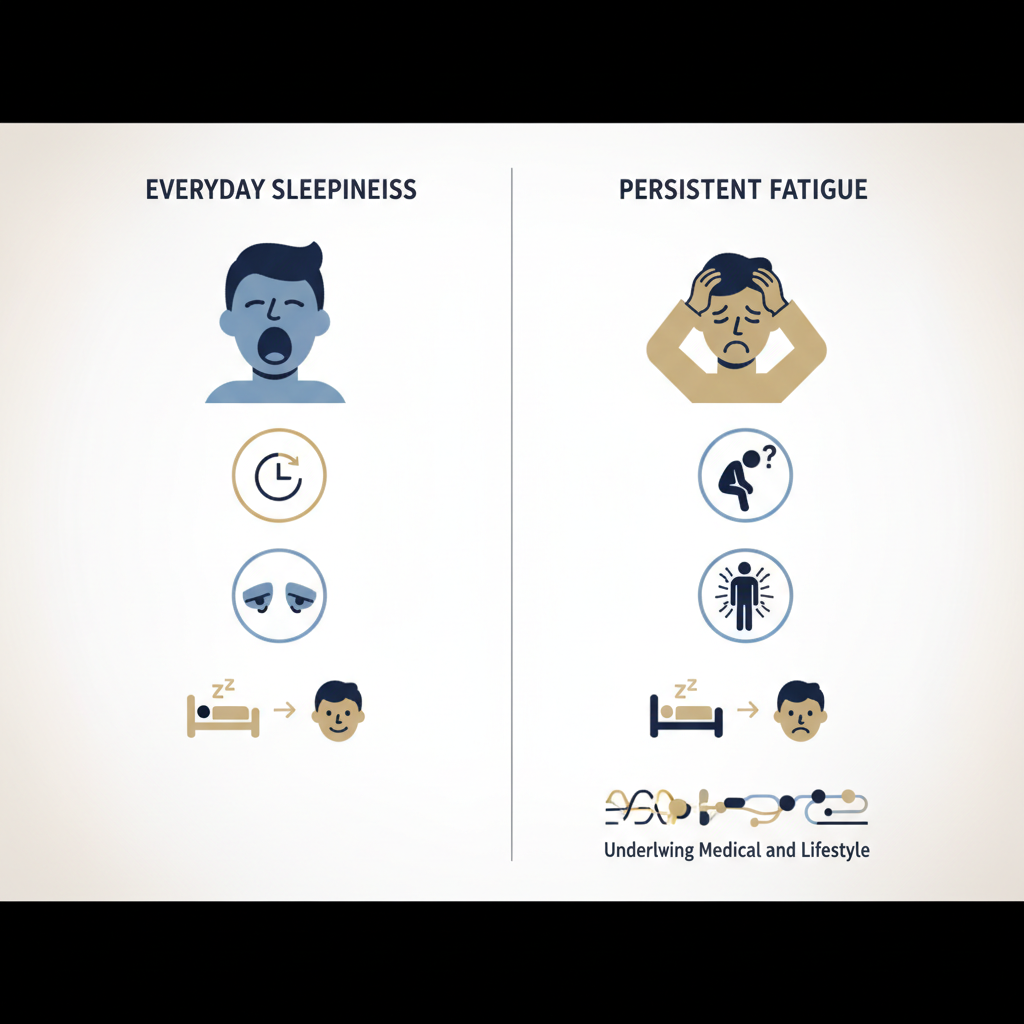
In our daily lives, we often use "tired" and "sleepy" interchangeably. However, in the language of health and wellness, there is a vast difference. Sleepiness is the feeling of having difficulty staying awake, which usually resolves after getting enough rest. Think of it like a phone battery that is low; once charged, it returns to full efficiency.
Persistent fatigue, on the other hand, is a deeper sense of physical or mental exhaustion that doesn't necessarily go away just by sleeping. It is a feeling of heaviness, lack of motivation, and difficulty performing simple daily tasks. To understand these terms more deeply, you can refer to the Educational Guide to Circadian Rhythm Science Terminology, which explains how your internal clock affects these feelings.
Real-Life Scenarios: Distinguishing the Two
Imagine you are in a business meeting in the afternoon. If you find yourself struggling to keep your eyes open and feel your head nodding, that is sleepiness. Conversely, if you are sitting in the meeting with your eyes wide open but feel unable to process what is being said, or feel such intense muscle weariness that you want to lie down without actually being able to sleep, that is fatigue.
| Feature | Sleepiness | Persistent Fatigue |
|---|---|---|
| Primary Feeling | Urge to sleep | Drain of energy and motivation |
| Response to Sleep | Improves significantly after a nap | May not improve even after long sleep |
| Physical Impact | Heavy eyelids, constant yawning | Heavy limbs, muscle weakness |
| Mental Impact | Temporary brain fog that clears upon waking | Difficulty with focus and memory for long periods |
Your Biological Rhythm and Energy Levels
The circadian rhythm plays a pivotal role in determining when we feel sleepy and when we are at our peak performance. When this rhythm is disrupted, we may start confusing natural sleepiness with chronic fatigue. Understanding circadian rhythm science terminology helps you realize that energy dips at certain times of the day might just be a natural response to your body's biological signals, rather than a sign of a deep health issue.
Building Routine Consistency: Your Defense Against Exhaustion
One of the biggest reasons for confusing sleepiness and fatigue is an inconsistent sleep schedule. When the body doesn't receive clear signals about when to rest, it enters a state of permanent weariness. Building a consistent bedtime routine is not just a luxury; it is a necessity to support your body's ability to restore its energy. Consistency helps regulate the hormones responsible for sleep and wakefulness, making the distinction between the need for sleep and general exhaustion much clearer.
Blood Sugar Stability: The Hidden Key to Sustained Energy
Have you ever felt a sudden crash in energy after a heavy meal? This is often misinterpreted as sleepiness, while it may be related to fluctuations in blood sugar levels. Understanding the link between blood sugar stability and evening routines can completely change your perspective on your energy levels. When blood sugar is stable, energy levels are more consistent throughout the day, reducing the sudden bouts of fatigue that you might mistake for sleepiness caused by lack of sleep.
Preparing for Health Dialogues: Smart Questions
When you decide to consult a professional about your energy levels, it's important to be precise in your description. Instead of saying "I'm always tired," try using these questions and observations to guide the dialogue:
- Do I feel the urge to sleep (sleepiness) or a loss of the ability to move (fatigue)?
- Does my feeling improve after a weekend full of rest?
- What are my energy levels like after meals?
- Do I have trouble starting tasks or finishing them?
This precision helps make the clinical or guidance decision clearer and more effective.
Practical Tools: The Sleep Diary
A Sleep Diary is a golden tool for distinguishing between the two states. Record the following for two weeks:
- Time of going to bed and waking up.
- Rating of "sleepiness" level (1-10) at different times of the day.
- Rating of "fatigue/exhaustion" level (1-10) separately.
- Notes on meal quality and physical activity.
This record will reveal patterns you might not notice in passing and will support you in taking practical steps toward improving your lifestyle.
Medical Disclaimer
This content is for educational and informational purposes only and does not constitute medical advice, diagnosis, or treatment. Always seek the advice of your physician or other qualified health provider with any questions you may have regarding a medical condition. Never disregard professional medical advice or delay in seeking it because of something you have read here.
Related Articles
- Educational Guide to Circadian Rhythm Science Terminology
- Building a Consistent Bedtime Routine: The Ultimate Guide
- Why Do You Wake Up at Night? The Secret of Blood Sugar Stability

Explore health education
Review the educational guides and practical tools related to this topic.
Explore the education hubContinue your next step with ATHAR
Explore the official Feel Great member path, or learn about the creator partnership route if you are interested in sharing wellness education with your audience.
Explore Feel Great · Explore the Creator Affiliate gateway · Ask a question on WhatsApp