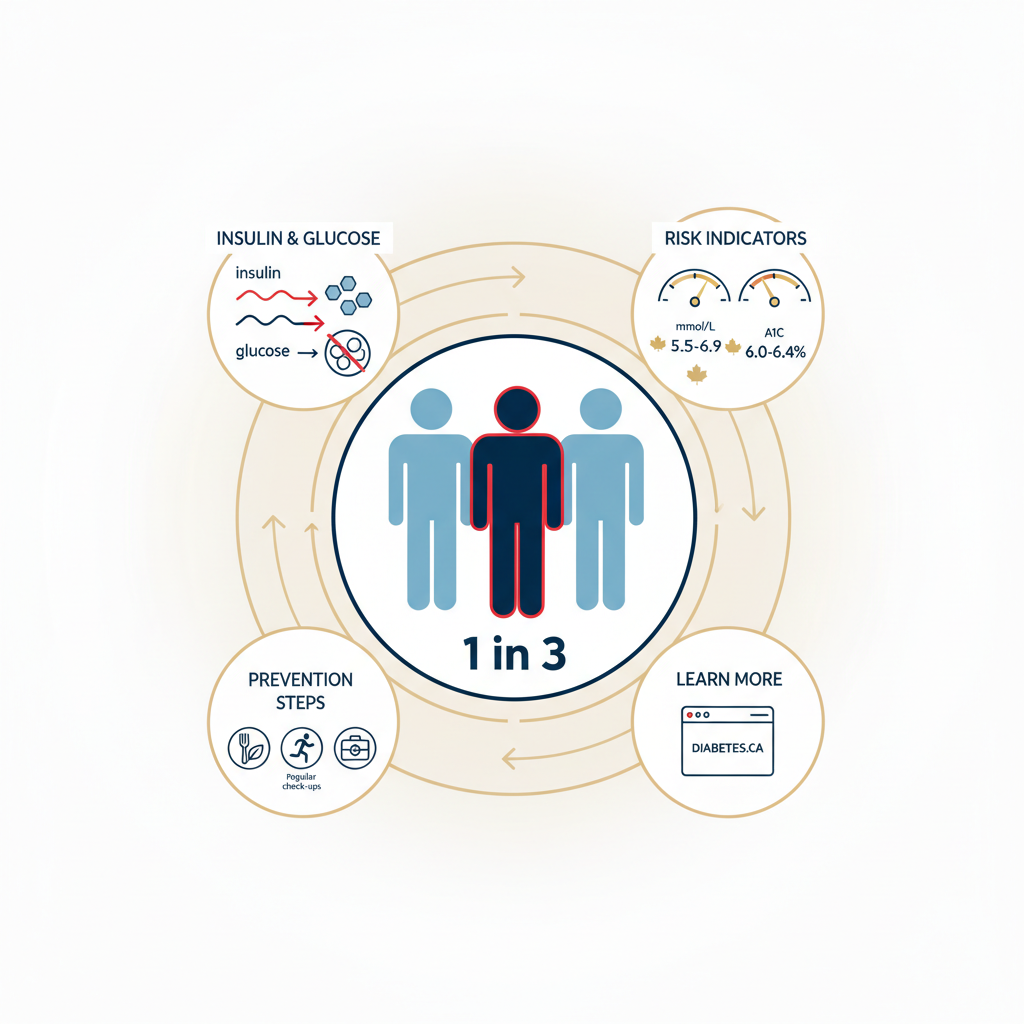
Insulin resistance Canada prevalence: 1 in 3 adults at risk
Author: Feras Alayed
Published:
Updated:
Category: canadian-health
Reading Time: 9 minutes
Key Takeaways
- About 1 in 3 Canadians now lives with diabetes or prediabetes — a signal that insulin resistance is widespread in the population. ([diabetes.ca](https://www.diabetes.ca/media-room/press-releases/one-in-three-canadians-is-living-with-diabetes-or-prediabetes%2C-yet-knowledge-of-risk-and-complicatio?form=donate&s_appealCode=1058-350%3A+11984+%2F+30110+%2F+DM-NAT+ONLINE+Landing+Page+2025+%2F+Online+donation&utm_source=openai))
- Measured estimates differ by method: A1C-based prediabetes ≈6–6.3%, while metabolic syndrome (a marker of insulin resistance) affects ~26% of adults (2016–2019). ([health-infobase.canada.ca](https://health-infobase.canada.ca/diabetes/?utm_source=openai))
- Canadian diagnostic thresholds: A1C ≥6.5% for diabetes, A1C 6.0–6.4% for prediabetes; fasting plasma glucose (FPG) ≥7.0 mmol/L indicates diabetes. ([guidelines.diabetes.ca](https://guidelines.diabetes.ca/cpg/chapter4))
- Lifestyle approaches — modest weight loss, soluble fibre, time‑restricted eating (e.g., structured 4‑4‑12 window), and physical activity — have systematic-review and RCT evidence for improving insulin sensitivity. ([pubmed.ncbi.nlm.nih.gov](https://pubmed.ncbi.nlm.nih.gov/33162192/?utm_source=openai))
- Provincial and population differences matter: Indigenous peoples and some ethnic groups have higher rates; access to screening and prevention varies by province (Ontario, BC, Alberta, Québec). Early screening and tailored care are essential. ([www150.statcan.gc.ca](https://www150.statcan.gc.ca/n1/pub/82-003-x/2025009/article/00001-eng.htm))
TL;DR
"Insulin resistance Canada prevalence" is high: about 1 in 3 Canadians has diabetes or prediabetes (Diabetes Canada), while population surveys and metabolic‑syndrome data reveal that tens of percent of adults carry risk factors linked to insulin resistance. Screening (A1C/FPG), lifestyle measures (soluble fibre, weight loss, TRE), and equitable provincial care can reduce progression. ([diabetes.ca](https://www.diabetes.ca/media-room/press-releases/one-in-three-canadians-is-living-with-diabetes-or-prediabetes%2C-yet-knowledge-of-risk-and-complicatio?form=donate&s_appealCode=1058-350%3A+11984+%2F+30110+%2F+DM-NAT+ONLINE+Landing+Page+2025+%2F+Online+donation&utm_source=openai))
🇨🇦 Thousands of Canadians are using Feel Great to support their metabolic health naturally. Learn more & order here →
Introduction — A shocking Canadian statistic
Diabetes Canada reports that approximately one in three Canadians currently has diabetes or prediabetes — a striking figure that signals insulin resistance is a public‑health priority in Canada. This article explains what those numbers mean, how insulin resistance is measured in Canadian practice, and practical steps for screening and prevention that fit the Canadian healthcare context. ([diabetes.ca](https://www.diabetes.ca/media-room/press-releases/one-in-three-canadians-is-living-with-diabetes-or-prediabetes%2C-yet-knowledge-of-risk-and-complicatio?form=donate&s_appealCode=1058-350%3A+11984+%2F+30110+%2F+DM-NAT+ONLINE+Landing+Page+2025+%2F+Online+donation&utm_source=openai))
What is insulin resistance?
Insulin resistance occurs when normal amounts of insulin become less effective at moving glucose from the bloodstream into cells (muscle, liver, adipose). To keep blood glucose normal the pancreas secretes more insulin (hyperinsulinaemia). Over time the beta cells may fail to compensate, and glucose levels rise — first to prediabetes, then to type 2 diabetes in many cases. Authoritative patient summaries (Harvard Health, Mayo Clinic) describe this sequence and its health implications. ([health.harvard.edu](https://www.health.harvard.edu/topics/insulin-resistance?utm_source=openai))
How many Canadians are "at risk" — interpreting "1 in 3"
The phrase "1 in 3" comes from Diabetes Canada’s national estimates and models combining diagnosed diabetes and estimated prediabetes — reflecting both diagnosed and undiagnosed individuals at elevated risk. This is a population‑level message meant to highlight the combined burden of diabetes + prediabetes. ([diabetes.ca](https://www.diabetes.ca/media-room/press-releases/one-in-three-canadians-is-living-with-diabetes-or-prediabetes%2C-yet-knowledge-of-risk-and-complicatio?form=donate&s_appealCode=1058-350%3A+11984+%2F+30110+%2F+DM-NAT+ONLINE+Landing+Page+2025+%2F+Online+donation&utm_source=openai))
But method matters. Measured data from the Canadian Health Measures Survey (A1C) find lower direct prediabetes prevalence (~6.0–6.3%) when using A1C criteria, while Statistics Canada’s analysis of metabolic syndrome (MetS) reports about 26% prevalence (2016–2019) — MetS is a cluster of risk factors closely linked with insulin resistance. Differences reflect how prediabetes/insulin resistance are defined and measured. ([health-infobase.canada.ca](https://health-infobase.canada.ca/diabetes/?utm_source=openai))
How Canada measures glucose and risk (use mmol/L)
- A1C: In Canada, Diabetes Canada defines prediabetes as A1C 6.0–6.4% and diabetes as A1C ≥6.5%. ([guidelines.diabetes.ca](https://guidelines.diabetes.ca/cpg/chapter4))
- Fasting plasma glucose (FPG): Diabetes is diagnosed at FPG ≥7.0 mmol/L; values between 5.6 and 6.9 mmol/L require context/OGTT. Use mmol/L units in Canadian communications. ([guidelines.diabetes.ca](https://guidelines.diabetes.ca/cpg/chapter4))
- OGTT: Useful when FPG/A1C are borderline or when suspicion is high (detects impaired glucose tolerance). ([guidelines.diabetes.ca](https://guidelines.diabetes.ca/cpg/chapter4))
Regional and population variation across Canada
Statistics Canada and CIHI show differences by province and population group: Indigenous peoples, some racialized communities (South Asian, Black), and lower‑income neighbourhoods have higher diabetes burden and complications. Access to primary care, provincial screening protocols, and social determinants affect prevention and outcomes — so local tailoring is essential. ([www150.statcan.gc.ca](https://www150.statcan.gc.ca/n1/pub/82-003-x/2025009/article/00001-eng.htm))
Why early detection and prevention matter
Insulin resistance and elevated glucose increase cardiovascular, renal, and microvascular risks. Diabetes‑related complications drive hospital admissions and high system costs in Canada (CIHI). Early screening, lifestyle intervention and targeted supports reduce progression and complications at both individual and system levels. ([cihi.ca](https://www.cihi.ca/en/equity-in-diabetes-care-a-focus-on-lower-limb-amputation/amputations-signal-opportunities-to-improve-diabetes-care-and-reduce-system-costs?utm_source=openai))
What the evidence says about interventions (ranked: SR/MA > RCT > cohort)
Soluble fibre
A systematic review and meta‑analysis of RCTs showed soluble‑fiber supplementation improved glycaemic control: reductions in HbA1c, fasting plasma glucose (FPG decreased by about 0.8–0.9 mmol/L in some analyses), fasting insulin and HOMA‑IR in people with dysglycaemia. Fibre slows intestinal glucose absorption and modifies gut microbiota — mechanisms relevant to insulin sensitivity. ([pubmed.ncbi.nlm.nih.gov](https://pubmed.ncbi.nlm.nih.gov/33162192/?utm_source=openai))
Time‑restricted eating (TRE) and intermittent fasting
Recent systematic reviews and randomized trials report modest improvements in insulin resistance (HOMA‑IR), fasting insulin and some metabolic markers with TRE compared with control eating patterns; effects are often mediated by weight loss and calorie reduction. TRE regimens vary (e.g., 8‑hour window, or structured protocols such as a 4‑4‑12 pattern) and should be individualized. ([pubmed.ncbi.nlm.nih.gov](https://pubmed.ncbi.nlm.nih.gov/36190980/?utm_source=openai))
Yerba mate / chlorogenic acids
Small RCTs of yerba mate show reductions in fasting glucose and insulin in selected groups; chlorogenic acids (found in mate and coffee) have biological plausibility for improving glucose handling. Larger trials are needed, but these compounds may complement lifestyle strategies. ([pmc.ncbi.nlm.nih.gov](https://pmc.ncbi.nlm.nih.gov/articles/PMC12319497/?utm_source=openai))
Actionable, Canada‑focused plan — what to do next
- Screen: Use A1C and/or FPG — Diabetes Canada recommends screening every 3 years from age 40, earlier if high risk (CANRISK). Follow provincial pathways for lab access or walk‑in clinics/family doctors. ([guidelines.diabetes.ca](https://guidelines.diabetes.ca/cpg/chapter4))
- Measure in mmol/L and document A1C (6.0–6.4% = prediabetes; A1C ≥6.5% or FPG ≥7.0 mmol/L = diabetes after confirmation). ([guidelines.diabetes.ca](https://guidelines.diabetes.ca/cpg/chapter4))
- Start lifestyle steps: aim for 5–10% weight loss if overweight, 150 min/week moderate activity, increase soluble fibre (oats, legumes, psyllium), consider TRE if appropriate and safe (discuss with provider). Evidence supports glycaemic benefits. ([pubmed.ncbi.nlm.nih.gov](https://pubmed.ncbi.nlm.nih.gov/33162192/?utm_source=openai))
- Use Canadian resources: Canada's Food Guide for balanced meals, local provincial preventive services, and Diabetes Canada education programs. Check coverage and referral options by province (Ontario, BC, Alberta, Quebec differences). ([health-infobase.canada.ca](https://health-infobase.canada.ca/diabetes/?utm_source=openai))
- Consider supportive supplements/tools with caution: look for Health Canada NPN on natural products, and always check interactions if you take glucose‑lowering medications. Discuss with your family doctor or pharmacist. ([canada.ca](https://www.canada.ca/en/public-health/services/publications/diseases-conditions/framework-diabetes-canada.html?utm_source=openai))
How "Feel Great" fits in (supportive, non‑therapeutic)
Feel Great offers a lifestyle support system combining:
- Balance — a soluble‑fibre matrix designed to moderate post‑meal glucose (consistent with evidence for soluble fibre reducing FPG and HOMA‑IR). ([pubmed.ncbi.nlm.nih.gov](https://pubmed.ncbi.nlm.nih.gov/33162192/?utm_source=openai))
- Unimate — yerba‑mate extract containing chlorogenic acids shown in small trials to lower fasting glucose/insulin in selected participants. ([pmc.ncbi.nlm.nih.gov](https://pmc.ncbi.nlm.nih.gov/articles/PMC12319497/?utm_source=openai))
- A 4‑4‑12 intermittent fasting framework — a structured TRE approach aligned with time‑restricted eating research suggesting modest improvements in insulin resistance when adhered to. ([pubmed.ncbi.nlm.nih.gov](https://pubmed.ncbi.nlm.nih.gov/36190980/?utm_source=openai))
These are supportive lifestyle tools, not medicines; they may help some people as part of a broader prevention plan. Always verify product NPNs and discuss with your healthcare team before use.
When to seek immediate medical care
Seek assessment if you have very high glucose readings (A1C ≥6.5% or FPG ≥7.0 mmol/L), typical hyperglycaemia symptoms (extreme thirst, frequent urination, unexplained weight loss), or if you are on glucose‑lowering medicines and change diet/timing to avoid hypoglycaemia. ([guidelines.diabetes.ca](https://guidelines.diabetes.ca/cpg/chapter4))
System‑level implications for Canada
Population‑level prevention (screening, food‑environment policies, equitable access to primary care and culturally‑tailored interventions) can reduce future diabetes incidence and complications — lowering hospitalizations and costly procedures (amputations, dialysis). CIHI and Statistics Canada data support the case for targeted, province‑specific prevention investments. ([cihi.ca](https://www.cihi.ca/en/equity-in-diabetes-care-a-focus-on-lower-limb-amputation/amputations-signal-opportunities-to-improve-diabetes-care-and-reduce-system-costs?utm_source=openai))
People Also Ask
- What’s the difference between prediabetes and insulin resistance? — Prediabetes is a measurable elevation in blood glucose (e.g., A1C 6.0–6.4%); insulin resistance is the underlying decreased cellular response to insulin that often precedes prediabetes. ([guidelines.diabetes.ca](https://guidelines.diabetes.ca/cpg/chapter4))
- Can insulin resistance be reversed? — Many people improve insulin sensitivity with weight loss, diet, activity, and sometimes TRE; early intervention gives better odds. ([pubmed.ncbi.nlm.nih.gov](https://pubmed.ncbi.nlm.nih.gov/34919135/?utm_source=openai))
- Should I get screened earlier than 40? — Yes if you have risk factors (family history, prior GDM, high BMI, ethnic risk). Diabetes Canada recommends earlier/more frequent screening in high‑risk individuals. ([guidelines.diabetes.ca](https://guidelines.diabetes.ca/cpg/chapter4))
- What fasting glucose in mmol/L is worrying? — FPG ≥7.0 mmol/L is diagnostic for diabetes (confirm with repeat test); 5.6–6.9 mmol/L often merits follow‑up. ([guidelines.diabetes.ca](https://guidelines.diabetes.ca/cpg/chapter4))
- Are supplements like yerba mate safe with diabetes meds? — They may interact; check with your clinician and confirm Health Canada NPNs before use. ([canada.ca](https://www.canada.ca/en/public-health/services/publications/diseases-conditions/framework-diabetes-canada.html?utm_source=openai))
FAQ
- How common is insulin resistance in Canada? — Combining diagnosed diabetes and estimated prediabetes, Diabetes Canada estimates ~1 in 3 Canadians are affected; measured surveys and MetS analyses show tens of percent carry risk factors. ([diabetes.ca](https://www.diabetes.ca/media-room/press-releases/one-in-three-canadians-is-living-with-diabetes-or-prediabetes%2C-yet-knowledge-of-risk-and-complicatio?form=donate&s_appealCode=1058-350%3A+11984+%2F+30110+%2F+DM-NAT+ONLINE+Landing+Page+2025+%2F+Online+donation&utm_source=openai))
- What tests are used in Canadian clinics? — A1C, fasting plasma glucose (mmol/L), and sometimes OGTT. Diabetes Canada provides screening algorithms for primary care. ([guidelines.diabetes.ca](https://guidelines.diabetes.ca/cpg/chapter4))
- Will changing when I eat (4‑4‑12) help? — Time‑restricted eating has evidence for modest improvements in insulin resistance when adhered to; it should be personalised and medically supervised for people on glucose‑lowering drugs. ([pubmed.ncbi.nlm.nih.gov](https://pubmed.ncbi.nlm.nih.gov/36190980/?utm_source=openai))
- How does Canada’s Food Guide fit in? — Canada’s Food Guide emphasises vegetables, whole grains and protein choices — consistent with a fibre‑rich, balanced diet that reduces cardiometabolic risk. ([health-infobase.canada.ca](https://health-infobase.canada.ca/diabetes/?utm_source=openai))
- Where can I get help in my province? — Start with your family doctor or local walk‑in clinic; many provinces offer diabetes prevention programs, dietitian services and community supports — availability and coverage vary by Ontario, BC, Alberta, Quebec. Check provincial health portals. ([cihi.ca](https://www.cihi.ca/en/hospital-stays-in-canada-2023-2024?utm_source=openai))
References & Scientific Sources
- Diabetes Canada — One in three Canadians is living with diabetes or prediabetes (press/reports). ([diabetes.ca](https://www.diabetes.ca/media-room/press-releases/one-in-three-canadians-is-living-with-diabetes-or-prediabetes%2C-yet-knowledge-of-risk-and-complicatio?form=donate&s_appealCode=1058-350%3A+11984+%2F+30110+%2F+DM-NAT+ONLINE+Landing+Page+2025+%2F+Online+donation&utm_source=openai))
- Health Canada / Diabetes in Canada: interactive report and Snapshot (PHAC/Health Infobase). ([health-infobase.canada.ca](https://health-infobase.canada.ca/diabetes/?utm_source=openai))
- Diabetes Canada Clinical Practice Guidelines — Screening and diagnosis (A1C, FPG thresholds). ([guidelines.diabetes.ca](https://guidelines.diabetes.ca/cpg/chapter4))
- Statistics Canada — Metabolic syndrome in Canadian adults, 2007–2019 (prevalence ≈26%). ([www150.statcan.gc.ca](https://www150.statcan.gc.ca/n1/pub/82-003-x/2025009/article/00001-eng.htm))
- CIHI — Diabetes‑related hospitalizations, amputations and system burden reports. ([cihi.ca](https://www.cihi.ca/en/equity-in-diabetes-care-a-focus-on-lower-limb-amputation/amputations-signal-opportunities-to-improve-diabetes-care-and-reduce-system-costs?utm_source=openai))
- Heart & Stroke Foundation — Diabetes as CVD risk factor. ([heartandstroke.ca](https://www.heartandstroke.ca/heart-disease/risk-and-prevention/condition-risk-factors/diabetes?utm_source=openai))
- Systematic review/meta‑analysis: soluble fibre and glycaemic control (effects on FPG, A1C, HOMA‑IR). ([pubmed.ncbi.nlm.nih.gov](https://pubmed.ncbi.nlm.nih.gov/33162192/?utm_source=openai))
- Systematic reviews and RCTs on time‑restricted eating / intermittent fasting and metabolic outcomes. ([pubmed.ncbi.nlm.nih.gov](https://pubmed.ncbi.nlm.nih.gov/36190980/?utm_source=openai))
- Yerba mate RCT: effects on fasting glucose/insulin in humans. ([pmc.ncbi.nlm.nih.gov](https://pmc.ncbi.nlm.nih.gov/articles/PMC12319497/?utm_source=openai))
- Harvard Health & Mayo Clinic patient resources on insulin resistance and prediabetes. ([health.harvard.edu](https://www.health.harvard.edu/topics/insulin-resistance?utm_source=openai))
Medical disclaimer
This article is educational and not a substitute for medical advice. If you have elevated blood glucose, symptoms, or take glucose‑lowering drugs, see your doctor or pharmacist before changing diet, timing of eating, or starting supplements. Check Health Canada NPNs on natural product labels and consult provincial services for access and coverage.

Related ATHAR paths
🇨🇦 Ready to Start Your Health Transformation?
Join thousands of Canadians who have improved their metabolic health with the Feel Great system. Backed by 50+ clinical studies and listed in the Physicians' Desk Reference (PDR).
✅ Ships to all provinces: BC, Alberta, Saskatchewan, Manitoba, Ontario, Quebec, New Brunswick, Nova Scotia, PEI, Newfoundland & Labrador | 90-Day Money-Back Guarantee