Longevity Myths vs. Facts: Understanding the Science of Aging Well
Author: Feras Alayed
Published:
Category: longevity
Reading Time: 6 minutes
Key Takeaways
- Genetics only account for about 25% of longevity; lifestyle controls the rest.
- Functional nutrition focuses on cellular support, not just weight loss.
- Research literacy helps you evaluate longevity claims and avoid marketing hype.
- Strong social connections are a universal factor in all Blue Zones.
TL;DR Summary
Aging isn't an inevitable decline but a biological process you can influence. By understanding Longevity Education, we realize that the balance between smart nutrition, moderate activity, and stress management is the true key to living longer and better, far beyond the myths of miracle supplements.Introduction to Longevity Research Literacy
We live in an era where health information flows at lightning speed, but with this flow comes the difficulty of distinguishing truth from misinformation. The concept of longevity research literacy is the tool that empowers you to understand what happens inside your body at a cellular level. When we talk about longevity, we don't just mean adding years to your life, but adding life to your years—what we call 'Healthspan.'
Many people fall into the trap of common misconceptions about longevity and healthy aging, believing that aging is merely a matter of luck or inheritance. However, modern science tells a different story. Understanding how your cells function and optimizing cellular energy through functional nutrition puts you in the driver's seat of your health journey.
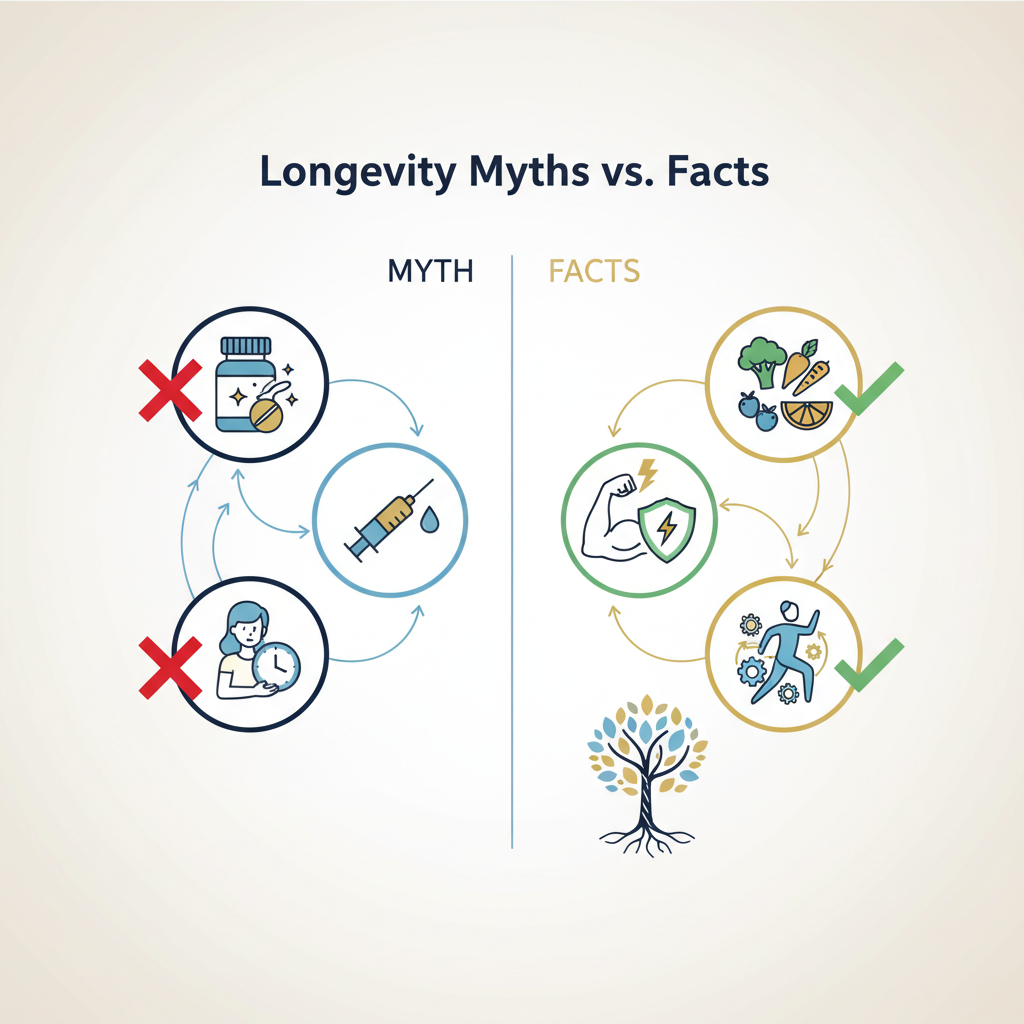
Myth 1: Genetics is Your Destiny
One of the most common myths is that your lifespan is pre-programmed in your DNA. The truth is that twin studies have shown genetics are responsible for only about 20% to 25% of the variation in human lifespan. What remains is 'Epigenetics'—how your environment and daily choices influence your gene expression.
In our communities, we might see families known for long lives, but often the cause is shared dietary habits, such as reliance on olive oil, legumes, and physical activity integrated into daily life, rather than genes alone. Adopting healthy aging routines starts with realizing that your daily decisions are what 'whisper' to your genes to stay active or dormant.
Myth 2: The Magic Pill Fallacy
There is a misconception that a handful of expensive supplements can compensate for poor sleep or nutrition. Take NAD+, for example. While it is essential, taking it as a supplement won't work miracles if there isn't a healthy foundation. You can read more in our guide on NAD+ and aging science explained to understand how this molecule works in integration with your lifestyle.
The truth is that supplements are 'supplemental,' not 'substitutional.' Research literacy teaches us that the body absorbs nutrients best when they come from natural sources within the context of functional nutrition that supports mitochondria and other vital processes.
Myth vs. Fact Comparison Table
| Myth | Scientific Fact |
|---|---|
| Aging starts at 60. | Cellular processes related to aging begin in your 20s and 30s. |
| You need intense exercise to live long. | Consistent natural movement (like walking) is more effective for longevity. |
| The brain stops growing as you age. | Neuroplasticity continues throughout life with proper mental stimulation. |
| Fats are always bad for heart health. | Healthy fats (Omega-3s) are essential for brain function and cellular longevity. |
Blue Zones Patterns: Real-World Lessons
When evaluating longevity claims, we must look at Blue Zones—regions where people live the longest, healthiest lives. These people don't go to fancy gyms or take exotic supplements. Instead, they follow blue zones patterns which include:
- A 90% plant-based diet.
- Strong social connections (community and family bonds).
- A sense of purpose (Ikigai).
- Natural physical activity like gardening or walking to the market.
These patterns prove that longevity is the product of a supportive environment and simple, consistent choices, rather than complex medical interventions.
Functional Nutrition: Beyond Calories
Functional nutrition isn't just a 'diet' for weight loss; it's an approach that uses food as medicine to support body systems. Instead of counting calories, we focus on nutrient density and its impact on inflammation and blood sugar levels. Optimizing cellular energy is at the heart of functional nutrition, where we choose foods that support mitochondria, the powerhouses of our cells.
In traditional Mediterranean-style diets, we have functional nutrition treasures: turmeric, garlic, extra virgin olive oil, and leafy greens. These foods act as natural antioxidants that protect our cells from damage caused by free radicals, one of the main drivers of premature aging.
Movement vs. High-Intensity Exercise
Many believe that if they don't run a marathon, they aren't doing enough for their health. The truth is that prolonged sitting is 'the new smoking.' Science shows that people who move every 20 minutes (even just for stretching) have better metabolism than those who exercise for an hour and then sit for the rest of the day.
The goal is to make movement an integral part of your routine. Taking the stairs, walking while on the phone, and active commuting are simple steps that support healthy aging routines and help maintain muscle mass and bone strength as we age.
Medical Disclaimer
The information in this article is for educational and informational purposes only and is not intended as medical advice, diagnosis, or treatment. Always consult your physician or a qualified health professional before making significant changes to your diet or starting new supplements.
Frequently Asked Questions
Absolutely! Research shows that lifestyle changes at any age can significantly improve quality of life and reduce the risk of chronic diseases.
There isn't just one, but a balance of fiber (for gut health), protein (to maintain muscle), and healthy fats (for the brain) is the foundation.
Yes, chronic stress raises cortisol levels and shortens telomeres (DNA caps), leading to faster cellular aging.
Genetic testing might give you a glimpse, but monitoring your daily biomarkers (like sleep, energy, and digestion) is more important for practical application.

Explore health education
Review the educational guides and practical tools related to this topic.
Explore the education hub