How to Read Longevity Research: A Comparison Guide for Discerning Science from Hype
Author: Feras Alayed
Published:
Updated:
Category: longevity
Reading Time: 7 minutes
Key Takeaways
- Distinguishing between correlation and causation is the key to understanding longevity research.
- Animal studies do not always translate directly to human biological outcomes.
- Functional nutrition relies on individual context, not just a single study's result.
- Research literacy helps you avoid chasing unproven health fads and marketing hype.
TL;DR Summary
If you want to know how to read longevity research, start by looking at the study type (human vs. animal), sample size, and funding source. Don't get swayed by headlines promising a 'magic pill'; instead, look for recurring patterns in longitudinal studies that link daily habits to cellular health.The Complex Landscape of Longevity Research
We live in a golden age of health information, but with this influx comes the challenge of 'longevity research literacy'. Every day, headlines tell us that coffee extends life, only for others to warn against it the next day. To truly understand how to read longevity research, you must realize that science is not a final destination but a continuous process of self-correction. When you read about Optimizing Cellular Energy: Functional Nutrition for Mitochondrial Health, you aren't just looking at calories; you are looking at how molecules interact with your DNA and mitochondria. The challenge lies in translating global research into a personal context where social bonds and traditional dietary habits play a massive role. Mindful reading means asking: was this study done on mice in a controlled environment, or on humans living their natural lives?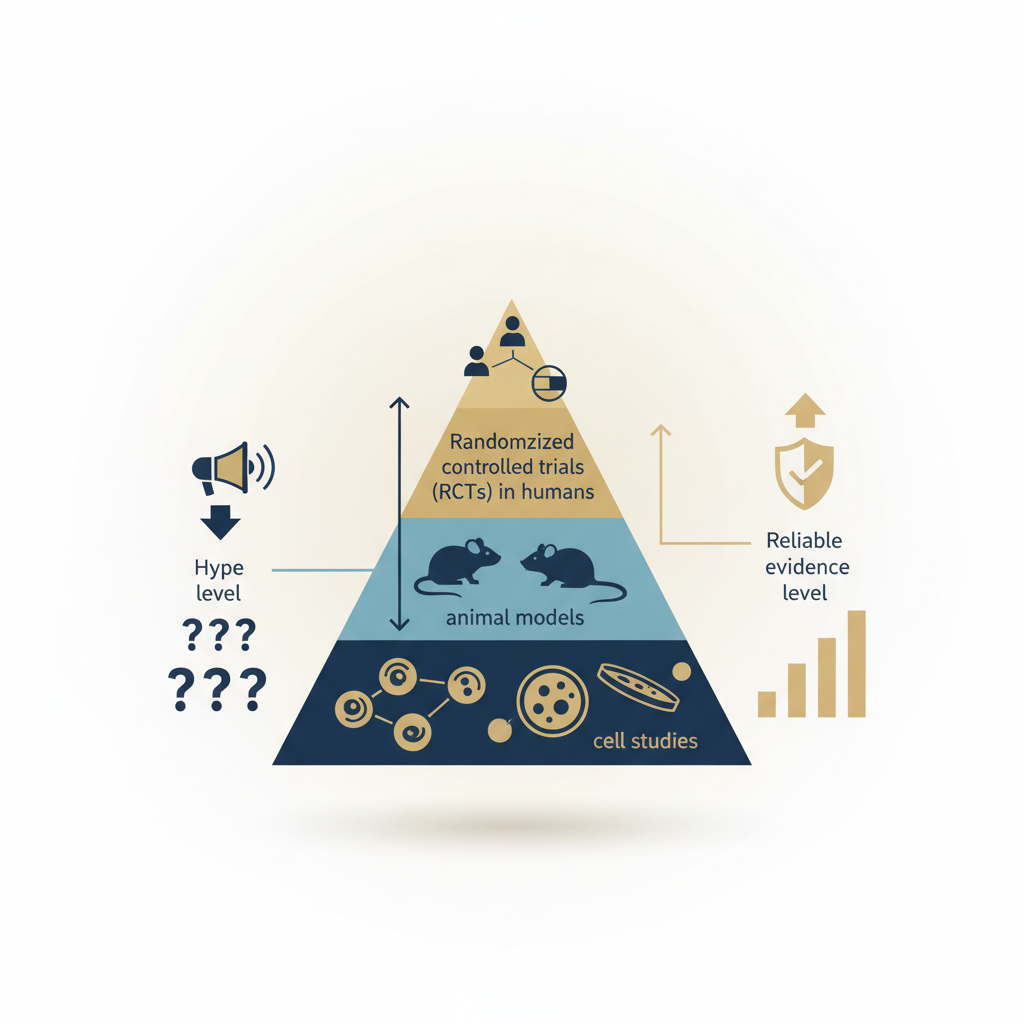
A Comparison Guide: Clinical vs. Observational Studies
To evaluate claims effectively, one must compare the most common research methodologies:1. Observational Studies
These studies monitor large groups of people over long periods. For example, observing a specific region's residents and documenting their diet and lifestyle. Pros: They provide insights into 'associations' (e.g., people who consume olive oil tend to live longer). Cons: They do not prove causation. Olive oil consumers might also exercise more, which could be the actual cause of their longevity.2. Randomized Controlled Trials (RCTs)
Considered the gold standard. Here, participants are randomly assigned to two groups: one receiving the intervention (like a supplement) and the other a placebo. Pros: Strong at proving that 'A' caused 'B'. Cons: Often short-term and difficult to execute in longevity research because we cannot monitor humans in a lab for 80 years. When exploring NAD+ and aging science explained, you'll find that much of the scientific weight comes from understanding how these molecules function in short-term clinical trials measuring biomarkers rather than total lifespan.Blue Zones Patterns vs. Lab Interventions: Where is the Truth?
'Blue Zones patterns' are among the most exciting topics in longevity research. These areas (like Okinawa, Ikaria, and Sardinia) host the highest number of centenarians. The comparison here is fascinating: In Blue Zones: Longevity results from a 'synergy' of factors: natural movement, strong social ties, and a mostly plant-based diet. In the Lab: Scientists try to isolate a single compound (like Resveratrol) to give us the 'Blue Zone effect' in a capsule. How to read this? If you read a study praising a single food component, compare it to what we know about Blue Zones patterns. Is this component part of an integrated diet? Is the effect due to the component or the surrounding lifestyle? Evaluating longevity claims requires a holistic view that bridges molecular biology and human behavior.Evaluating Longevity Claims and Functional Nutrition
When faced with a new health claim, use the 'Functional Nutrition Filter'. Functional nutrition views food not just as fuel, but as chemical messages for the cells. Evaluating longevity claims requires checking three things: 1. Dosage: Is the dose used in the study humanly possible? (Sometimes animal studies use doses equivalent to 100 bottles of a supplement daily for a human). 2. Duration: Did results appear after a week or years? 3. Source: Is the study funded by a company selling the product? In daily life, you might hear about intermittent fasting. Instead of following it just because it's a 'trend', read the research explaining how fasting triggers 'Autophagy' and how that can be integrated into your routine. The goal is to make the decision clearer, not harder.Understanding Biomarkers: From NAD+ to Glucose
A big part of learning how to read longevity research is understanding what is being measured. Since we cannot wait for participants to pass away to see if an intervention worked, scientists use 'Biomarkers'. Key biomarkers to watch in research:- Insulin Sensitivity: How your body handles sugar is a strong indicator of aging speed.
- NAD+ Levels: A vital molecule for energy production and DNA repair. Learn more in our Practical guide to NAD+ and aging.
- Telomere Length: Protective caps at the end of chromosomes (though this is scientifically debated).
- Inflammation (hs-CRP): 'Inflammaging' is the hidden driver of most age-related issues.
Practical Steps to Build an Evidence-Based Routine
To turn reading into action, follow these steps for healthy aging routines: 1. Start with Basics: Don't look for expensive supplements before optimizing sleep quality and stress management. 2. Gradual Change: Functional nutrition depends on individual experience. If you read about the benefits of low-carb, try it and monitor your energy levels. 3. Use Tech Wisely: Health trackers are great, but they give you data, not wisdom. Wisdom comes from understanding the science behind the data. 4. Continuous Learning: Science evolves. What was considered a fact 10 years ago might be debunked today. Stay flexible in your routine.Comparison Table: Types of Scientific Evidence
| Study Type | Strength in Proving Cause | Human Applicability | Main Goal |
|---|---|---|---|
| Cell Studies (In Vitro) | Very Low | Low | Understand primary mechanisms |
| Animal Studies (Mice) | Medium | Low to Medium | Test safety and hypotheses |
| Human Observational | Low (Correlation only) | High | Identify long-term patterns |
| Clinical Trials (RCTs) | Very High | Very High | Prove efficacy of specific intervention |
FAQ: How to Read Longevity Research
1. Should I believe every study published in a scientific journal? No, journals vary in quality. Look for studies that are 'Peer-reviewed' and published in high-impact journals like Nature, Cell, or Science. 2. Why do study results often contradict each other? Because methodologies differ, as do the genetics and environments of participants. Science looks for 'consensus', not a single isolated study. 3. How can I tell if a health claim is just marketing? if it promises very fast results, uses words like 'miracle' or 'hidden secret', or relies solely on testimonials instead of statistical data, it's likely marketing. 4. Are mouse studies useful for humans? Yes, they are excellent starting points for understanding 'how' something works, but they don't necessarily mean the same result will occur in the complex human body. 5. What is the most important marker to look for in nutrition studies? Look for 'Metabolic Health' and how food affects blood sugar stability and inflammation, as these are the pillars of cellular energy.Medical Disclaimer
The information in this article is for educational and informational purposes only and is not intended to diagnose, treat, or prevent any disease. Always consult your physician or a qualified healthcare provider before making any changes to your diet, starting new supplements, or changing your exercise routine. Results vary from person to person based on health status and genetics.Related Articles
- Optimizing Cellular Energy: Functional Nutrition for Mitochondrial Health
- NAD+ and Aging Science Explained — Practical Guide

Explore health education
Review the educational guides and practical tools related to this topic.
Explore the education hub