7-Day Food and Mood Journal Challenge: Practical Guide
Author: Feras Alayed
Published:
Updated:
Category: mental-nutrition
Reading Time: 12 minutes
Key Takeaways
- Neutral observation is key: Writing down what you eat and how you feel without self-blame is the first step toward change.
- The gut-brain connection is real: What we consume directly impacts our energy and mood throughout the day.
- Journaling is not a diet: The goal of this challenge is to gather personal data to understand habits, not to restrict calories.
- Patterns emerge over time: Committing to 7 days reveals emotional eating triggers and the effects of stress.
TL;DR
The food and mood journal challenge is a practical tool designed to help you understand the relationship between your dietary choices and your mental and physical state. Over 7 days, you will log your meals, hunger levels, and mood before and after eating. This guide provides a detailed daily plan, real-life scenarios, and a checklist to start building healthy, sustainable nutritional awareness immediately.
The Problem: Why We Lose Touch with Hunger and Fullness
Have you ever finished a meal while working at your desk or watching TV, only to wonder how the food disappeared so quickly? Or perhaps you felt a sharp drop in energy or a sour mood a couple of hours after eating, without realizing the connection. In our fast-paced world, eating has become a secondary activity we do while multitasking. This disconnection from the eating experience leads us to ignore the natural hunger and fullness cues our bodies send.
Many people try to solve this by adopting strict diets and complex rules. However, these attempts are often hard to sustain because they address the symptoms (what we eat) while ignoring the root causes (why and how we eat). When we rely solely on willpower without understanding behavioral patterns and emotional triggers, we find ourselves reverting to old habits the moment we feel stressed or tired. This is where stepping back and mindfully observing the relationship between Mental Health & Nutrition Education becomes crucial.
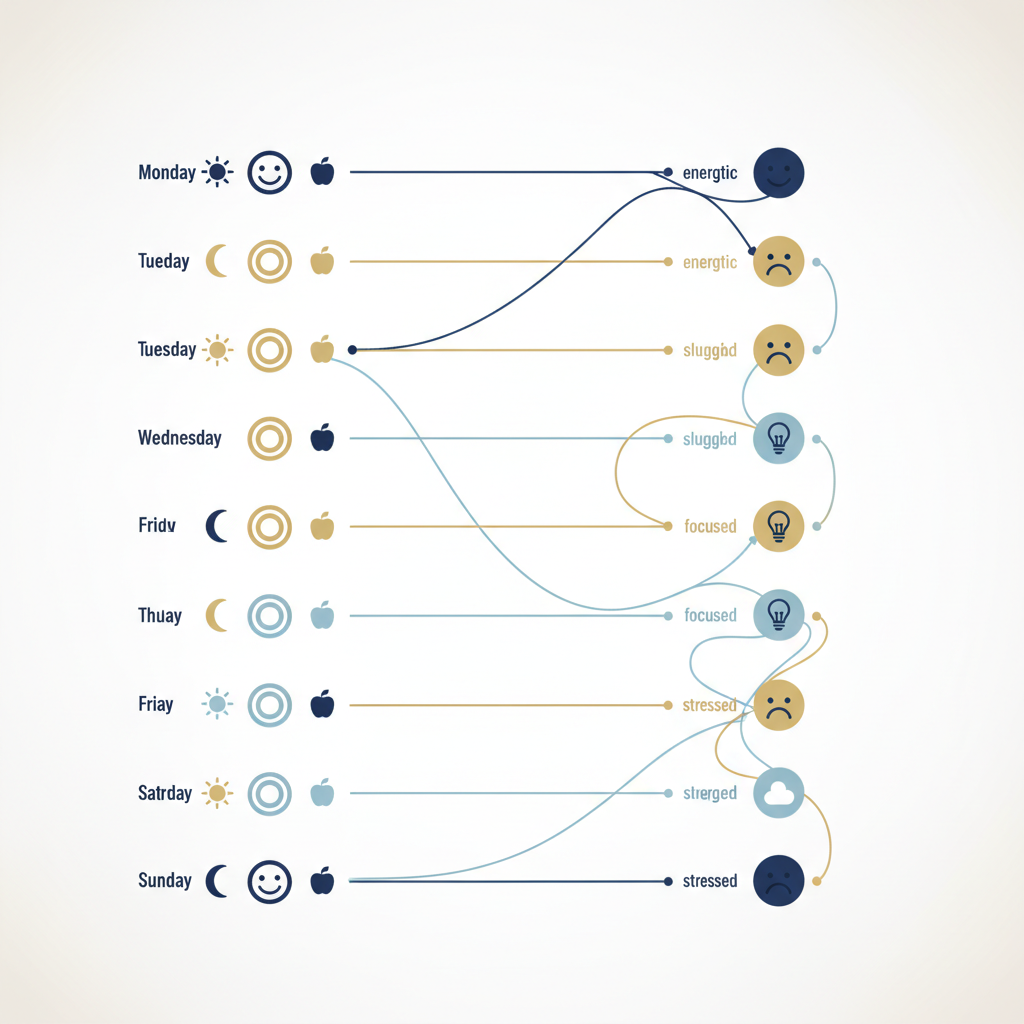
What is a Food and Mood Journal Challenge?
A food and mood journal challenge is: a structured, 7-day self-monitoring tool aimed at recording what you eat and drink, paired with your emotional state and energy levels before and after consumption. The goal is not to count calories or judge food quality, but to uncover hidden patterns. For instance, you might discover that skipping breakfast consistently leads to intense sugar cravings at 3 PM, or that drinking coffee after 4 PM increases your anxiety.
This challenge is rooted in mindfulness. By dedicating just a few minutes a day to journaling, you build a personal database that helps you make dietary decisions that better support your mental and physical health, especially when you understand the comprehensive guide to gut-brain axis terminology and its impact on mental health.
Step 1: Preparation and Setting Up
Before you begin the challenge, you need to set up an environment that supports your success. It doesn't require complex tools, just a simple commitment to documentation.
Required Educational Tool: A small, portable paper notebook or a notes app on your smartphone. Divide the page into columns: Time, Food/Drink, Hunger Level (1-10), Mood Before, Mood/Energy 2 Hours After.
Clear Check Question: Have you chosen a journaling method that is easily accessible anytime and anywhere for the next seven days?
Step 2: Day 1 - Observation Without Judgment
Day one is about breaking the ice. Do not try to change your diet today. Eat exactly as you normally would. The golden rule here is: Observation without judgment. If you eat an extra piece of candy, write it down honestly without berating yourself. The idea is to capture a realistic snapshot of a typical day.
Required Educational Tool: The lens of a neutral observer. Write down everything, even the small bites while cooking or the chocolates at the office.
Clear Check Question: Were you able to record everything you ate today without feeling guilty or trying to sugarcoat reality?
Step 3: Day 2 - Assessing Hunger Levels
On the second day, we add a new layer of awareness: the hunger scale. Before you start eating anything, ask yourself: How hungry am I on a scale from 1 (starving) to 10 (painfully full)? This helps differentiate between true physical hunger and the desire to eat for other reasons.
Required Educational Tool: The hunger and fullness scale. Try to start eating when your hunger is at a 3 or 4, and stop when you reach a 7 (comfortably full).
Clear Check Question: How many times today did you eat when you were not physically hungry (hunger level 5 or above)?
Step 4: Day 3 - Pre-Meal Emotions
Today, we focus on the emotional state that precedes eating. Are you eating because you are bored? Stressed? Happy? Lonely? Logging emotions before a meal reveals emotional eating triggers. You might notice that you turn to specific foods when you feel anxious.
Required Educational Tool: A basic emotions list (Happy, Sad, Stressed, Angry, Bored, Neutral).
Clear Check Question: Did you notice a connection between a specific emotion (like stress) and the choice of a particular type of food?
Step 5: Day 4 - Post-Meal Energy Levels
What happens after you eat? On day four, focus on logging how you feel 30 to 120 minutes after a meal. Do you feel energized and focused? Or do you experience sleepiness, bloating, or a craving for more sugar? These observations can indicate how your body handles certain foods, and might encourage you to learn more about insulin resistance symptoms and when to seek care if you experience severe energy crashes.
Required Educational Tool: Phone alarm. Set an alarm for an hour and a half after your meal to remind you to log your energy level.
Clear Check Question: Which meals today gave you sustained energy, and which caused a sudden slump?
Step 6: Day 5 - Stress and Snacking
Stress is one of the biggest triggers for mindless eating. On day five, observe how work or life pressures affect your snacking patterns. Do you find yourself reaching for something crunchy or sweet after a difficult meeting? It is important here to learn about stress eating cycle breaking strategies.
Required Educational Tool: Stress event tracker. Link a stressful event in your day to your urge to eat.
Clear Check Question: Did you use food today as a tool to cope with psychological pressure or an upsetting situation?
Step 7: Day 6 - Hydration and Mental Clarity
We often confuse thirst with hunger. On day six, add a column to track your water intake. Notice how proper hydration affects your mental clarity (brain fog) and your desire to snack between main meals. If you follow a specific protocol, it might be helpful to review the intermittent fasting comprehensive guide for beginners to understand the importance of hydration during fasting windows.
Required Educational Tool: A water bottle and cup tracking in your journal.
Clear Check Question: Did you feel that your urge to snack decreased when you kept your body well-hydrated?
Step 8: Day 7 - Social Eating and Weekends
Our eating habits often change on weekends or when dining with others. On the final day of the challenge, observe how the social environment impacts your choices. Do you eat more when you are with friends? Do you ignore fullness cues because the conversation at the table continues?
Required Educational Tool: Environmental observation (who you were with, where you ate, level of distraction).
Clear Check Question: How did your food choices differ today compared to workdays or your usual routine?
Step 9: Reviewing and Identifying Patterns
After the seven days are over, sit in a quiet place and review your journal. Look for common threads. Journaling itself is helpful, but the real value lies in the analysis. Don't look for mistakes; look for data. It can also be beneficial to understand how to accurately evaluate nutrition and mental health research claims to make sense of these patterns scientifically.
Required Educational Tool: A highlighter. Highlight times you felt high energy in green, and times you felt sluggish or stressed in yellow.
Clear Check Question: What is the one habit or pattern that repeated most often during this week?
Step 10: Building a Flexible Routine
Now that you have realistic data about yourself, you can start making small, flexible adjustments. Do not try to change everything at once. Pick one pattern to work on. If you noticed you eat out of boredom in the evening, try adding an alternative activity like reading or walking. A healthy routine should be flexible and adapt to your life, not a rigid schedule that adds more stress.
Required Educational Tool: A One-Step Action Plan.
Clear Check Question: What is one simple, positive change you can implement next week based on your observations?
Common Mistakes and How to Fix Them
While undertaking the food and mood journal challenge, it is easy to fall into certain traps. Here are the most common ones and how to handle them calmly:
- Perfectionism: Trying to log every single gram and tiny detail can make the process exhausting. Correction: Focus on the big picture and feelings, not precise calculations.
- Changing your diet abruptly: Once you start journaling, you might be tempted to eat very healthily so your journal looks perfect. Correction: Remember the journal is for your eyes only. Honesty is what gives you useful data.
- Self-blame upon discovering negative habits: Reading that you ate due to stress might trigger guilt. Correction: Use neutral language. Replace "I ruined my day" with "I noticed I turned to food to relieve stress today."
- Delaying logging until the end of the day: Relying on memory leads to forgetting subtle details and emotions. Correction: Jot down your notes immediately after a meal, or use a quick app on your phone.
Quick-Start Checklist
- [ ] Choose your journaling tool (notebook or app).
- [ ] Set up your tracking columns (Time, Food, Hunger, Mood Before, Mood After).
- [ ] Commit to not changing your current diet during the challenge period.
- [ ] Set alarms to remind you to log energy levels two hours post-meal.
- [ ] Schedule time at the end of the week (Day 8) to review patterns and notes.
Daily Life Decision Scenarios
To understand how journal findings can be used in daily life, let's look at some hypothetical scenarios:
Scenario A: The Mid-Afternoon Craving
Situation: You notice in your journal that you consistently crave sweets at 3 PM on workdays.
Mindful Decision: Instead of fighting the craving with sheer willpower, you review your lunch and discover it lacks protein and fiber. You decide to adjust your lunch to be more satiating, and prepare a healthy snack (like nuts or fruit) for 2:30 PM to prevent the sharp energy drop.
Scenario B: Evening TV Snacking
Situation: Your journal shows you consume large amounts of chips after dinner, and your pre-snack hunger level was (2) while your mood was (bored).
Mindful Decision: You realize this is emotional eating tied to habit, not hunger. You decide to change your evening routine; perhaps by taking up a manual hobby, or brewing a warm cup of herbal tea as a substitute for the chewing habit.
When to Seek Professional Help
The food and mood journal challenge is an excellent tool for increasing self-awareness, but it is not a substitute for professional medical or psychological care. You should consider consulting a clinical dietitian or therapist if you notice any of the following:
- If journaling causes you severe anxiety or an obsession with tracking every detail.
- If you discover patterns of binge eating or severe food restriction that you feel you cannot control.
- If mood or energy swings significantly impact your daily quality of life, work, and relationships.
- If you have chronic health conditions that require precise nutritional intervention.
Medical Disclaimer
The information provided in this article is for educational and informational purposes only and is not intended to diagnose, treat, or prevent any disease. The food and mood journal challenge is a tool to support behavioral awareness, not a treatment plan. Please consult your physician or a qualified healthcare professional before making any drastic changes to your diet or lifestyle, especially if you have pre-existing medical conditions.
Your Next Step
Awareness is the first step toward building a healthy, sustainable relationship with food. Don't wait for the perfect moment to start; neutral observation requires no physical effort, only mental presence. If you are ready to understand the patterns that govern your daily choices more deeply, start your internal health assessment now to determine the right step for your goal and build a routine that supports your mental and physical well-being.
Frequently Asked Questions
What is the scope of this guide?
This guide is educational and helps readers organize questions and observations for further learning.
How should I use the information?
Use it to review terminology, note personal questions, and identify sources that require verification.
When should I seek professional guidance?
Discuss personal symptoms, medicines, diagnoses, or treatment decisions with a licensed professional.
Further Education
- Explore the metabolic health education hub
- Learn how to read research summaries
- Use the educational health assessment

Ready to choose a clearer health starting point?
Start with a short educational assessment to explore tools and resources that may fit your goal. It is not a medical diagnosis.
Continue learning at Mental Health & Nutrition.
Continue your next step with ATHAR
Explore the official Feel Great member path, or learn about the creator partnership route if you are interested in sharing wellness education with your audience.
Explore Feel Great · Explore the Creator Affiliate gateway · Ask a question on WhatsApp