Heart Disease Prevention Canada: How to Lower Your Risk and Stay Well
Author: Feras Alayed
Published:
Updated:
Category: canadian-health
Reading Time: 8 minutes
Key Takeaways
- Heart disease remains Canada’s top killer and a major cause of hospital use and health-care cost (Heart & Stroke; CIHI).
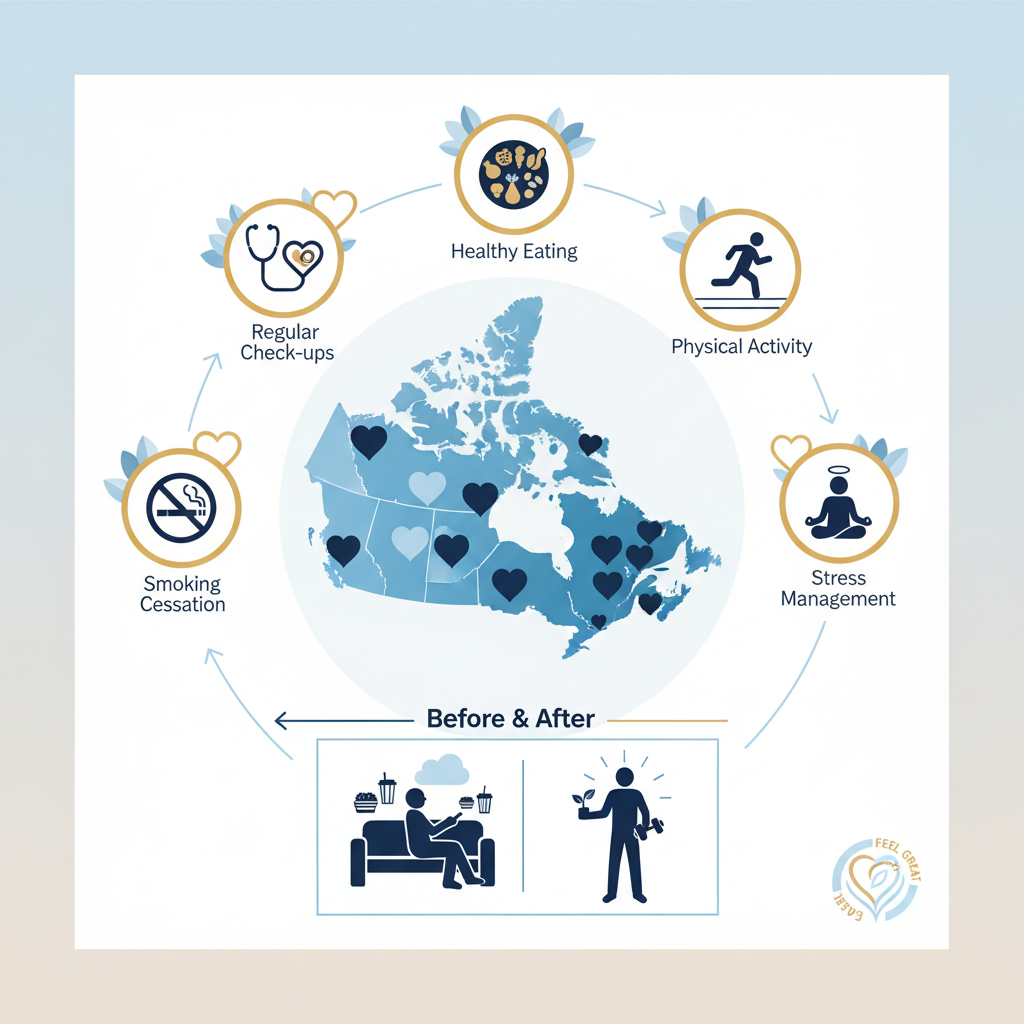
- Lifestyle changes — healthy eating per Canada’s Food Guide, regular activity, quitting smoking, weight management and blood-sugar control — are frontline prevention strategies.
- In Canada, important measurements use mmol/L for blood glucose and cholesterol; know your numbers and discuss targets with your health-care team.
- Access to services (cardiac rehab, specialist care) varies by province — Ontario, BC, Alberta and Quebec have different pathways and programs.
- The Feel Great system (Balance soluble-fibre matrix, Unimate yerba mate, and the 4-4-12 intermittent fasting protocol) may help as a lifestyle support — not a medication — and works best alongside medical care.
TL;DR
Heart disease is the leading cause of death in Canada. Primary prevention — managing blood pressure, cholesterol, weight and diabetes — plus quitting smoking and increasing activity are crucial. Supportive lifestyle systems like Feel Great can be part of a broader prevention plan.
🇨🇦 Thousands of Canadians are using Feel Great to support their metabolic health naturally. Learn more & order here →
Introduction: A Shocking Canadian Statistic
Cardiovascular disease (CVD) remains a leading cause of death and disability in Canada. Heart & Stroke and CIHI report that heart disease and stroke continue to account for a large share of deaths and hospital care, affecting millions of Canadians and posing an ongoing burden to the health-care system (Heart & Stroke Foundation of Canada; CIHI).
Why Heart Disease Prevention Matters in Canada
Preventing heart disease improves quality of life, reduces strain on provincial health budgets and decreases hospital admissions. Differences across provinces — in wait times, availability of cardiac rehab and primary-care access — mean prevention must be tailored to local reality. National data from Statistics Canada and CIHI highlight these variations.
Main Risk Factors for Heart Disease
High blood pressure
Hypertension is one of the biggest modifiable risk factors for heart disease. Regular monitoring and treatment are essential.
High cholesterol
Elevated LDL cholesterol contributes to atherosclerosis. Targets are discussed individually with clinicians and reported in mmol/L in Canada.
Diabetes and insulin resistance
People with diabetes face a higher risk of cardiovascular disease. Diabetes Canada recommends regular monitoring of fasting plasma glucose and HbA1c. In Canada blood glucose is reported in mmol/L — fasting glucose ≥7.0 mmol/L is used for diabetes diagnosis; discuss thresholds and targets with your care team (Diabetes Canada).
Smoking
Tobacco use increases the risk of heart disease substantially. Provincial cessation programs and Health Canada–approved therapies are available to help quit.
Overweight and sedentary lifestyle
Excess weight and inactivity link to elevated blood pressure, adverse lipids and poorer glucose control. Obesity Canada provides evidence-based resources for management.
What the Canadian Data Shows
- Heart & Stroke indicates CVD remains a leading cause of death in Canada (Heart & Stroke).
- CIHI and Statistics Canada document that CVD contributes substantially to hospital admissions and health-care costs, with regional variation in outcomes and access to services (CIHI; Statistics Canada).
- Diabetes Canada highlights that diabetes prevalence increases heart disease risk; controlling blood glucose, blood pressure and lipids is central (Diabetes Canada).
Practical Prevention: A Step-by-Step Plan for Canadians
Prevention relies heavily on reducing modifiable risk factors. Here’s an actionable plan that fits the Canadian system.
1. Know your numbers
- Blood pressure: Have it checked at your family doctor, a walk-in clinic, or pharmacy monitor and record average readings.
- Cholesterol: Routine blood work ordered by your clinician will report LDL/HDL/total cholesterol in mmol/L.
- Blood sugar and HbA1c: Measured in mmol/L for glucose — fasting values and A1c help forecast risk. Consult Diabetes Canada for diagnostic thresholds and management.
2. Follow Canada’s Food Guide
Canada’s Food Guide encourages vegetables and fruits, whole grains, healthy protein choices and limiting sodium, saturated fats and free sugars. Adopting these patterns reduces cardiovascular risk (Canada's Food Guide).
3. Move more — Canadian activity recommendations
The Canadian 24-Hour Movement Guidelines recommend at least 150 minutes of moderate-to-vigorous physical activity weekly, including strength activities twice weekly. Regular activity improves blood pressure, lipid profile and weight management.
4. Stop smoking and limit alcohol
Take advantage of provincial smoking cessation services, nicotine replacement, and Health Canada–approved medications as needed. For alcohol, follow national guidance on low-risk drinking.
5. Manage diabetes and weight with a team
In Canada, primary care is the first line; referrals to endocrinologists, registered dietitians and cardiac rehab are common. Many provinces have chronic disease management programmes and community resources.
6. Pay attention to special populations
Women, older adults and Indigenous populations may have distinct risk profiles and barriers to care. Discuss personalised prevention strategies with your provider.
Regional Considerations Across Provinces
Access to cardiac rehabilitation, specialist clinics and allied health varies by jurisdiction. Ontario, BC, Alberta and Quebec have different referral pathways and program availability. If you’re concerned, contact your provincial health ministry or local cardiac centre for region-specific options.
Testing and Coverage in the Canadian Health System
Most basic lab tests and physician visits are publicly funded when ordered through a provincial health-care provider, but coverage for allied health services, specific programs or private cardiac rehab may vary. Walk-in clinics, family doctors and specialist referrals are common access routes.
Vitamin D, Canadian Climate and Seasonal Factors
Long winters and reduced sunlight in many parts of Canada can influence vitamin D status. Health Canada and CMAJ offer guidance on supplementation where deficiency exists. Discuss testing and safe dosing with your clinician, as needs vary by latitude and lifestyle.
How Feel Great Helps
Feel Great is positioned as a lifestyle support system that complements medical care and prevention efforts — not a replacement for clinical treatment.
- Balance: A soluble-fibre matrix formulated to reduce rapid post-meal glucose spikes — this may help post-prandial glycaemic responses when used as part of a broader dietary plan.
- Unimate: A yerba mate extract containing chlorogenic acids and other compounds that may support mental clarity and steady energy, offering an alternative to traditional coffee.
- 4-4-12 intermittent fasting protocol: A flexible eating schedule focused on timed windows that many clients find helpful for metabolic regulation and habit formation.
- Evidence base: Feel Great references a body of clinical research (50+ studies associated with ingredients listed in PDR). Products are presented as non-pharmaceutical supports; check Health Canada NPNs for any registered products in Canada.
Because individuals vary, consult your physician or pharmacist before adding supplements to your regimen, especially if you take medications for blood pressure, blood thinning or diabetes. Feel Great ships across Canada — from BC to Newfoundland — and is intended to work alongside medical care and lifestyle change.
A Practical Weekly Template for Canadians
- Day 1: Book or attend a check-up — blood pressure, basic blood work for lipids and glucose (mmol/L).
- Days 2–7: Implement Canada’s Food Guide meal templates; consider Balance before high-carb meals if advised.
- Activity: 30–40 minutes brisk walking 5 days a week plus 2 sessions of resistance or strength work.
- Monthly: Reassess weight, fasting glucose and blood pressure; adjust plan with the care team.
Warnings and Interactions
Do not change prescription doses without medical advice. Some supplements may interact with statins, blood thinners or diabetes medications. Always disclose supplements to your care providers. In Canada, look for Health Canada NPNs on supplements to confirm regulatory registration where applicable.
People Also Ask
- How can I reduce my heart disease risk in Canada? — Focus on lifestyle, screening and managing high blood pressure, cholesterol and diabetes.
- What are normal blood-sugar targets in Canada? — Blood glucose is reported in mmol/L; consult Diabetes Canada and your clinician for personal targets.
- Is Feel Great safe with heart medication? — Discuss with your prescriber; some ingredients may interact with medications.
- Where can I find cardiac rehab in my province? — Check provincial health ministry websites or local hospitals; pathways differ between Ontario, BC, Alberta and Quebec.
- Should I take vitamin D during Canadian winters? — Test levels with your doctor and follow Health Canada guidance for supplementation if deficient.
FAQ
- Can heart attacks be fully prevented? There is no absolute guarantee, but managing modifiable risks (smoking, blood pressure, lipids, diabetes) significantly lowers risk.
- What is cardiac rehabilitation versus general exercise? Cardiac rehab is supervised, medically oriented exercise and education for people after cardiac events; general exercise is unsupervised and not tailored medically.
- What LDL target should I aim for? Targets depend on individual risk; speak with your clinician to set an LDL goal (reported in mmol/L in Canada).
- Is intermittent fasting safe if I have heart disease? Some people tolerate structured fasting, but if you have heart disease or take medications (especially for diabetes), consult your clinician first.
- How can I get nutritional support in Canada? Registered dietitians and public health nutrition services are available in most provinces; see provincial health sites or Diabetes Canada for referrals.
References & Scientific Sources
- Health Canada — https://www.canada.ca/en/health-canada.html
- Diabetes Canada — https://www.diabetes.ca
- Heart & Stroke Foundation of Canada — https://www.heartandstroke.ca
- Canadian Institute for Health Information (CIHI) — https://www.cihi.ca
- Statistics Canada — https://www.statcan.gc.ca
- Public Health Agency of Canada — https://www.canada.ca/en/public-health.html
- Canadian Medical Association Journal (CMAJ) — https://www.cmaj.ca
- Obesity Canada — https://obesitycanada.ca
- PubMed — https://pubmed.ncbi.nlm.nih.gov
- National Institutes of Health (NIH) — https://www.nih.gov
- Harvard Health Publishing — https://www.health.harvard.edu
- Mayo Clinic — https://www.mayoclinic.org
Medical Disclaimer
This article is for educational purposes and does not replace personalised medical advice. Always consult your physician, pharmacist or other qualified health provider before starting or stopping medications, supplements, or major lifestyle changes. Feel Great products are not medications and are intended as lifestyle supports; check Health Canada NPN registration where applicable.

Related ATHAR paths
🇨🇦 Ready to Start Your Health Transformation?
Join thousands of Canadians who have improved their metabolic health with the Feel Great system. Backed by 50+ clinical studies and listed in the Physicians' Desk Reference (PDR).
✅ Ships to all provinces: BC, Alberta, Saskatchewan, Manitoba, Ontario, Quebec, New Brunswick, Nova Scotia, PEI, Newfoundland & Labrador | 90-Day Money-Back Guarantee