How to Read Hormone Health Information: A Seasonal Planning Guide for Health Literacy
Author: Feras Alayed
Published:
Category: hormonal-health
Reading Time: 5 minutes
- Health literacy is the key to making informed decisions.
- Scientific terminology is the building block of understanding your condition.
- Preparing for appointments changes the quality of healthcare.
- Distinguishing between reliable and commercial sources protects you from misinformation.
Introduction: Why Learn How to Read Hormone Health Information?
In the age of information overload, we face a real challenge in knowing how to read hormone health information correctly. Hormones are chemical messengers that control everything from our mood to our metabolism. When you search for health information, you aren't just looking for words; you're looking for a roadmap for your body. Understanding Comprehensive Hormone Health Terminology is the first step to becoming an active partner in your healthcare, rather than just a passive recipient of information.
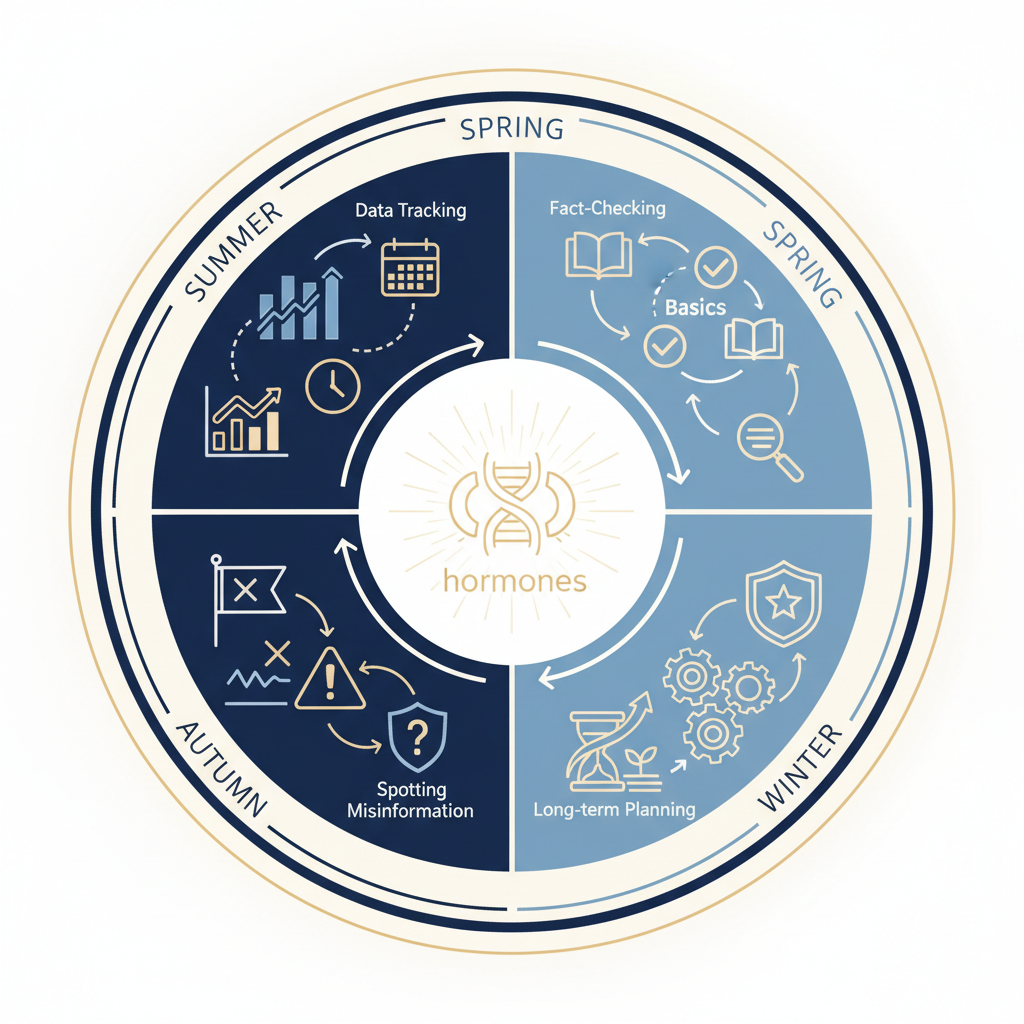
Winter Foundation: Building the Knowledge Base
Winter, with its calm and long nights, is the perfect time to dive into theoretical aspects. To learn how to read hormone health information, you must start with the basics. Hormones aren't just complex names; they are an integrated system. Start by learning the difference between steroid and peptide hormones, and understand how endocrine glands work as a team. When you read an article talking about 'negative feedback,' you should realize that this means your body's ability to stop producing a certain hormone once it reaches the required level. Absorbing a Guide to Endocrine System Terminology gives you the power to decode medical reports and scientific articles without feeling lost. In our society, we often rely on traditional advice, but integrating this with sound scientific understanding makes your daily decisions, like choosing types of food in winter to support the thyroid, more accurate and consistent.
Spring Interaction: Turning Information into Effective Questions
As flowers bloom in spring, it’s time to turn your knowledge into action. Learning how to read hormone health information also means knowing what to ask. If you are planning a doctor's visit regarding thyroid functions, reading about symptoms isn't enough. You must be armed with specific questions. We recommend reviewing 50 Essential Questions for a Thyroid Health Appointment to organize your thoughts. Spring is the season of renewal, the right time to organize your health file. Learn how to read lab results; don't just look at whether the result is 'within normal range,' but learn what it means to be at the low or high end of that range. This type of deep reading of health information is what distinguishes a health-literate person.
Summer Balance: Decoding Cortisol and Stress at Peak Times
Summer in the Arab region is associated with high heat, travel, and changing sleep routines, all of which directly affect the stress hormone. To learn how to read hormone health information in this context, the focus should be on 'Cortisol.' Cortisol is often portrayed as an enemy, but a conscious reading of information clarifies that it is essential for life. Look for a Comprehensive Guide to Cortisol Conversations to understand how this hormone interacts with your daily rhythm. When you read advice about 'stress management,' look for the hormonal explanation behind it. Does this practice help lower evening cortisol? Does it support insulin balance? Smart reading means linking advice to a tangible biological outcome, encouraging you to stick to a healthy routine during busy summer vacations.
Autumn Review: Sifting Through Digital Content
As leaves fall, it's time to filter your information sources. Learning how to read hormone health information requires critical skills. Don't believe every catchy headline promising to 'balance hormones in 24 hours.' Use clear criteria: Is the source medically reliable? Does it rely on human or animal studies? Are there conflicts of interest? In this season, review everything you've learned throughout the year. Compare what you read in the Hormone Terminology Guide with the claims you hear on social media. Health literacy is not a destination we reach, but a continuous journey of learning and re-evaluation. Make your autumn a season for establishing correct cognitive habits that will support you in the coming year.
7-Day Hormonal Awareness Challenge
- Day 1: Choose one hormonal term and look up its scientific definition.
- Day 2: Review your last blood test and try to understand each abbreviation.
- Day 3: Find a health article and evaluate it based on the quality of the sources cited.
- Day 4: Write down 5 questions you want to ask your doctor next time.
- Day 5: Read about the relationship between sleep and hormones and how it affects your routine.
- Day 6: Share a correct and documented piece of information with a friend or relative.
- Day 7: Set a health reading plan for the next month.
Related Articles
- Comprehensive Cortisol Conversations Guide
- Understanding Hormone Health Terminology
- Essential Questions for Thyroid Appointment

Explore health education
Review the educational guides and practical tools related to this topic.
Explore the education hub