Understanding Heart Health Terminology: A Complete Q&A Guide
Author: Feras Alayed
Published:
Updated:
Category: heart-health
Reading Time: 21 minutes
Key Takeaways
- Understanding heart health terminology is not a substitute for medical advice, but a tool to facilitate clear and organized communication with your doctor.
- Blood pressure and heart rate are physiological indicators that reflect your body's response to daily routines, environmental factors, and physical exertion.
- Cholesterol is not an "enemy" by default; it is a necessary structural substance that the body utilizes for cellular function and hormone production.
- Triglycerides and blood sugar play a pivotal role in the metabolic processes that accompany vascular function.
- Knowing these terms helps you read nutritional labels systematically and adjust your daily habits with greater awareness and documentation.
TL;DR
This comprehensive guide aims to simplify heart health terminology through a detailed Q&A format. Here, you will learn the physiological meaning of the numbers and symbols you see in your health reports, such as systolic and diastolic blood pressure, various forms of cholesterol, and triglycerides. The goal is to provide you with foundational, educational knowledge that informs your daily choices and makes your dialogue with your healthcare provider clearer and more effective, without offering any diagnosis, medical outcomes, or treatment promises.
Introduction: Why Does Heart Health Language Seem So Complex?
Imagine leaving the doctor's office holding a paper filled with numbers, reference ranges, and acronyms like LDL, HDL, BP, and HR. For many individuals, this paper looks like it is written in a completely foreign language. This sense of mystery can create a barrier between you and the practical steps needed to organize your daily routines. When we do not understand what these numbers mean on a physiological level, it becomes difficult to maintain the consistent tracking required to document lifestyle modifications, and previous attempts to organize nutritional intake or physical activity become hard to sustain over the long term.
The complexity of medical terminology stems from the need for standardized communication among healthcare professionals globally. When a laboratory technician, a general practitioner, and a cardiologist look at a lipid panel, they must all understand the exact same biochemical markers. However, this standardization often leaves the individual patient feeling overwhelmed. The terminology is highly specific, relying on Latin and Greek roots, as well as complex biochemical classifications, which are rarely taught in standard educational curricula.
Understanding heart health terminology is the first step toward building sound health awareness and taking an active role in your personal data organization. This article is not a diagnostic or therapeutic tool; rather, it is an educational dictionary specifically designed to answer your questions in a simplified, structured manner. By translating dry medical terms into concepts relevant to your daily observation, you will be able to organize your routine more effectively, read food labels with a critical eye, and prepare for more productive, data-driven consultation sessions with your doctor.
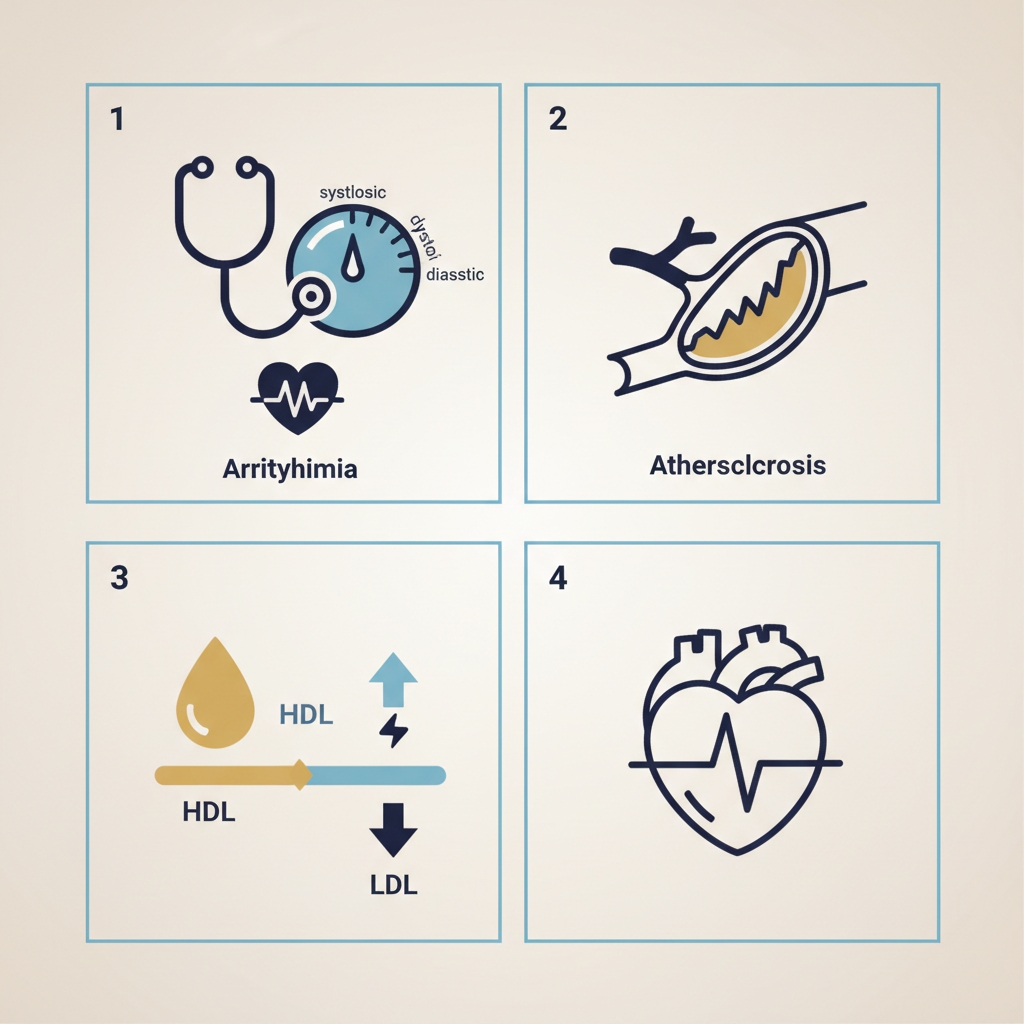
Section 1: Decoding Daily Vitals
Vital signs are the primary, observable markers that measure the body's basic physiological functions. Healthcare providers use these metrics to establish a baseline of your current physical state. Here are the most important questions and detailed explanations about them:
Q: What is Blood Pressure, and why does it consist of two numbers?
A: Blood pressure is the physical force of blood pushing against the inner walls of your arteries as your heart pumps it throughout the vascular system. The measurement always consists of two distinct numbers (for example, 120/80), which represent different phases of the cardiac cycle:
- The top number (Systolic Pressure): This metric measures the maximum pressure inside your arteries when your heart muscle contracts (a phase called systole) and forces blood out into the circulation. It reflects the force exerted on the arterial walls during the active pumping phase.
- The bottom number (Diastolic Pressure): This metric measures the baseline pressure inside your arteries when your heart muscle rests and refills with blood between beats (a phase called diastole). It reflects the continuous resistance and tone of the blood vessels when the heart is not actively pushing blood.
Understanding these two numbers helps you monitor your body's response to various stimuli, such as environmental stress, physical activity, and daily lifestyle factors. When tracking these numbers at home, noting the time of day, your physical position, and your recent activities provides valuable context for your healthcare provider.
Q: What is Resting Heart Rate?
A: Resting heart rate is the total number of times your heart beats per minute when you are at complete physical and mental rest, such as sitting quietly in a chair or lying down. This metric is considered a general indicator of the heart muscle's operational efficiency. The measurement is typically taken by finding a pulse point, such as the radial artery on the wrist or the carotid artery on the neck, and counting the pulsations. Generally, a regular resting heart rate falls within a specific reference range, though this varies significantly from person to person based on age, genetics, and baseline fitness level. Documenting your resting heart rate at the same time each morning can help you establish a personal baseline for your doctor to review.
Q: What is the difference between Heart Rate and Heart Rate Variability (HRV)?
A: While heart rate measures the total number of beats per minute, Heart Rate Variability (HRV) measures the minute, millisecond fluctuations in the time intervals between each successive heartbeat. The heart does not beat like a perfectly metronomic clock; the intervals constantly change based on signals from the autonomic nervous system. The autonomic nervous system consists of the sympathetic branch (which accelerates the heart rate in response to stress or activity) and the parasympathetic branch (which slows the heart rate during rest and digestion). HRV is a metric used in many modern wearable devices to observe the balance between these two branches, providing data on the body's recovery status and physiological stress levels.
Section 2: Understanding Cholesterol and Lipids (The Lipid Panel)
When your doctor orders a "Lipid Panel" or "Lipid Profile," they are looking for a specific set of biochemical indicators related to fats circulating in the blood. Because blood is mostly water and fats do not dissolve in water, the body uses specialized transport mechanisms. Here is what these terms mean:
Q: What is Total Cholesterol?
A: Cholesterol is a waxy, fat-like substance (a lipid) that is primarily produced by the liver, with a smaller portion absorbed from certain dietary sources. Your body absolutely requires cholesterol to build the structural membranes of every cell, to synthesize essential hormones (like estrogen and testosterone), and to produce bile acids necessary for digestion. Total cholesterol is the overall, combined sum of all the different types of cholesterol circulating in your bloodstream at the time of the blood draw.
Q: Why is LDL called "bad" and HDL called "good" cholesterol?
A: Because cholesterol cannot travel freely in the aqueous environment of the blood, it must be packaged into microscopic transport vehicles called lipoproteins (complexes of lipids and proteins). The density of these lipoproteins determines their classification and function:
- LDL (Low-Density Lipoprotein): This is often referred to in popular terminology as "bad" cholesterol because its primary biological function is to transport cholesterol from the liver out to the cells and arteries that need it. If the concentration of LDL particles in the bloodstream is disproportionately high, the excess cholesterol can become deposited and build up on the inner walls of the blood vessels, a process doctors monitor closely.
- HDL (High-Density Lipoprotein): This is commonly known as "good" cholesterol because its biological function is reverse cholesterol transport. It acts somewhat like a biological vacuum cleaner; it circulates through the bloodstream, picks up excess cholesterol molecules from the tissues and arterial walls, and transports them back to the liver, where they are processed and eventually eliminated from the body.
Q: What are Triglycerides, and how do they differ from cholesterol?
A: Triglycerides are another distinct type of lipid found in the blood. While cholesterol is utilized primarily as a structural building block for cells and a precursor for hormones, triglycerides serve a completely different function: they are used to store excess energy. When you consume more calories than your body requires for immediate use, the metabolic system converts those extra calories into triglycerides, which are then stored in fat cells and circulated in the blood to provide energy between meals. Triglyceride levels are closely linked to nutritional patterns, especially the consumption of simple sugars and refined carbohydrates. To dive deeper into how to observe and manage these levels through daily habits, you can check out triglycerides lowering natural strategies.
Section 3: The Connection Between Blood Sugar and the Heart
You might wonder: Why does a cardiologist or a general practitioner evaluating heart health care so much about blood sugar levels? The answer lies in the intricate, interconnected relationship between the metabolic system and the structural integrity of the vascular system.
Q: What is the HbA1c test?
A: The HbA1c test, also known as the glycated hemoglobin test, is a specific blood test that measures your average blood sugar (glucose) levels over the past two to three months. When glucose enters your bloodstream, a portion of it naturally attaches to hemoglobin, the protein inside red blood cells that carries oxygen. This attachment process is called glycation. Because red blood cells have an average lifespan of about 120 days, measuring the percentage of glycated hemoglobin provides a comprehensive, long-term picture of how your body handles glucose. This is fundamentally different from a fasting blood glucose test, which only provides a momentary measurement that might be influenced by your last meal or recent stress.
Q: What is Insulin Resistance, and how does it affect the heart?
A: Insulin is a hormone secreted by the pancreas that acts like a key, unlocking cells so they can absorb glucose from the blood and use it for energy. Insulin resistance is a physiological condition where the body's cells do not respond effectively to this hormone. Because the cells resist the insulin signal, glucose remains in the bloodstream, leading to elevated blood sugar levels. In response, the pancreas pumps out even more insulin. Over time, this constant state of elevated glucose and insulin is associated with changes in the elasticity of blood vessels and is closely correlated with shifts in cholesterol and triglyceride levels. To understand the terminology and mechanisms of this condition more broadly, you can read our complete guide on insulin resistance symptoms.
Section 4: How Understanding These Terms Benefits Your Daily Life
Knowledge is a tool for organization, and understanding these physiological terms translates into more informed, conscious daily decisions. When you know the vocabulary, you can document your habits systematically:
- Reading Nutritional Labels: Food packaging contains detailed biochemical information. When you understand the structural difference between saturated fats, unsaturated fats, and trans fats, and their respective associations with LDL and HDL particles, you will be able to categorize your food choices more consciously. You can track serving sizes, carbohydrate types, and fiber content in a personal log. Your comprehensive guide for this organizational skill is available in reading nutrition labels for heart health.
- Organizing Meal Times: Understanding how blood sugar and triglycerides respond to the intake of food might encourage you to explore systems that organize your eating schedule. Documenting the timing of your meals allows you to observe your body's hunger cues and energy fluctuations. You can learn the basic terminology and scheduling concepts in the intermittent fasting beginners guide 2026.
- Managing Stress and Activity: Your awareness of the concepts of systolic pressure, diastolic pressure, and heart rate variability makes you more mindful of the physiological responses to your daily environment. By keeping a journal of your daily stressors alongside your vital sign readings, you can observe patterns. This documentation of rest periods, breathing exercises, and physical exertion provides excellent data for your next medical consultation.
Section 5: Common Belief vs. What Needs Verification
In a world full of easily accessible health information, it is remarkably easy to confuse established physiological facts with oversimplified misconceptions. Here is a detailed table clarifying some common beliefs and providing the necessary context for deeper understanding:
| Common Belief | What Needs Verification and Deeper Understanding |
|---|---|
| All cholesterol is harmful and must be completely eliminated from the diet and body. | Cholesterol is an essential structural component for building cell membranes and synthesizing vital hormones. The clinical goal is observing the balance and distribution between HDL and LDL particles, not the total elimination of the substance. |
| A single high blood pressure reading indicates a permanent, unchangeable physiological problem. | Blood pressure is a dynamic metric that fluctuates continuously throughout the day in response to physical activity, caffeine intake, hydration status, and mental stress. The overall documented trend and professional doctor follow-up are what provide a true clinical picture. |
| Consuming dietary fat is the sole biological cause of high triglyceride levels in the blood. | While dietary fats play a role, excess simple sugars and refined carbohydrates are actively converted by the liver into triglycerides and stored in the bloodstream for later energy use. Tracking carbohydrate intake is a key part of observing triglyceride fluctuations. |
| If you feel physically healthy and have no pain, there is no need to check your cardiovascular numbers. | Many physiological shifts in blood pressure, arterial tone, or lipid concentrations do not cause obvious physical symptoms in their initial stages. Regular, scheduled screening is a fundamental part of organizing your long-term health data. |
| Wearable fitness trackers provide exact medical diagnoses of heart rhythm and function. | Wearables use optical sensors to estimate blood flow and pulse rate, which is useful for daily observation and habit tracking. However, they cannot replace the clinical accuracy of an electrocardiogram (ECG) administered by a licensed professional. |
Section 6: Common Information Mistakes and How to Correct Them
When individuals begin trying to understand their health metrics and laboratory reports, many fall into simple analytical and organizational errors. The most important mistakes to be aware of include:
- Mistake: Focusing exclusively on a single number and ignoring the broader physiological picture.
Correction: Medical professionals do not look at the LDL number or the systolic blood pressure in isolation. They read these metrics in the context of HDL levels, total triglycerides, fasting glucose, family genetic history, and lifestyle factors. Health data represents a complex, interconnected system, not a single isolated data point. - Mistake: Comparing your personal laboratory numbers to someone else's numbers.
Correction: Reference ranges on lab reports are based on broad population averages. What is considered an appropriate physiological baseline for someone in their twenties may be completely different for someone in their sixties, or someone with a specific familial health history. Always consult your doctor to interpret your numbers within the context of your unique biology. - Mistake: Believing that physiological markers change overnight based on a single meal.
Correction: While blood glucose can spike after eating, long-term markers like HbA1c or structural lipid profiles take weeks or months to reflect changes in laboratory tests after modifying your daily routine. Consistency in observation and patience in tracking are essential components of health organization. - Mistake: Ignoring pre-analytical variables before a blood test.
Correction: Factors such as dehydration, intense physical exertion the morning of the test, or failing to adhere to fasting guidelines can significantly alter the concentration of lipids and glucose in the blood sample, leading to skewed data. Always follow the laboratory's preparation instructions meticulously.
Section 7: Hypothetical Scenarios for Reading Metrics
To understand how this terminology and organizational strategy is applied in real life, let us look at some hypothetical scenarios. (Note: These examples are strictly for educational illustration regarding data organization and do not represent medical advice or diagnostic criteria):
Scenario 1: Tracking Blood Pressure at Home
Ahmed is 45 years old, and his healthcare provider asked him to monitor his blood pressure at home to gather more data. On the first day of tracking, he measured his pressure immediately after returning from a highly stressful workday, carrying heavy groceries up the stairs. The reading was 135/85. Instead of panicking, Ahmed remembered his terminology: systolic pressure reflects the active force of the heart, which naturally increases during exertion and stress. He documented the initial reading, waited 15 minutes, sat quietly in a supported chair, breathed deeply to engage his parasympathetic nervous system, and then remeasured. The second reading was 120/80. He logged both numbers in his notebook, along with the context of the physical exertion, providing his doctor with a clear picture of his vascular reactivity.
Scenario 2: Reading a Lipid Panel Report
Sarah received her annual blood test results in the mail and saw that her "Total Cholesterol" was flagged as being slightly above the standard reference range. Her initial reaction was concern. However, upon reading the detailed breakdown (based on her understanding of the specific terms), she noticed that the total increase was mathematically driven by a high concentration of HDL (the "good" reverse-transport cholesterol), while her LDL and triglyceride concentrations were well within the baseline reference ranges. This understanding of the terminology helped her organize her thoughts and avoid unnecessary anxiety, allowing her to prepare a calm, focused list of questions for her upcoming doctor's appointment.
Scenario 3: Organizing Nutritional Logs for Blood Sugar
David was asked by his doctor to observe his fasting blood glucose levels. He began keeping a detailed daily log. He noticed that on mornings following late-night meals heavy in refined carbohydrates, his fasting glucose was consistently higher than on mornings following earlier, protein-focused meals. By understanding the terminology of insulin response and glucose metabolism, David did not attempt to self-diagnose; instead, he organized his nutritional logs alongside his glucose readings. He presented this organized data to his doctor, which facilitated a highly specific and productive conversation about meal timing and metabolic observation.
Section 8: Preparing for a Clearer Dialogue with Your Doctor
Understanding medical terminology makes you an active, organized partner in your healthcare journey. A medical consultation is most effective when both parties communicate clearly. Before your next doctor's visit, take the time to prepare a structured list of questions based on your new understanding of these physiological concepts. You can use our comprehensive heart health appointment question list to organize your thoughts and documentation. Here are some suggested, neutral questions to guide your dialogue:
- Based on the specific breakdown of my lipid panel results, which particular metric (LDL, HDL, or Triglycerides) should I focus on observing through my daily routine?
- Looking at the home blood pressure log I have provided, is there a specific pattern of fluctuation you notice regarding the time of day or my documented stress levels?
- How do my current fasting blood sugar and HbA1c levels correlate with my overall vascular observations?
- Are there specific pre-analytical variables (like fasting duration or morning hydration) I should adjust before my next scheduled blood draw to ensure the most accurate data?
- Could you explain how my family history factors into the reference ranges you are using to evaluate my current metrics?
For more reliable, structured information on this topic and how to organize your personal health data, visit our comprehensive educational hub on Heart Health.
Frequently Asked Questions
Can I rely on smartwatches to measure heart health?
Smartwatches and wearable fitness devices are excellent organizational tools for tracking general daily patterns, such as your resting heart rate baseline, daily step count, and sleep duration. They typically use a technology called photoplethysmography, which shines a light into the skin to observe changes in blood volume. However, they are not diagnostic medical devices and cannot detect complex cardiac conditions with clinical certainty. Use them as a supplementary guide to document your daily habits, and always consult your doctor for any precise measurements, ECGs, or specific physiological concerns.
What is Body Mass Index (BMI), and is it accurate for heart health?
Body Mass Index (BMI) is a mathematical calculation derived by dividing a person's weight in kilograms by the square of their height in meters. It was originally developed as a broad population-level screening tool to estimate body mass categories. While it is a useful general metric, it has limitations: it cannot differentiate between the weight of dense muscle mass, bone density, and adipose tissue (body fat). Therefore, healthcare providers rarely use BMI in isolation. They often prefer to observe it alongside other anthropometric measurements, such as waist circumference, as well as clinical blood markers, to evaluate metabolic and cardiovascular status more comprehensively.
Why am I asked to fast before a cholesterol or blood sugar test?
Fasting (which usually requires abstaining from all food and caloric beverages for a period of 9 to 12 hours) ensures that your bloodstream is clear of chylomicrons—temporary particles that transport dietary fat and glucose immediately after a meal. If you eat before a test, your triglyceride and blood sugar levels will temporarily spike as part of the normal digestive process. Fasting provides the laboratory with an accurate reading of your body's true baseline metabolic state, free from the immediate influence of recent nutritional intake.
Do normal blood pressure reference ranges vary by age?
While the general clinical guidelines for baseline blood pressure remain relatively consistent for the adult population, the physiological reality is that blood vessels naturally lose some of their elasticity and stiffen as humans age. Because of this structural change, doctors may establish slightly different, individualized observation goals for older adults or individuals with complex, multi-system health conditions. This individualized approach helps avoid the risks associated with sudden drops in blood pressure, such as dizziness or falls. Always consult your doctor to determine the appropriate numerical goal for your specific age and physiological profile.
What does the term "CVD Risk" (Cardiovascular Disease Risk) mean?
CVD Risk is a multifactorial clinical assessment performed by a healthcare provider. Instead of looking at one single number, the doctor uses standardized algorithms (such as the ASCVD risk estimator) that combine multiple data points: chronological age, biological gender, total cholesterol levels, HDL levels, systolic blood pressure, smoking history, and genetic family history. The resulting calculation provides a statistical estimation of the likelihood of a person experiencing a significant cardiovascular event within the next ten years. This comprehensive assessment helps guide the dialogue between you and your doctor regarding long-term observation and care decisions.
Conclusion and Next Step
Understanding heart health terminology is not merely an academic exercise in memorizing complex medical definitions; it is about acquiring a structured language that empowers you to organize your personal data and make informed daily decisions. When you understand the physiological mechanics of what blood pressure actually measures, how cholesterol functions as a cellular building block, and why blood sugar tracking provides insight into your metabolic system, you become equipped to read your body's signals more clearly. This knowledge allows you to direct your organizational efforts toward documenting habits and observing patterns in a systematic way.
Always remember that the information detailed in this guide is intended for educational support and organizational purposes only. Human biology is highly complex, and your body is entirely unique. The safest and most effective way to interpret your specific laboratory numbers and vital signs is to discuss your documented observations with a licensed healthcare professional. They possess the clinical training required to provide personalized, context-aware guidance tailored to your specific physiological condition.
Medical Disclaimer: The information, definitions, and scenarios provided in this article are for educational and informational purposes only and do not constitute a substitute for professional medical advice, clinical diagnosis, or medical treatment. Always consult your physician or other qualified health provider with any questions you may have regarding a medical condition, and before making any modifications to your nutritional intake, physical activity, or health routine.
Are you ready to organize your health information, document your daily routines, and start taking practical, observable steps? Start your health assessment now and explore our extensive library of educational guides designed to inform your journey toward a balanced, well-documented lifestyle.
Further Education
- Explore the metabolic health education hub
- Learn how to read research summaries
- Use the educational health assessment

Ready to choose a clearer health starting point?
Start with a short educational assessment to explore tools and resources that may fit your goal. It is not a medical diagnosis.
Continue learning at Heart Health.