Evaluating Nutrition and Mental Health Research Claims
Author: Feras Alayed
Published:
Updated:
Category: mental-nutrition
Reading Time: 16 minutes
Key Takeaways
- Evaluating nutrition and mental health research claims is the critical process of distinguishing between catchy headlines and established scientific consensus.
- A correlation between two variables in an observational study does not automatically imply a direct causal relationship.
- Studies conducted in vitro or on animal models provide valuable preliminary insights but do not always translate directly to human outcomes.
- The broader lifestyle context plays a crucial role in how the body responds to isolated dietary changes.
- Always discuss significant dietary or lifestyle modifications with a licensed healthcare professional before implementation.
TL;DR
Many people struggle with the overwhelming volume of conflicting health information available online. This comprehensive guide provides an educational framework for evaluating nutrition and mental health research claims, from understanding different types of scientific studies to recognizing common media misinterpretations. The goal is to empower you to make informed decisions based on scientific context and to facilitate more productive discussions with your healthcare providers.
Introduction: Navigating Health Information in the Digital Age
In our fast-paced daily lives, filled with responsibilities and challenges, you may often find yourself searching for ways to improve your quality of life—whether that means finding strategies to maintain energy levels, support cognitive focus, or manage daily stressors. This search almost inevitably begins online, where you are immediately confronted with an endless stream of articles, videos, and social media posts. Every day, a new headline claims that a specific food is a miraculous solution, or that a single dietary component is the root cause of all modern ailments. This constant barrage of conflicting information creates cognitive overload and confusion. You might try a new dietary approach based on an article you read on Monday, only to find a study completely contradicting it on Tuesday. This pattern of repeated attempts and inconsistent information can be deeply frustrating and difficult to sustain. This is where the skill of evaluating nutrition and mental health research claims becomes essential. It is not merely an academic exercise; it is a necessary daily tool to protect your mental and physical well-being from the chaos of misinformation. When we learn how to look beyond sensationalized headlines and ask the right questions about the source and context of information, we become better equipped to build a logical, sustainable approach to our health. The goal is not to become scientists or researchers, but to become critical readers and conscious consumers of health information. In this comprehensive guide, we will unpack how to read these claims, understand the boundaries of scientific research, and use this knowledge to enhance your dialogue with medical professionals.
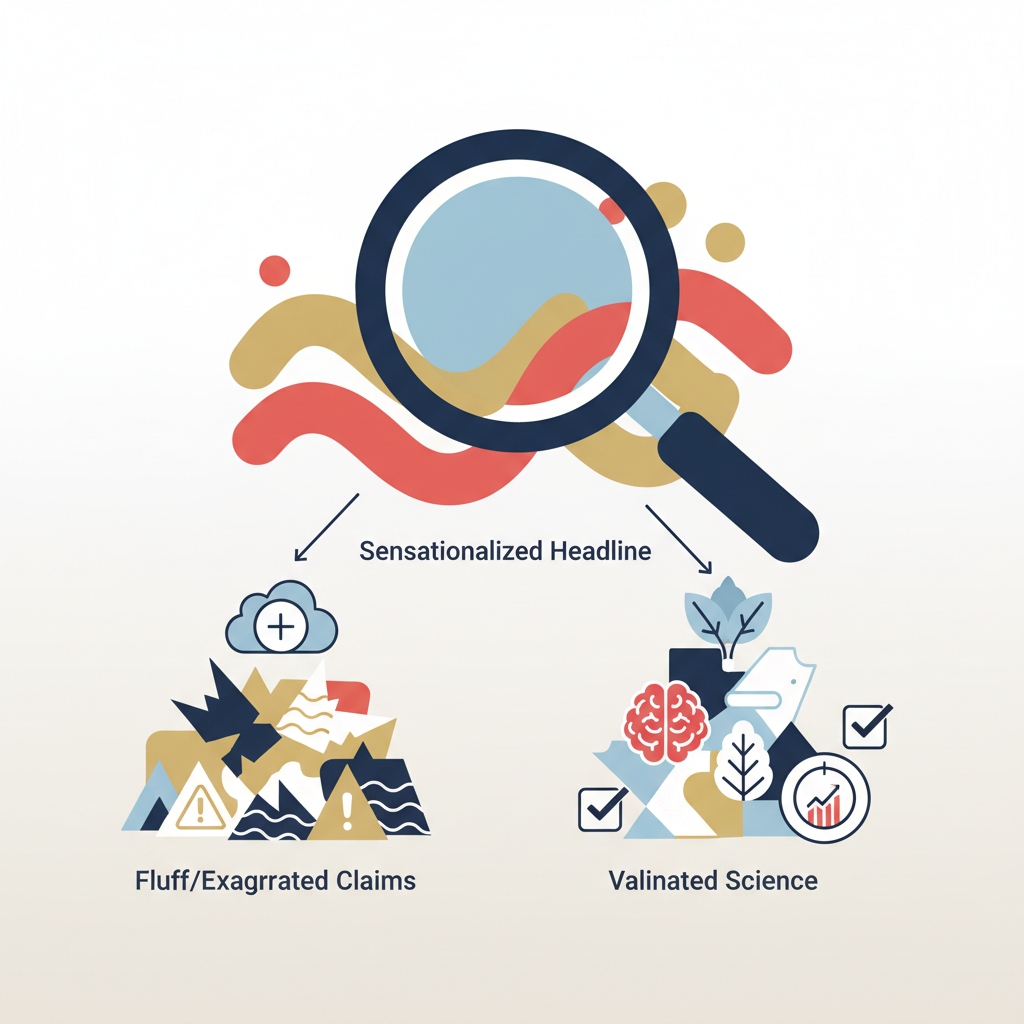
Why Learning to Evaluate Health Claims Matters to You
You might wonder: why should I learn how to evaluate studies and research? Isn't that the job of doctors and experts? The answer lies in the nature of the information age we live in. We are directly and constantly exposed to health information, which is often oversimplified or taken out of context to generate clicks and engagement. Learning how to evaluate nutrition and mental health research claims gives you the power to control your decisions. First, this understanding helps you avoid unnecessary health anxiety. When you read a news story stating that consuming a certain food increases the risk of a health issue by a specific percentage, understanding the difference between relative risk and absolute risk can prevent unwarranted panic. Second, it saves you the time, effort, and money that might otherwise be wasted chasing dietary trends that lack solid scientific backing. Instead of jumping from one restrictive protocol to another based on unrealistic promises, you will be able to focus on the foundational habits supported by broad scientific consensus. Third, and most importantly, this skill significantly improves the quality of your communication with your healthcare provider. When you approach your doctor with questions based on a fundamental understanding of how research works, the conversation becomes much more productive. Instead of asking, 'Will this food cure my condition?' you can ask, 'I read that there might be an association between this dietary pattern and this condition; do you think this is relevant to my individual health profile and medical history?' This shift in thinking puts you in the driver's seat of your health journey, making frameworks like the structured reflection approach or any other organizational tool simply a supportive element within a broader, more conscious strategy.
The Hierarchy of Evidence: How to Read Scientific Studies
To understand how to evaluate nutrition and mental health research claims, we must first recognize that not all studies are equal in their strength or their ability to establish facts. In the scientific community, there is a concept known as the hierarchy of evidence. At the base of this pyramid, we find in vitro studies (conducted on cells in test tubes) and animal studies. These studies are incredibly important for discovering potential mechanisms and generating hypotheses, but their results cannot be directly applied to humans. For example, if a study shows that a specific compound provides prompts for observing stress-related patterns markers in mice, it does not mean it will have the same effect or be safe at the same dose for a human. Moving up the hierarchy, we find observational studies. In these studies, researchers observe large groups of people over time and record their dietary habits and health outcomes. These studies are excellent for discovering correlations, but they cannot prove causation. Researchers might find that people who eat more vegetables have better mental health outcomes, but are the vegetables the cause? Or do people who eat vegetables also tend to exercise more and sleep better? Further up the pyramid, we reach Randomized Controlled Trials (RCTs). Here, participants are randomly assigned to two groups: an intervention group (e.g., receiving a specific diet) and a control group. This design minimizes bias and helps better determine causal relationships. Finally, at the top of the hierarchy are systematic reviews and meta-analyses, which gather and analyze data from multiple studies to reach a more comprehensive and reliable conclusion. When reading a health news story, always ask yourself: what type of study is this claim based on?
Common Pitfalls in Media Reporting of Health Research
One of the biggest challenges for the non-specialist reader is how scientific research is translated by the media. Headlines are often designed to provoke emotion and attract clicks, which frequently leads to the distortion of nuanced scientific conclusions. The first and most common mistake is confusing correlation with causation. As mentioned earlier, just because two phenomena occur together does not mean one causes the other. Media coverage often ignores this nuance, using words like 'causes' or 'prevents' instead of 'is associated with' or 'may contribute to.' The second mistake is overgeneralizing the results of small studies or studies conducted on very specific populations. A study conducted on 20 professional athletes cannot have its results generalized to the broader public. The third mistake is focusing on relative risk rather than absolute risk. For instance, a headline might claim that a certain food doubles the risk of a condition (a 100% increase). This sounds terrifying, but if the absolute risk of developing that condition is 1 in a million, doubling it means it becomes 2 in a million—still an exceedingly small risk. The fourth mistake is ignoring the dose or quantity. A study might show benefits for a specific compound, but the dose used in the study might be equivalent to consuming kilograms of that food daily, which is entirely unrealistic in daily life. To effectively evaluate nutrition and mental health research claims, we must be aware of these media traps and always look for the fine details within the text, not just the headline.
Applying Critical Evaluation to Gut-Brain Axis Research
The field of research concerning the gut-brain axis is currently one of the most fascinating areas of study, but it is also one of the most susceptible to media exaggeration. To understand this topic more deeply, you can explore our comprehensive guide to gut-brain axis terminology. Preliminary research suggests a complex communication network between the gastrointestinal tract and the central nervous system, and that the composition of the microbiome (the beneficial bacteria in the gut) may play a role in mood regulation and stress response. However, when evaluating claims in this area, we must exercise caution. Many of the studies showing dramatic results regarding the impact of gut bacteria on behavior have been conducted on mice. While these provide an important scientific foundation, the human microbiome is vastly more complex and influenced by countless factors, including environment, genetics, history of antibiotic use, and overall diet. There is currently no scientific consensus defining a single 'perfect' microbiome composition that works for everyone and guarantees optimal mental health. Therefore, when you read a claim that a specific product or diet will 'reprogram your gut to cure anxiety or depression,' you must approach it with critical thinking. Science tells us that a balanced, fiber-rich diet supports overall gut health, which may positively reflect on general well-being, but it does not offer promises of magical cures or instant results. This balanced understanding helps you make dietary choices that support your health without falling victim to exaggerated marketing promises.
Table: Common Claims vs. What Needs Verification
To illustrate how to apply critical thinking, this table reviews some common claims you might encounter and how they should be reframed or considered based on a systematic scientific evaluation approach. This table does not provide medical advice; rather, it demonstrates a method of critical thinking.
| Common Claim (As seen in media) | What Needs Verification & Deeper Understanding (Critical Perspective) |
|---|---|
| This specific food completely cures depression. | No single food cures complex psychological conditions. Research examines how overall dietary patterns support brain health as part of a comprehensive care plan. |
| Study proves intermittent fasting instantly eliminates nervous stress. | Fasting studies look at long-term metabolic changes. Individual responses vary greatly, and fasting may not be suitable for everyone. Read more in our intermittent fasting beginner's guide. |
| Sugar is the sole cause of mood swings. | While blood sugar fluctuations affect energy and mood, mental health is influenced by multiple factors including sleep, life stressors, and genetics. |
| Probiotic supplements are the ultimate solution for anxiety. | Research on specific bacterial strains and their effect on mood is still evolving. Effects vary significantly from person to person. |
| Eliminating carbohydrates prevents cognitive decline. | The brain requires glucose to function. Research focuses on the quality of carbohydrates (complex vs. refined) rather than complete elimination. |
Hypothetical Scenarios for Critical Evaluation
Suppose you are browsing the internet and find an article titled: 'New Study: Eating Blueberries Daily Prevents Memory Loss and provides prompts for observing Mood-related patterns by 50%.' How do we apply the skills of evaluating nutrition and mental health research claims to this hypothetical example? The first step is to look for the original source of the study. Was it published in a peer-reviewed scientific journal? Or is it merely a press release from a company that produces blueberries? If there is a conflict of interest (funding from a benefiting party), it doesn't necessarily mean the study is wrong, but it requires a higher level of scrutiny. The second step is to examine the study sample. Was the study conducted on 10 laboratory mice? Or on 5,000 human adults followed over ten years? The third step is to look at how the outcomes were measured. How did researchers measure 'mood improvement'? Did they use self-reported questionnaires or validated clinical scales? The fourth step is to evaluate the stated percentage (50%). Is this an absolute or relative improvement? And what was the baseline? Another hypothetical example: you read that stress causes obesity, and there is a specific diet that breaks this cycle. It is important here to understand the physiological mechanisms without jumping to deterministic conclusions. Stress may lead to changes in eating behaviors, a topic we discuss in detail in our article on breaking the stress eating cycle. Critical evaluation here means understanding that a diet alone may not solve the problem if the underlying stressors are not addressed and healthy coping mechanisms are not developed.
Practical Questions to Discuss with Your Healthcare Provider
The goal of learning to evaluate nutrition and mental health research claims is not to replace professional medical advice, but to enhance it. When you are equipped with the right information and precise questions, you can make the most of your consultation time with your doctor or licensed dietitian. Here is a list of questions you can use to organize your thoughts before a visit: 1. I read about an association between this dietary pattern and improved energy levels; do you think this pattern is appropriate for my current health status and the medications I am taking? 2. How can I differentiate between symptoms caused by my diet and those that might require deeper medical evaluation, such as issues related to insulin resistance? (You can prepare for this question by reading our insulin resistance symptoms and comprehensive guide). 3. Are there specific tests you recommend before I make any major changes to my diet? 4. What are realistic expectations I should set if I decide to adopt these new health habits? 5. How can we monitor progress or potential side effects objectively, based on medical measurements rather than just a general feeling? These questions open the door to an evidence-based dialogue and help the professional provide guidance tailored to your individual needs, moving away from generic advice or misleading headlines.
The Broader Role of Nutrition in Mental Health
When we step back from the narrow focus on individual food claims or 'magic' supplements, we begin to see the bigger picture of how nutrition interacts with mental health. This holistic approach is the focus of the emerging field of Nutritional Psychiatry. Instead of looking for a single food to treat a specific symptom, researchers study how overall dietary patterns (such as the Mediterranean diet or patterns rich in whole foods) affect brain health over time. The brain is a highly energy-demanding organ that requires a continuous supply of essential nutrients like vitamins, minerals, amino acids, and healthy fats to function efficiently. Chronic deficiencies in some of these nutrients, or an overreliance on highly processed foods, may contribute to an inflammatory environment in the body, which some research suggests could be linked to changes in mood and cognitive function. For a deeper dive into this topic, we recommend visiting our dedicated page on mental health and nutrition. By adopting a comprehensive perspective, we recognize that nutrition is just one pillar of mental health, alongside quality sleep, physical activity, stress management, social support, and specialized medical care when needed. This understanding protects us from the frustration that arises from expecting unrealistic results from a simple dietary change, and encourages us to build sustainable habits that support our overall health in the long term.
Frequently Asked Questions (FAQ)
What is the difference between an observational study and a clinical trial? An observational study monitors people's behaviors and health without intervening, helping to find associations. A clinical trial intentionally intervenes (e.g., giving a specific diet to one group and not another) and is stronger for determining cause and effect.
Can I rely on other people's personal experiences as scientific evidence? Personal experiences (anecdotal evidence) are important and can inspire research, but they are not considered conclusive scientific evidence because what works for one person may not work for another due to genetic, environmental, and medical differences.
How do I know if a study is funded by a party with a conflict of interest? Funding sources and potential conflicts of interest are usually declared at the end of a published scientific paper. In reliable news articles, the journalist should mention the study's funding source.
What does the term 'peer-reviewed' mean? It means that before the research was published in a scientific journal, it was reviewed and evaluated by other independent experts and scientists in the same field to ensure the validity of the methodology and the accuracy of the conclusions.
Are animal studies useless? Not at all. They are very useful for understanding basic biological mechanisms and testing initial safety, but their results should not be used to make direct health or dietary recommendations for humans.
Why do dietary recommendations constantly change? Science is inherently evolutionary. Recommendations change because researchers gather new and more accurate data over time, allowing them to update previous understandings and improve health guidelines.
Are dietary supplements necessary for mental health? Supplements may be necessary in cases of medically diagnosed deficiencies. However, they should not be used as a replacement for a balanced diet or medical treatment without consulting a licensed professional.
How should I handle contradictory news headlines about the same food? Look for the general scientific consensus rather than relying on a single study. Consult reliable sources such as official health organizations, and remember that moderation and variety are often the key.
Medical Disclaimer
The information provided in this article is for educational and informational purposes only and is not intended in any way to be a substitute for professional medical advice, diagnosis, or treatment. Do not make any health decisions or alter your diet or treatment plan based on the information provided here without consulting your doctor or a licensed healthcare provider. Evaluating scientific research is a tool for understanding, not a method for self-diagnosis. If you have any concerns regarding your mental or physical health, please seek immediate assistance from qualified professionals to receive appropriate care for your individual situation.
Conclusion and Next Steps
The journey of understanding and evaluating nutrition and mental health research claims is a crucial step toward building sound and sustainable health literacy. By recognizing the difference between sensational headlines and solid scientific evidence, understanding the limitations of various studies, and identifying common pitfalls in information reporting, you become capable of protecting yourself from confusion and frustration. Always remember that health is a comprehensive journey that requires a balance between nutrition, physical activity, mental well-being, and specialized medical guidance. There are no magical or quick fixes; instead, there are informed choices based on a clear understanding of your body and mind's needs. Use the knowledge you have gained here to organize your thoughts and observations, and to be prepared for a constructive and effective dialogue with your doctor. If you are ready to take a practical step toward a deeper understanding of your health needs and how to better organize your lifestyle, we encourage you to start systematically. Start your health assessment today to discover the appropriate steps for your individual goals, and remember that knowledge is the most powerful tool you have on your journey toward better health.

Ready to choose a clearer health starting point?
Start with a short educational assessment to explore tools and resources that may fit your goal. It is not a medical diagnosis.
Continue learning at Mental Health & Nutrition.