Essential Women Health Appointment Questions Canada: A Comprehensive Guide to Advocacy and Wellness
Author: Feras Alayed
Published:
Updated:
Category: womens-health
Reading Time: 7 minutes
Introduction: The Canadian Healthcare Context
For many women in Canada, the healthcare experience is defined by a paradox: access to a world-class publicly funded system, yet often limited by short appointment windows and a shortage of primary care providers. Whether you are seeing a family physician, a nurse practitioner, or a specialist, the typical 10-to-15-minute consultation can feel rushed. This time constraint often leaves patients feeling unheard or forgetting to ask critical questions about their long-term wellness. The desired outcome for any Canadian woman is to leave her appointment with a clear understanding of her health status and a collaborative plan for the future. However, sustaining a proactive health routine can be difficult when the system feels reactive rather than preventative. This is where preparation and health literacy become your most powerful tools. By entering the clinic with a structured list of women health appointment questions Canada-specific, you shift the dynamic from a passive recipient of care to an active partner in your health journey.
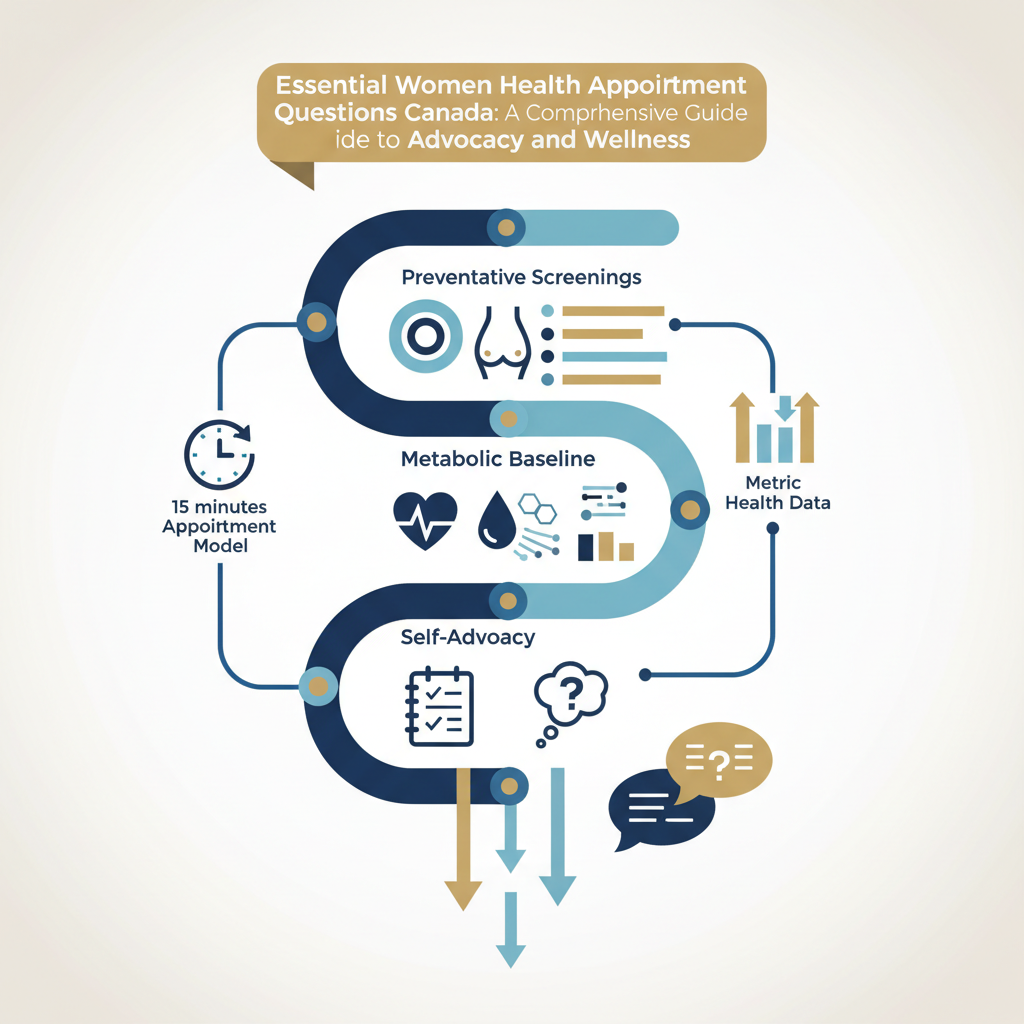
TL;DR: Quick Summary
If you have limited time, focus on these three pillars: 1. Screening: Confirm you are up to date on Pap tests (cervical screening) and mammograms based on your provincial guidelines. 2. Metabolic Baseline: Ask for your blood pressure, cholesterol, and blood glucose (in mmol/L) to understand your metabolic health. 3. Advocacy: Use a health binder to track symptoms and ensure your concerns are documented, even if a specialist referral is needed. Consider structured lifestyle supports like the structured reflection approach to maintain consistency between visits.
Key Takeaways
- Preparation is essential to maximize the 15-minute Canadian primary care model.
- Preventative screenings in Canada follow specific age-based guidelines that vary slightly by province.
- Metabolic health metrics (glucose, lipids) should be tracked in metric units (mmol/L).
- Mental health and lifestyle factors, such as Vitamin D levels in the Canadian climate, are vital discussion points.
- Self-advocacy involves asking for specific reasons when a test or referral is declined.
Preparing for Your Appointment
Before you step into the clinic, it is helpful to gather your 'health data.' In Canada, where you might see different providers over time, maintaining your own records is a form of empowerment. Start by tracking your menstrual cycle, sleep patterns, and any recurring symptoms for at least two to three months. This data provides the 'colour' to the clinical picture your doctor sees. Understanding your results requires high health literacy, as discussed in our health literacy guide, which helps you evaluate the information you receive. When choosing the right wellness routine, it is vital to have this baseline data to share with your provider. For women in leadership, managing health is a prerequisite for leadership team building and scaling projects; a healthy foundation allows for professional growth.
Preventative Care and Screenings
The Canadian Task Force on Preventive Health Care sets the standard for screenings, but implementation can vary. Essential questions include: 1. 'Based on my age and family history, am I due for a Pap test or HPV screening?' In many provinces, the interval has moved from every year to every three or five years. 2. 'When should I begin regular mammograms, and what is the process for self-examination in the interim?' 3. 'Are there specific immunizations, such as the HPV vaccine or the shingles vaccine, that I should consider?' 4. 'Given the Canadian climate, should we test my Vitamin D levels, and what is the recommended supplementation for this latitude?' These questions ensure you are meeting the national standards for early detection.
Metabolic Health and Lifestyle
Metabolic health is the cornerstone of long-term vitality. In Canada, blood glucose is measured in mmol/L, and it is important to know your numbers. Ask your doctor: 1. 'What was my most recent fasting glucose and HbA1c, and where do they fall on the Canadian reference range?' 2. 'How is my blood pressure, and what lifestyle factors can help me maintain it within a healthy range?' 3. 'What is my lipid profile (cholesterol), and do I have a high ratio of HDL to LDL?' If you are considering fasting as a way to support these numbers, always consult your physician first. For muscle health, understanding sarcopenia terminology is key, especially as women age and muscle mass naturally begins to decline. Ask: 'How can I ensure I am maintaining enough muscle mass to support my metabolism?'
Reproductive and Hormonal Health
Whether you are in your 20s or 50s, hormonal health dictates much of your daily experience. If you are experiencing changes in your cycle, ask: 1. 'Are my symptoms consistent with perimenopause, and what are my options for symptom management?' 2. 'If I am planning a pregnancy, what pre-conception steps should I take regarding folic acid and overall health?' 3. 'Could my fatigue or hair loss be related to thyroid function or iron deficiency (ferritin levels)?' While cultural contexts differ, the principles in our guide for preparing for health visits offer universal strategies for effective communication regarding sensitive hormonal issues.
Mental Health and Wellbeing
Mental health is health. Canadian winters and the demands of modern life can contribute to burnout and Seasonal Affective Disorder (SAD). Ask: 1. 'I have been feeling persistently low/anxious; can we discuss a mental health assessment or a referral to a counsellor?' 2. 'How does my physical health (like thyroid or Vitamin B12) potentially impact my mood?' 3. 'What resources are available through provincial health plans for mental health support?' A structured service-based system in your professional life works best when your personal health foundation, including mental clarity, is solid.

Advocating for Yourself
If a doctor dismisses a concern, you have the right to ask: 'Can you please document in my chart that I requested this test/referral and the reason it was declined?' Often, this prompt encourages a more thorough discussion. Remember that you are the expert on your own body. If something feels 'off,' even if blood tests are within the 'normal' range, continue to seek answers. Advocacy is about ensuring that the 'normal' range for the general population is also 'optimal' for you as an individual.
Source-Verification Checklist
- Does the information come from a Canadian government health site (.gc.ca) or a provincial health authority?
- Is the advice consistent with the Canadian Task Force on Preventive Health Care?
- Are the units of measurement in metric (kg, cm, mmol/L)?
- Does the source avoid making 'guaranteed' health outcomes or 'cure' claims?
- Is the date of the guidance current (within the last 3-5 years)?
Medical Disclaimer
Next Step
Ready to take control of your health journey? ابدأ تقييمك الصحي لمعرفة الخطوات التالية المناسبة لهدفك
Frequently Asked Questions
What is the scope of this guide?
This guide is educational and helps readers organize questions and observations for further learning.
How should I use the information?
Use it to review terminology, note personal questions, and identify sources that require verification.
When should I seek professional guidance?
Discuss personal symptoms, medicines, diagnoses, or treatment decisions with a licensed professional.
Further Education
- Explore the metabolic health education hub
- Learn how to read research summaries
- Use the educational health assessment
Explore the topic with reliable health education
Use ATHAR’s educational guides and practical tools to consider your next learning step.