Evaluating Longevity Claims: Q&A on Blue Zones Eating Patterns for Longevity
Author: Feras Alayed
Published:
Updated:
Category: longevity
Reading Time: 14 minutes
Key Takeaways
- Blue zones eating patterns for longevity are not strict diets, but dietary habits focusing on whole plant foods and moderation.
- Distinguishing between correlation and causation is crucial for understanding health research and avoiding marketing hype.
- No single magic food guarantees a long life; health is a complex interaction of nutrition, movement, sleep, and stress management.
- Thinking critically about sensational headlines protects you from adopting unsupported practices.
TL;DR
In a world buzzing with anti-aging claims and superfoods, distinguishing science from marketing is tough. This Q&A guide helps you understand blue zones eating patterns for longevity, equips you with tools to evaluate health research, corrects common misconceptions, and prepares you for productive conversations with your doctor to build sustainable habits.
Introduction: The Health Information Challenge
We often start our journey toward better health with great enthusiasm, driven by a desire to age well and maintain vitality. However, we quickly hit a wall of conflicting information: one study praises a food, another condemns it; one article promises longevity through a strict diet, while an ad pushes a miracle supplement. This information overload makes it incredibly hard to sustain any positive change and often leads to frustration. The real issue isn't a lack of willpower, but the difficulty in evaluating and filtering these claims. In this guide, we will use a Q&A approach to unpack the concept of blue zones eating patterns for longevity. Together, we will learn how to read health information critically, making your daily choices clearer and more sustainable within a broader lifestyle framework.
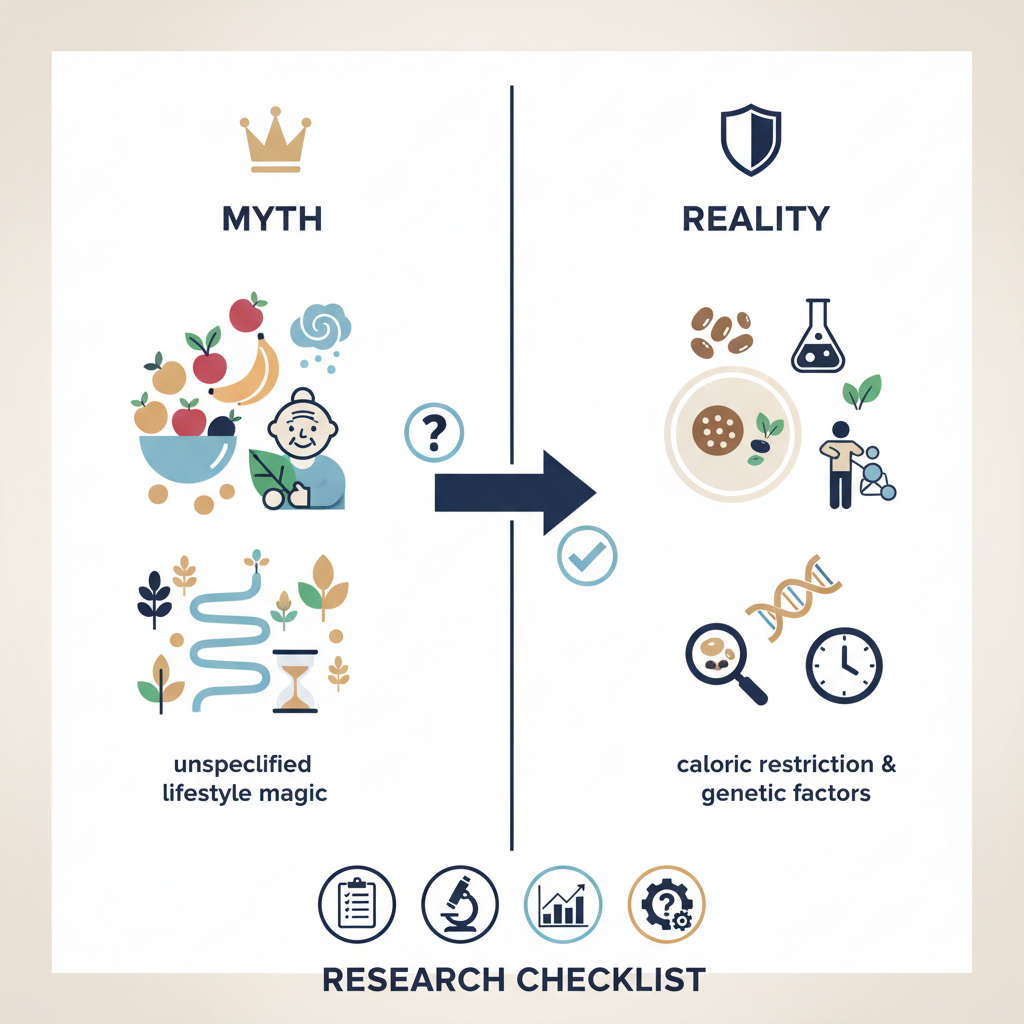
What Are Blue Zones Eating Patterns and Why Do They Matter?
Blue zones eating patterns for longevity are a set of shared dietary habits observed in specific geographic regions around the world where populations statistically live longer, healthier lives. These patterns do not rely on deprivation or meticulous calorie counting. Instead, they primarily focus on consuming whole plant foods, legumes, nuts, and moderate amounts of meat and sugar, combined with mindful eating practices and social connection during meals.
Why does understanding this matter to you? Because grasping the foundational principles of these patterns helps shift your focus from chasing quick fixes or superfoods to building sustainable habits. Rather than stressing over every gram you eat, you can focus on the bigger picture: diversifying your food sources, improving ingredient quality, and supporting your body's natural functions. For more on how this approach supports your health at a cellular level, check out our article on Optimizing Cellular Energy: Functional Nutrition for Mitochondrial Health and Longevity.
Q&A: Decoding Longevity Claims
To better understand how to evaluate health information, let's address the most common questions through the lens of critical thinking:
Q: Is there one single food or supplement that guarantees a longer life?
A: No. Claims promoting a single food (like a specific berry or herb) as a magic anti-aging cure are usually marketing exaggerations. Longevity and quality of life result from a complex interplay of genetics, environment, comprehensive nutrition, physical activity, and stress management. Whole foods support health, but they don't work in isolation from the rest of your lifestyle.
Q: I always read that people in Blue Zones eat a lot of carbohydrates. Does this mean carbs are always good for everyone?
A: Context is king. The carbohydrates consumed in these regions are mostly unprocessed, complex carbs (like sweet potatoes, legumes, and whole grains) and are paired with highly active physical lifestyles. If someone is dealing with metabolic challenges, they might need a different approach. To understand more about how the body responds, review our guide on Insulin Resistance: Symptoms, Tests, and When to Seek Care.
Q: What is the role of time-restricted eating in these patterns?
A: Many traditional cultures practice natural forms of time restriction, such as eating an early dinner and fasting until the next morning. This supports cellular repair processes. If you are interested in how to structure your meal timings, you can read the Comprehensive Intermittent Fasting Guide for Beginners 2026.
Q: How should I interpret studies saying a certain compound extends the lifespan of mice in a lab?
A: With extreme caution. Animal studies are crucial for understanding biological mechanisms, but they do not always translate directly to humans. When reading news about a new discovery, look for whether the study involved humans, the sample size, and whether it was observational or a clinical trial. For a deeper dive into the science of aging, explore the NAD+ and Aging Science Explained Practical Guide.
Myth vs. Fact: Evaluating Common Information
The following table helps organize our observations and correct common misconceptions about nutrition and longevity:
| Common Claim (Myth) | Evaluation (Myth or Fact?) | Explanation and What Needs Verification |
|---|---|---|
| You must be 100% vegan to live a long life. | Myth | Most blue zones follow a plant-slant diet, meaning they predominantly eat plants but consume moderate amounts of animal products on occasion or as side dishes. |
| Genetics are the only determining factor for longevity. | Myth | Estimates suggest genetics account for only about 20-30% of longevity, while lifestyle and environment play the largest role in gene expression. |
| Stopping eating when 80% full supports health. | Fact | This practice, known as 'Hara Hachi Bu' in Okinawa, helps prevent overeating, supports proper digestion, and builds awareness of hunger and fullness cues. |
| Drinking alcohol daily is necessary for longevity, as seen in some regions. | Needs Verification & Personalization | While some observational studies linked moderate consumption of certain beverages to benefits, recent research suggests health risks may outweigh benefits. Always consult a doctor. |
Research Literacy: How to Read Studies Critically
In the age of information flow, the ability to evaluate what you read is a vital skill. Here are common information mistakes and how to correct them when reading health and longevity articles:
- Mistake: Confusing correlation with causation. When a study says people who eat walnuts live longer, that is a correlation. It doesn't necessarily mean walnuts are the sole cause; perhaps walnut eaters also exercise more and smoke less. Correction: Always look for confounding variables that might explain the result.
- Mistake: Relying on sensational headlines. Headlines are written to grab attention. Correction: Read at least the study's abstract and look for words like 'may contribute,' 'in mice,' or 'observational study.'
- Mistake: Generalizing individual results. What works for one person in a specific environment may not work for you. Correction: Remember that functional nutrition relies on biological individuality.
Everyday Scenarios: Applying Concepts Realistically
What do these concepts look like in daily life? Here are neutral hypothetical examples showing how to integrate mindful nutrition principles without extremes:
Scenario 1: The busy professional seeking to reduce processed meats. Instead of trying to go strictly vegan overnight (which can be hard to sustain), Ahmed decides to replace processed meats at lunch with a legume-based meal (like lentils or chickpeas) three times a week. This simple shift aligns with blue zones eating patterns for longevity, is easy to stick to, and supports a diverse gut microbiome.
Scenario 2: Finding balance in meal timing. Sarah reads a lot about the benefits of fasting and calorie restriction but feels overwhelmed. Instead of a rigid protocol, she adopts a simple principle: finishing dinner early and avoiding late-night snacks. This helps her provides prompts for observing sleep-related patterns quality and regulate her energy levels naturally.
Questions for Your Healthcare Provider
When visiting your doctor or licensed dietitian, it is important to be prepared for a clear, specific dialogue. Use this checklist to organize your thoughts:
- Based on my current labs (e.g., blood sugar and lipids), are there specific dietary adjustments that suit my condition better than others?
- How can I integrate more whole plant foods into my diet without negatively impacting my iron or B12 levels?
- Are there any interactions between my current medications and major dietary changes (like a sudden increase in fiber)?
- How can we objectively monitor progress beyond just the number on the scale (e.g., waist circumference, energy levels, sleep quality)?
Frequently Asked Questions
What exactly are the Blue Zones?
They are geographic regions identified by researchers where people live longer, healthier lives, including Okinawa (Japan), Sardinia (Italy), Nicoya (Costa Rica), Ikaria (Greece), and Loma Linda (California).
Can I apply these patterns if I live in a busy modern city?
Yes, the principles are adaptable. Focusing on whole foods, reducing ultra-processed foods, finding ways for natural daily movement, and building a social support network are steps that can be applied in any environment.
Do I need to buy expensive or imported foods to follow this pattern?
Not at all. The staple foods in these patterns are often the cheapest and most accessible, such as lentils, beans, chickpeas, local seasonal vegetables, and whole grains.
How do I start without feeling deprived?
Start by adding rather than subtracting. Add an extra serving of vegetables to your meal, or replace a processed snack with a handful of nuts. Gradual changes are the most sustainable.
Do these eating patterns cure chronic diseases?
Healthy lifestyle patterns support the body's natural functions and help manage overall health, but they are not a substitute for medical treatment. Always consult a doctor to manage any diagnosed health condition.
Medical Disclaimer
The information provided in this article is for educational and informational purposes only and does not constitute professional medical advice, diagnosis, or treatment. Do not make any drastic health decisions or change your medications based on the information provided here without consulting your doctor or a licensed healthcare provider. Health outcomes vary from person to person, and the approaches mentioned are intended to support an overall healthy lifestyle, not to cure or prevent any disease.
Next Step
Understanding how to evaluate health information is your first step toward building sustainable habits that support your long-term quality of life. To expand your knowledge on how to thoughtfully integrate these concepts into your daily routine, explore the Longevity and Functional Nutrition hub and find the right step for your health goal.
Further Education
- Explore the metabolic health education hub
- Learn how to read research summaries
- Use the educational health assessment

Ready to choose a clearer health starting point?
Start with a short educational assessment to explore tools and resources that may fit your goal. It is not a medical diagnosis.
Continue learning at Longevity & Functional Nutrition.