How to Read Canadian Health Guidance Online: A Health Literacy Guide
Author: Feras Alayed
Published:
Category: health-literacy
Reading Time: 9 minutes
Introduction: The Digital Health Maze
In an era where information is available at the click of a button, the challenge for many Canadians is not finding information, but determining which information is relevant, accurate, and safe. You may have found yourself searching for ways to manage daily energy, improve your nutritional habits, or understand a recent lab result, only to be met with a barrage of conflicting advice. The desired outcome is simple: a healthier, more vibrant life. However, previous attempts to follow generic health trends often fail because they lack the specific context of the Canadian healthcare environment and lifestyle.
Understanding how to read Canadian health guidance is the first step toward sustainable wellness. Whether you are looking at official government portals or exploring structured lifestyle supports like the structured reflection approach, the ability to discern high-quality information is essential. This guide aims to build your health literacy, providing the tools to evaluate digital content through a Canadian lens, ensuring that your health journey is informed by evidence rather than trends.
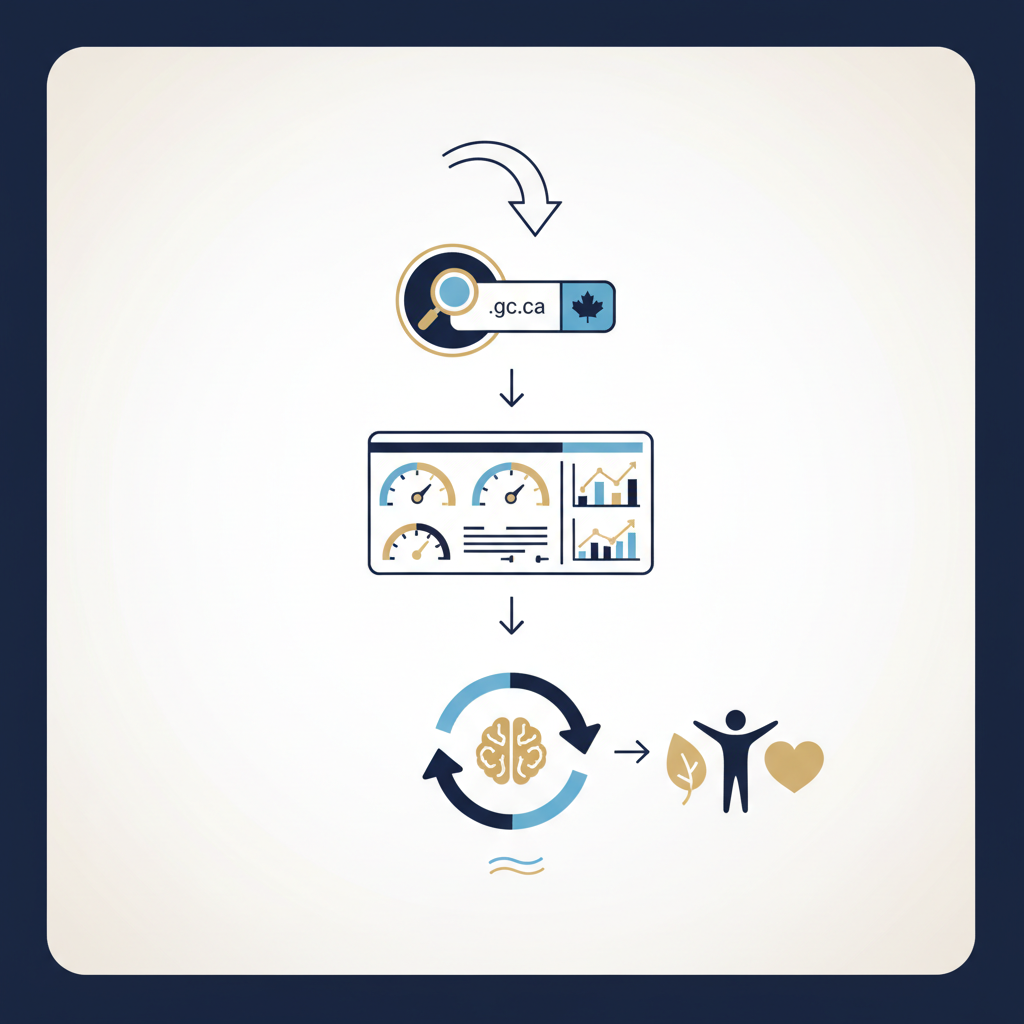
TL;DR Summary
Key Takeaways
- Prioritize .gc.ca and provincial health websites for official guidance.
- Understand metric measurements (kg, cm, mmol/L) to avoid confusion with US-based data.
- Use structured programmes like the structured reflection approach as tools for consistency, not as cures.
- Evaluate the 'Hierarchy of Evidence' when reading health studies online.
- Maintain a personal health log to track your unique response to lifestyle changes.
Identifying Official Canadian Sources
When you search for health advice, the top results are often from international sources. While these can be informative, they may not align with Canadian regulatory standards or clinical guidelines. To accurately read Canadian health guidance, you must know where to look. Official information is typically hosted on domains ending in .gc.ca (Federal) or .ca (Provincial and academic).
Health Canada is the federal department responsible for helping Canadians maintain and improve their health. Their guidance covers everything from food safety and nutrition (like the Food Guide) to drug approvals and environmental health. The Public Health Agency of Canada (PHAC) focuses on infectious diseases, chronic disease prevention, and health emergencies. For localized information, such as finding a primary care provider or understanding provincial screening programmes, refer to your specific provincial health ministry (e.g., Ontario Health, Alberta Health Services, or BC Centre for Disease Control).
It is also helpful to compare how different regions present information. For instance, you might find it useful to see how literacy is approached in other contexts by reading about the health literacy guide for Al-Ahsa, which highlights how cultural and regional factors influence health communication.
Decoding Metrics: mmol/L and the Canadian Standard
One of the most common points of confusion for Canadians reading health information online is the difference in measurement units. Much of the content on the internet originates in the United States, where they use the Imperial system or different clinical units. In Canada, we use the International System of Units (SI).
For example, blood glucose levels in Canada are measured in millimoles per litre (mmol/L), whereas US sources use milligrams per decilitre (mg/dL). A reading of 7.0 mmol/L is very different from 7.0 mg/dL. Similarly, weight is often discussed in kilograms (kg) and height in centimetres (cm) in clinical settings, though many Canadians still use pounds and inches in daily life. Understanding these conversions is vital when you navigate the digital health maze and compare guidance from across the border. Always double-check the units before interpreting any health data or laboratory results.
Canadian Climate and Lifestyle Factors
Health guidance is not one-size-fits-all; it must account for the environment. In Canada, our climate significantly impacts our health needs. For instance, during the long winter months, Health Canada provides specific guidance regarding Vitamin D, as natural synthesis from sunlight is limited. Furthermore, physical activity guidelines often include adaptations for indoor exercise or winter safety.
Dietary guidance also reflects Canadian availability. The Canadian Food Guide emphasizes the importance of fibre-rich foods, such as whole grains, vegetables, and pulses, which are staples in the Canadian agricultural landscape. When reading about longevity or dietary patterns, such as those discussed in evaluating longevity claims and Blue Zones, it is important to consider how these patterns can be adapted to the Canadian context, focusing on locally available, nutrient-dense foods.
Evaluating Evidence and Hierarchy of Information
Not all health information is created equal. When you read Canadian health guidance or any online health content, it is important to understand the hierarchy of evidence. At the top are systematic reviews and meta-analyses, which look at all available research on a topic. Below these are randomized controlled trials (RCTs), followed by observational studies, and finally, expert opinion or anecdotal evidence.
Be cautious of 'breakthrough' claims based on a single small study. Reliable guidance is built on a body of consistent evidence over time. This is particularly important when exploring complex topics like the biological processes of aging. To better understand how scientists categorize these changes, you might explore visualizing the hallmarks of aging, which provides a framework for understanding long-term health changes without making diagnostic claims.
Navigating Digital Health Logs
When keeping a log, focus on objective measures (like steps taken or hours of sleep) and subjective feelings (like energy levels or mood). This data is invaluable when discussing your health with a Canadian healthcare professional. For a comprehensive approach to this, refer to our guide on mastering a personal health information log in Canada. Remember, these logs are for your personal use and should be kept private and secure.
Source-Verification Checklist
Before you act on health information found online, use this checklist to evaluate its credibility:
- Authority: Is the author a qualified health professional or a reputable government/academic institution?
- Accuracy: Does the information cite peer-reviewed research? Are the units (like mmol/L) correct for Canada?
- Date: Is the information current? Health guidance evolves as new research emerges.
- Purpose: Is the site trying to sell a 'cure' or provide education? Be wary of sites that link products to specific disease treatments.
- Ethics: Does the content follow ethical frameworks? You can learn more about this by reading about ethical frameworks in health content partnerships.
- Labels: If the guidance involves nutrition, do you know how to read the labels correctly? See the guide to reading food labels for a comparative perspective on nutritional transparency.
Frequently Asked Questions
How do I know if a health website is Canadian?
Look for the .gc.ca or .ca domain. Check the 'About Us' page for a Canadian physical address and look for references to Canadian health regulations and units of measurement.

Why does Canadian guidance differ from the US?
Differences often arise from different regulatory bodies (Health Canada vs. the FDA), different clinical standards, and the use of the metric system in Canada.
What are the best official sources for Canadian nutrition advice?
The Health Canada Food Guide is the primary source for nutritional guidance in Canada. It emphasizes whole foods, fibre, and water as the drink of choice.
How should I interpret clinical study results I find online?
Look for consensus. A single study is rarely enough to change health guidance. Look for systematic reviews or statements from major Canadian health organizations that synthesize multiple studies.
Medical Disclaimer
Ready to take the next step in your health journey? Understanding your current status is key to choosing the right path.
Start your health assessmentFurther Education
- Explore the metabolic health education hub
- Learn how to read research summaries
- Use the educational health assessment
Explore the topic with reliable health education
Use ATHAR’s educational guides and practical tools to consider your next learning step.